Matilda Finn has been describing music as colour since childhood. The condition has a name, synaesthesia, but in her case it is the engine of the work. She sees songs as rooms, as weather, as figures that walk into the frame. The job, as she has described it in interviews with Crack and Shoot, is to translate the picture in her head into something a viewer can stand inside.
That framing matters. Most directors working in music video treat the form as illustration. You hear the song, you see the song. The images explain the music rather than extend it. Finn's approach is structurally different. The visual track does not follow the audio. It runs parallel, sometimes in counterpoint, occasionally in outright argument with what you are hearing. The result is that her videos feel like separate works that happen to share a room with the song, each one making the other stranger and more interesting than it would be alone.
She has done it well enough to have already become inevitable. Best New Director at the UK Music Video Awards two years in a row, 2017 and 2018, then a Best Director nomination by 2019. Music videos for Bicep, Danny Brown, Obongjayar, Bipolar Sunshine and AlunaGeorge that look genuinely unlike anything else in the cycle. Bicep's Aura was the early calling card, all halogen reds and sweat and slowed time. Danny Brown's Lost was a study in claustrophobic interiors. Obongjayar's Endless found a way to make running a spiritual gesture.
What Aura Established
Aura is worth examining in detail because it announced a specific set of preoccupations that have remained consistent across everything since. The video is built around bodies at the point of exhaustion or ecstasy, states that look nearly identical when captured at the right shutter speed. The colour temperature shifts between shots in ways that feel physiological rather than aesthetic, as though the camera itself is running a fever. Bicep's production on that track is already emotionally saturated, the kind of rave music that sounds like it is grieving something, and Finn does not double down on that quality. She complicates it. The video introduces tension precisely where the music offers release.
That is a choice with a cost. A softer director would follow the uplift. Finn's instinct is always to find the unresolved thing inside an emotional moment, to keep the image from settling into something comfortable. The early awards attention was partly recognition that this approach was working.
Claustrophobia and Scale
Danny Brown's Lost operates from the opposite end of the spatial spectrum. Where Aura uses slow motion and wide colour fields to create a kind of overwhelming openness, Lost is all compression. Tight rooms. Faces too close to the lens. The edit refuses to let you step back. Brown's vocal style on that track is already agitated, already pinned, and Finn finds a visual grammar that puts the same pressure on the eye that the record puts on the ear.
Obongjayar's Endless splits the difference. The central gesture, a figure running, is simple to the point of bluntness. What Finn does with it is remove every contextual cue that would let you read the running as either flight or pursuit. The landscape is stripped. The pace is wrong for either panic or joy. The video turns a literal action into an abstract state, which is exactly what Obongjayar's music is doing on the textural level.
The Commercial Turn
This year she has signed to Stink Films for representation in London and the United States, with Love Song handling additional U.S. duties. The newest reels read as a director moving up a tier. Promnesia, Oh How Sweet It Is, The Audition for Armani Beauty, and Waiting for Vera all came out in April alone. The commercial work is now sitting alongside the personal projects without feeling smaller.
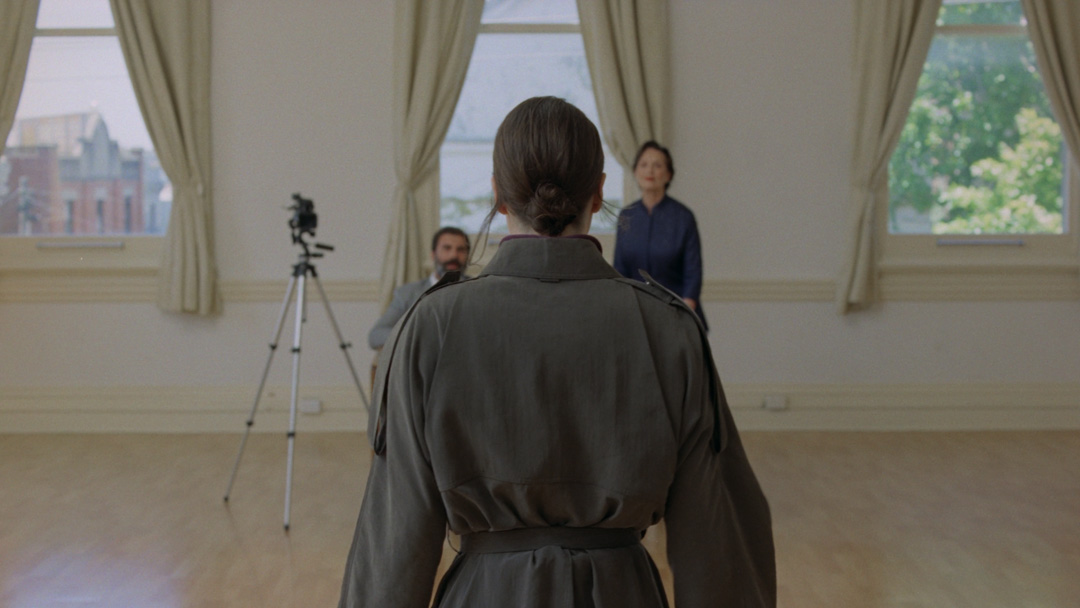
The Armani Beauty piece is the instructive one. Fashion and beauty advertising has a house style that is almost impossible to escape. Finn works within those constraints and still makes something that reads as hers. The faces in The Audition are lit the way she lights them in music videos: as landscapes with weather moving across them rather than as objects to be flattered. The product still sells. The film still breathes.
That ability to maintain a directorial voice inside commission work is rarer than it sounds. Many directors who start in music video lose their edge the moment a brief arrives with real budget and brand oversight. The April output suggests Finn has found a way to treat commercial work as research rather than compromise.
The Lineage and the Difference
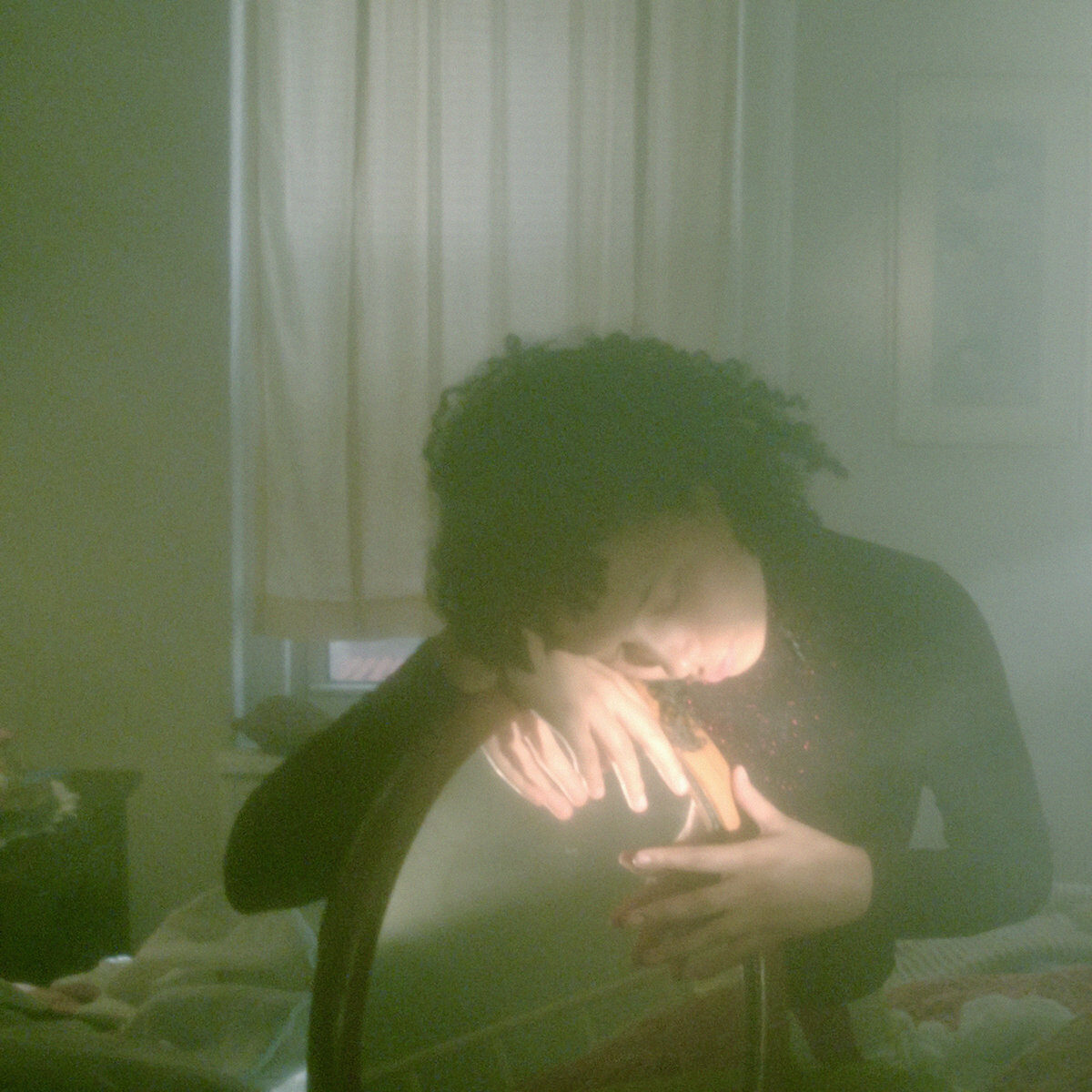
What I keep coming back to is the texture. Finn shoots the way some directors paint. Light is a mood, not an exposure. Faces are landscapes. Even the brand spots feel hand-built, the way a photograph by Elaine Constantine still feels developed in a sink.
There is a lineage here. Floria Sigismondi, early Chris Cunningham, the music-video-as-short-film tradition that almost died in the streaming era. Sigismondi's videos for Marilyn Manson and David Bowie in the late 1990s used industrial imagery and body horror to create a specific register of unease that felt new at the time. Cunningham pushed further into the mechanical and the abject. Both directors made the body a site of transformation or violation.
Finn is working from similar formal premises but with a different emotional temperature. Her surrealism is warmer. The body in her videos is a soft instrument, capable of registering states too subtle for conventional cinematography to catch. She is interested in the face at the moment just before expression fully forms, in movement that is not quite dance and not quite ordinary motion, in the visual equivalent of a song that has not yet resolved its chord. The disturbance in her work is internal rather than external. Nothing jumps out at you. Things shift.
The music-video-as-short-film tradition nearly died not because the form ran out of possibilities but because the distribution infrastructure collapsed. When MTV stopped programming videos, the economics of ambitious production evaporated. Finn is one of a small number of directors demonstrating that the short-form music video can still function as a genuine cinematic proposition.
What to Watch
Watch Aura first. The colour handling alone justifies the fifteen minutes. Then watch The Audition and notice how the same instincts operate inside a completely different set of commercial requirements. Then watch Endless again and think about what running means when you strip the narrative from it.
The April releases suggest she is at a moment of genuine acceleration. When a director with this much formal intelligence gains access to larger budgets and more varied briefs at the same time, the resulting work tends to define a period. Keep your eye on whatever drops next. She is moving very fast.