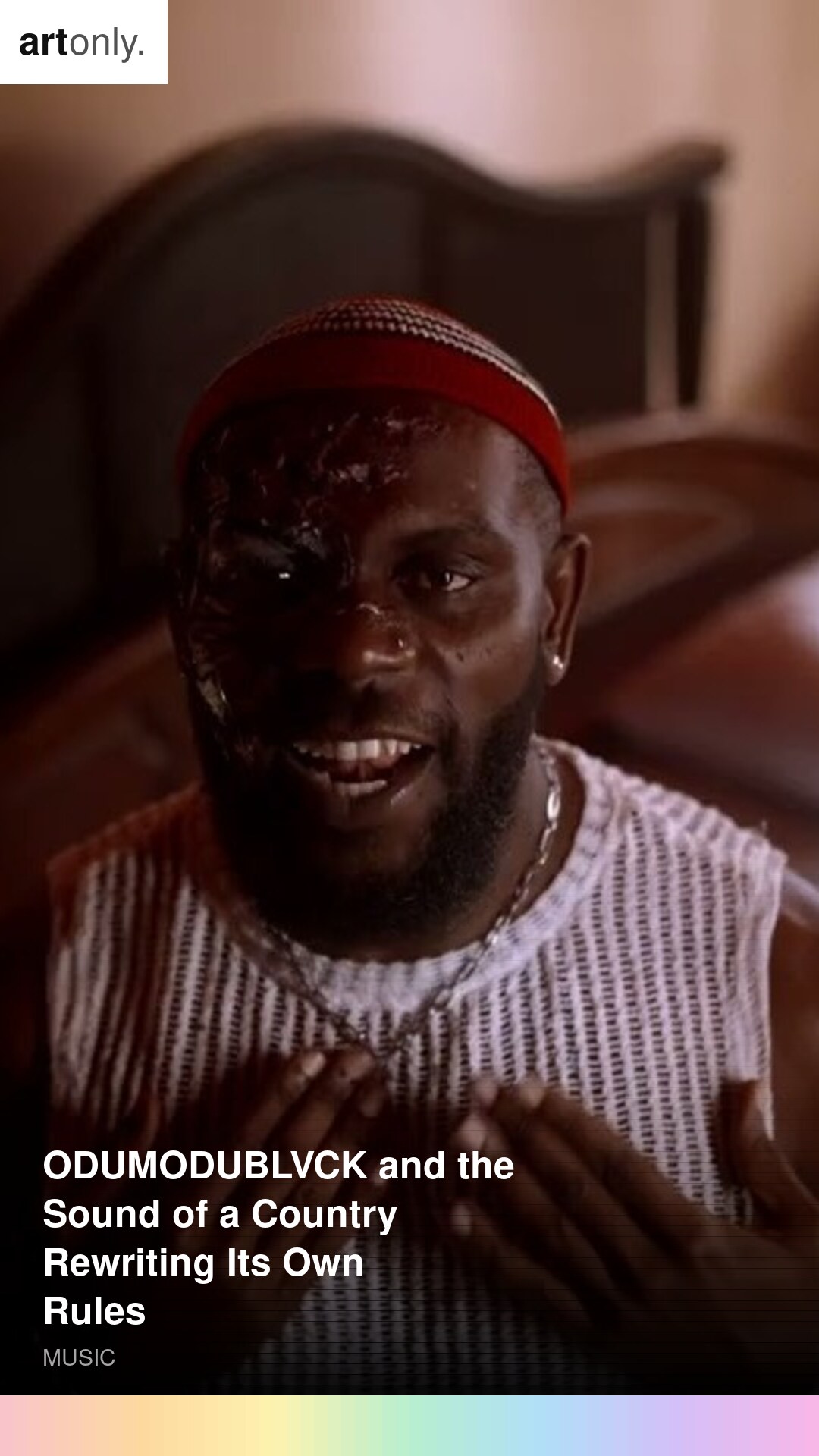
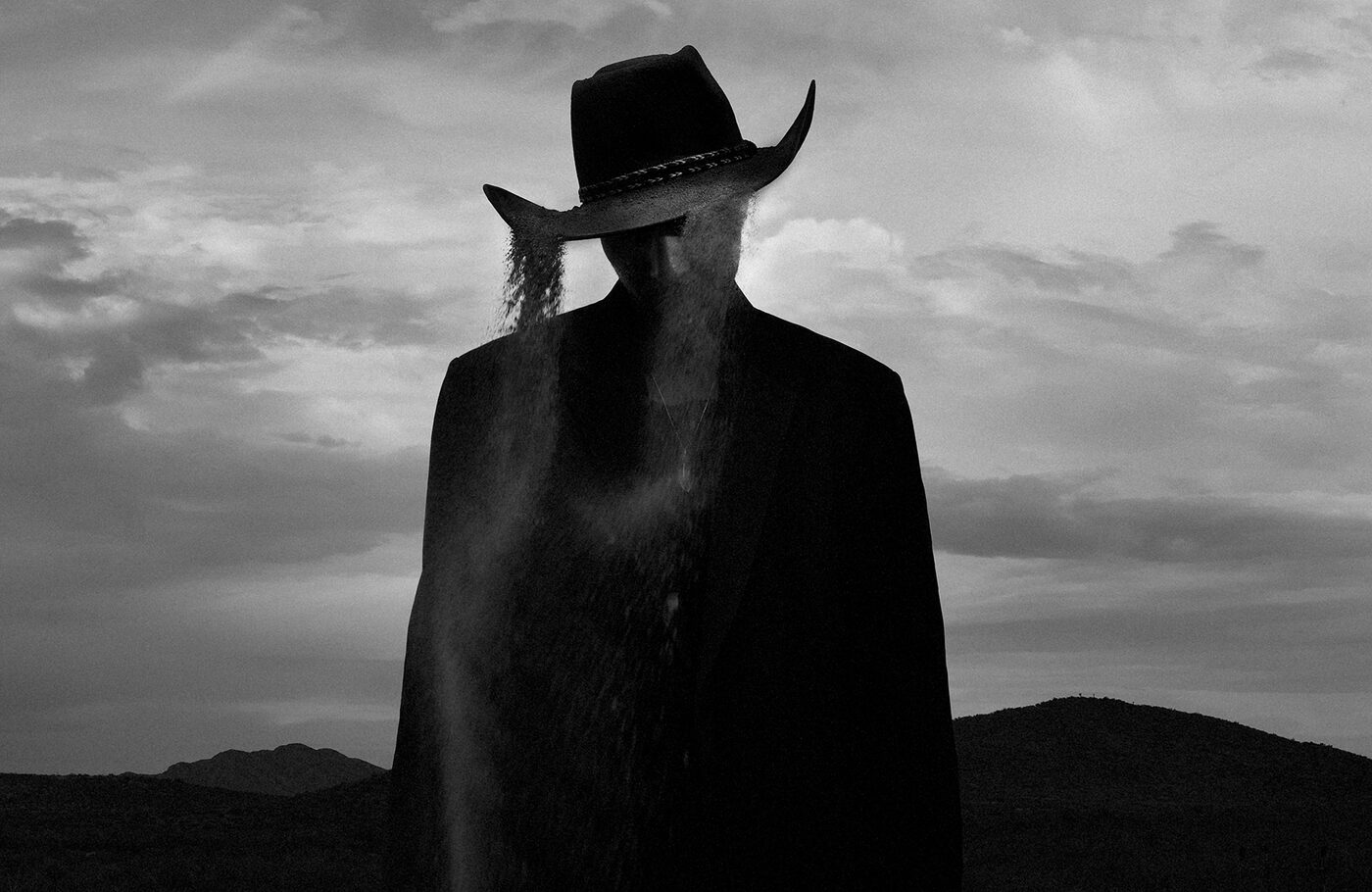
The first thing to understand about ODUMODUBLVCK is that he is not doing what the international music industry assumed Nigerian artists were supposed to do. He is not chasing an Afropop crossover. He is not softening his edges for a playlist. He calls what he makes Okporoko Rhythms, his own term, untranslatable, unapologetically from Abuja, and the refusal to simplify that into something more exportable is a creative and political act.
They Love Me
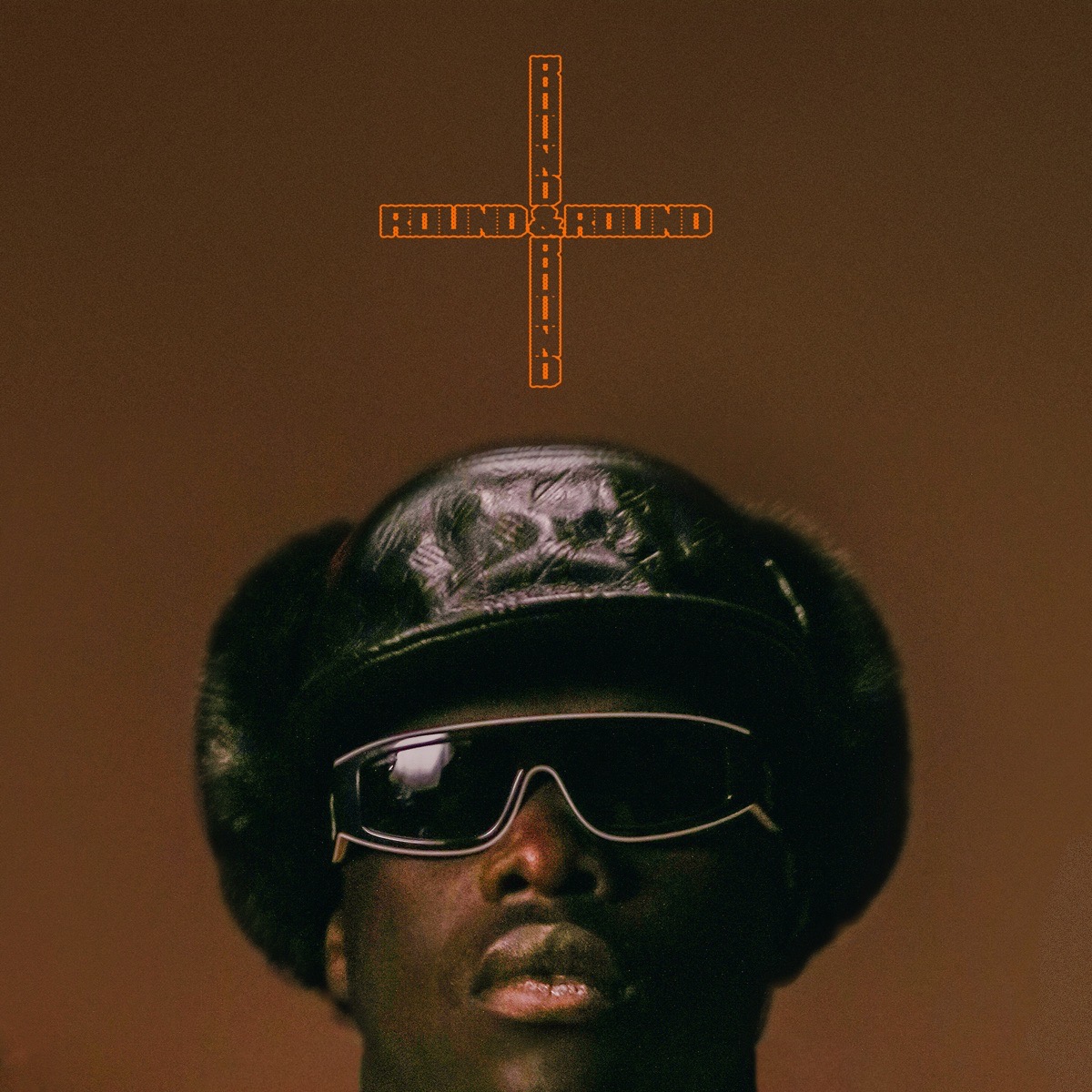
His first single of 2026 is called THEY LOVE ME, and it arrives like a statement of account rather than a pitch for attention. The production, handled in part by ODUMODUBLVCK himself alongside Ucee, has that layered density that has defined his best work: grime-adjacent rhythm patterns threaded through Afrobeat tonalities, with his voice sitting deep in the mix, unhurried, certain. The lyric is not a boast so much as a reckoning. He has been doing this since 2017. The numbers, over a billion streams across his catalog, have caught up to the reality of what he built.
What separates him from most of his peers is the lyricism. Where much of the commercial Nigerian rap conversation rewards a certain gloss, ODUMODUBLVCK writes with the detail of someone who has never confused ambiguity with sophistication. His 2023 mixtape EZIOKWU, the title means truth in Igbo, was a document of that precision. The follow-up, THE MACHINE IS COMING in 2025, debuted at number one on the Nigerian charts. THEY LOVE ME is the opening chapter of whatever comes next.
What Okporoko Rhythms Actually Means
Okporoko is stockfish, the dried and salted cod that is a staple of Nigerian cooking particularly in Igbo households. It is not an exotic ingredient for people who grew up eating it. It is just food, essential and unglamorous, the kind of thing that sustains rather than impresses. When ODUMODUBLVCK calls his music Okporoko Rhythms, he is making a claim about sustenance over spectacle, about music that feeds rather than dazzles.
The genre term is also a refusal of the available categories. Nigeria's music industry has spent the last decade building global infrastructure for Afrobeats, the Lagos-centred sound that Burna Boy and Wizkid and Davido have carried to streaming charts worldwide. That infrastructure exists and ODUMODUBLVCK operates within it. But he is not a product of it. His music draws from grime, from UK drill, from trap, from the specific musical culture of Abuja, which is not Lagos, which has its own rhythmic vocabulary, its own relationship to the North and to the traditions that do not appear in the Lagos export version of Nigerian music.
The Anti World Gangstars
Abuja has never been Lagos in the music industry's imagination, and ODUMODUBLVCK has made it his project to complicate that hierarchy. The Anti World Gangstars collective he leads, the collaborations with Wale, Bloody Civilian, Stormzy, and Black Sherif, these are not networking moves. They are proof of a specific vision being executed over time, without apology, from the capital city that the industry forgot to account for.
The Black Sherif collaboration is particularly revealing. Both artists operate at the intersection of West African tradition and British-influenced club music, both have built their audiences through a quality of emotional honesty that commercial radio tends to file away, and both have managed to achieve scale without compromising the thing that makes their music worth listening to. When those two sensibilities meet, the result is music that proves the genre label is the least interesting thing about either of them.
The Billion-Stream Context
A billion streams is a number that is supposed to mean something. In the contemporary streaming economy it registers as a measure of reach, the breadth of audience a catalog has touched. What it does not measure is depth, the quality of the listening, the number of times the same person has returned to the same track because it gave them something they could not get elsewhere. ODUMODUBLVCK's billion streams suggest that both are present.
That is the longer story THEY LOVE ME is telling. Not that they love him now, but that they always should have.
The Craft Behind the Momentum
What separates ODUMODUBLVCK from the many artists who have attempted to navigate the Nigerian rap and Afrobeats intersection is the quality of the craft underneath the personality. The personality is undeniable: the voice, the presence, the ability to make a track feel like a room you want to be inside. But personality without craft produces music that peaks early and ages poorly. THEY LOVE ME is not going to age poorly.
The production choices on the album are consistently intelligent. ODUMODUBLVCK does not default to the dominant sonic frameworks of contemporary Afrobeats when something else would serve the song better. He moves between modes with a confidence that comes from having a clear musical identity that can survive contact with multiple production environments. Some tracks are dense and club-oriented. Others are spare and lyric-forward. The album holds together because the voice and the sensibility are consistent even when the production shifts.
The City as Character
Lagos is present in THEY LOVE ME the way a city is present when an artist has grown up inside it rather than moved to it. It is not referenced so much as assumed, baked into the rhythmic sensibility, the specific quality of confidence that the music carries, the references that only land if you understand the cultural geography. For international listeners without that context, the music is still compelling. For listeners who share the frame, it is something more: recognition, the experience of hearing something that knows exactly where it is from because the artist knows exactly where he is from.
That kind of specificity is the engine of global cultural influence. The music that travels farthest is often the most particular, because particularity creates genuine encounter rather than smooth universality. ODUMODUBLVCK's particularity is Nigerian, is Lagos, is the specific moment in Afrobeats' global ascent when the form was self-confident enough to stop explaining itself to international audiences and start demanding that those audiences meet it on its own terms. THEY LOVE ME is that demand made concrete.