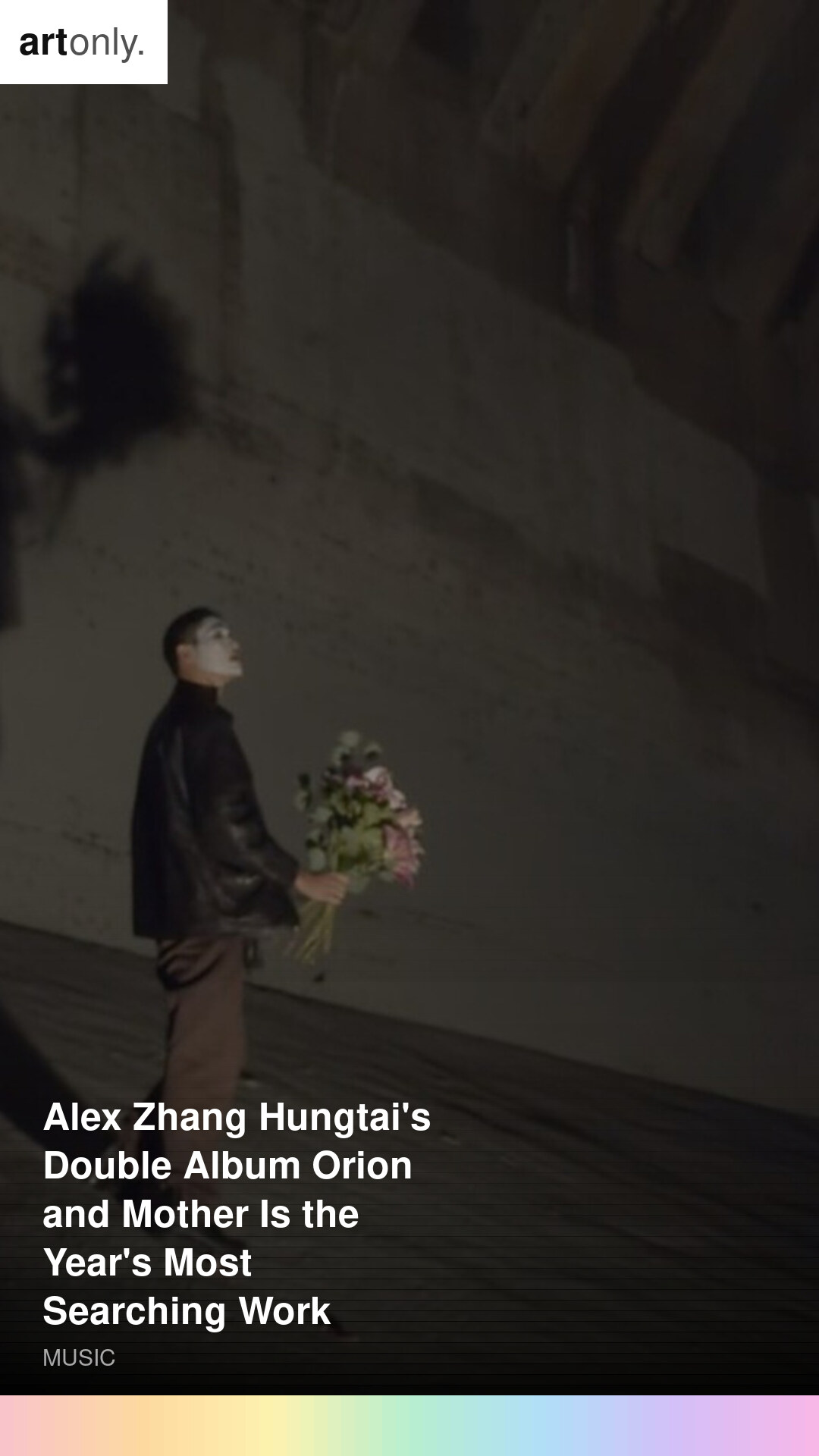
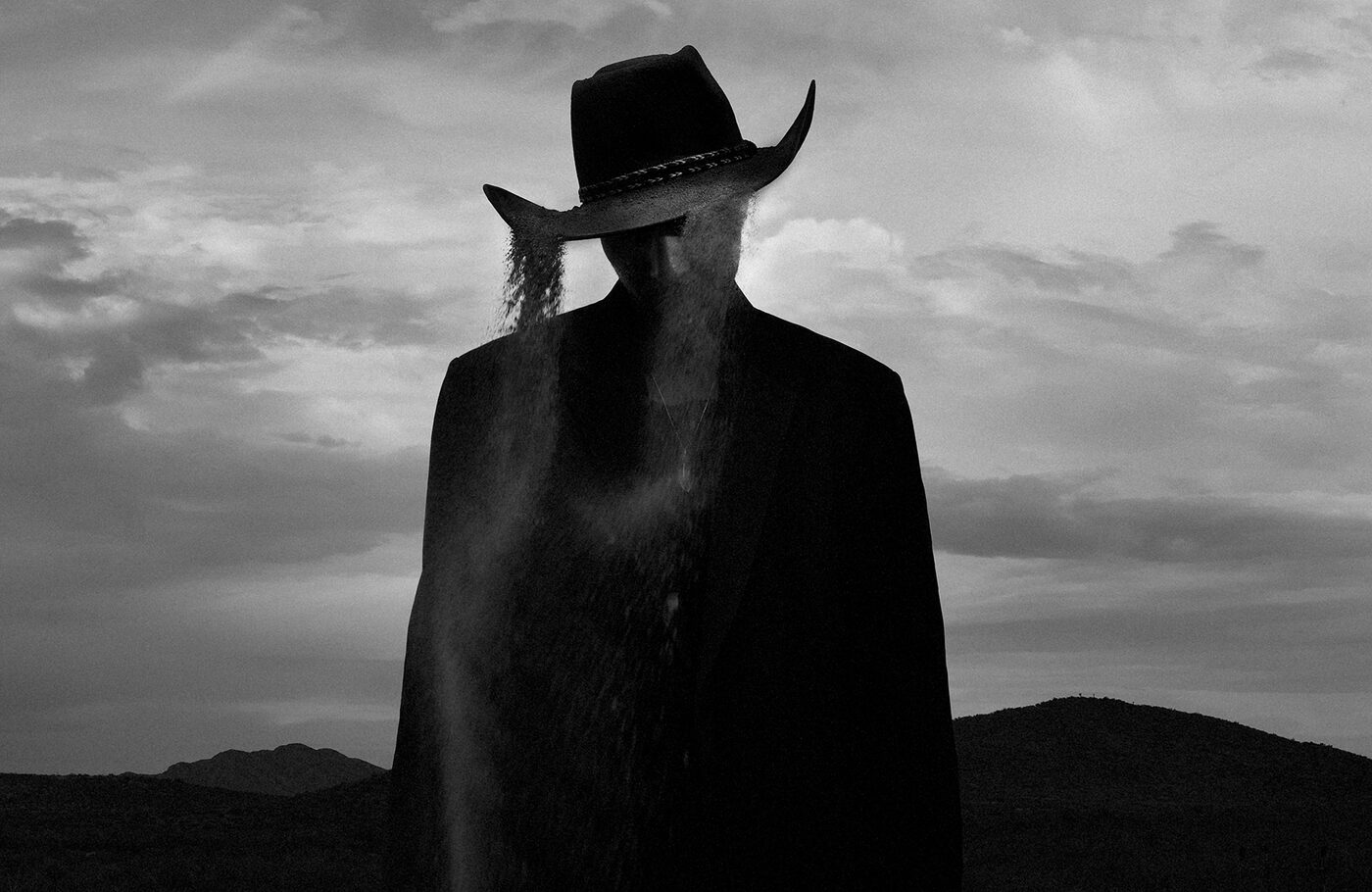
Alex Zhang Hungtai has been making music under various names and configurations for more than a decade, but his project has always been essentially the same: an investigation into what sound can hold when the person making it is willing to live inside the uncertainty of the process rather than directing it from a safe distance. As Dirty Beaches, the name under which he released "Badlands" and "Drifters/Love Is the Devil" in the early part of this decade, he built a reputation on records that felt like transmissions from an altered state. Rockabilly filtered through noise, personal mythology rendered in distorted guitar, the figure of the outsider as compositional principle. When he ended that project in 2014 and began releasing music under his own name, something shifted. The persona dissolved. The investigation remained.
"Orion/Mother" is his second release of 2026 and his most formally ambitious to date: a double album, each half running as a distinct but related record, connected by the same material circumstances. Zhang Hungtai has described the project as emerging from two weeks of full days in a New York rehearsal space during winter, a period he has called one of intense personal transition. The sessions involved some of New York's finest improvisers, whose home recordings he later sampled and composed on top of, using trumpet as the conceptual narrator throughout. The result is an album about the unconscious and about what surfaces when a person is genuinely inside a transformative experience rather than retrospectively organizing one.
The American Dreams Records context provides the ideal frame. The label, which has spent years building a catalog of experimental and avant-garde American music with a commitment that outpaces market logic, does not ask its artists to resolve what they are doing into legible categories. It provides infrastructure for artists working at the edge of genre, which is exactly where Zhang Hungtai has always operated most productively.
Two Sides, Two Kinds of Distance
The double album format is not a novelty here. The two halves make distinct emotional claims. "Orion" works outward: more open spatially, influenced by the improvisers whose recordings form its structural material, concerned with a quality of expansiveness that the record's title suggests without fully explaining. The trumpet moves through these tracks as a presence rather than a lead instrument, sometimes disappearing into the texture entirely, sometimes emerging as the clearest element in the mix.
"Mother" works inward. The material here is more intimate, more personal in the way that the word "mother" carries weight in any language: origin, foundation, the prior relationship that conditions everything that follows. Zhang Hungtai has spoken about how the period that generated this music was one of reckoning with the past through improvised present-tense composition. That process is audible in "Mother." There is a quality of raw material that has not been fully domesticated, which does not mean unfinished. It means the work has chosen to preserve the texture of its own making rather than smooth it away in the interest of a cleaner product.
The trumpet's role as what Zhang Hungtai calls the "grounding force" becomes clearest on "Mother." Here it functions almost as a voice that is not quite speaking, using the logic of improvisation to respond to material that carries a charge prepared composition could not address. Trumpet improvisation has its own traditions of emotional directness, its own vocabulary for navigating material that resists resolution. Zhang Hungtai brings those traditions to bear on experiences that are genuinely his own without making the music about confessional disclosure. The instrument mediates. The music arrives.
A Taiwanese-Canadian Artist in New York's Improvised Music Scene
Zhang Hungtai was born in Taiwan and raised in Canada, and his work has always carried a multiple-inheritance quality: a person formed by places and languages that do not resolve into a single coherent identity. As Dirty Beaches, this manifested as the figure of the drifter, the person who belongs fully nowhere and observes acutely from the margin. Under his own name, the same condition is handled differently, not as persona but as the actual texture of how he thinks and what he makes.
The New York improvisers whose recordings form the basis of "Orion/Mother" bring their own traditions into the work: American jazz, avant-garde performance practice, the specific community of musicians who have sustained a particular vision of what improvised music can be for generations. Zhang Hungtai's role as an outside composer working on top of the collaborators' recordings is unusual. It creates a particular kind of intimacy in the finished work: the improvisers are present but processed, heard through the sensibility of someone who thinks in different cultural materials. This is not fusion in any conventional sense. It is closer to what photographers do when they are interested in what a subject reveals about something beyond itself. The recordings become a lens, and the compositions that emerge on top of them are the result of that looking.
The Meaning of This Much Music
That Zhang Hungtai releases a double album as his second project of 2026 is itself a statement. At a moment when the dominant logic of music distribution pushes artists toward singles and short-form content designed for algorithmic recommendation, a double album says something about the artist's relationship to form. It says: this much material belongs together, and it will not be broken into pieces for convenience.
"Orion/Mother" earns the format. Neither disc wastes its position or overstays its welcome. The two together create something that neither alone could achieve: a record of genuine transition, of someone moving through a period of difficulty and change and making music that does not organize that experience after the fact but holds it in real time. This is what improvisation is for. This is what Zhang Hungtai has always understood: the best art does not present a finished version of experience. It lets you feel the experience in the making.