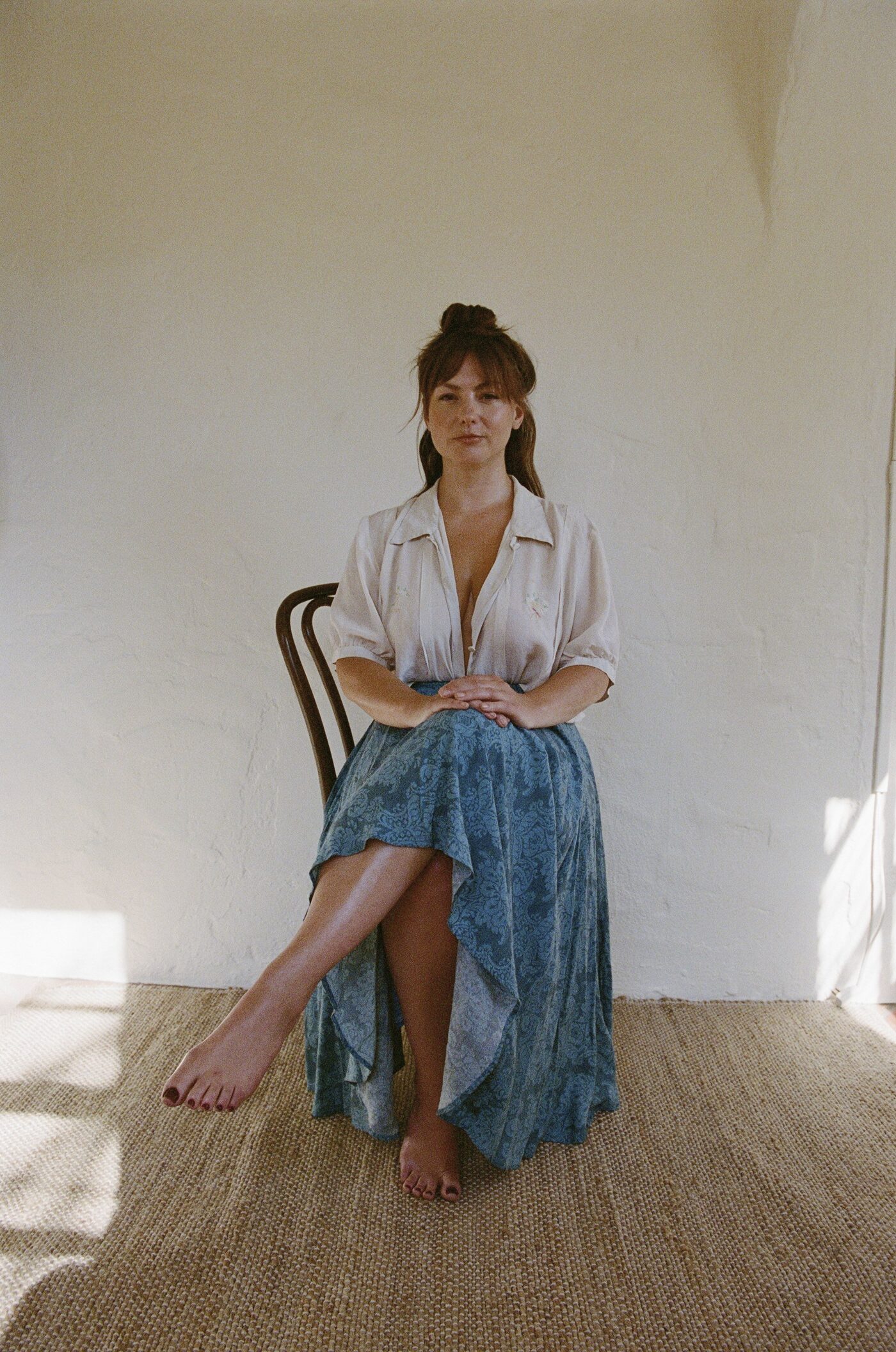
Three weeks after her mother's funeral, Angel Olsen walked into Jonathan Wilson's Fivestar Studios in Topanga, California and started recording what would become Big Time, her fifth studio album. She had also just come out to her parents, and introduced them to her partner, before losing both of them within weeks of each other. Three days after she came out, her father died. His funeral was where her partner first met her family. Her mother followed weeks later, a stay in the ER collapsing into hospice and then a second funeral in close succession. The album that emerged from those months did not become a grief record in any obvious sense. It became something harder to categorize and more useful: a record about what it feels like to love someone and lose them and carry both things at the same time.
The Country That Was Already There
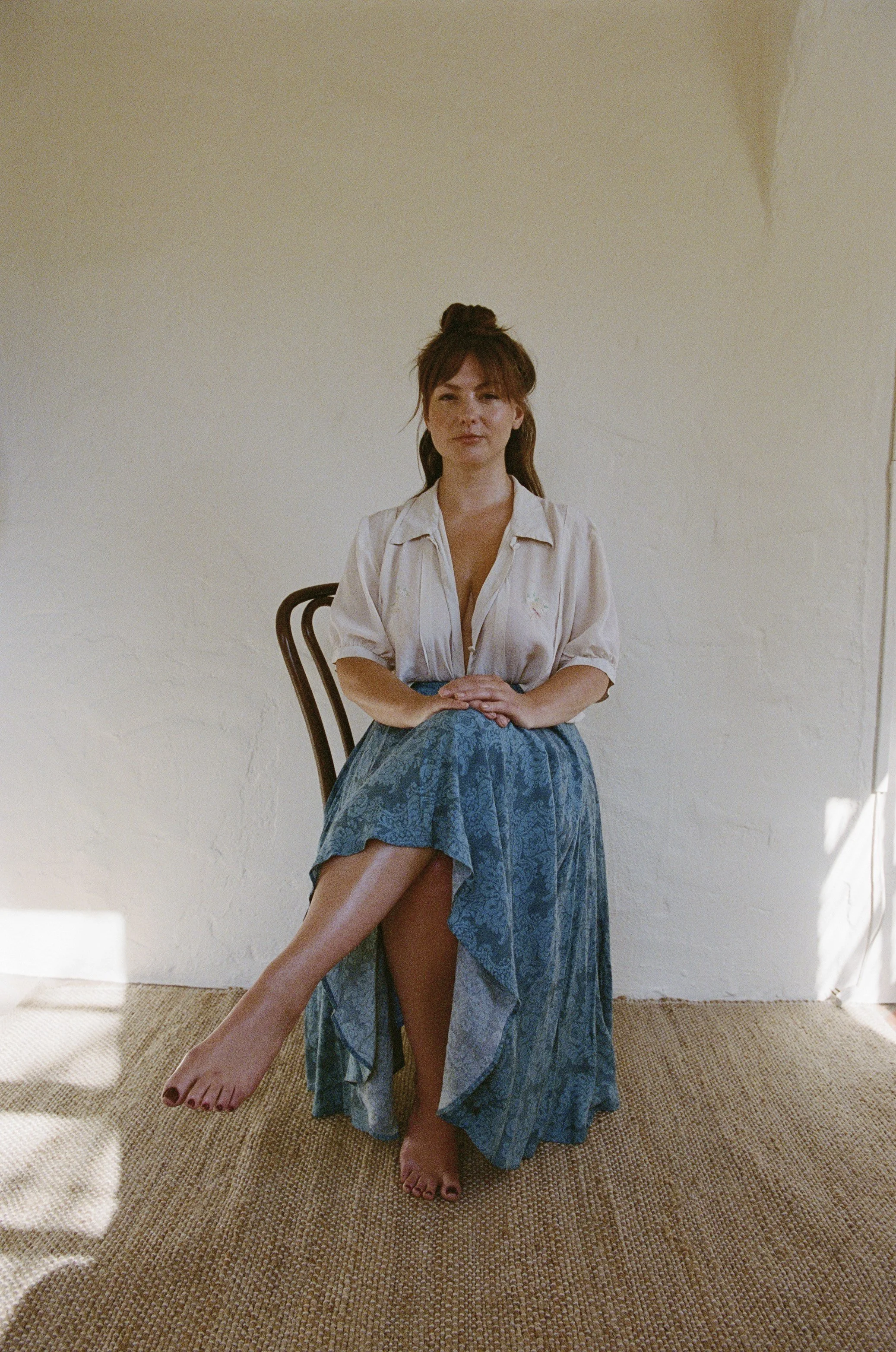
Big Time arrived on June 3, 2022, through Jagjaguwar, and critics scrambled to place it in a lineage. The references that kept surfacing were Dusty Springfield's Dusty in Memphis from 1969, Tammy Wynette, Lucinda Williams, Shelby Lynne. Those comparisons are not wrong. Olsen uses slide guitar, horn sections, string arrangements. The production is open and warm in ways that her earlier records rarely were. But calling this a country album sells short what she was actually doing. She was not borrowing a genre. She was finding a sonic space that matched what she needed to say, and that space happened to have roots in American country and soul.
The songwriting on Big Time does not lean on metaphor to avoid its subject. The title track opens onto something plainly felt. All the Good Times, which preceded the album as a single, is a lament with nothing hidden in it. What holds these songs together is not a concept but a voice that has learned, over years of making records, how to carry weight without buckling under it.
Recording in Topanga

Jonathan Wilson, who produced the album alongside Olsen, is known for the warmth he brought to records by Father John Misty and Dawes. His studio in Topanga, a canyon community north of Los Angeles, suited the material. The sessions were not rushed, but the circumstances that preceded them were acute. There is a particular kind of focus that arrives after catastrophic personal loss, a narrowing of attention toward what is actually true. That quality runs through the album in ways that are not simply lyrical. The arrangements breathe. Nothing sounds padded.
Olsen has been open about the fact that making the album was how she processed what had happened. That is not unusual for songwriters. What is unusual is the degree to which the finished record holds the complexity of those circumstances without simplifying them into sentiment.
Before the Loss
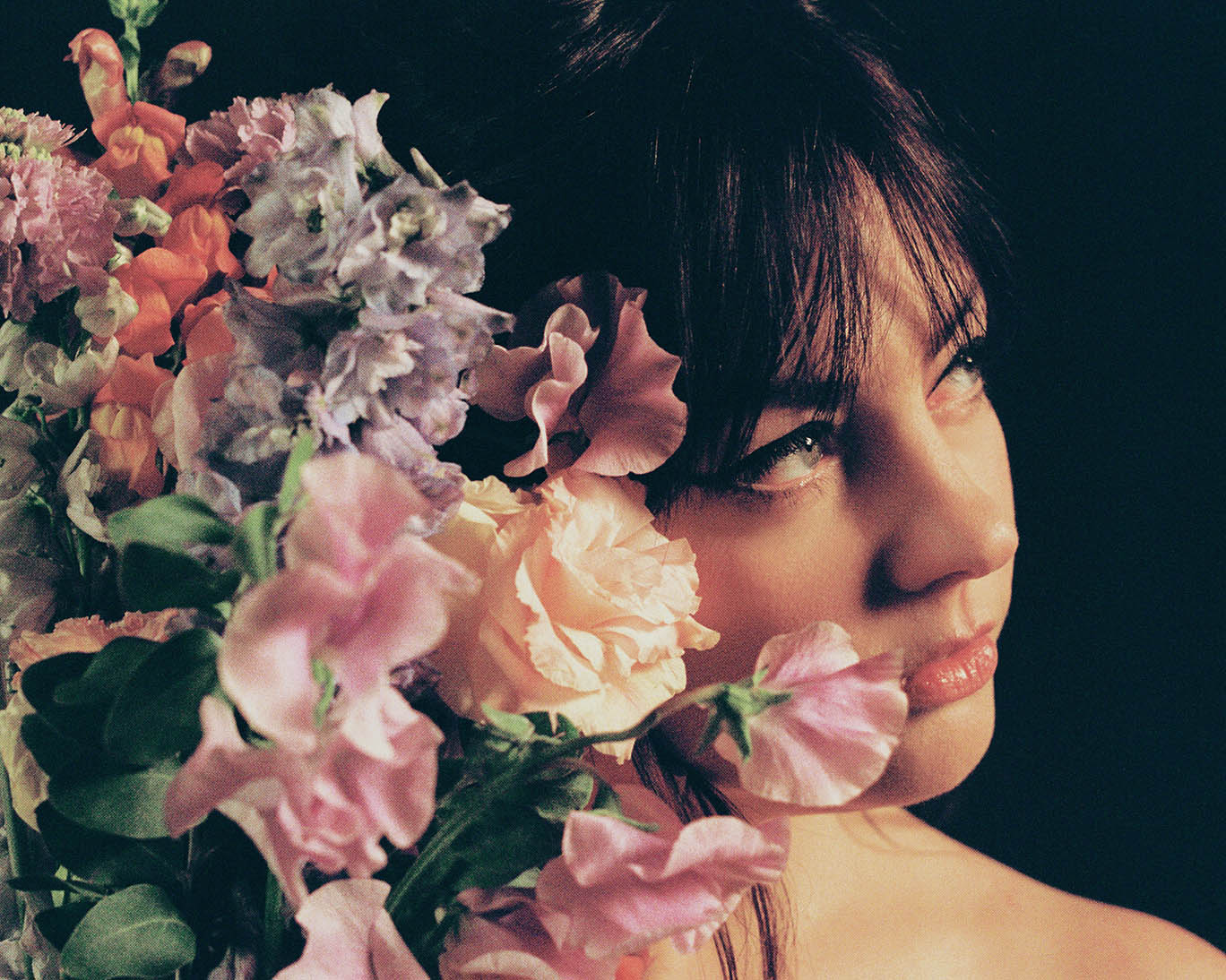
All Mirrors, released in October 2019, was the record that preceded Big Time, and it pointed in a different direction entirely. Orchestral, maximalist, produced for a certain kind of scale, it was an album that felt outward facing in the way that Big Time is inward. Both records are ambitious. But where All Mirrors reached toward grandeur, Big Time settles into something more private and more durable.
The trajectory of Olsen's catalog makes more sense from where we are now than it did in real time. Her debut, Half Way Home, came out in 2012 on Bathetic Records, intimate and close. Burn Your Fire for No Witness, her first full band record, arrived in 2014 through Jagjaguwar and introduced her to a wider audience. My Woman followed in 2016, pushing further into full band arrangements while keeping the songwriting anchored in the personal. Each record since has pushed against the previous one, not in a manner that favors fashion over feeling but in a way that is genuinely driven by what the work requires.
The Voice Itself
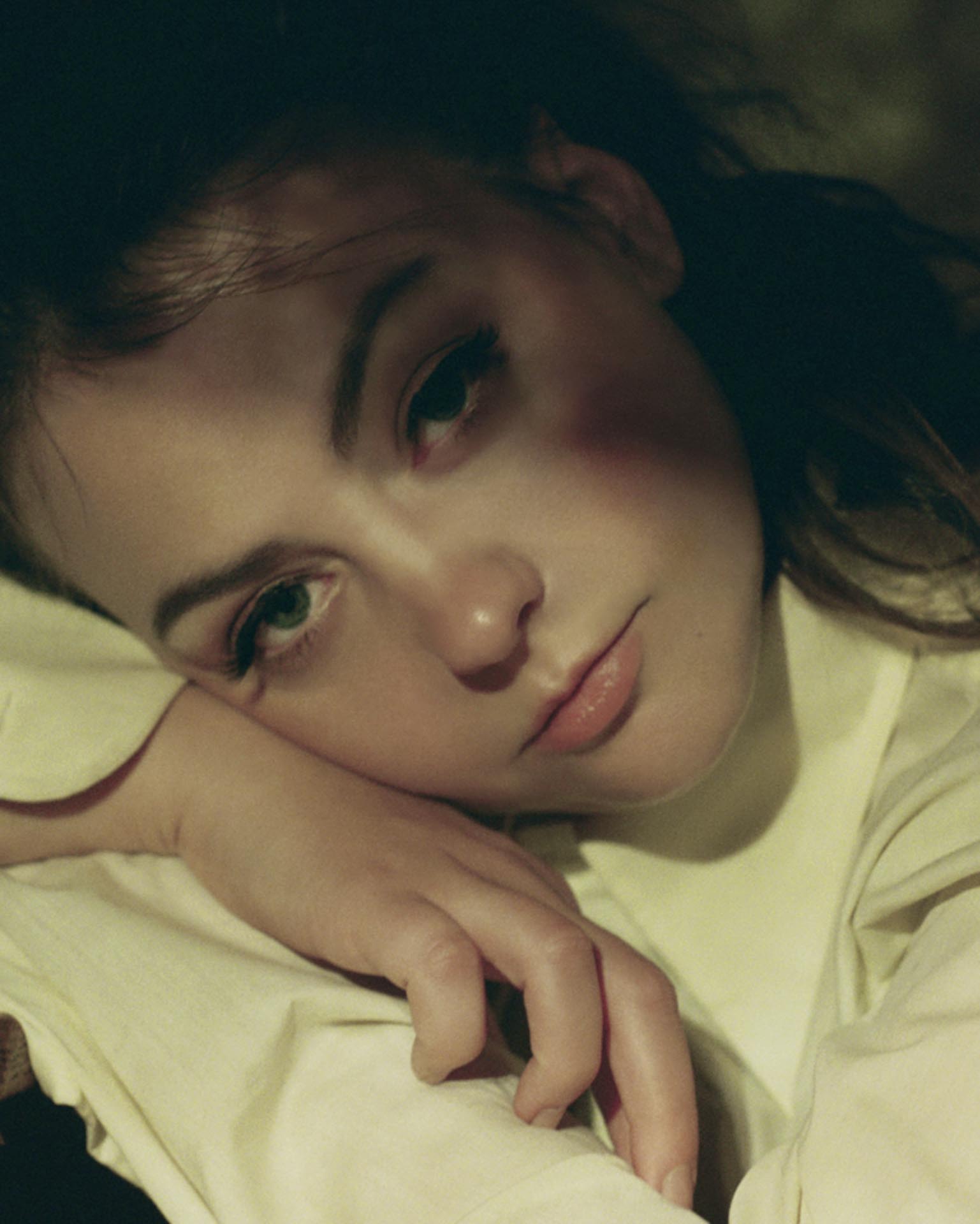
There is a tendency in coverage of Olsen to treat her as primarily an emotional artist, as though what she does is mainly a matter of feeling rather than craft. This undersells the precision of her songwriting. She has spent years working out how to put specific truths inside specific forms, and the country soul architecture of Big Time is not incidental. Country music, at its functional best, is a form built for expressing things that resist euphemism. Loss, love, time. Olsen used that architecture because it was adequate to her purpose.
Her voice on this record is also worth attending to separately from the songs. She has always had a wide range, but here she uses it with more restraint than on All Mirrors, where the orchestral arrangements often pushed her toward the dramatic ceiling of what she could do. On Big Time, she stays in a middle register more often, and the effect is of someone talking to you directly rather than performing for you.
That restraint is a decision, not a limitation. The eleven tracks on Big Time move through different tempos and textures, from the warm swell of the title track to the spare, direct quality of the album's quieter moments, and through all of it Olsen resists the impulse to announce. The singing matches the writing. Both trust the listener to close the remaining distance.
It is also worth noting how the record sounds across repeated listening. Albums built around acute emotional events sometimes lose their force once the biographical context becomes less fresh. Big Time does not. The craft underneath the feeling is strong enough to hold the songs independent of what made them. That is the test, and this record passes it.
Who She Pulls Toward

In May 2021, before Big Time arrived, Olsen released Like I Used To with Sharon Van Etten, produced by John Congleton. The song is a harmony built for two voices around a shared register of memory and distance. It was not incidental to what came after. Van Etten and Olsen occupy adjacent spaces in independent music, both of them artists who have moved through grief and reinvention in public, both of them capable of the kind of directness that sounds simple until you try to replicate it.
Olsen has also appeared alongside Mark Ronson, contributing to his work in a context that demonstrated she is not precious about where her voice lands. She is a musician who takes seriously the music around her, not only her own.
What Cosmic Waves Confirms

In December 2024, Olsen released Cosmic Waves Volume 1 through Jagjaguwar, a project that combined original songs from a curated set of artists with her own cover versions of their work. It was a lateral move, curatorial rather than confessional, and it confirmed something about where she stands now in relation to the music around her. She is an arbiter as much as a practitioner. The artists she pulled into Cosmic Waves include Poppy Jean Crawford, Coffin Prick, and Maxim Ludwig, names that have not yet reached the audience size Olsen commands. Her willingness to use her platform that way says something about how she understands her own position in the larger conversation.
The curatorial instinct on display in Cosmic Waves is the same instinct that made Big Time coherent. Both projects required knowing what to put in and what to leave out, and in both cases the choices are specific rather than safe. Olsen did not pull recognizable names into Cosmic Waves. She pulled artists whose work she found compelling, and she covered their songs with the same attentiveness she brings to her own. That is a more generous and more demanding form of collaboration than the kind that trades on shared celebrity.
Big Time remains the record that will define this period of her work, not because of what it cost to make, but because of what it actually is. It is one of the more accomplished American albums of the early 2020s, generous in its arrangements, precise in its language, and built to last longer than the circumstances that created it.