The Limit of the Frame
Most performance operates within frames, the stage, the gallery, the concert hall, that establish the terms of the contract between performer and audience. The frame says: here is the performance, there is where you watch it from, these are the rules of the encounter. What happens inside the frame is art. What happens outside is life. The frame keeps them separate.
Arca, Alejandra Ghersi Rodriguez, has been working on the dissolution of this frame for years, and the live performances and gallery works that have been appearing with increasing frequency since around 2021 represent the most complete dissolution so far. What Arca does in performance space is difficult to describe and almost impossible to prepare for. It's not a concert. It's not a performance in the usual sense. It is something closer to a field of affect that the audience enters and that acts on them before they've decided how to respond.
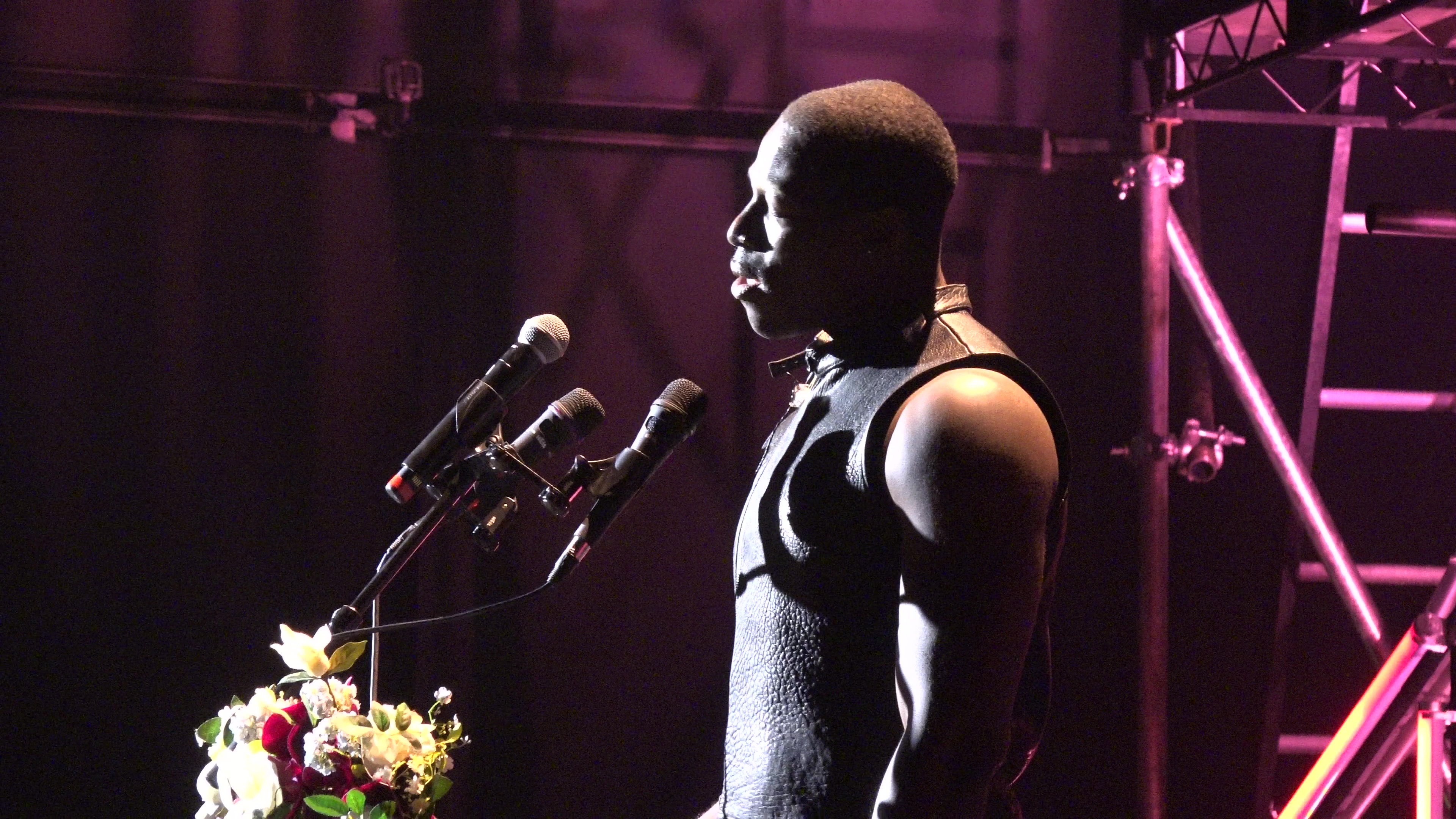
I attended a performance in 2023 that I am going to describe now and immediately acknowledge that the description will be inadequate. It was in a large gallery space. The sound system was treated as an architectural element, the sound moving through the space in ways that meant different positions in the room produced genuinely different experiences. Arca was present, transformed by prosthetics and makeup into something that existed at the edge of human legibility. The performance moved through registers, violent, tender, overwhelming, intimate, without warning and without the transitions signaling what was coming.
Mutant;Destrudo at the Park Avenue Armory
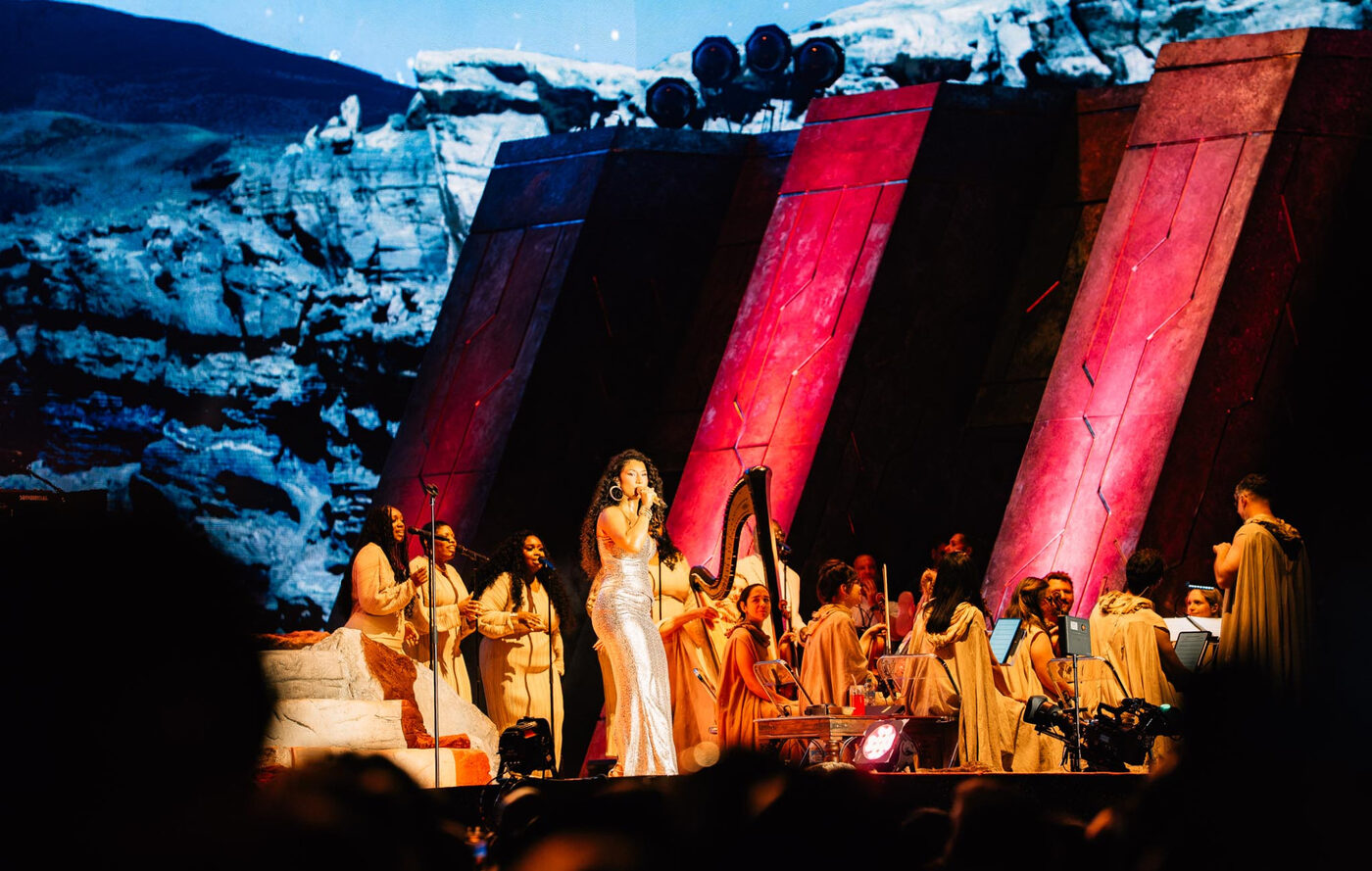
The most ambitious of the 2023 performances was Mutant;Destrudo at the Park Avenue Armory in New York, running October 11 through 15. This was not a one-night event. It was a durational installation with repeated performances across five days, in the Wade Thompson Drill Hall, the Armory's vast, column-free main space that swallows ordinary concert production and demands something more.
The technical infrastructure was considerable. Arca worked with 4DSOUND technology, a spatial audio system developed by Salvador Breed and Poul Holleman that distributes sound through arrays of speakers positioned throughout the space rather than projecting from a fixed front. This means listeners at different positions in the room receive genuinely different spatial mixes. The music does not come from a direction. It comes from everywhere, or from nowhere, or from inside the body. The effect is disorienting in the productive sense, it removes a habitual reference point and leaves the listener without the usual compass.
Daito Manabe and Rhizomatiks contributed custom audiovisual technology. The production was general admission, two hours with no intermission, audience standing throughout. These details matter. A seated audience maintains a posture of spectatorship. A standing audience, standing for two continuous hours in a field of spatial sound, occupies a different relationship to what is happening around them.
The performance was directed by Arca herself. The stated intent was to create space for the deconstruction of preconception, merging creative practice across disciplines and reexamining the ritual of the concert as a moment of heightened connection. This framing is useful but insufficient. What the performance actually did was more bodily and less conceptual than any framing captures.
What the Body Knows
Audiences at Arca performances experience physical responses that precede and sometimes overwhelm intellectual responses. The sound at certain volumes and frequencies does things to the body. The visual elements, Arca's physical presence, the transformation of the human form, register in the nervous system before they register in the mind. This is not incidental. It is the point.
Alejandra Ghersi has described her work as being about the body, about trans embodiment specifically, about the experience of inhabiting a body that does not conform to the categories available for it, about the violence and the freedom of that non-conformity. The performances make this description viscerally legible. You are watching someone who has decided to take their body seriously as material, as territory, as something that can be pushed to limits and transformed beyond expectation.
The music is extraordinary on its own terms, Arca has been making some of the most formally adventurous electronic music of the past decade, but the music is only one element of the larger performance work. The visual, the spatial, the physical presence: all of it contributes to an experience that the music alone can't produce.
Being in the room matters. This is one of those performances where documentation (video, recording) captures nothing essential. The piece is the experience of the piece, and the experience requires presence.
The Angels Exhibition
Parallel to the performance work, 2023 also saw the Angels exhibition at Cordova Gallery in Barcelona, where Ghersi is based. This was her first institutional showing of pictorial work, painting and drawing that extends the visual logic of her music into static objects. The Angels series comprises works made between 2019 and 2024, combining traditional techniques with materials like makeup, glitter, pyrotechnic residue, latex, and melted plastic.
The materials are not casual choices. Pyrotechnic residue records an event. Melted plastic records a transformation. Makeup is the specific language of gender performance and surface transformation that runs through all of Ghersi's work. The paintings are, in this sense, compressed performances, objects that carry evidence of processes rather than simply representing subjects.
The exhibition ran through April of 2023, giving the work a public life outside the nighttime temporality of performance. It confirmed what the live work had long suggested: that Ghersi operates simultaneously across music, performance, and visual art without subordinating any of them to the others.
What Performance Is Allowed to Be
The question in my headline is not rhetorical. I mean it literally: the encounter with Arca's work changes what I understand performance to be permitted to do. The emotional extremity, the physical intensity, the dissolution of the frame that keeps art and experience safely separated, these are things I didn't know I was waiting for permission to encounter.
The permission exists. Arca has been granting it in rooms around the world for years.
I don't know how to talk about it without experiencing it. I recommend the experience.
The aftermath of a performance like this is strange. You leave the space still slightly altered, still carrying something of what happened in your nervous system, still in the process of integrating an experience that exceeded the usual categories of 'show' or 'concert' or 'event.' The integration takes time. Days later, fragments of it keep returning, not memories of specific moments but the quality of the experience, the specific register it operated in.
The Spatial Sound Argument
One of the most consequential technical decisions in Mutant;Destrudo was the commitment to 4DSOUND. Most electronic music performance, even ambitious electronic music performance, projects sound from a fixed point or a fixed array. The listener is positioned in relation to the sound. The sound is over there.
4DSOUND removes that fixed point. Processed through dozens of speakers positioned at floor level, at mid-height, and overhead, the audio field becomes volumetric. The architecture of the listening experience changes. This has aesthetic consequences, sounds can approach from behind, can circle the body, can seem to originate within the chest cavity, and it has psychological ones. The standard cognitive shortcuts that allow us to locate sound in space, to orient ourselves relative to it, stop working reliably. The result is not disorientation in the anxious sense but something more like a suspension of the usual spatial habits.
This matters for what Arca is doing because spatial habits are connected to social habits. How we position ourselves in relation to sound is connected to how we position ourselves in relation to experience. Removing the stable reference point of the front-facing stage, the speaker stack, the directed audience gaze, opens up room for something else to happen. At the Park Avenue Armory, something else happened.
This might be the most accurate description of what Arca does: she operates in a register that most performance doesn't access, that requires integration after the fact, that lives in the body for a while before it becomes memory. I'll be thinking about what I experienced in that room for a long time.