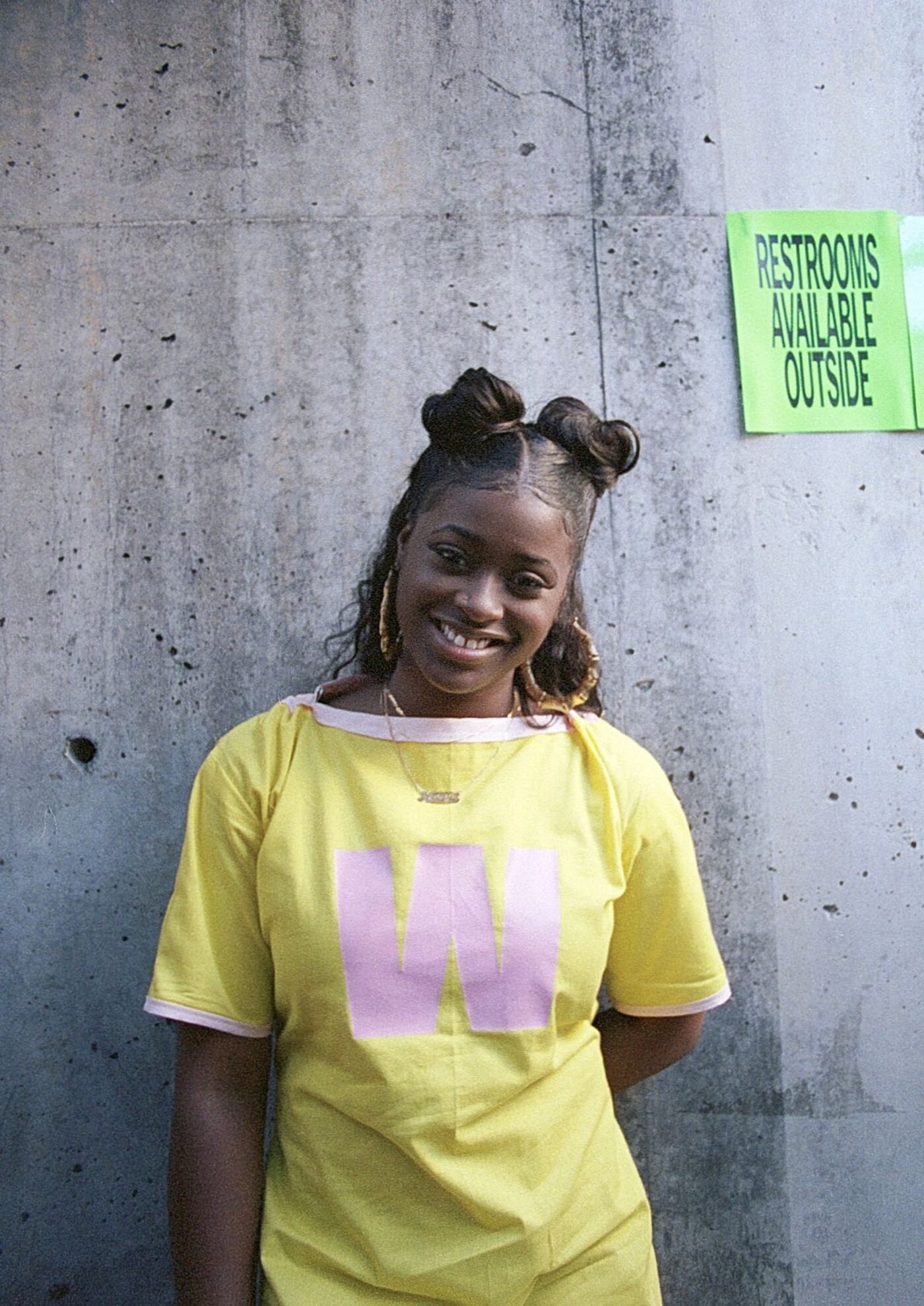
Some people arrive fully formed. And then there are people like Dani Roche, who arrive, and then keep arriving. Who are always, visibly, in the process of becoming more of themselves. More capable. More considered. More certain of what they want to build and why it matters. Watching her over the years is watching someone who never coasts, never performs stillness, never pretends that the work is done.
She is one of the most powerful, most gentle, most genuinely remarkable people in this industry. She just happens to also have one of the best dogs on the internet.
She Started Before It Was a Blueprint

Dani, @daniesque, launched Kastor & Pollux in 2011. Not as a side project. Not as a pivot. As a decision, made deliberately, to build something real in a space that didn't yet have a roadmap for what she was trying to do. She was simultaneously working full-time at MTV, then at The Creator Class, teaching herself how to run a business, how to direct creative, how to turn a digital presence into something with actual structural weight. She went fully independent in 2015, terrified, by her own account, and completely undeterred by it.
What emerged over the next decade is extraordinary. Kastor & Pollux became one of the most respected independent creative studios in Canada. The client list reads like a brief history of culture itself: Chanel, Gucci, Netflix, Google, Apple, Lululemon, Converse, Fujifilm, Wealthsimple, Republic Records. Forbes named her to their 30 Under 30 in Marketing & Advertising in 2019. Marketing Magazine called her a "leader in Canadian marketing." Applied Arts called her a "design industry disruptor." She became a Faculty Advisor at York/Sheridan's design program. She co-founded SCHOOL by K&P, an educational platform built specifically to hand people the knowledge the industry habitually withholds.
And she held in-person events about filing your taxes as a self-employed creative. Real ones. Unglamorous, specific, this-is-what-nobody-told-me ones. Because she understood that genuine power isn't just having the tools, it's choosing to pass them forward.
The Responsibility of the Platform

There is a generation of creators who understood that a following is a responsibility. Not a metric. Not a leverage point. A room full of people who showed up because they trusted you to give them something real. Dani has always operated like she understands this in her bones. She doesn't perform expertise. She has it, and she shares it, whether that's the mechanics of running an independent business, the philosophy of building a brand with actual values, or the quieter, more personal work of figuring out what success actually means when you strip away the version the industry sells you.
"I started to feel successful when I started to actually enjoy the work I was doing," she said once. Fifteen words that took years to earn. She operated under a belief system built around growth and scalability for so long that she destroyed friendships, compromised her health, ran herself into the ground, and then she stopped, reframed everything, and started building something she could actually love. That pivot took courage. The kind that doesn't photograph well and doesn't trend. The kind that is just quietly, completely real.
She Talks About the Things Nobody Talks About
This is where Dani becomes something rarer than a great creative director. She talks about the things people with a platform usually avoid, the uncomfortable ones, the ones without easy solutions, the ones that don't make you look good so much as make you look honest. She has spoken openly about the financial realities of incarceration in Canada. Not as a political performance. As someone who looked at something unjust and named it plainly, without hesitation.
The position is simple: calls should be free. You should be able to contact your loved ones, your family, your lawyer, your support system, without a corporation and a government turning your desperation into a revenue stream. Full stop. There is no version of a just society where that is a luxury.
Here is the reality she was pointing at: in Canada, when someone is held in custody, often just on remand, not even convicted, simply waiting for bail or trial, their families bear a financial punishment the system never names as such. For years in Ontario, Bell Canada operated the jail phone system under a contract that charged $1 per minute plus a $2.50 connection fee for long-distance calls. A 20-minute call could cost $30. A mother in Montreal racked up a $6,072 phone bill in three months because her son was being held at an Ottawa detention centre. He had not been convicted of anything. His charges were eventually dropped. The bill remained. She was 65 years old and put herself on a payment plan of $50 a month, projected to last eleven years, until she is 76.
Bell made over $64 million in gross revenue from those calls between 2013 and 2021. The Ontario government contractually required a commission of no less than 25% of gross revenue. Fifteen thousand calls a day. Families paying hundreds, sometimes thousands of dollars a month just to speak to someone who had not yet been found guilty of anything. Because when someone you love is in solitary confinement or sitting in a cell waiting for a court date, you pay whatever they ask. You don't negotiate. You just pay.
More than 70% of people in Ontario's correctional facilities at any given time are on remand. Not sentenced. Waiting. And the system charged their families as though proximity to incarceration were itself a crime that needed to be monetised.
Advocates, lawyers, and researchers have said it plainly for years: family contact reduces reoffending, supports mental health, keeps people tethered to their lives on the outside. The phone line is a lifeline. And for nearly a decade in Ontario alone, that lifeline ran through a billing system that enriched a telecom and a government off the desperation of people at their absolute lowest. The calls should have always been free. This is not a radical position. It is the only humane one.
This is what Dani talked about. Not because it was a good content strategy. Not because it trended. Because it was true and it was wrong and she has always been the kind of person who says the thing when she knows the room needs to hear it. That is what a platform is for. That is the difference between a creator who has built an audience and one who has earned it. And she has always, from the very beginning, from day one, been the latter.
100,000 Miles, and What It Actually Costs

She flew over 100,000 miles last year. She said so in a post, a paid partnership with American Express, disclosed cleanly, no pretense about it, and the reason it landed the way it did is because it was true. Not true in a branded way. True in the way that a number can make visible everything that was previously invisible: the client trips, the brand productions, the speaking engagements, the creative direction sessions across time zones, the relentlessness of building at this level while remaining a whole person throughout it.
The Amex post is a masterclass in what the golden age of creator partnerships actually looked like. It wasn't that the best ones refused commercial work. It was that they brought so much of themselves to it that the product became almost incidental, context for a story that was already true. The brand didn't make the post. The post was real, and the brand was lucky to be in it. That window is closing. Dani is proof it existed and proof it still can.
Suki, Then and Now

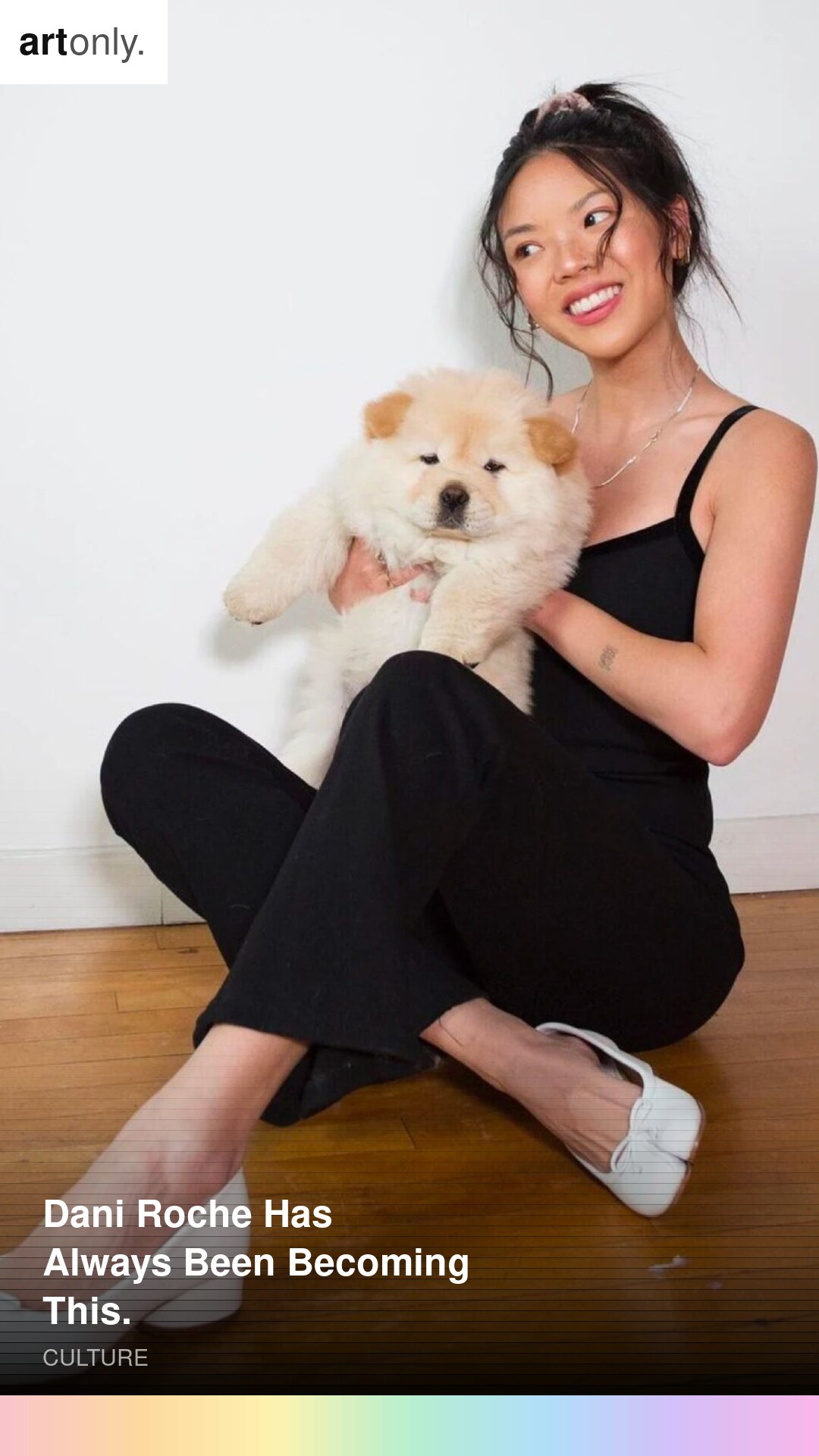
And then there is Cookie Wolf Suki. The Chow Chow who has been in Dani's life since she was a tiny, impossibly fluffy cream-coloured puppy, the kind of dog you see once and cannot forget. That was 2020. The puppy years ran parallel to some of the most formative years of Dani's career. The building years. The years of figuring out what the agency was, what SCHOOL would become, what kind of person she was becoming alongside it all. You watch someone take on that kind of care, for a dog, for a business, for a community of people who look to them, and you start to understand something about who they are that no résumé can convey.
Suki is grown now. Deep amber-gold, fully maned, regal and unhurried in the way only adult Chow Chows can be, the kind of dog that takes up a room not by demanding anything but simply by being completely, magnificently themselves. She inspired an entire brand, @fuzzboyoriginals, co-founded with @laurdiy, which is exactly right, because Dani cannot love something without eventually building around it. Suki grew up. The career grew up. The woman grew up. All of it in parallel, all of it documented without performance, all of it real. That kind of continuity is rarer than any award on any shelf.
What She Is
Dani Roche is not easy to summarize because she contains too many things the industry tends to believe cannot coexist. She is exceptionally powerful and exceptionally gentle. She is one of the most technically accomplished creative directors working today and one of the most openly, undefendedly human people on the internet. She built an agency, a school, a dog brand, a career that crosses continents, and she did all of it while staying recognizably, stubbornly herself. The aesthetic is consistent across fifteen years. The values are consistent. The voice is consistent. She changed and grew and became more, and somehow none of it cost her the thing that made people follow her in the first place.
That is the work. Not the Chanel campaign or the Forbes list or the 100,000 miles. The work is who you are after all of that. And who she is, after all of that, is someone you would want in your corner on the hardest day of your career and the quietest Sunday afternoon of your life.
She is superhuman in the specific way that only deeply, deliberately human people ever are.
Follow her at @daniesque. See everything she has built at daniroche.com. She is one of the originals. And she is still becoming.