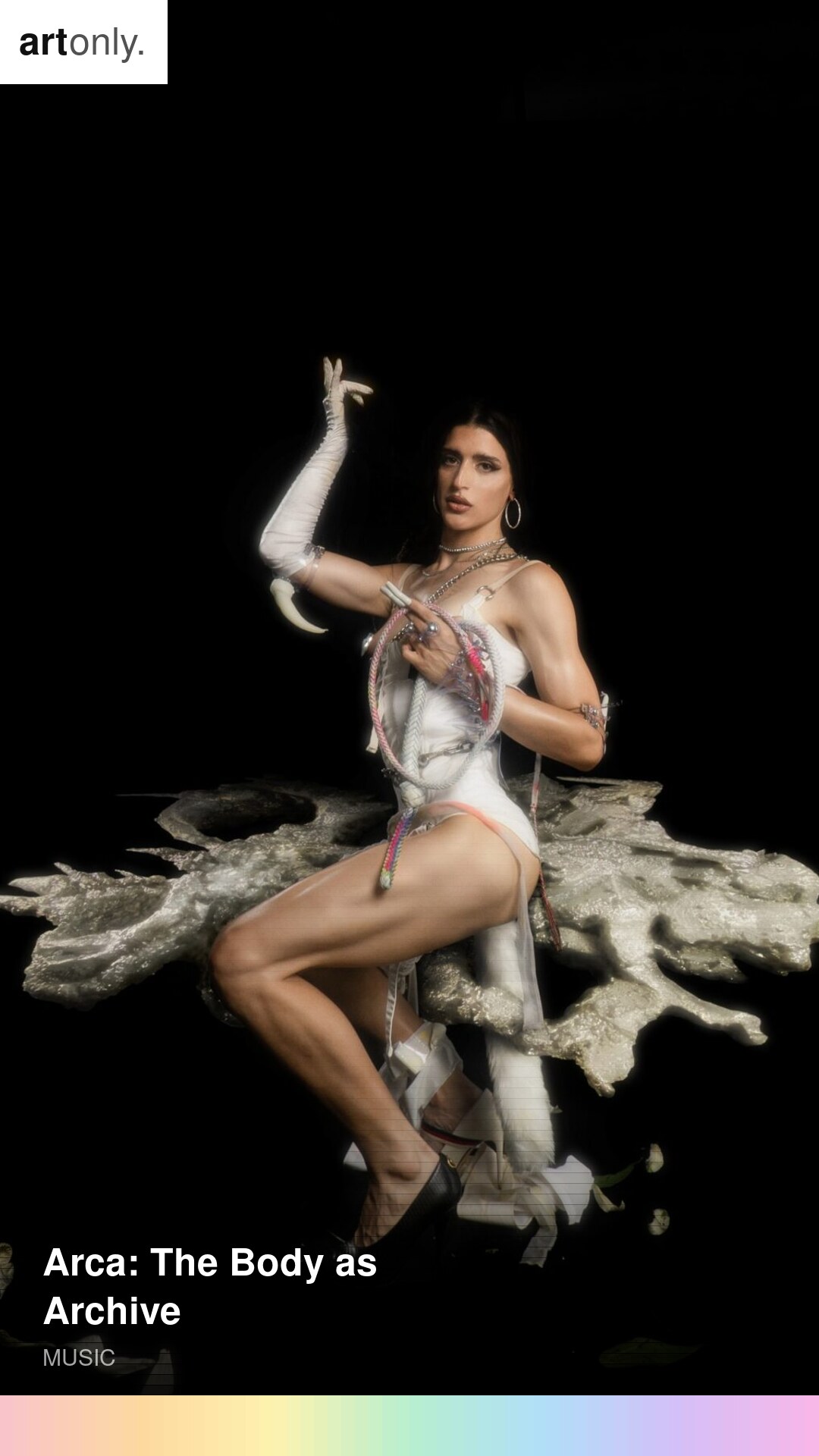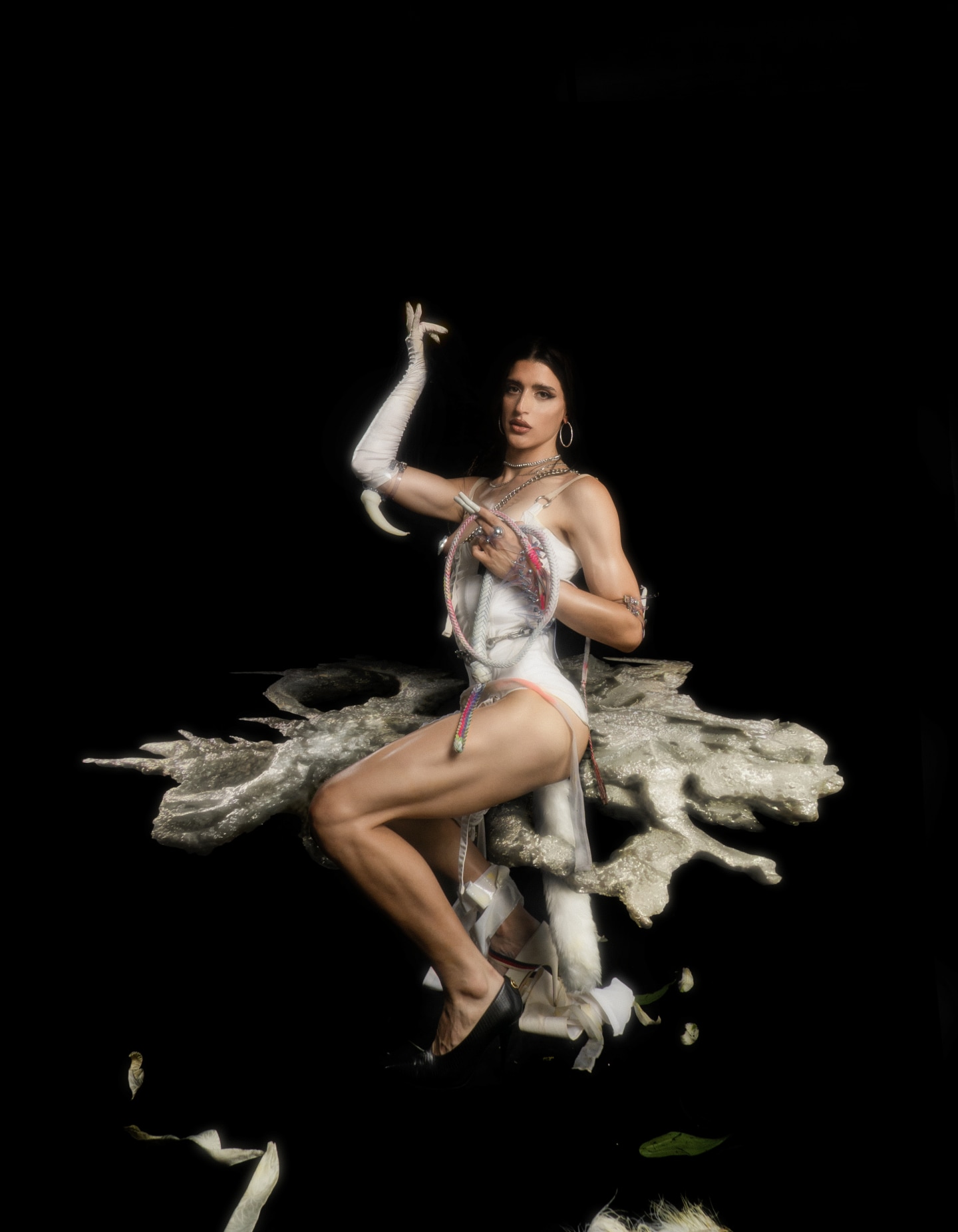
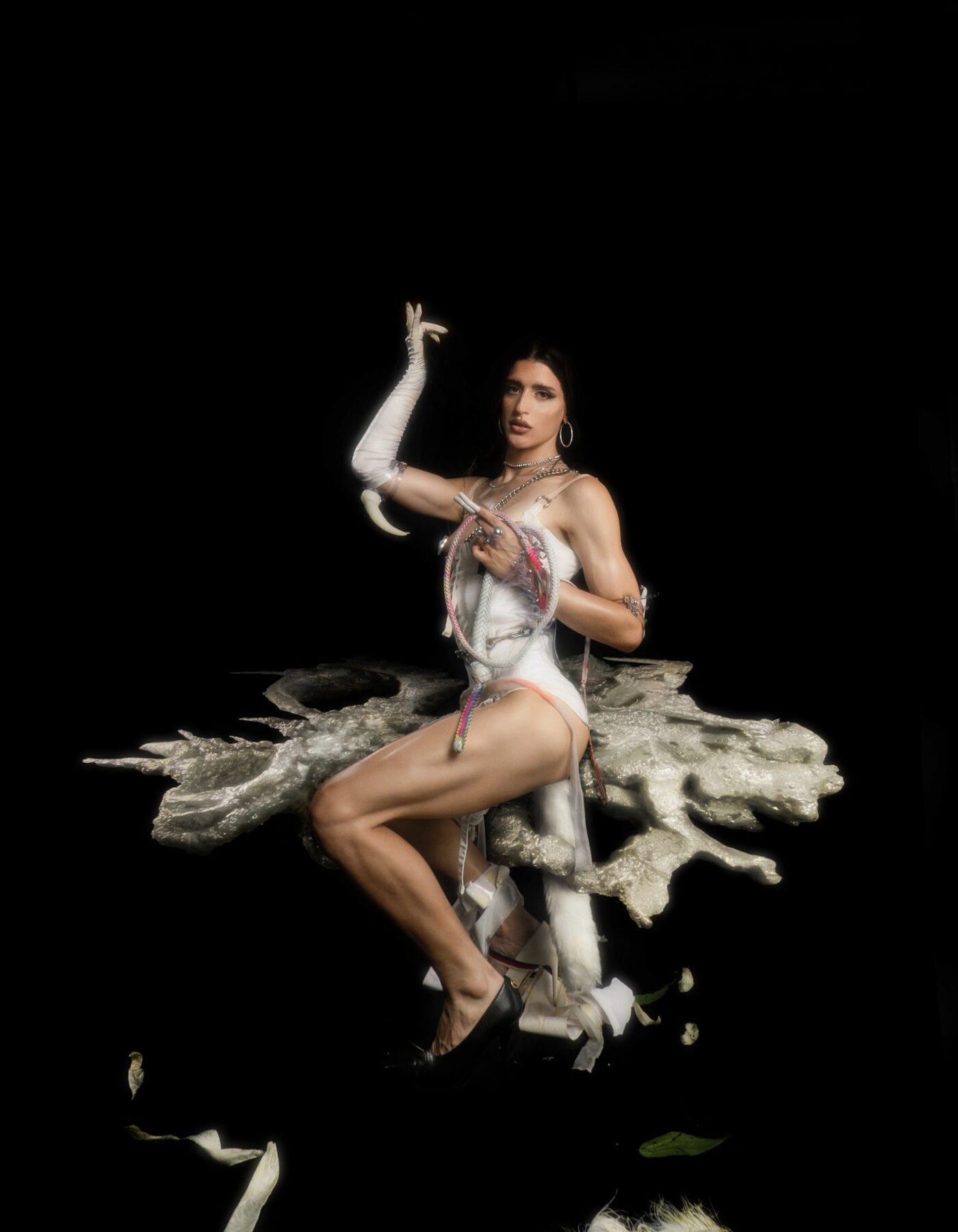
Arca is Alejandra Ghersi, a Venezuelan-born artist working at the intersection of music production, performance, and visual art. Her CV includes production credits for Björk, Kanye West, and FKA twigs, collaborations that demonstrate a range most producers never approach. But Arca's solo work is where the full scope of her vision becomes apparent: records that treat the album format as an open question rather than a container for songs.
A Discography That Doesn't Sit Still
From the brutal rhythmic experiments of Xen through the operatic sprawl of the KiCk series, Arca has built one of the most formally adventurous bodies of work in contemporary music. Each release feels like a different artist trying a different set of rules, except that Ghersi's fingerprints are unmistakable throughout. There is something in the texture of her production, a quality of material that seems to be both building and collapsing simultaneously, that no one else has quite replicated.
Xen, released in 2014, named after the way Ghersi signed off in her diary entries, established her as a producer whose influence exceeded her profile. The following records, Mutant in 2015, then the self-titled Arca in 2017, moved steadily toward more exposed vocal work and a broader range of emotional register. The KiCk quintet, released between 2020 and 2021, was the culmination of that trajectory: five albums released across a single year, each one pursuing a different sonic logic. KiCk i draws from reggaeton and IDM with collaborators including Björk and Shygirl. KicK iii concentrates on heavy club music. The final kiCK iiiii is largely instrumental and includes contributions from Ryuichi Sakamoto. Together they constitute a body of work that has no real precedent in contemporary music, five distinct albums with shared DNA, released almost simultaneously, refusing the conventional model of the album cycle.
The Production Lineage
Ghersi's work as a collaborator predates and runs alongside her solo output. The production credits for Björk's Vulnicura (2015) and Utopia (2017) demonstrate a capacity to serve another artist's vision without subordinating her own aesthetic instincts. Working with FKA twigs on the Ep2 and LP1 recordings established her relationship to the avant-R&B adjacent space that would feed back into her own work. The credits on Kanye West's Yeezus (2013), where she contributed alongside a significant production roster, show a facility with commercial contexts that she has never pursued as an end in itself.
This range is not incidental. It reflects a genuine versatility that most producers in her position, building a reputation for experimental, often abrasive solo work, would not have access to. The commercial credits expand the range of reference. The experimental solo work expands the range of possibility. The interaction between them is productive.
Visual Practice
Arca's visual work is inseparable from the music. She has engaged with artists like Jesse Kanda whose grotesque, morphing digital imagery provides a visual language that matches the music's refusal of stability. Her own performances involve elaborate costume and physical transformation. The cumulative effect is of an artist who treats identity itself as a medium, something that can be shaped, dissolved, and reconfigured in real time.
The paintings in the Angels series, shown at Cordova Gallery in Barcelona in 2023, extend this into static objects. Materials like pyrotechnic residue, melted plastic, and makeup are incorporated into canvases that record transformation rather than simply depicting it. These are not paintings about change. They are objects that carry evidence of change in their physical substance. The distinction matters.
Ghersi's own body functions as the primary archive. Trans embodiment is the explicit subject of much of her stated intention, but the work refuses to be reducible to that subject. The body as territory, as material that can be worked, transformed, pushed to limits and beyond, this is the operative logic, and it extends from the personal to the formal. The music is built from sounds that seem to be in states of transition. The performances stage transformation in real time. The paintings record transformation after the fact. The body is always in the picture, always being renegotiated.
Live Performance as Medium
The 2023 performance Mutant;Destrudo at the Park Avenue Armory in New York represented the most concentrated statement of what Ghersi can do in a large space. The 4DSOUND spatial audio system, developed by Salvador Breed and Poul Holleman and employed for the five-night run, distributed sound through arrays of speakers at floor level, mid-height, and overhead, producing a volumetric acoustic field without a fixed source. Two hours, no intermission, general admission standing. The effect on audiences was reported as physically immediate in ways that purely sonic or purely visual work does not produce.
The Armory's Wade Thompson Drill Hall, roughly 55,000 square feet of column-free interior, is one of the few spaces in the world that can contain an ambition of this scale. The choice of venue was a statement about what kind of art this is: not the concert hall, not the club, not the gallery, but something that requires the largest available container and still fills it.
The Model
What Arca has demonstrated is that the most radical artistic positions can coexist with genuine popular impact. Her production credits alone could have sustained a conventional career. Instead, she used that platform to pursue work of increasing strangeness and ambition. For artists operating in experimental music's current moment, that trajectory offers both inspiration and a useful blueprint.
The body as archive is not a metaphor. It is a methodology. Ghersi's work accumulates in the body, her own body, which carries the marks of transformation, and the bodies of audiences, which carry the physical residue of exposure to her performances long after the specific memories have faded. This is what it means to work in a register that most performance doesn't access.
The archive is always being written. The body ensures it.
The archive Ghersi is building is the most radical kind: one that cannot be accessed without being changed by it.