The Source Material
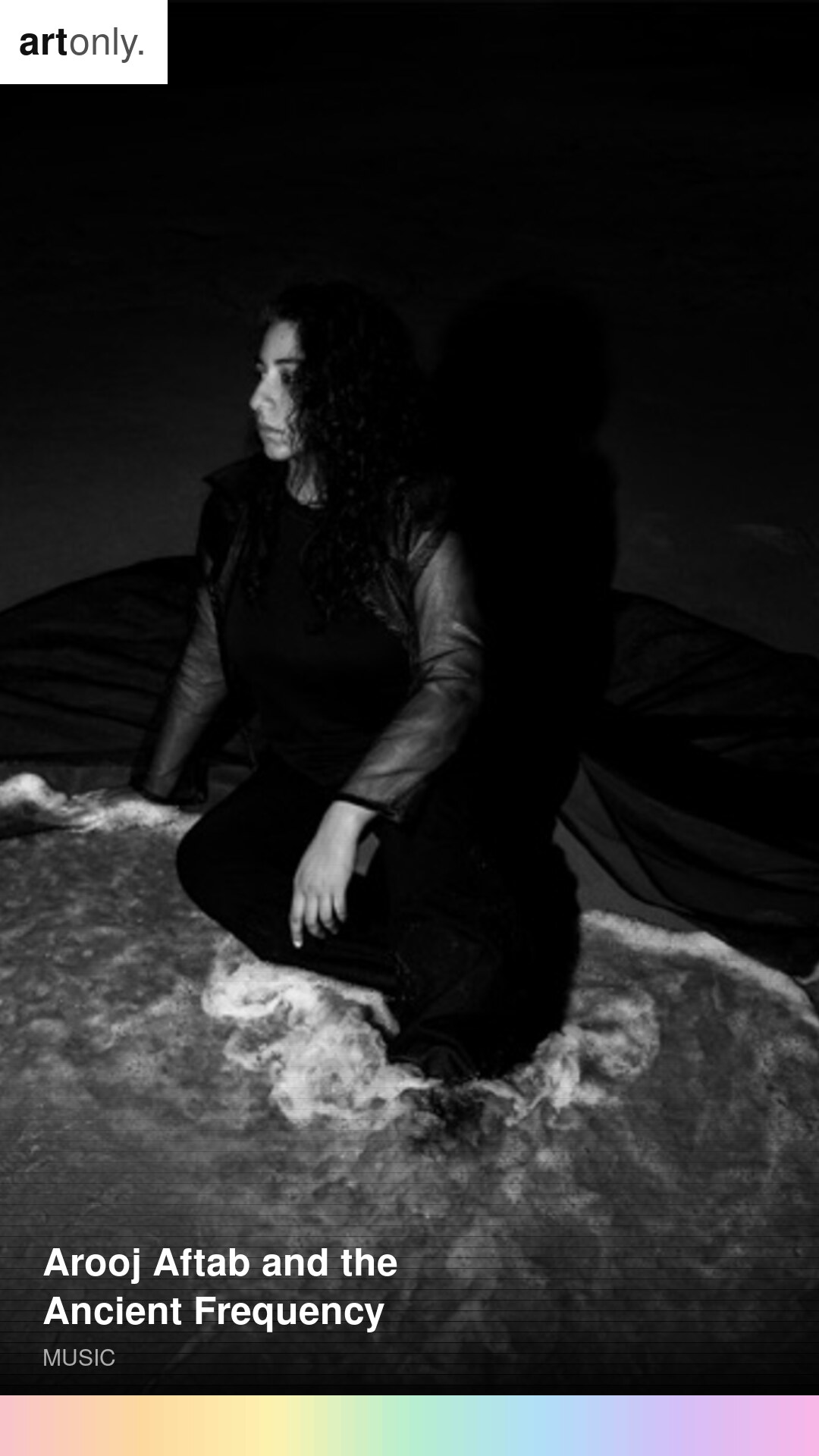
Arooj Aftab draws from poetry that is several hundred years old, Urdu and Persian verse from the classical ghazal tradition, from Sufi devotional literature, from a lineage of writers who treated language as a vehicle for states of consciousness rather than merely information. She does not treat this material as heritage or archival object. She uses it as raw material, which is different. Raw material implies transformation.
This is worth dwelling on because it is unusual. Most contemporary music that engages with classical traditions does so reverently, preserving the original form. Aftab preserves the words and the emotional logic but surrounds them with something entirely contemporary: jazz-adjacent harmonic language, ambient space, arrangements that breathe rather than declaim. The result is a music that operates out of time, not timeless in the soft complimentary sense but genuinely difficult to locate historically. It doesn't sound like it belongs to a decade.
Vulture Prince and the Grammar of Grief
Vulture Prince, released in 2021 and expanded in 2022, is the record that brought Aftab to wider attention, specifically the Grammy for Best Global Music Performance for 'Mohabbat,' an award that the Recording Academy gave her almost despite itself. The Grammy infrastructure has no particular framework for what she does. It landed in her lap anyway.
The album was made in the aftermath of her younger brother Maher's death. This is documented, not hidden, but Aftab doesn't deploy it as emotional credential. The grief is structural rather than announced, it's in the tempo, the space between phrases, the quality of restraint that runs through the entire record. Something about this music knows what it cannot afford to waste.
The circumstances of the album's making are specific. Aftab had been working toward a different record, something she described as edgier, more movement-oriented, a grown evolution of her previous sound. Then Maher died, and the record she was writing became impossible to continue. The title Vulture Prince, which had already been chosen, acquired new meaning through the loss. The album that emerged was not the one she planned. It became a meditation on the different kinds of loss, centered on the most immediate one.
'Mohabbat' itself is an extraordinary piece. The Urdu word is typically translated as love, but the word carries connotations of longing that the English love doesn't quite capture. Aftab's version is slow, sparse, almost dissolving at the edges. The trumpet by Mazen Elsayed moves through it like smoke. The melody arrives and withdraws without establishing the kind of resolution that pop music trains listeners to expect.
This refusal of resolution is deliberate and important. The classical poetry she draws from is full of desire that does not expect fulfillment, the beloved is often metaphysical, the longing is the point rather than a stage toward satisfaction. Aftab's music carries this logic into its form. The songs feel like they are in a permanent state of reaching.
Ancient Words, Contemporary Space
The choice to work in Urdu and Persian puts Aftab in an unusual position as a Pakistani-American artist based in New York. Born in Lahore and raised partly in Riyadh before coming to the United States, she carries a specific cultural itinerary that is present in the music without being explained by it. The Urdu poetic tradition she draws from, one of the great literary traditions of the world, with centuries of accumulated aesthetic logic, is not accessible to most of her listeners at the level of language.
She is performing her own cultural inheritance for audiences who often lack the linguistic framework to parse it directly. The music compensates for this in the only way it can, by making the emotional content available through means other than language.
This is one of music's fundamental capabilities and Aftab exploits it with precision. The melodic lines she sings carry information that doesn't require translation. The intervals, the ornamentation, the relationship between voice and silence, these communicate before understanding, alongside it, below it.
Night Reign and the Hours
The Night Reign album, released on Verve Records in May 2024, extends the same logic into darker, more nocturnal territory. The title references the hours between midnight and dawn that recur throughout classical Urdu and Persian poetry as a setting for spiritual crisis and revelation. Aftab takes this metaphor literally and sonically: the record sounds like those hours, suspended between unresolved questions.
Night Reign was originally conceived around the Urdu-language poetry of Mah Laqa Bai Chanda, an eighteenth-century poet who is considered the first woman to compile a diwan, a collected volume of verse, in the Urdu tradition. Two of the album's nine tracks draw directly from Bai Chanda's words. The rest move between original Urdu and English lyrics and texts drawn from other poets.
The collaborators on Night Reign reflect the creative community Aftab has assembled in Brooklyn over years of working. Gyan Riley and Kaki King contribute guitar. Maeve Gilchrist plays harp. Vijay Iyer, Shahzad Ismaily, and Moor Mother all appear. Elvis Costello guests on one track, an unlikely combination that resolves naturally because Aftab's music creates a gravitational field strong enough to make most things cohere around it.
The production is sparse in ways that feel decisive. The negative space in these recordings is as carefully considered as the sounds themselves. Each contributor is audible as a distinct presence rather than blending into a uniform texture.
The Frequency That Carries
What Aftab has found is a frequency, not in the technical audio sense but in the sense of a wavelength of feeling that travels across time and language. The classical poets she draws from were working with the same fundamental material she works with: the gap between what we want and what we have, the way love and loss are often indistinguishable from each other, the relationship between the human and whatever is larger than the human.
These are not niche concerns. They are close to universal. The specific cultural coding, the classical Urdu script, the raga-adjacent melodic structures, the Sufi philosophical framework, provides the precision that makes the universality legible rather than vague.
Aftab is based in Brooklyn and is embedded in the New York jazz and experimental music community. This geographic and cultural position is part of what makes Night Reign sound the way it does, not South Asian classical music, not American jazz, not ambient, but a specific synthesis that could only come from someone who has spent years in genuine contact with all of those traditions simultaneously. The record's chamber jazz quality gives the ancient material a contemporary container without domesticating it.
The ancient frequency doesn't require that listeners know what they're hearing. It requires only that they be in a state to receive it. Aftab's music creates that state by moving slowly, filling the room with space, resisting the compulsion to explain itself. The poetry she sings is several hundred years old. The music sounds like it might be that old, or might be from next year. The feeling it produces is, reliably, immediate.