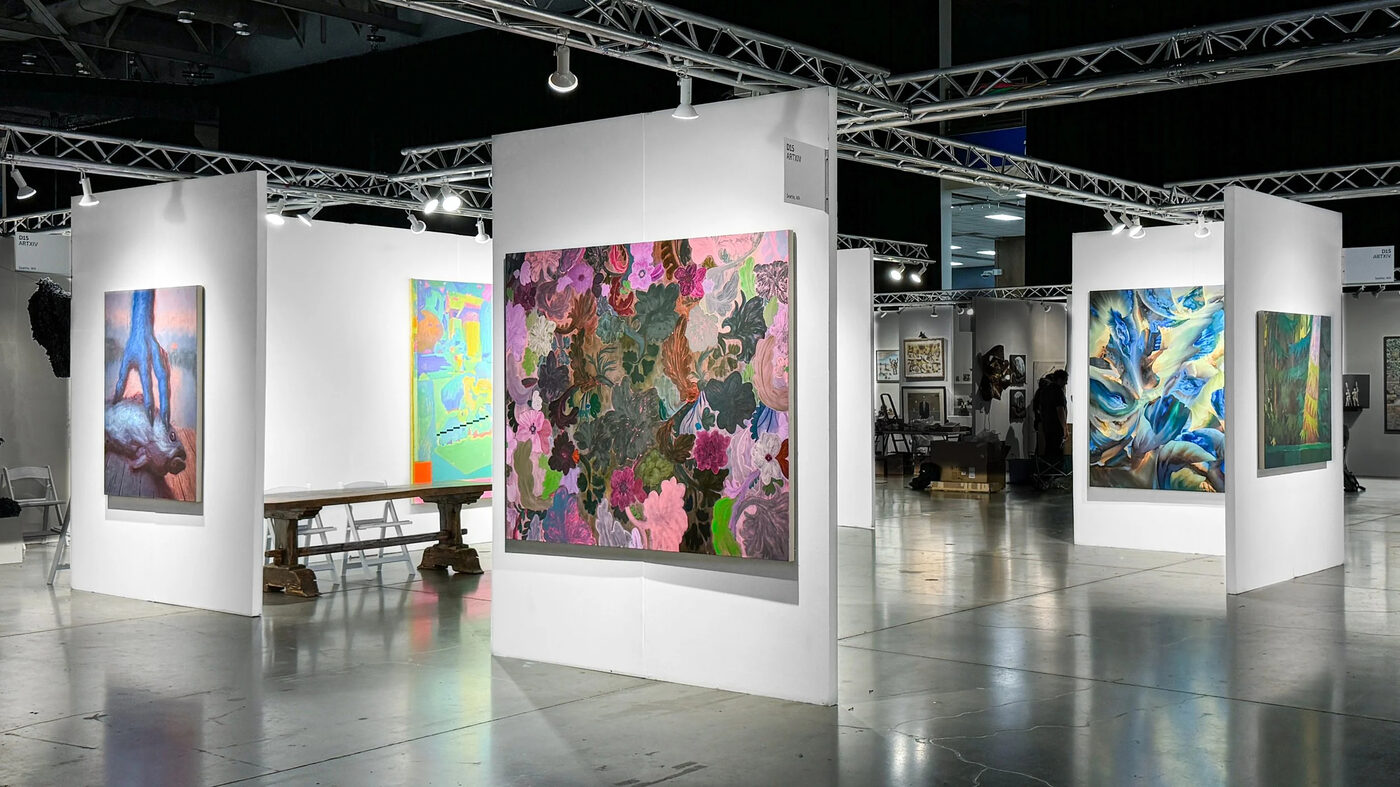
What Happens When Art Is Not an Afterthought
Most art that ends up in a hotel lobby, a corporate corridor, or a public plaza arrives through a particular process. A designer specifies a budget line. A procurement team selects from a catalog. Work arrives in a crate, gets hung on a wall, and becomes part of the furniture. The result is almost always the same: art that functions as texture rather than meaning, presence without engagement, something to look past rather than at.
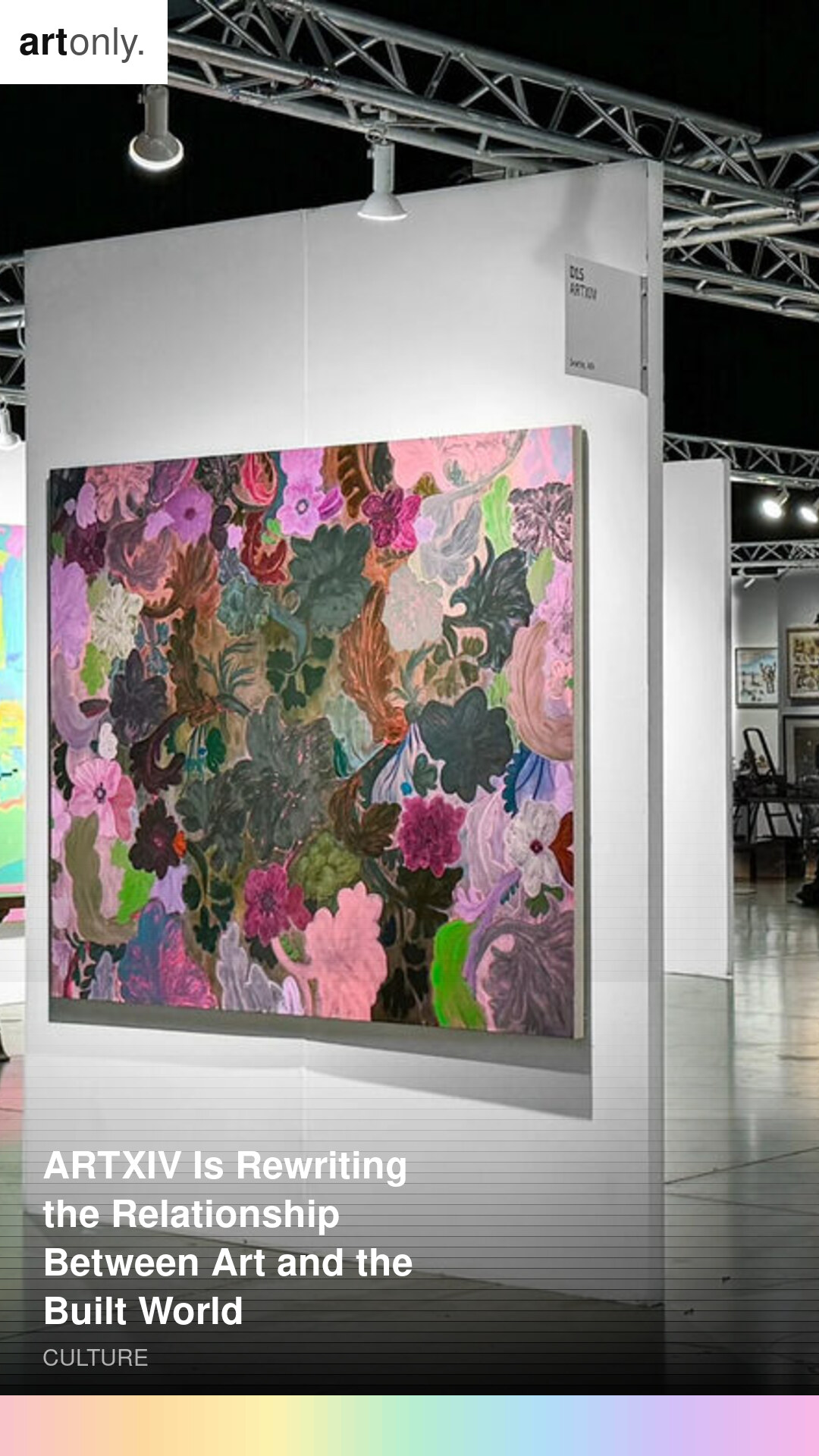
ARTXIV, the Seattle-based creative strategy agency and art production house founded by Dominic Nieri, is built on the premise that this process is broken, and that fixing it requires rethinking the relationship between art, artists, and the spaces that art inhabits. The organization operates across five interconnected areas: curation, production, communication, placemaking, and partnerships. What that description does not quite capture is the ambition behind the structure.
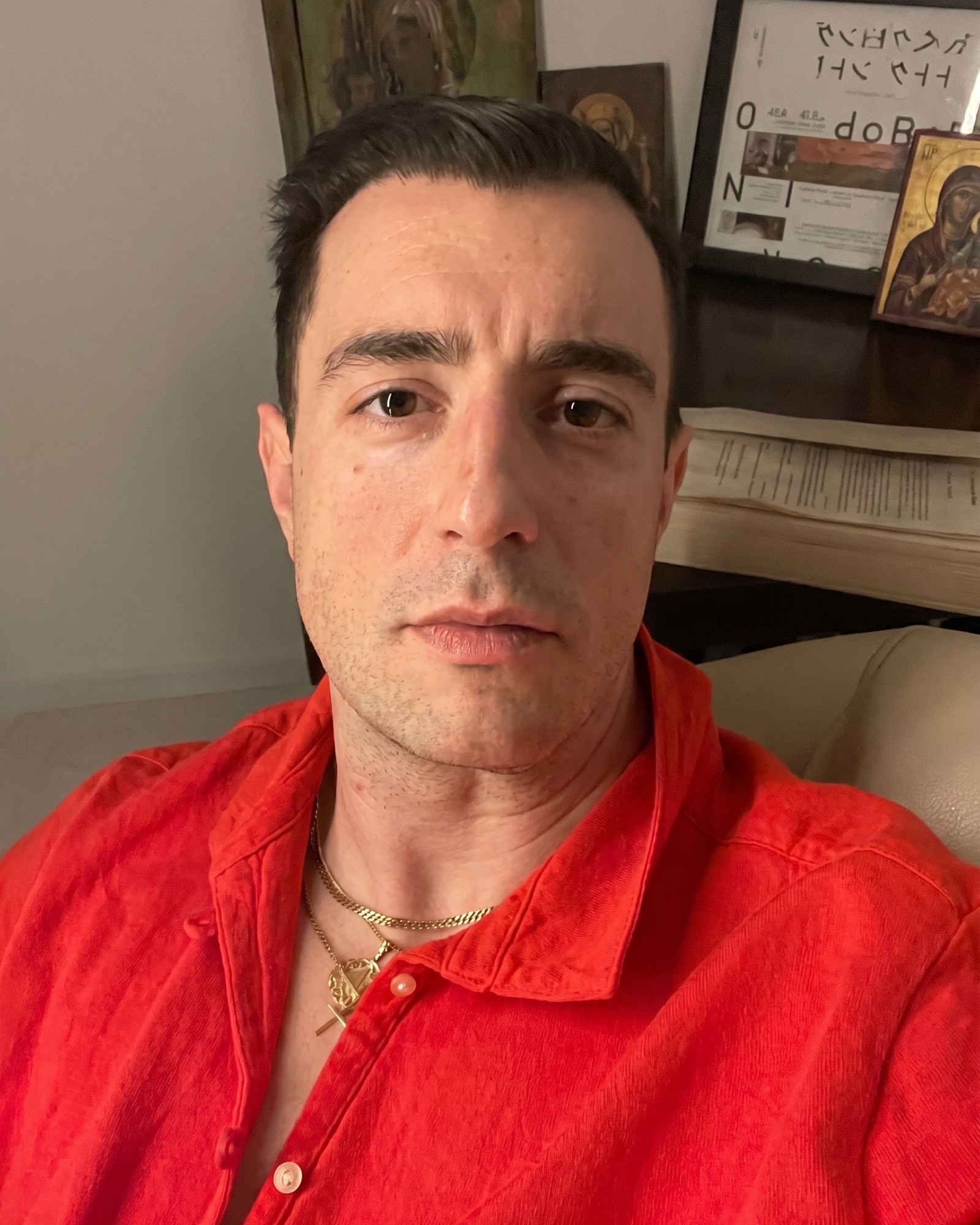
Nieri, who studied fine art at Oregon State University and opened a gallery in Pioneer Square in 2015, describes ARTXIV as a connective layer. The agency works with artists at every stage of the process, from initial concept through curation, production, documentation, and final presentation. Crucially, it operates without exclusivity agreements, which means the artists who work with ARTXIV retain the freedom to pursue other opportunities while benefiting from a production infrastructure and institutional support they would not otherwise have access to.
The mission statement on the ARTXIV website reads as an integration of compelling artistic narratives into the built environment. In practice, this means something more specific: art that is made for a place, not placed into it.
Pioneer Square as Laboratory
Pioneer Square is the neighborhood where ARTXIV has done much of its most visible work, and it is a fitting stage. The historic district in Seattle has undergone decades of fitful revitalization, a neighborhood that contains genuine architectural significance alongside the pressures and complications that attend any urban area navigating change. Art has played a role in that navigation, sometimes instrumentally, sometimes with more integrity.
Forest for the Trees is one of ARTXIV's most significant projects and one of the most ambitious community arts events Seattle has produced. The event brought more than 100 artists together to transform the Rail Spur building in Pioneer Square, an empty warehouse under redevelopment by Denver-based Urban Villages, into an immersive free art festival. Nieri co-produced the event, and its scale made clear what kind of organizing capacity ARTXIV had built. A hundred artists in a single building, over the course of a week, requires not just curation but logistics, relationship management, production infrastructure, and the kind of institutional credibility that convinces artists to commit their time and work.
The Casspir Project, another initiative that ARTXIV has been involved with, goes further into the territory of art as confrontation rather than decoration. The centerpiece is a striking sculpture created by artist Drew Merritt: an apartheid-era police vehicle covered in beaded panels, produced in collaboration with 100 South African artisans using roughly 70 million glass beads. That a piece of this political and historical weight ended up as part of an art activation connected to Seattle Art Fair programming, through ARTXIV's Art Frames satellite events, is itself a statement about what the organization thinks art in public space should be capable of doing.
PSQ Frames, an ongoing program of rotating public art installations in Pioneer Square, is the more sustained version of this work: art that is not static, not permanent in the way that art in public spaces usually is, but cycling through the neighborhood and giving more artists visibility and more residents repeated encounters with new work.
The Hotel Model
The project that has brought ARTXIV its most significant recent attention is the art program for Populus Seattle, formerly Hotel Westland, which opened to the public in 2025. The scale is considerable: more than 300 original artworks across the hotel's lobby, restaurant, guest rooms, and common spaces, produced by 50 local, regional, and international artists through a residency program in a 10,000-square-foot production studio adjacent to the hotel.
The residency model matters here. Rather than selecting work from existing inventories, ARTXIV organized a process in which artists took up residence in the studio, engaged with Pioneer Square through walks, ferry rides, and excursions into the surrounding landscape, and made work in response to what they found. The work in the hotel is not generic hospitality art. It is place-specific, made by people who spent time in that place.
Nieri has spoken about the challenge of overcoming the perception that hotel art cannot be serious art, noting that years of relationship-building with the Seattle artist community made the Populus program possible. The trust that allowed artists to commit to an institutional project came from a track record of smaller engagements where ARTXIV had demonstrated that it operated on artists' terms rather than the institution's.
And then there is the structural innovation: all the work at Populus is available for purchase, and the collection is renewed annually. As pieces sell, new artists come into the residency program. The hotel does not acquire a fixed collection and hold it forever. It becomes an ongoing site of artistic production, with a built-in mechanism for turnover and renewal. The artist-in-residence program ensures that the next generation of work is always being made.
This model has real implications beyond the hotel. If a commercial property can function as a site of ongoing artistic production, with work that is made in and for that specific context, then the category of what counts as a place where art is made gets considerably larger.
Production and the Infrastructure Question
Beyond specific projects, what ARTXIV has built is infrastructure. The organization operates a 3,000-square-foot private production studio alongside the larger exhibition space. These are not ancillary amenities. They are the material basis for making the kind of work ARTXIV commissions: large-scale, site-specific, often labor-intensive work that individual artists would struggle to produce without institutional support.
The infrastructure question is one that the art world tends to undervalue when it discusses which artists succeed and which do not. Talent is not the limiting factor for most artists who do not achieve the visibility their work deserves. Resources, networks, and time are the limiting factors. A production house that provides those things without taking ownership of the artist's career in exchange is doing something genuinely useful.
ARTXIV's Foundation presence, where the organization has an active profile, suggests engagement with the digital and blockchain-adjacent art economy as well, a space where provenance, ownership, and the economics of limited editions are being renegotiated in ways that parallel some of the broader questions the organization asks about how art circulates in physical spaces.
An Emerging Model
ARTXIV is not a gallery in the traditional sense, not a curating institution in the museum sense, and not a pure production company. It sits at the intersection of all three, which is exactly where the most interesting work in the art world tends to happen right now. The field of art consulting, placemaking, and community-engaged production has grown significantly over the past decade, as both public and private clients have become more sophisticated about what they want from art in their spaces, and as artists have become more strategic about the contexts in which they choose to work.
What Nieri has built in Seattle is a model for how an organization can serve both those interests without subordinating either one. The artist is not treated as a vendor. The client is not treated as a patron in the old sense. The space is not treated as a backdrop. All three are in a relationship of mutual accountability, and ARTXIV's function is to design and manage that relationship.
For an art audience that has grown accustomed to a conversation about whether institutions can actually serve artists, or whether commercial contexts inevitably compromise artistic integrity, ARTXIV offers a practical answer rather than a theoretical one. The work exists. It is documented. The artists are named and compensated and given production resources. The spaces are better for having it.
That is not a small thing. It is, in fact, exactly the kind of model that the relationship between art and the built world has needed for a long time.