Crystal LaBeija had been called ugly at a drag pageant she deserved to win. The year was 1972. The judge was white. The pageant system in New York City at the time operated on standards that were built for and by white participants, and Crystal LaBeija, legendary and unmatched, had lost to someone she was better than in every measurable way. She did not accept this. She left the system and built her own.
The House of LaBeija was founded in 1972, the first of the houses that would eventually form the structure of ballroom culture. A house is not just a name. It is a family, with mothers and fathers who take in queer and trans youth who have often been rejected by their biological families. The house provides belonging, protection, community, and a framework for competition that rewards the things that the mainstream world refuses to see as valuable: self-transformation, originality, performance, the specific kind of excellence that comes from having very little and making something extraordinary from it.
What Crystal LaBeija built in response to being told she was not good enough is now everywhere. On Broadway, in fashion weeks, in the most-streamed music in the world, in gymnastics competitions and figure skating and TikTok dances. Ballroom culture is one of the great invisible infrastructures of contemporary aesthetics, and in 2026 it has become impossible to pretend it is invisible any longer.
The Vocabulary of a Scene
To understand ballroom is to understand its vocabulary. A ball is an event, a competition, a party, a ritual. Categories at a ball might include Butch Queen Vogue Femme, Femme Queen Body, Realness, Runway, or any of dozens of other specifically named forms of competition. Each category rewards a different kind of mastery. Vogue is the dance form central to ballroom, itself subdivided into styles: Old Way, New Way, Vogue Femme, Soft and Cunt, each with its own history and standards.
The houses compete against each other. Legends are remembered. New talent is recognized. Within the community, status is earned through decades of performance and mentorship, not through institutional validation from outside. The community validates itself, which is partly why it survived for so long without mainstream attention and partly why mainstream attention has taken so long to understand what it is actually looking at.
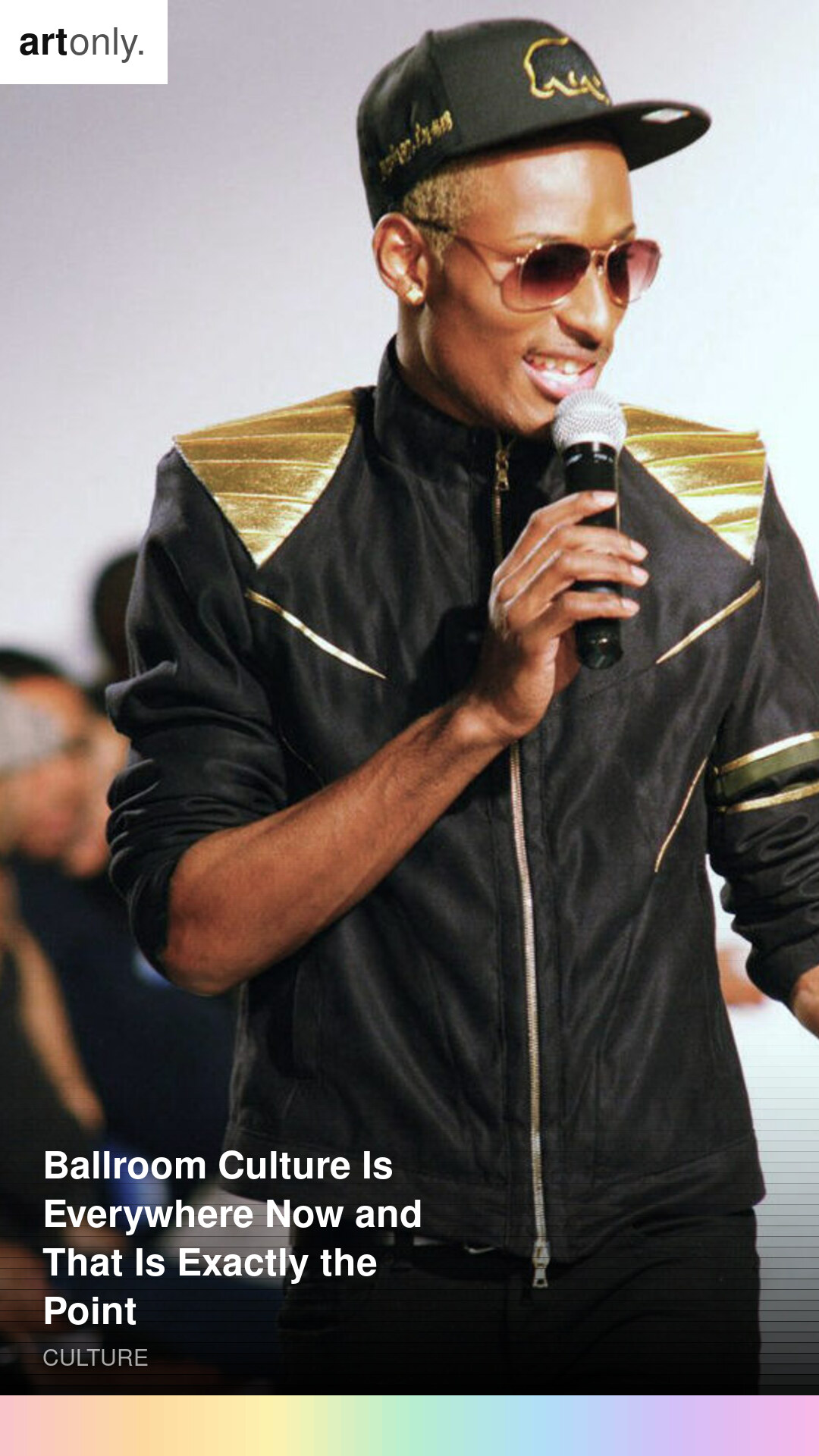
Willi Ninja is the name you have to say. Founder of the House of Ninja in 1982, the Godfather of Vogue, the person who built over 200 international chapters of his house before his death in 2006. He made vogue legible to the world outside the community, appeared in Paris Is Burning, worked with fashion designers and photographers, and never lost the thread back to where he came from. The House of Ninja is still active. His legacy is not a historical artifact. It is a living practice.
Paris Is Burning, Pose, and the Long Arc of Recognition
Jenny Livingston's documentary Paris Is Burning was released in 1990 and remains the most complete document of the ballroom scene from the late 1980s. It introduced figures like Willi Ninja, Pepper LaBeija, Venus Xtravaganza, and Dorian Corey to audiences who had no frame of reference for what they were watching. The documentary was not without its complications: debates about the ethics of outside documentation, about who profits from community visibility, about what gets lost in translation. Those debates have not been resolved and do not need to be. They are part of the ongoing conversation about what it means to take something seriously.
Madonna released "Vogue" in 1990, the same year as the documentary. The song is the most commercially successful articulation of ballroom culture ever made. It also created a distance between the mainstream's understanding of vogue and the actual practice of the form, because what Madonna presented was a stylized version of something that had specific technical standards and a specific community history. That distance has been closing for thirty-five years, and it is significantly smaller now.
Pose, the Ryan Murphy series that ran from 2018 to 2021, brought ballroom into the mainstream on its own terms to a degree that the documentary and the pop song could not. With the highest number of transgender actors in series regular roles in television history, Pose depicted the ballroom scene of the late 1980s and early 1990s with enough specificity that people inside the community recognized themselves rather than a softened version of themselves. It was television as reparation, in a way, and its cultural impact has been substantial.
2026 and the Broadway Arrival
On April 7, 2026, Cats: The Jellicle Ball opened on Broadway at the Broadhurst Theatre. The production, directed by Zhailon Levingston and Bill Rauch and choreographed by Omari Wiles and Arturo Lyons, reimagines the Andrew Lloyd Webber musical inside an underground ballroom setting. Junior LaBeija, a member of the House of LaBeija for over fifty years and a central figure in Paris Is Burning, plays the role of Gus. The Rum Tum Tugger and Mr. Mistoffelees become ballroom categories. The Jellicle Ball is a ball.
The production received attention partly because of what it represents, the formal arrival of ballroom aesthetics at one of the most mainstream institutional stages in American performance. But it is worth being precise about what the production is doing. This is not ballroom being simplified for a Broadway audience. The creative team includes figures from deep inside the community, and the choreography reflects genuine mastery of the form. The production brings ballroom to Broadway rather than bringing Broadway to ballroom. That distinction matters.
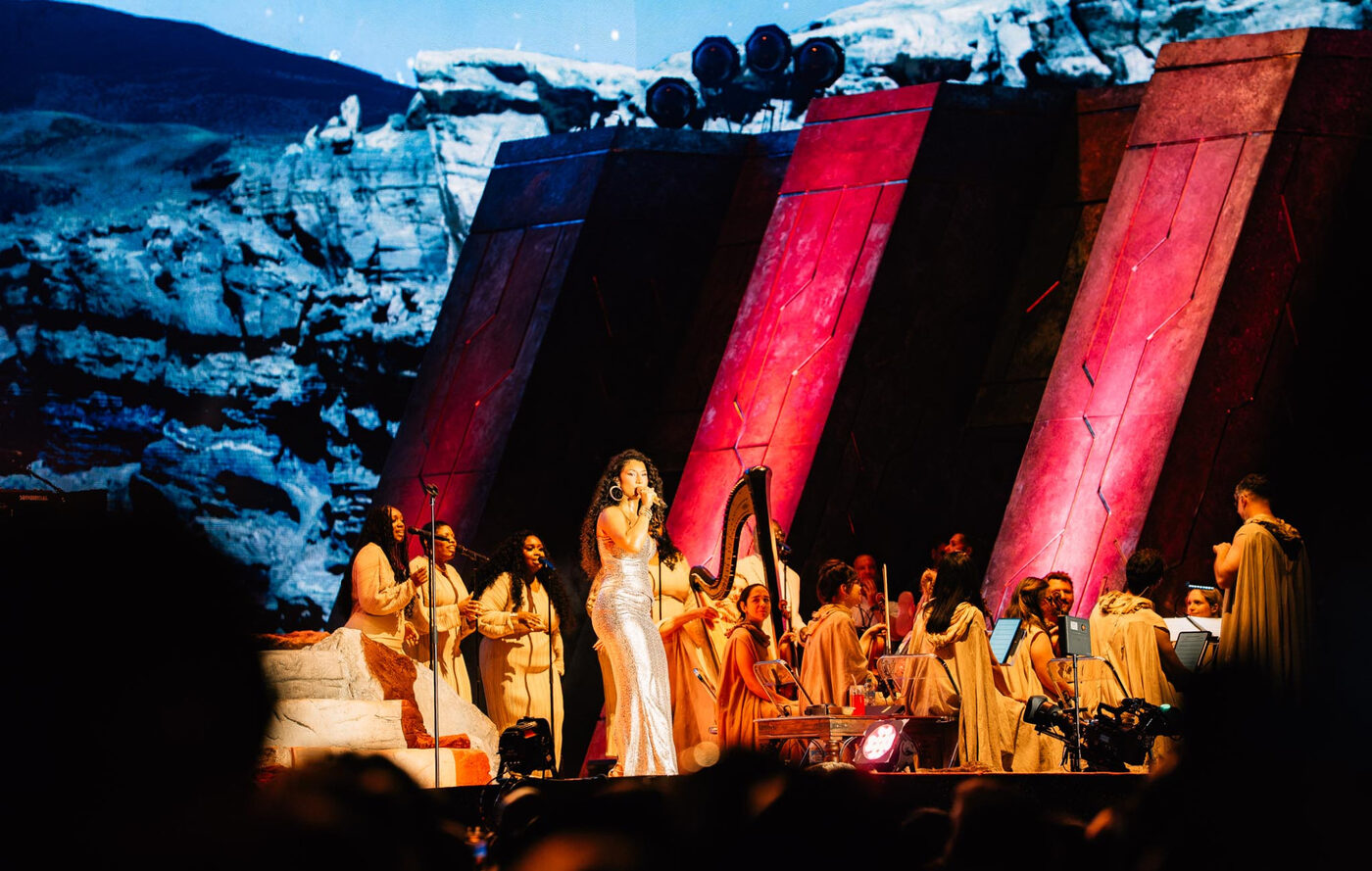
FKA twigs performed at Coachella 2026 and incorporated voguing into the set in ways that felt like documentation rather than homage, with Dashaun Wesley, one of the most visible hosts and performers in contemporary ballroom, appearing alongside her. This is what absorption looks like when it is done with respect and care: the community is present in the moment of visibility rather than being cited after the fact.
The Houses Are Global Now
Ballroom culture has spread well beyond New York. London, Paris, Amsterdam, Berlin, Tokyo, Mexico City, and Jerusalem all have active ball scenes. The House of Vineyard has established a strong presence in Amsterdam. The Latex Ball, GMHC's annual event in New York, continues to serve as the flagship event of the American scene while explicitly centering HIV prevention and community health as part of its programming. The next Latex Ball is scheduled for August 22, 2026.
The global expansion is not a dilution. The houses in Tokyo are not doing exactly what the houses in Harlem are doing. They are doing something related, shaped by local context, local bodies, local forms of exclusion and resistance. Ballroom has always been about taking what exists and transforming it into something that serves the people who need it. That capacity for transformation is what made it portable.
What is true in 2026 is that the culture has enough visibility that the question is no longer whether people know it exists. The question is whether that visibility changes the community's relationship to itself, whether being seen by the mainstream shifts something inside the scene. The ballroom community has navigated that question before. Crystal LaBeija built a room because she was denied entry to another one. What she built turned out to be better than what she was excluded from. That is the story ballroom keeps telling, and in 2026 it is telling it louder than ever.