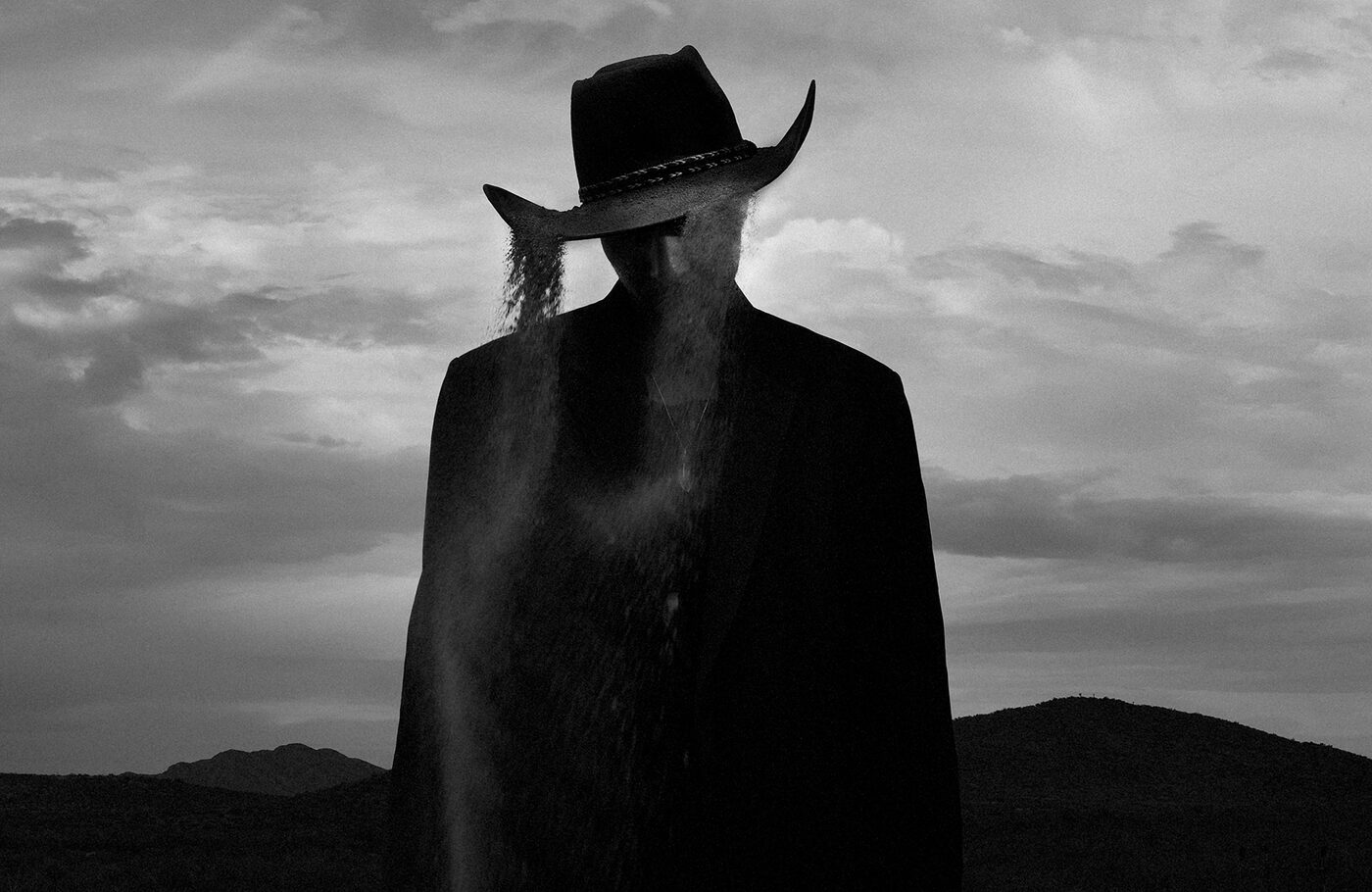
BIG BRAVE has been operating at the intersection of drone, experimental rock, and what might simply be called force for over a decade. Robin Wattie and Mathieu Ball formed the band in Montreal in 2012, and their catalog from Feral Verdure (2014) through the Polaris-longlisted trio of Vital (2021), nature morte (2023), and A Chaos of Flowers (2024) represents one of the most consistent bodies of work in contemporary experimental music. Consistent is the wrong word, actually. The work has developed in specific directions. Each record finding new formal solutions to the same essential problem: how to use volume and silence and the sustained note as emotional language.
In grief or in hope (June 12, 2026, Thrill Jockey Records) arrives as the first BIG BRAVE studio record without their longtime drummer Tasy Hudson, who has stepped back from the band. In Hudson's absence, touring bassist Liam Andrews, also known from the Australian collective MY DISCO, joins Wattie and Ball as a full member for the first time on a studio recording. This is not a minor development in formal terms. The rhythm section has always been the engine of BIG BRAVE's dynamics, the structure against which the guitar drone and Wattie's voice could create tension. An album without drums is not an absence. It is a choice about where the weight lives.
The Shape of the Thing
Eight tracks, forty-four minutes, titles that read like fragments of an unresolved argument. What May Be the Kindest Way to Leave opens the record at seven and a half minutes, which is not the running time of a song that intends to be easy. The Ineptitude for Mutual Discernment is not a title that offers comfort. An Uttering of Antipathy runs almost seven minutes and is not, presumably, about gratitude. These are titles that come from a tradition of taking the album object seriously as a formal container for specific emotional content. They announce what kind of record this is before the first note plays.
What the record actually sounds like is harder to describe than what it is about. Wattie has said that she wanted to explore catchy, melodic phrasing as a contrast to the sheer weight of the instrumentation. The phrase critics have used is reverse-engineered pop structures, which is a useful formulation. What you hear on in grief or in hope is melody arriving through walls of guitar. It is not the melody of a pop song that has been distorted. It is the idea of melody discovered inside a material that seems to resist it. That discovery is the emotional content of the record.
Wattie's voice has always been the most immediately human element of BIG BRAVE's sound, the thing that keeps the drone from collapsing entirely into abstraction. On this record she leans further into that role than on any previous album. The vocal phrasing is more direct, more present, which creates a specific kind of tension with the instrumentation. The guitars and bass operate at a scale that suggests geological formation. The voice operates at human scale. The album lives in that gap.
What Grief and Hope Actually Share
The title of the record is not a contrast. Grief and hope are not opposites in the way that the word "or" might suggest. They are, in the experience of actually living through loss, two aspects of the same orientation toward the future. You hope because you grieve. You grieve because you hoped. The album treats this relationship as its central subject, returning repeatedly to the body as the location where this experience happens. Not as abstraction but as weight, as physical condition, as something that happens to a person who cannot step outside themselves to observe it from a safer distance.
Holding Tongue is one of the record's more contained moments, a track whose restraint feels earned rather than imposed. The title names something that anyone who has tried to navigate grief in the presence of others will recognize. The things you do not say because saying them would require the other person to respond, and you are not yet ready for response. Verdure appears as a title in BIG BRAVE's catalog, the name of their earliest full-length from 2014, and its reappearance here suggests that the album is in some sense a conversation with the body of work that preceded it. Skin Ripper is the most aggressive title on a record that is, in its emotional content, about vulnerability. The aggression in the language coexists with the emotional openness of Wattie's delivery. This coexistence is the record's most consistent formal strategy. The sounds that seem like violence contain something that is not violence. The sounds that seem soft carry weight.
Polaris, Thrill Jockey, and the Long Project
Three Polaris Music Prize longlist nominations across four years constitute a specific kind of critical recognition. The Polaris Prize weights artistic ambition above commercial performance, and BIG BRAVE's nominations reflect a sustained assessment by Canadian music critics that this is work that matters in a way that extends beyond its audience size. The nominations also represent a progressive critical engagement with experimental music that sits, categorically, closer to metal than to indie rock or pop, which are the genres that tend to dominate Polaris consideration.
Thrill Jockey Records, their label since 2021, has been one of the more thoughtful homes for experimental music in North America since its founding in Chicago in 1992. Their roster over three decades has included Tortoise, Trans Am, Bitchin Bajas, and Calexico. Artists for whom the formal possibilities of their chosen instruments are the primary creative concern. BIG BRAVE fits this roster not as a stylistic match but as a commitment: the commitment to treating the record as a space for discovery rather than a container for something already known.
In grief or in hope is their most melodic record and their most emotionally direct, which means it is also their most exposed. Wattie and Ball have spent twelve years building a sound that uses volume as armor. This record removes some of the armor. What is underneath is what the title names: the grief that is already present in any hope that is still active, and the hope that is the only condition under which grief can eventually complete its work.
The album arrived the same week as La Securite's Bingo!, and the two records could not occupy more different positions on the formal spectrum of what music can do. Both are from Montreal. Both are committed to a version of the form that takes the form seriously. The coincidence is pleasing in the way that a city producing two entirely different answers to the same question is always pleasing. The question is what music is for. The answers, in both cases, are worth hearing.