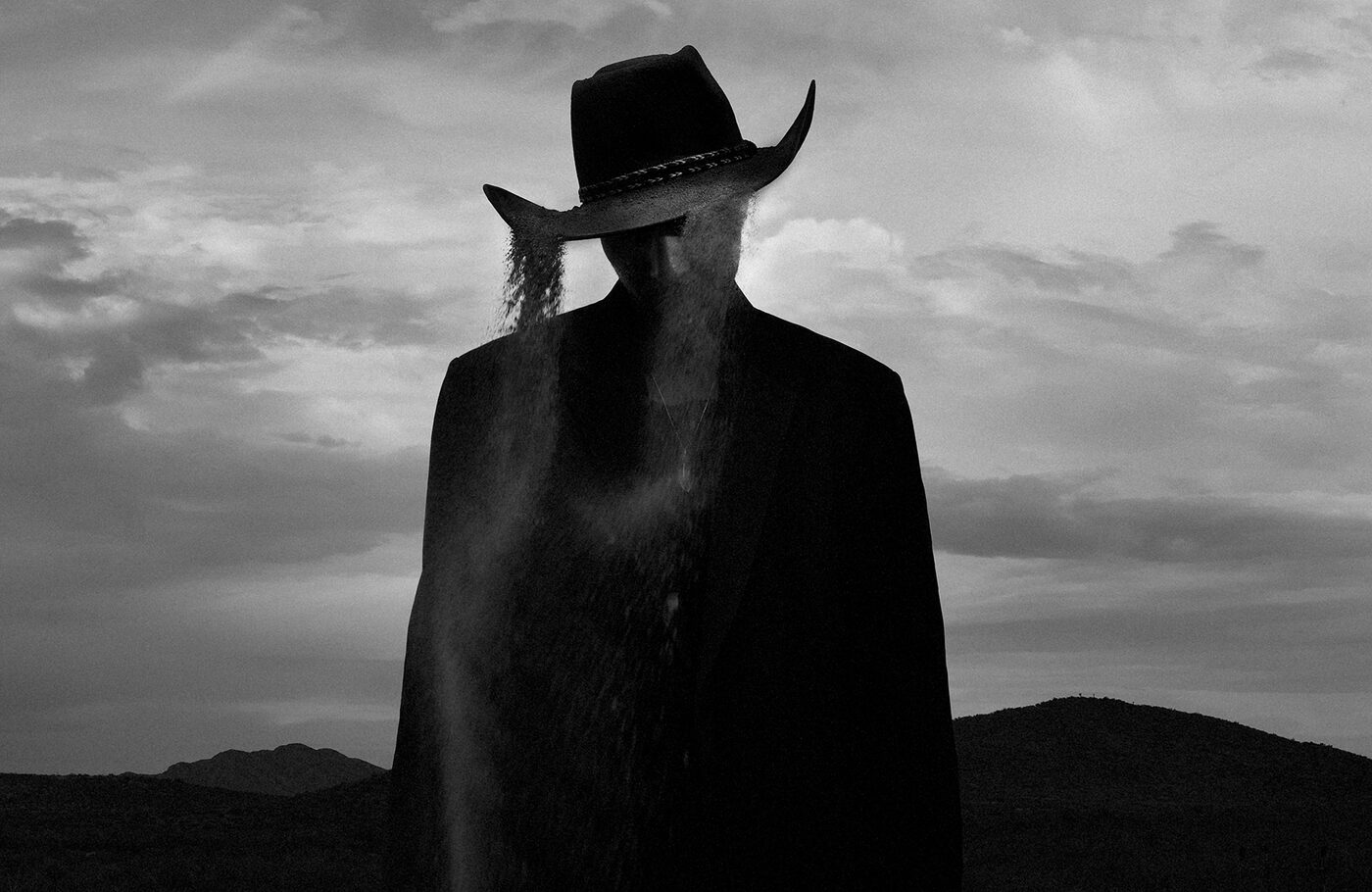
Burna Boy was not always inevitable. This is worth stating plainly because the story of his ascent has been retold so many times, with so much emphasis on the triumphal arc, that it has begun to acquire the quality of mythology. Mythology means the unfolding of something foreordained. But Damini Ebunoluwa Ogulu, born in Port Harcourt, Nigeria in 1991, whose mother Bose Ogulu has managed his career from its earliest days and whose grandfather Benson Idonije was Fela Kuti's manager, chose very deliberately to become Burna Boy. He embodied a particular kind of outsized presence. He constructed a persona large enough to contain the ambitions he was carrying. Sovereign, released June 13 on Spaceship Entertainment and Atlantic Records, is the record that asks what it means to have arrived at everything you declared you were going to arrive at, and to still be here.
The Afrofusion genre that Burna Boy did not invent so much as make irreversibly his own draws from Nigerian highlife, dancehall, reggae, hip-hop, and R&B in proportions that shift from album to album depending on what the material requires. His catalog runs from the uncompromising regional pride of "L.I.F.E." through the crossover ambition of "African Giant" to the Grammy-winning sweep of "Twice as Tall" and the more vulnerable register of "Love, Damini." "I Told Them..." in 2023 was his answer to whether the mainstream had changed him, and the answer was deliberate: it had not. Sovereign is his answer to a different question. It is asking what the self looks like once it has proved itself sufficient.
The Architecture of Claim
What distinguishes Sovereign from its predecessors is the deliberateness of its compositional architecture. The album does not open the way Burna Boy albums typically open, with an immediate statement of power. It begins instead with something more measured, building the case for what will come with the patience of someone who knows they do not need to rush. The production, handled primarily by Leriq who has been Burna's most essential collaborator across more than a decade, demonstrates a new willingness to let silence function as an argument. Space is deployed strategically. When the bass arrives in the record's first release moment, it lands with the force of something that has been earned rather than asserted.
The structural confidence of the record extends to its treatment of Burna Boy's voice. His vocal instrument has always been one of the most distinctive in global popular music, capable of shifting between the intimate and the monumental within a single phrase, but Sovereign gives it more room than previous records have. The production frames rather than envelops. The result is a record that sounds, for the first time in his catalog, as though the artist and his sound are completely synchronized. Not straining toward each other, not negotiating, but simply occupying the same space with full mutual understanding.
The Pan-African Project
Burna Boy has been explicit for years about the political dimensions of his work. He has positioned himself as a pan-African figure, as an artist carrying the burden and possibility of a continent's cultural ambition, and Sovereign makes this positioning more explicit than any previous record. The album features collaborators from across the African continent, including artists from Ghana, South Africa, and Senegal, and the production draws from musical traditions across the same geography. This is not ecumenism performed for the benefit of global audiences. The musical choices are too specific for that, too deeply informed by the actual sounds and rhythms being referenced.
There is a track that engages directly with the legacy of afrobeat as Fela Kuti developed it, and the connection is not decorative. The family inheritance is literal. Benson Idonije managed Fela. The conversation with that inheritance on Sovereign is more sustained than it has been on previous records, and more honest. It does not claim equivalence with Fela's political project. It claims continuity with his insistence that popular African music could bear philosophical weight.
What Sovereignty Actually Means
The word sovereign carries multiple registers, and the album is smart enough to address all of them. There is the political sovereignty that Burna Boy has referenced throughout his career: the liberation from colonial frameworks that persists as an unfinished project across the continent he represents. There is the personal sovereignty of an artist who has spent more than a decade refusing to make the compromises that international success typically demands and has arrived, improbably, at that international success anyway. And there is the quieter sovereignty of a person who has made peace with the particular shape of their own life, which is the hardest kind to achieve and the most interesting to document.
The album's most vulnerable moments arrive in its second half. This is a consistent feature of Burna Boy's best work: the bombast of the opening gives way, eventually, to something more searching. On Sovereign, the searching quality carries a new acceptance. There is less straining in these moments than in previous records. The questions are asked more quietly because the person asking them is no longer performing the asking. The performance is reserved for the record's exterior. The interior, for the first time across his catalog, is simply present.
The Market Does Not Own This
One of the stranger features of Burna Boy's career is that he has maintained a consistent artistic vision while becoming one of the commercially dominant forces in global music. These two things are supposed to be in tension. The market is supposed to reshape the artist toward its requirements, filing down the particular roughnesses that make the work original until what remains is something saleable but generic. This has not happened. Sovereign sounds like no other record in the global pop landscape, is not trying to sound like any other record, and has been made in full confidence that this specificity is not a commercial liability but the precise source of its commercial power.
The lesson is not transferable. Burna Boy arrived at this position through a combination of stubbornness, talent, and the particular cultural moment that made an African artist's confidence in the distinctiveness of his work legible to global audiences in a way that might not have been possible a decade earlier. The lesson, to the extent there is one, is that the attempt to manufacture authenticity always fails. The authentic is recognizable precisely because it was not manufactured. Sovereign is the work of someone who has been building toward a single definitive statement for more than a decade and has now made it. It is the work of an artist who has earned the right to use a word like sovereign without irony, because the music makes the claim on its own.