"An Overview on Phenomenal Nature" was supposed to be the last record Cassandra Jenkins would make. She said as much. She had decided to stop. The 2021 album was written and recorded as a kind of closure, a goodbye she was giving herself. When the record came out and people started responding to it in numbers she had not expected, the plans changed. What follows from that moment is not a career saved from obscurity but something stranger: an artist who has spent the years since making work that only exists because she changed her mind about stopping.
The three years between "An Overview" and "My Light, My Destroyer" (Dead Oceans, 2024) are worth understanding. She was not rebuilding or recalibrating. The album arrived with the confidence of someone who had already settled accounts with herself and was now working freely. Field recordings, jazz influenced structures, Jenkins's voice sitting in the middle of composed space rather than riding over it. The record sounds like collaboration with the sonic environment rather than against it.
An Overview as Starting Point
The critical reception of "An Overview on Phenomenal Nature" used the word iridescent repeatedly. It is not wrong. The album has a quality of shifting color depending on where you stand and what mood you bring to it. The folk jazz framing is accurate as a genre label but misses the more important fact: Jenkins was making something that organized sound around negative space. The field recordings she incorporated were not texture. They were structural elements that the more conventional musical parts had to work around.
That approach was not immediately legible to everyone. The record's audience grew slowly, the way records tend to grow when they do not fit a neat promotional pitch. It was eventually nominated for the 2021 Polaris Music Prize. More importantly, it changed how people heard her.

What My Light My Destroyer Actually Is
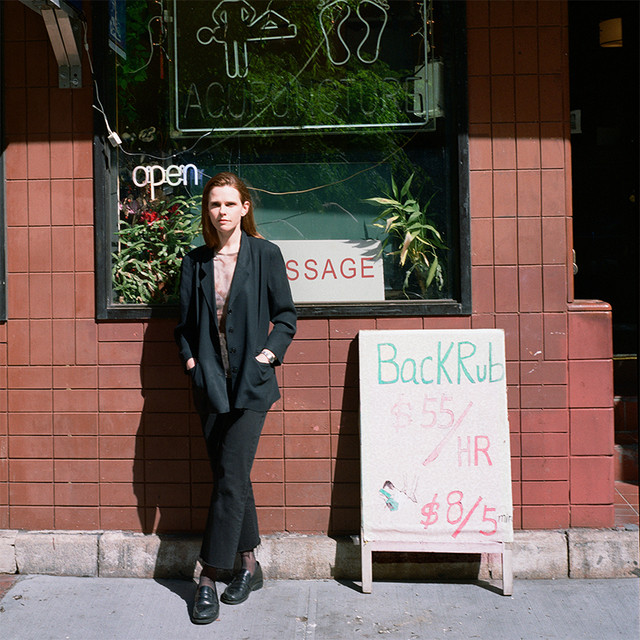
Released July 12, 2024, "My Light, My Destroyer" is the record Jenkins made after she had accepted that she was still making records. It is not a sequel to "An Overview" and it is not a departure from it. It is a fuller realization of what the earlier album was reaching toward. The field recordings are more integrated. The jazz influence is less conspicuous and more absorbed. The album cover was photographed by Wyndham Garnett, whose work tends toward a kind of luminous specificity that matches what Jenkins does with sound.
"Petco" is the track most people encounter first. It is a useful entry point because it demonstrates how Jenkins structures a song around accumulation rather than resolution. Details stack. The emotional weight arrives sideways. The video is worth watching alongside the recording: the visual language reinforces the sonic approach without illustrating it directly.

The Field Recording Method
The use of field recordings in contemporary music tends to fall into two categories. The first is atmospheric, where recordings of rain or traffic or birdsong create mood without bearing structural weight. The second is compositional, where the recorded environment becomes a participant in the music. Jenkins works in the second category, which is rarer and harder to execute without sounding programmatic.
What makes it work is that the field recordings she selects have something in common with the emotional register of the songs around them. They are not arbitrary ambient texture. They are chosen for a reason that is not always articulable but is consistently audible. The effect is that her records sound like documents of actual places, not constructions that have incorporated the sound of places.

Collaboration as an Ongoing Method
Before his death in August 2019, David Berman was one of the few artists Jenkins had worked alongside who seemed to understand the register she was working in. Berman's Purple Mountains project had its own quality of deliberate emotional exposure that Jenkins shares. The loss was significant to the New York folk community she was part of, and it registers in the texture of "An Overview" without being explicitly stated.
"My Light, My Massage Parlor" arrived in August 2025. The title is a variation on the previous album's title, a structural joke or acknowledgment that the project is ongoing in a way she had not planned. It continues the field recording work and the compositional approach. She is still making records and they are still worth making.

The Decision to Keep Going
There is something clarifying about making what you believe will be your last record. The stakes change. You stop writing for any future audience and start writing for the one you have. "An Overview on Phenomenal Nature" has that quality of finality that makes it generous rather than merely accomplished. Jenkins gave it everything because she thought she was done.
That she then continued producing work at the same level of care and ambition is the genuinely remarkable thing. Not that she kept making records but that the reason she stopped wanting to stop was because people told her what she had made mattered to them. That feedback loop is what most artists want and few find. She found it in the moment she had given up looking.
The ongoing work makes sense on those terms. She is not extending a career. She is following through on something she would have abandoned if the audience had not arrived when it did. "My Light, My Destroyer" and "My Light, My Massage Parlor" exist because of that arrival. They justify it.