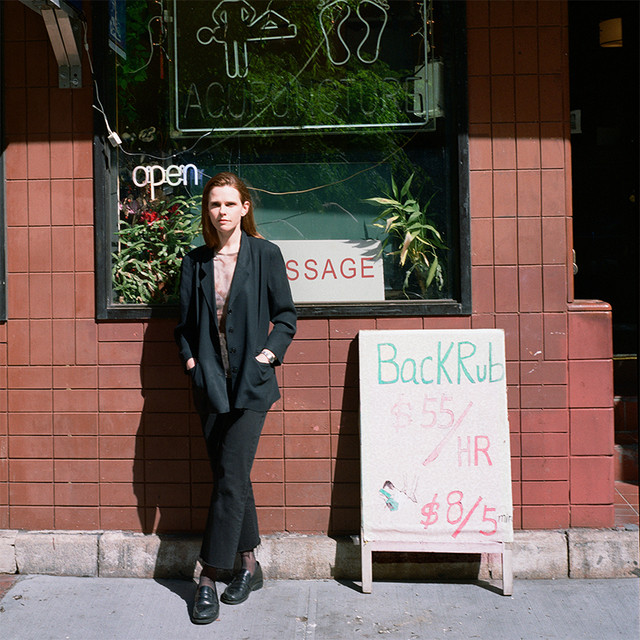
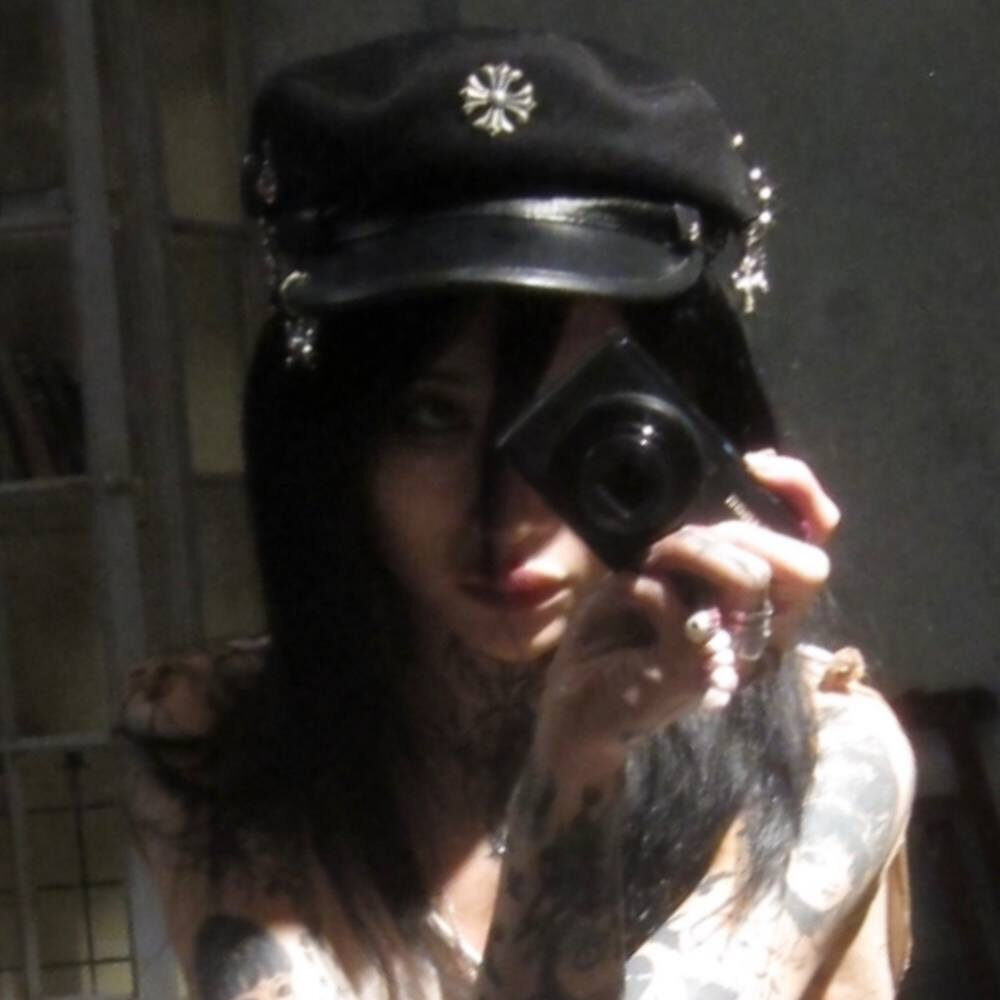
Neil Krug photographed Natalie Mering for the "And in the Darkness, Hearts Aglow" press cycle in light that looked borrowed from a Flemish painting. The images are intentional without being precious, dramatic without announcing drama. They tell you something about how Weyes Blood works before you ever press play.
Mering released "And in the Darkness, Hearts Aglow" on November 18, 2022, through Sub Pop. It was her fifth album and the second part of a loosely conceived trilogy. Critics reached for the word "orchestral" and then ran out of steam. What they missed is that Mering does not just arrange strings and call it beauty. She builds environments. Each song on "Hearts Aglow" operates as a distinct room in a structure that feels both enormous and intimate, and the decisions inside those rooms, the choice of texture, the placement of silence, the handling of her voice against the orchestration, are the decisions of a visual thinker as much as a sonic one.
The case for Weyes Blood as an artist in the full sense of that word, not simply a musician with good taste, rests on the deliberateness of everything around the sound. The photography. The staging. The sequencing. Nothing is incidental.
The Orchestrated Interior

Jonathan Rado produced "And in the Darkness, Hearts Aglow" alongside Mering, with Rodaidh McDonald joining production on the track "A Given Thing." These are not names that appear in the credits of maximalist pop records. Rado built his reputation as the guitarist and producer of Foxygen, working in the slightly warped corridor between classic rock and something stranger. Mering chose him because she needed a collaborator who understood production as composition, not decoration.
The album's orchestrations do not swell to fill space. They arrive precisely, carry exactly what they are supposed to carry, and leave. On "It's Not Just Me, It's Everybody," strings enter and change the meaning of every lyric that preceded them. That is editing. That is visual logic applied to sound.
Neil Krug and the Album as Image

Neil Krug has photographed Lana Del Rey, Lykke Li, and a range of artists who understand that image is not promotion but extension. His collaboration with Mering produced some of the more distinctive press photography of the decade's first half. The light in the photographs is warm and slightly antique, the poses never casual, the settings always controlled. They are not fashion photographs. They are something closer to portraiture in the Northern European tradition, where every object in the frame is chosen.
Mering arrived at Krug already knowing what she wanted. That is not typical. Most musicians hand their image to a photographer and accept what comes back. Mering's photographs feel like they were conceived from the inside out, because they were.
Chamber Pop as a Living Form

The genre label "chamber pop" is applied so broadly it risks becoming useless. It has covered everyone from Sufjan Stevens to Carole King reissues. What distinguishes Mering's use of orchestral arrangement from the ambient category is specificity. She studied music at Lewis and Clark College, dropped out after a year, and then spent years in underground circuits that had no interest in the polished center of the art form.
That experience matters. It means Mering came to baroque arrangement not as a student executing a learned tradition but as someone who took the tools of a tradition and bent them toward something personal. The textures on "Titanic Rising" that suggest harpsichord and antique string writing were not ironic. They were sincere, which is harder.
The Collaborators

The people Mering works with are instructive. Drugdealer, the project of Michael Collins, has been a collaborator since the 2016 record "The End of Comedy," where Mering appeared on two tracks and shaped the emotional register of the whole without being its nominal subject. The two reunited in 2025 for a single called "Real Thing." Collins operates in similar territory: soft rock surfaces, late night melancholy, arrangements that disguise their sophistication.
Perfume Genius, the project of Mike Hadreas, shares her orbit in more diffuse ways. They have shared stages and tours, including a night at the Greek Theatre in Los Angeles. Hadreas, like Mering, refuses to treat the distinction between the artistic and the commercial as the significant fault line. Both of them make work that is ambitious about beauty, which is currently out of fashion and may be the most countercultural position available.
The Darkness as Subject

"And in the Darkness, Hearts Aglow" is explicitly about collapse. It was written during a period of sustained global anxiety and it does not try to resolve that anxiety. The title promises light but the body of the album is more interested in what happens before it arrives. Mering's lyrics on the record are the plainest she has written, which took courage. The orchestrations carry the weight that in lesser hands would fall to metaphor and complicated syntax.
The image on the album cover, a figure seen through patterned glass, obscured but present, is the right image for what the music does. It does not hide. It filters. The world is there. You see it through something that changes what seeing means.
What the Art Requires

What Weyes Blood is building over the course of her records, her collaborations, her press photography, and her live presentation is something that has no clean name. It is not a brand. It is closer to what painters build over a career, a body of work that accrues meaning each time a new piece enters it. "Hearts Aglow" changed what "Titanic Rising" meant. The next record will change what "Hearts Aglow" means.
This is how serious art works. Mering knows it. She was playing in underground bands in Portland before most of her current audience knew what Sub Pop was. She has been building this world for a long time. Now the world is large enough that strangers walk around inside it and feel something they could not have predicted. That is the measure of it.