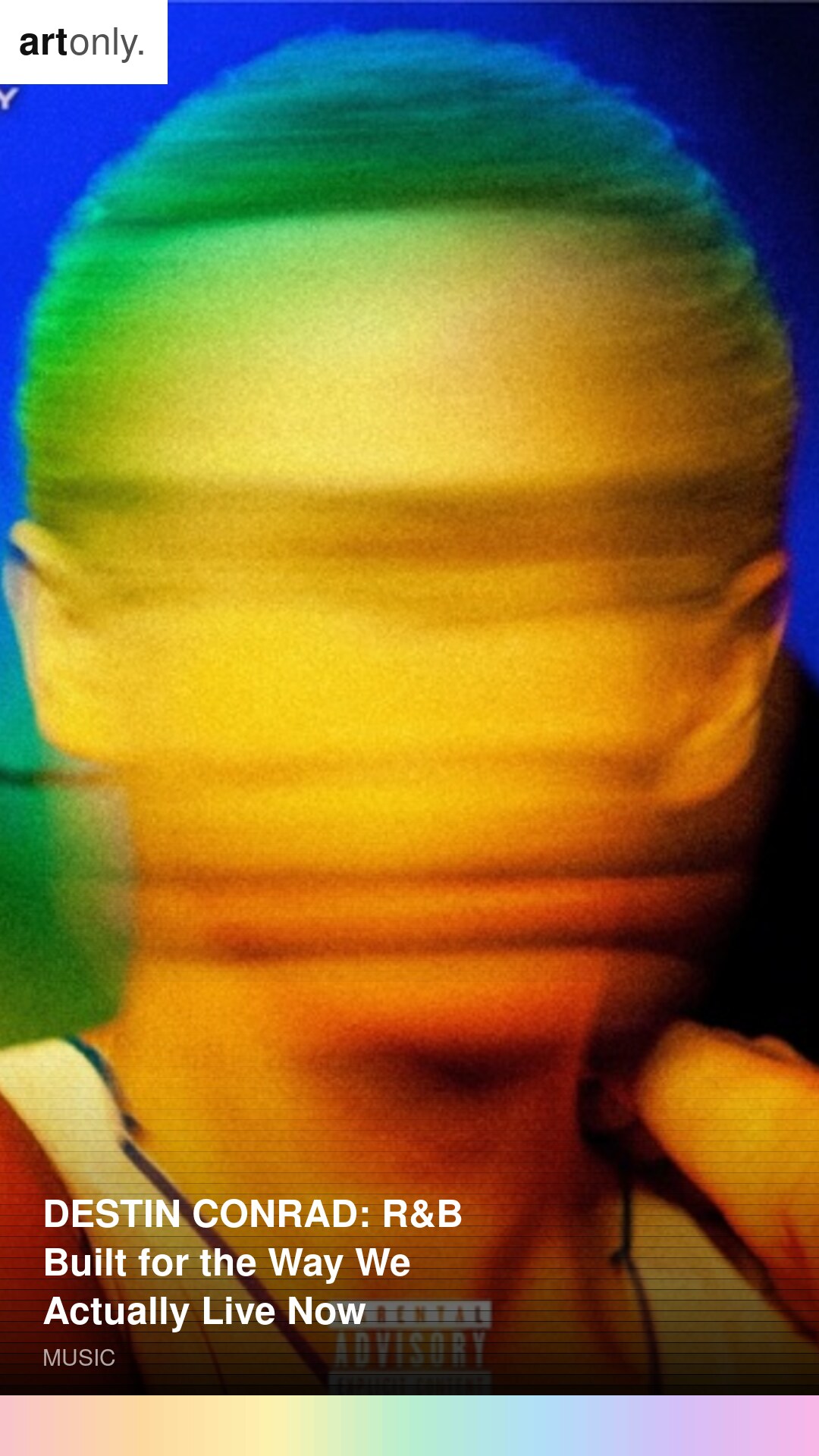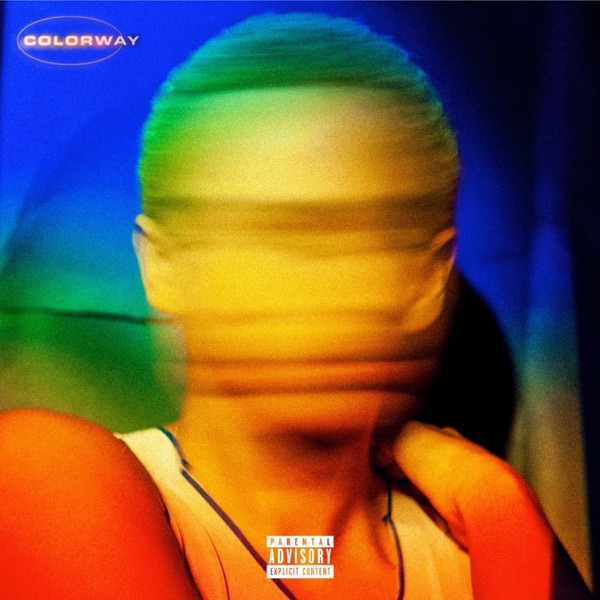
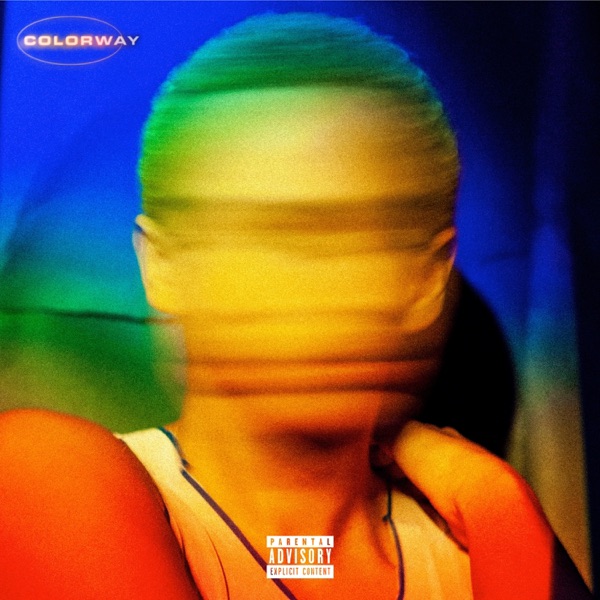
Somewhere in the gap between what contemporary R&B wants to be and what it actually is, DESTIN CONRAD has found something real.
The Los Angeles singer and writer, originally from Tampa, Florida, released LOVE ON DIGITAL on April 25, 2023. It landed with a clarity that a lot of music in its lane has been working toward without quite achieving. The production is warm but not retro. It uses familiar textures, smooth bass, layered vocals, gentle percussion, without fetishizing them. Conrad's voice is the kind that does not announce itself. It builds. You realize halfway through a song that you have been completely absorbed, which is a different experience from being impressed.
The subject matter is specific: navigating Black queer love in the digital age. The title is not metaphor. The album is literally about what happens to intimacy when it is mediated by screens, when the distance between people is measured not in miles but in response times and read receipts. Conrad does not write about this from the outside looking in. He writes from inside it, with the precision of someone who has felt exactly the friction he is describing.
The Sonic Frame
The production on LOVE ON DIGITAL draws directly from a specific era. The turn of the century, the years when R&B was at its most sonically adventurous, when The Neptunes were rewriting what percussion could do in a pop song and Pharrell was building a production vocabulary that still has not been fully exhausted. Conrad absorbed that era and rebuilt it for now.
"KISSING IN PUBLIC" channels early 2000s Justin Timberlake and Pharrell Williams without being a pastiche. The futuristic percussion of that moment, the pops and snaps and offbeat placements that made those records feel kinetic rather than groovy, is present here but reconfigured. The production is less about nostalgia and more about taking a set of tools that worked and applying them to a set of concerns that are entirely contemporary.
This is a meaningful distinction. A lot of R&B that reaches backward does so because the past feels safer than the present. LOVE ON DIGITAL reaches backward for the opposite reason. The sonic architecture of early 2000s R&B was genuinely built for emotional complexity. It could hold joy and unease at the same time. Conrad needs that capacity because the subject matter demands it.
What makes the project interesting beyond the obvious sonic pleasures is the emotional precision. Conrad writes about the specific texture of modern intimacy, the uncertainty, the digital mediation, the difficulty of being fully present, without turning it into a concept album. These are observations, not arguments. The songs feel like conversations that happened rather than essays about conversations.
The Craft Underneath
Conrad's background as a writer for other artists is audible in the construction. Songwriters who work for other performers develop a specific discipline: they learn to build hooks that survive outside of their own voice, that carry emotional weight before any personality is attached to them. LOVE ON DIGITAL has that quality. The songs are structurally complete. Conrad's performance deepens them, but the architecture holds independently.
The Pharrell influence runs through the album without being a crutch. Conrad's connection to that production lineage shaped how he thinks about rhythm as an expressive tool. Not decoration, not texture, but a primary carrier of meaning. When the percussion drops out on a key line, or when a beat arrives half a count late, those choices are doing argumentative work. They produce feeling rather than simply accompanying it.
"Gone" and "Perfect" are the clearest examples of this approach. Both feel immediate on first listen. Both reveal structural layers over repeated listens, additional chord movement, vocal processing that was not immediately audible, rhythmic counterpoint that only registers once the melody is familiar enough to recede slightly. That is the hallmark of genuinely good pop songwriting. The surface rewards you on contact. The interior rewards you for returning.
The Validation
The Grammy nomination is the institutional acknowledgment. A Grammy nominated R&B album released in 2023 carries a certain weight in terms of what it means the Recording Academy paid attention to, and what it tells you about where the record sat relative to its peers. Conrad's album was in that conversation.
The Tiny Desk Concert for NPR is a different kind of validation. The Tiny Desk format strips away production. It removes the studio and the arrangement and puts the songwriter in a small room with minimal instruments and a camera. What it tests is whether the songs hold without infrastructure. Conrad's held. The performance circulated because it demonstrated what was already on the record: the material is strong enough to survive any format.
At roughly 400,000 Spotify listeners, Conrad has an audience that found him the way good R&B usually spreads. Not through a single viral moment but through sustained recommendation, through people who needed to hear exactly this and told other people who also needed to hear exactly this. That audience compounds slowly and then does not leave.
What the Album Is Actually About
The digital dimension of LOVE ON DIGITAL is not a gimmick. Conrad is writing about something specific and real: the particular loneliness of being connected to someone through a screen, the way that connection is both genuine and insufficient, the way intimacy can be completely sincere and still somehow incomplete because of the medium through which it is being expressed.
Black queer love carries additional weight in this context. The digital world is both a refuge and an exposure. Online spaces have historically provided community for people whose visibility in physical spaces carried risk. They have also become spaces of surveillance, performance, and misrepresentation. Conrad sits with both realities without resolving them into a lesson. The songs hold the contradiction rather than explaining it away.
The uncertainty that runs through the album is not ambivalence about the people in it. It is structural. It is about whether full presence is available when connection is always partially mediated, whether love can be fully expressed through the formats available to express it. Those are questions the album asks without pretending to answer them definitively.
At this moment in music, when R&B is producing a lot of work that mistakes gloss for depth and sincerity for simplicity, LOVE ON DIGITAL makes a different case entirely. Conrad is operating with genuine craft, genuine emotional intelligence, and a production sensibility that knows exactly what it is doing. The next record will be interesting, not because of what he might become, but because of what he already is.