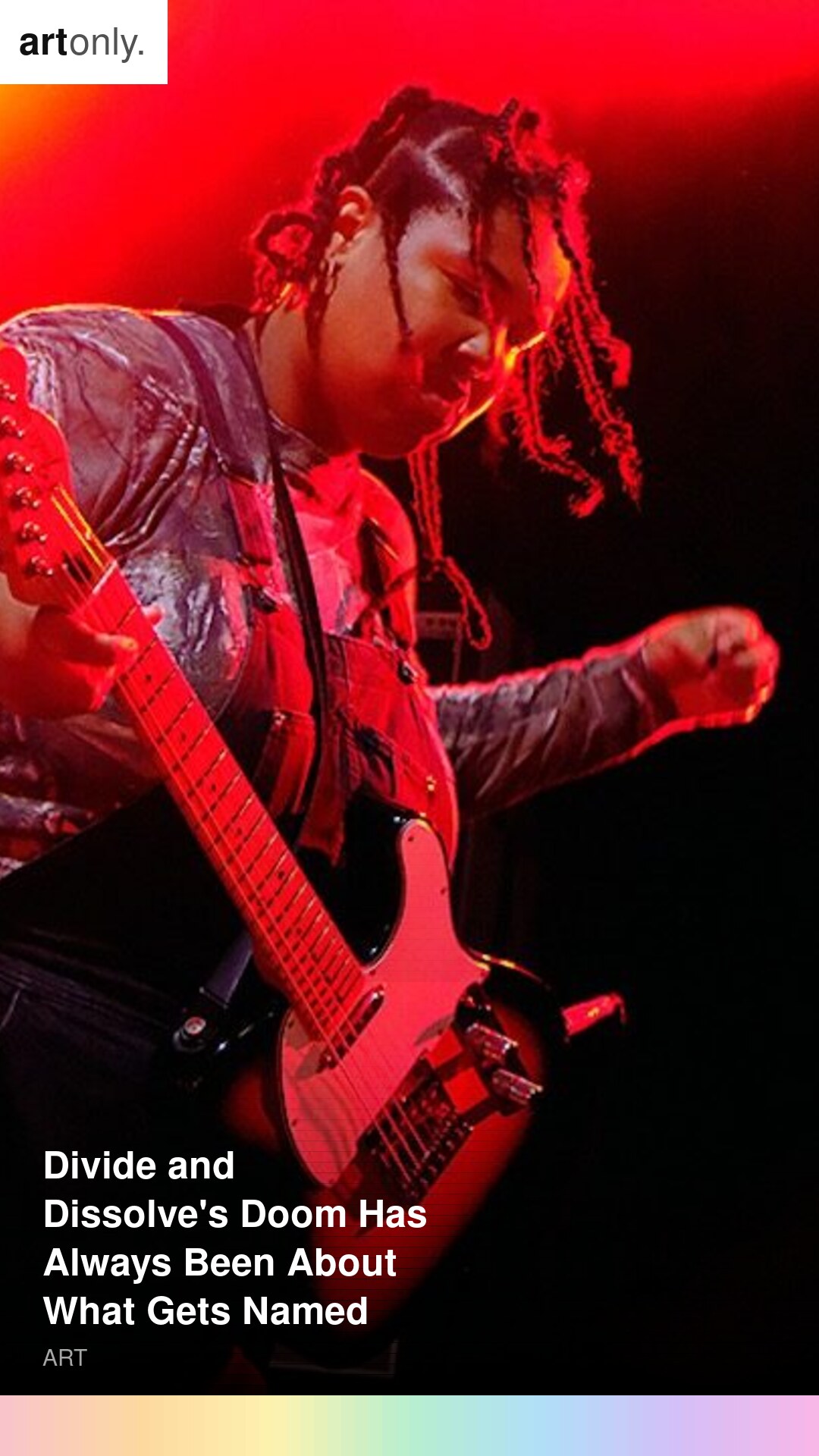
Doom metal has no shortage of projects willing to gesture at political themes from inside genre conventions. Protest imagery grafted onto standard song structures, progressive politics announced in press releases while the music does nothing that disrupts the received form. Divide and Dissolve has never operated that way. Reed and Sylvie Nehill built their project from the premise that the structure of the music itself carries political content, and that what gets played, who plays it, and how the sound is organized are all arguments with real stakes.
Doom without Genre Nostalgia

Gas Lit, released January 29, 2021 on Invada Records and produced by Ruban Nielson of Unknown Mortal Orchestra, introduced a production clarity that opened the band to listeners outside experimental metal circles. Nielson's approach placed the drone weight forward without making the saxophone feel like an ornament. The result was heavy music that was physically demanding in the way the term was meant before it became shorthand for guitar distortion.
Systemic followed in 2022 on the same label, with Nielson again producing. It refined that configuration, narrowing the compositions to something almost procedural in its focus. Four albums and eight years in, Insatiable strips both records back further. The production credit belongs to Reed. Working without an outside producer, the album is slower, more interior, and more unguarded. That is not a word typically applied to doom metal. For Divide and Dissolve, it is the right one.
The Saxophone Decides What Matters
No other significant act in heavy music has built saxophone into its structural foundation the way Divide and Dissolve has. Reed does not use it as color or contrast. The saxophone is the instrument around which the band's compositional logic organizes itself. It occupies the frequency range where melodic information normally lives, and it does so with a physicality that electric guitar could not replicate. In live performance, Reed plays saxophone and guitar simultaneously. The architecture holds.
This is not an accident of personal taste. Reed is Two Spirit, Black, and Tsalagi. Nehill is Maori. The band's stated framework positions decolonization not as a theme to address but as a way of building music. That means the instrumentation is part of the argument. Western heavy music has its hierarchies: guitar above everything, rhythm as support structure, melody as the expendable element. Divide and Dissolve does not organize its sound that way. The saxophone is the argument the music is making, and it has been since the first record.
Insatiable and the First Voice
Reed sings on Insatiable. One track, "Grief," features Reed's distorted voice inside the mix, and it represents the first time vocals have appeared on a Divide and Dissolve studio record. The restraint is as deliberate as everything else. The vocal is not treated as a revelation or a departure. It sits in the texture of the album the way a new material might enter a sculpture, changing the weight distribution without changing the fundamental form.
Music video director Sepi Mashiahof directed the visual for "Grief," and the film operates in the same register as the music: slow, physical, politically situated. Reed does not frame the vocal debut as an arrival. Voice entered the work when the work required it.
Insatiable is, by Reed's own description, an album about love. That word carries a particular weight in the context of this project. Love as Reed articulates it is not sentimental. It is a philosophical position: the idea that compassion and the dismantling of structures built on dispossession are not separate projects. The album's stated concerns include decolonization, the philosophy of impermanence, and positive liberation. All of these are aspects of the same argument rather than separate tracks.
Moving to Bella Union
Bella Union is a UK independent label whose catalog includes Fleet Foxes and Father John Misty. Signing Divide and Dissolve is not a genre adjacency move. It is a genuine expansion of scope, and it gives the band European distribution infrastructure and press access that independent metal labels rarely provide.
That access matters for a project that has consistently made music more politically legible than most of its genre contemporaries. Doom metal audiences already found Divide and Dissolve through Invada. Bella Union opens the record to listeners in adjacent spaces who might not have found it otherwise: listeners engaged with questions of land, sovereignty, and structural violence who encounter the music through arts press rather than metal press. The band does not need to be discovered. The wider infrastructure changes what is possible.
What the Title Names
Insatiable is not a title about appetite as a personal quality. It describes a structural condition. Colonial economies cannot be satisfied because extraction requires ongoing dispossession to function. Institutional white supremacy is insatiable by design. Reed is naming this directly with the album, not deploying insatiability as romantic metaphor.
The music has always operated this way. Divide and Dissolve does not make records that reference political positions from outside them. The political logic is built into the compositional choices. Tempo functions as refusal. The instrumentation disrupts genre hierarchy. Silence carries specific weight rather than serving as negative space. Insatiable extends this practice into a sound that is slower, more interior, and more confident than anything the band has released before. Five albums in, the argument is clearer because the music no longer needs to explain itself. It simply holds.