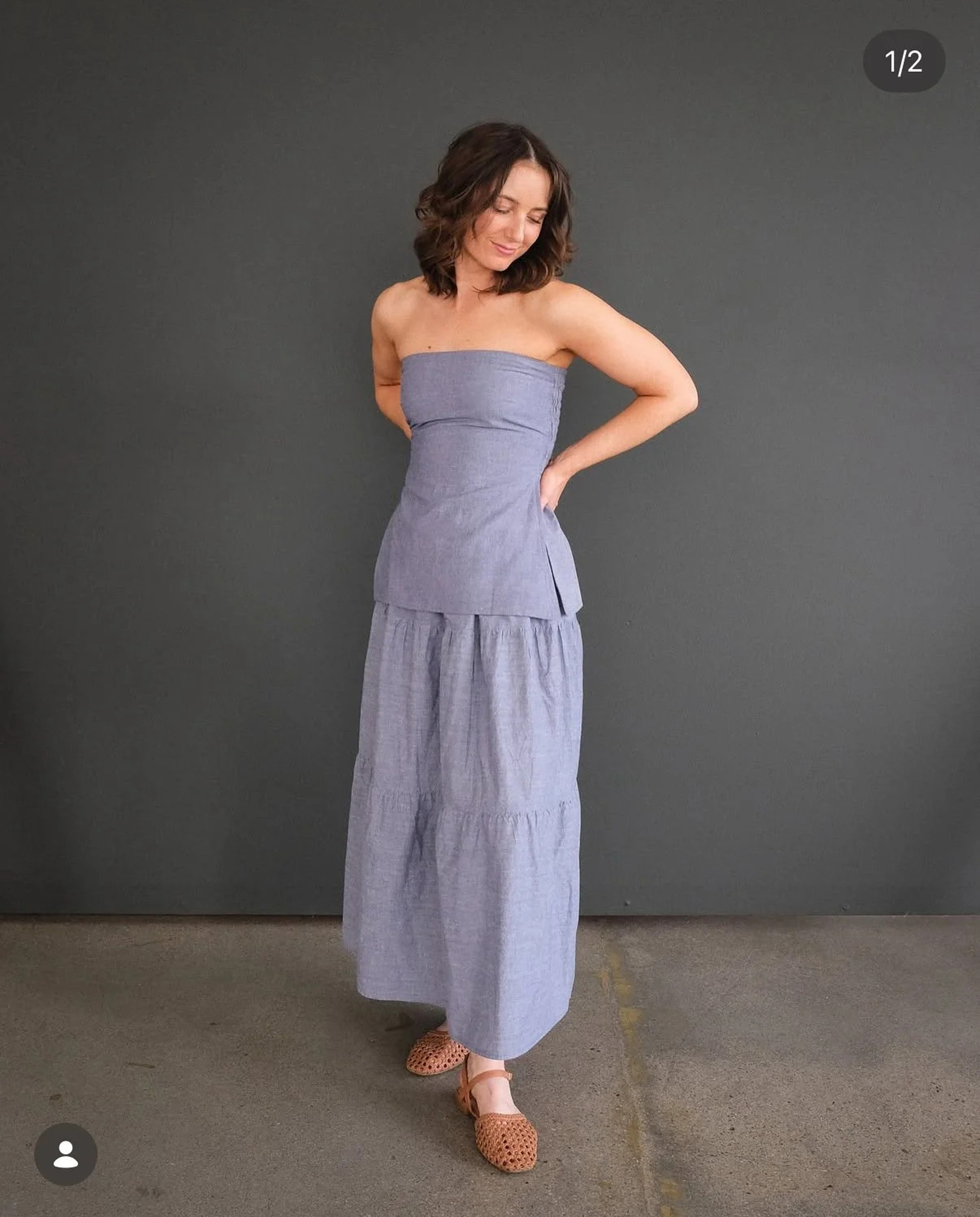
The Sable Set Costs Fifteen Dollars
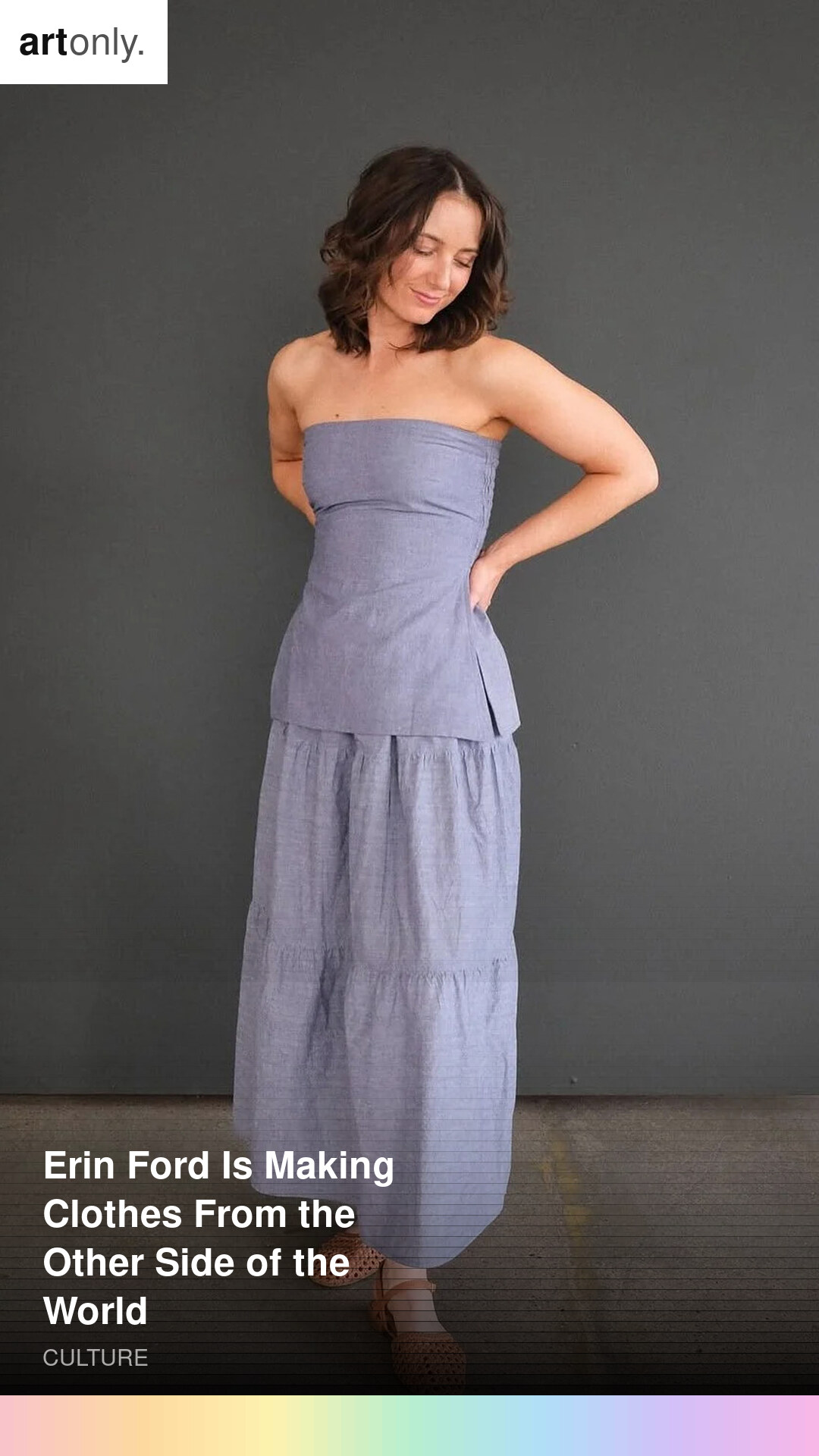
The pattern, not the clothes. You print it at home, tile the pages together, cut out the pieces, and sew it yourself. A strapless fitted top with an elasticated back. A tiered maxi skirt. No zippers, no fuss. The kind of thing you wear on a warm evening when you want to look like you put thought into it without actually suffering for it.
Fifteen dollars is a considered number. Low enough to be genuinely accessible. High enough to signal that the person who made it values their work. Erin Ford designed the Sable Set, the Viper Top, the Saddleback Dress, and she sells them all at that same price, through a clean Squarespace shop, from an apartment in Bangkok.
She is Australian. She got there the long way.
What Actually Happened With Sewing
Most people who pick up sewing have a failed first attempt. Erin Ford's was at fifteen, ended quickly, and left a machine unused for close to two decades. The craft came back during COVID, through crochet first, then knitting, then the machine again. When it stuck the second time, it stuck properly.
The patterns came from a straightforward observation: the beginner-friendly patterns available online did not always look like things worth wearing. She wanted clothes she would actually put on. She wanted patterns that assumed a new sewist was also a person with taste. So she made them.
The Sable Set arrived in early 2024. The Saddleback Dress followed, named after a species of Galapagos tortoise, designed as a shift with deep back detail that can be cut long or short depending on what you want from it. Then the Viper Top. A tank that goes cropped or longline, with an optional built-in bralette. She has made enough of them to wear one most days.
Three patterns. All fifteen dollars. All genuinely wearable. That is a tighter hit rate than most labels at ten times the price.
What Makes the Designs Work
The quality that runs through all three patterns is structural confidence. Each one begins from a clear idea of how the garment should function on a body and works backward from there. The Sable Set's elasticated back on the top solves the fit problem that makes strapless tops unwearable for most people without involving complicated boning or structure. The Saddleback Dress's deep back detail is precisely placed to provide visual interest without adding construction complexity. The Viper Top's bralette option is built into the pattern rather than treated as an afterthought.
These are not design decisions made to look impressive in a flat lay photograph. They're decisions made by someone who wears clothes and understands how they move. That distinction separates practical pattern design from aesthetic pattern design, and it's the reason Ford's patterns work for the sewists who make them rather than just for the sewist who designed them.
The instruction writing matters too. Patterns fail beginners not because the design is wrong but because the instructions assume knowledge the sewist doesn't have. Ford's instructions are written from the position of someone who remembers not knowing things, which produces a document that teaches rather than simply directs. The tutorials she posts on Instagram extend this, translating abstract pattern-making concepts into specific, observable steps.
The Fifteen Dollar Decision
The pricing model is not accidental and deserves more consideration than it usually gets in coverage of independent pattern designers. Most independent pattern businesses operate somewhere between two poles: low prices that signal accessibility but undervalue the work, and premium prices that restrict the audience to people who already have money and taste. Ford's fifteen dollars sits between these deliberately.
At fifteen dollars, the Sable Set is priced lower than a single pattern from most major pattern companies. It is within reach of a genuinely wide range of people. At the same time, it is priced high enough that it does not feel like a freebie, like something that exists to build a following rather than as a standalone product. The price signals seriousness without exclusivity. It also means Ford does not need enormous volume to sustain the business, which preserves the quality of each release.
Independent, Not Niche
There is a version of independent pattern design that is small by intention, precious and underground, circulated among people who already know. Erin Ford is not doing that. She is on Instagram at @byerinford with around eleven thousand followers, posting tutorials, wear tests, and finished makes. The approach is instructional without being condescending. The aesthetic is clean.
She has pushed back on the standard entry advice in the sewing community, which tends to funnel beginners toward wovens and treat stretch knits as advanced territory. Her position is simpler: start with the fabric you actually want to wear. The rest follows. That is not a revolutionary position but it is a useful one, and it is the kind of clear-headed thinking that runs through everything she makes.
The Cicada Dress is in development. A stretch knit with a trumpet hem, functional shoulder ties, two length options. She was testing it in April.
The Distance

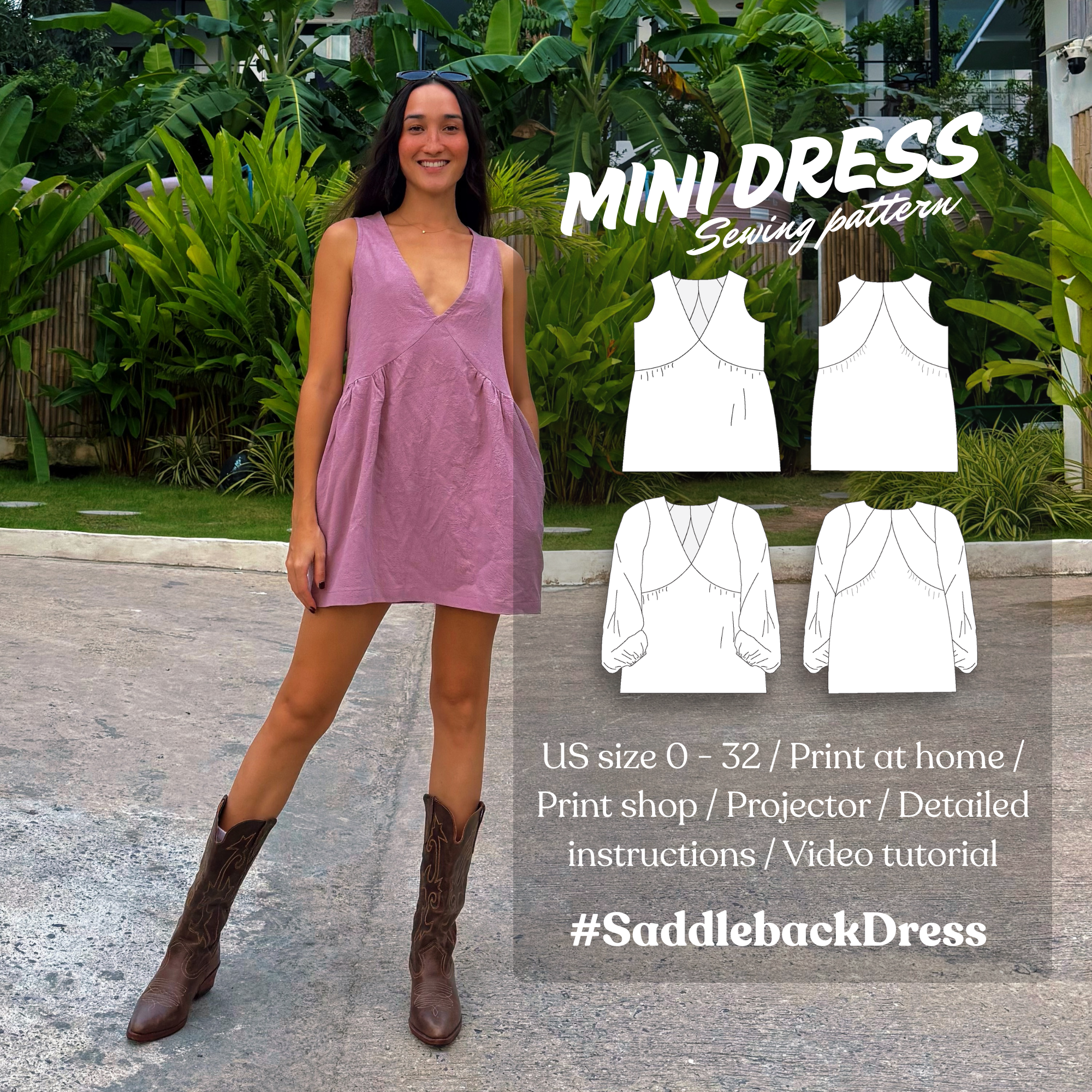
She is making patterns for people all over the world, from Bangkok, at prices that assume her customers are normal people who want nice things. The distance is part of it. She is not embedded in a fashion city, not attached to a school or a label or a retail ecosystem. The work exists because she wanted it to exist and she had the skills to make it happen.
Bangkok is a city with a serious textile industry, genuinely excellent fabric shopping, and a garment culture that takes material quality seriously. Ford's proximity to good fabric is not incidental. It informs how she thinks about construction, about what is achievable with different weights and drapes, about what a beginner sewist in a different city can realistically source and work with. The patterns are designed for accessibility but they're designed by someone who has access to a lot.
There is a version of this story that gets told as an inspiration piece, the lone designer bootstrapping a community from scratch in a foreign country. That framing misses the point. The actual story is simpler: someone identified a real gap, made things well, priced them honestly, and kept going.
The patterns are at byerinford.com. They are worth the fifteen dollars.