A 21-Year-Old with Nothing to Prove
"Easter Pink" sounds like something you'd find buried three pages deep in a 2012 music blog, crystalline, weightless, lo-fi adjacent without being lo-fi, emotionally raw without being theatrical. The fact that it appeared in 2025 and immediately generated a Drake co-sign and 8 million monthly listeners says something about how far the internet has shifted what "mainstream" means. fakemink didn't move toward the audience. The audience moved toward him.
fakemink is Vincenzo Camille, a 21-year-old from Basildon, London, who started making music in FL Studio at age 10 and has released everything through his own label, EtnaVeraVela. His catalog sits at the intersection of jerk, cloud rap, bloghouse, and UK underground, a particular zone of the internet that has no clean genre name but is immediately recognizable when you hear it. His 2023 debut album London's Saviour built the foundation; 2025 and 2026 brought everything else.
What "Easter Pink" Actually Does
The track works because it refuses to announce its intentions. There is no buildup toward a drop, no structural promise of resolution. It simply exists at a specific emotional temperature and stays there. The production has a quality of suspension, as if the beat is hovering slightly above its own grid. Camille's vocal sits inside the mix rather than on top of it, which gives the whole thing an intimacy closer to a home recording than a release engineered for streaming.
That aesthetic is not accidental and it is not lo-fi nostalgia. It is a specific production philosophy that prioritizes emotional truth over technical polish. The distinction matters because the music industry has trained listeners to read lower fidelity as either retro affectation or amateur roughness. "Easter Pink" is neither. It is exactly as finished as it needs to be, and no more.
The Drake co-sign is worth examining precisely because of the gap between the two artists' aesthetics. Drake operates at the center of mainstream rap infrastructure; fakemink operates at a significant remove from it. The co-sign signals that the music crossed cultural boundaries by being genuinely compelling, not by chasing relevance or accommodating itself to a broader audience.
The Drain Gang Orbit
The co-signs tell you where the sound lives: Dean Blunt, Yung Lean, Ecco2k, Clairo, Playboi Carti, Frank Ocean. These aren't random, they're all artists who operate at some angle to the mainstream, who have built distinct worlds that resist easy categorization. fakemink's collaboration with Ecco2k and Mechatok on "Makka" in 2025 is a genuine experimental left-turn, the kind of move that signals an artist thinking about craft rather than momentum.
His EP The Boy who cried Terrified dropped January 29, 2026, his 21st birthday, and the Dazed Spring 2026 cover followed. Shot by Hedi Slimane. These are not the markers of an artist who stumbled into visibility; they're the result of a fully formed aesthetic that arrived already coherent. "Under Your Skin" and "Blow the Speaker" show different angles of the same sensibility, nostalgic and forward simultaneously, emotionally direct without being confessional.
The Label Independence Question
Running your own label at 21, having started producing at 10, means Camille has never experienced the traditional artist development pipeline. He has no A&R telling him what a single should sound like. He has no distribution deal requiring a minimum number of releases per year. The shape of his catalog is determined entirely by what he wants to make and when he wants to release it.
This is increasingly the architecture of a certain kind of artist, particularly in the UK underground, where self-released music on Bandcamp and SoundCloud built audiences long before Spotify algorithms mattered. But fakemink has operated in this way while achieving reach that self-release usually can't produce. The 8 million monthly listeners number coexists with a catalog that sounds nothing like it was made for 8 million monthly listeners.
That coexistence is the most interesting thing about his position right now. He has the audience. He has not changed the music to keep it.
The Coachella Tent
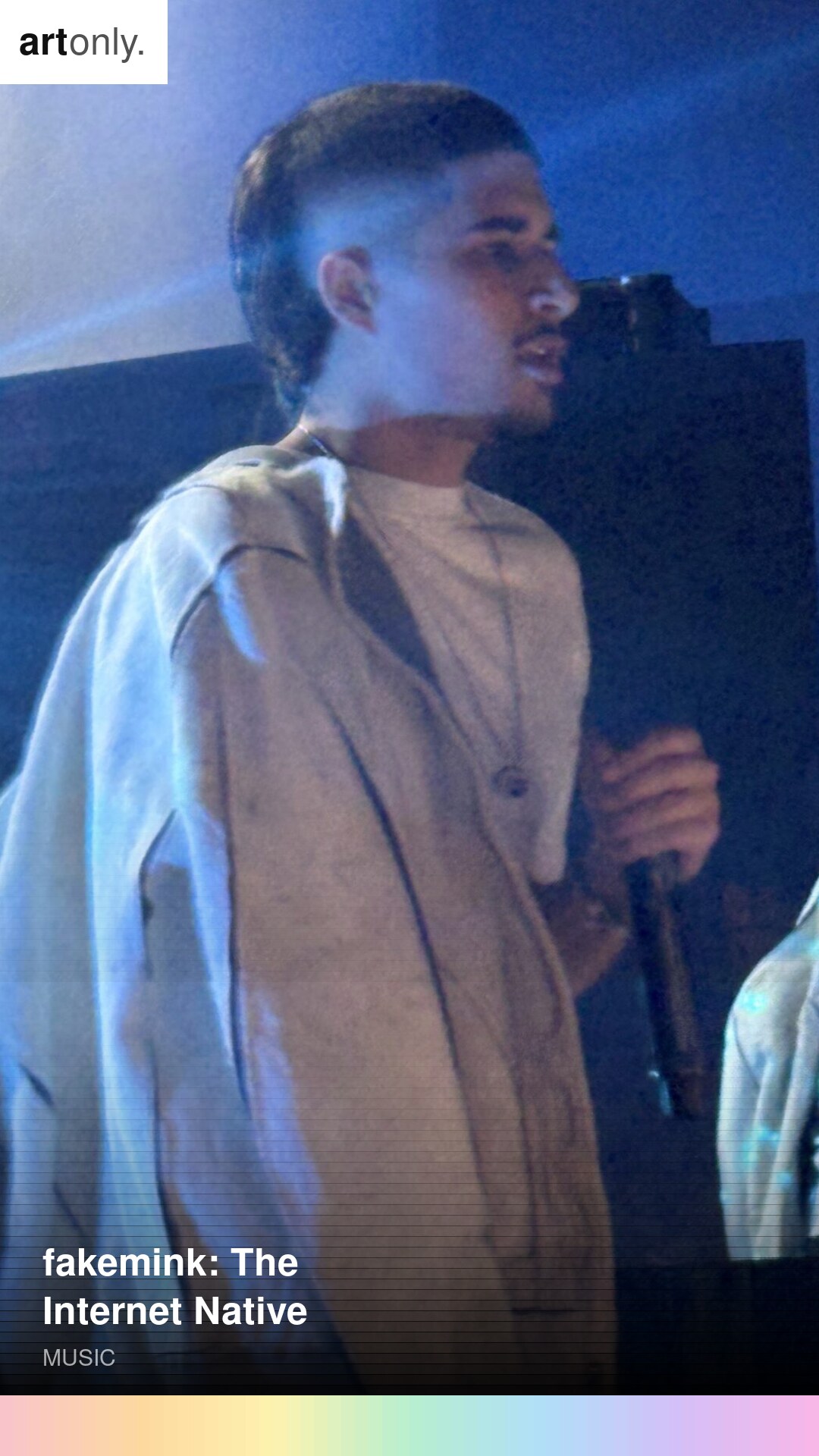
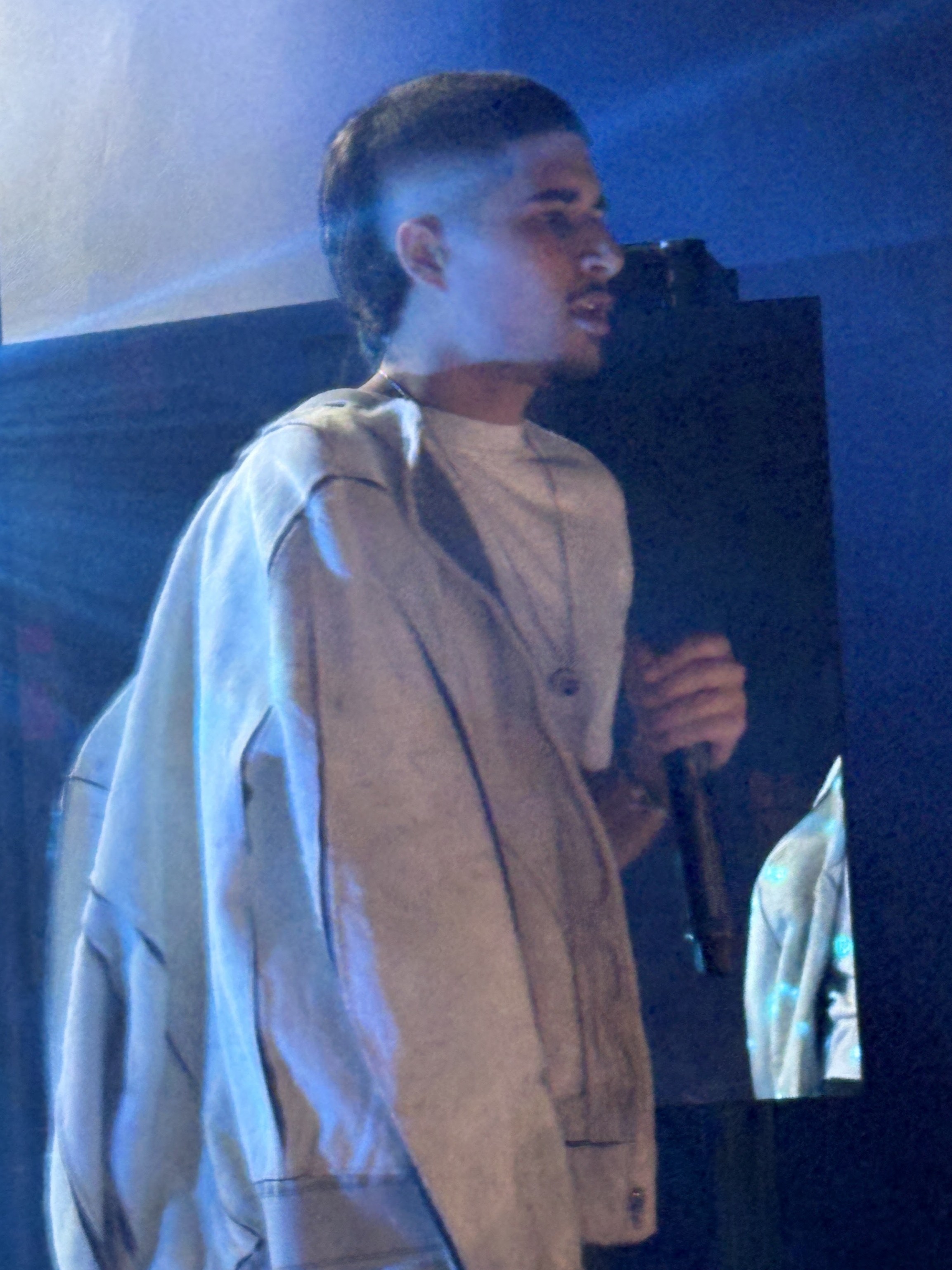
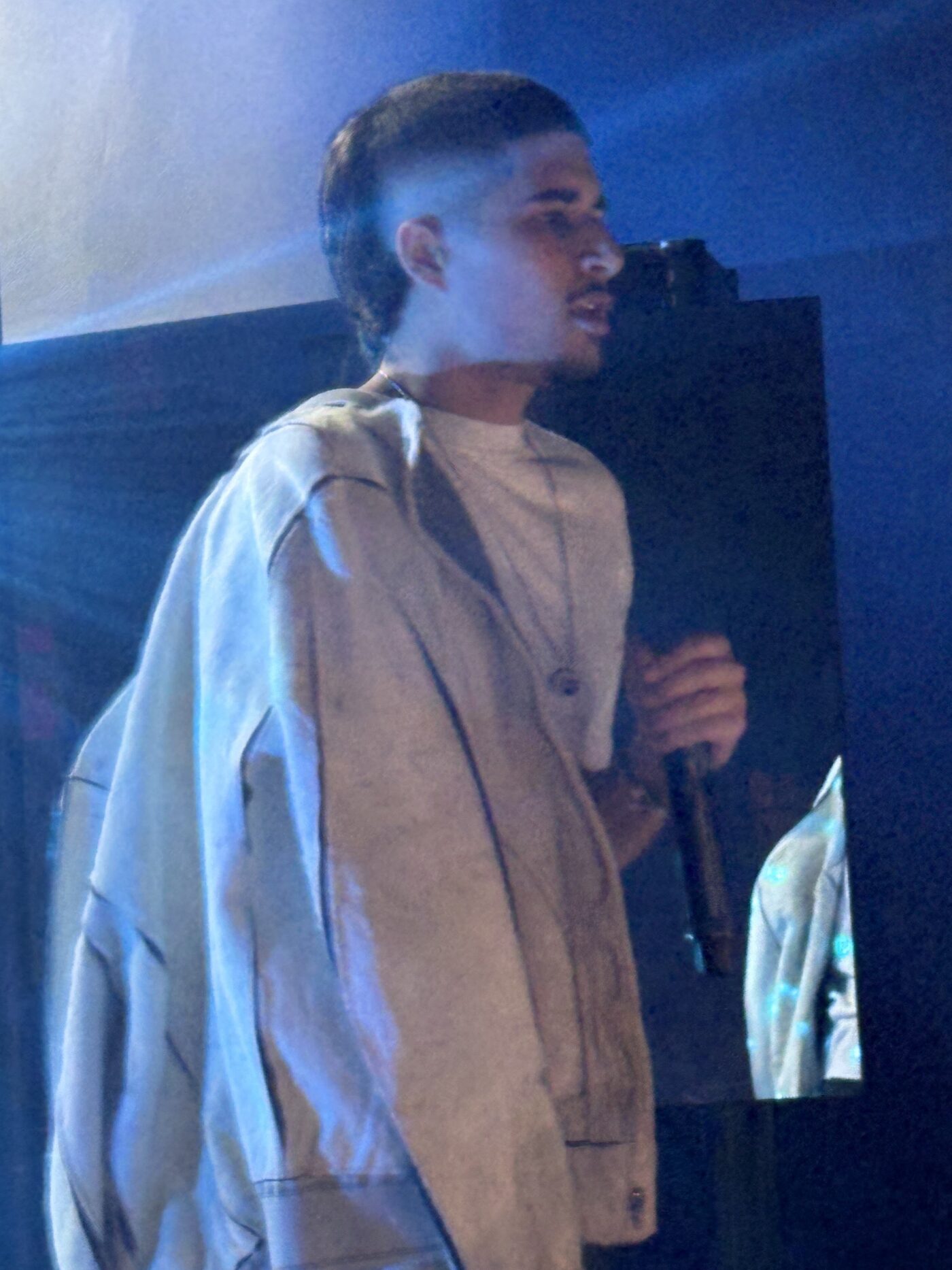
He performed at Coachella 2026 in the Gobi Tent and his Spotify follower count still reads under 500K. That gap between cultural footprint and platform metrics is one of the more interesting facts about what he's built. The music did its own work. That's how it's supposed to go.
The Gobi Tent at Coachella is not the main stage. It is the stage for artists whose audiences are real before they are large, who fill rooms with people who genuinely know the music rather than people who came to see a name they recognize. Playing it well, which fakemink did, is a different kind of credibility than the main stage offers. It means the music travels on its own terms.
The Internet Native Proposition
The artist who builds an aesthetic in isolation, discovers an audience retroactively, and has no debt to the industry because they never needed it: this is a specific kind of artist that only the internet era produces. fakemink is a clear example of what that produces. The catalog exists before the audience arrives. The sound is complete before the press attention. The Coachella appearance and the Drake co-sign did not create the aesthetic. They found it already there.
This matters because it inverts the normal relationship between artist and industry. The standard pipeline moves from development deal to A&R shaping to single rollout to audience. fakemink moved from bedroom production to finished catalog to audience to industry attention, in that order. The music determined what the attention meant rather than the attention determining what the music became.
The 8 million monthly listeners and the sub-500K Spotify follower count coexisting is the arithmetic of this. Real audience, built one person at a time through the music itself, not through algorithmic optimization or industry machinery. That is what the internet native proposition actually means: the work does the work. That is the internet native position at its most precise: not a marketing strategy, a fact about how the music was made and how it found its listeners.