The Intergenerational Tension That Fashion Pretends Not to Have
Fashion has a particular relationship to its own history. It cycles through it, cannibalizes it, declares it relevant and then exhausted and then relevant again on a schedule that seems driven more by market logic than by genuine cultural development. The new faces at fashion week exist in this cycle, arrived at the moment when the previous wave is beginning to be recognized as previous, carrying the energy of something that hasn't been metabolized yet.
The tension I keep noticing at shows, particularly in the front rows, in the backstage, in the way the established figures of the industry position themselves relative to the new arrivals, is not the tension of hostility exactly. It's more complicated. It's the tension of a world that depends on newness for its value proposition, whose economy requires the next thing, confronting the arrival of the next thing with the mixed feelings that produce.
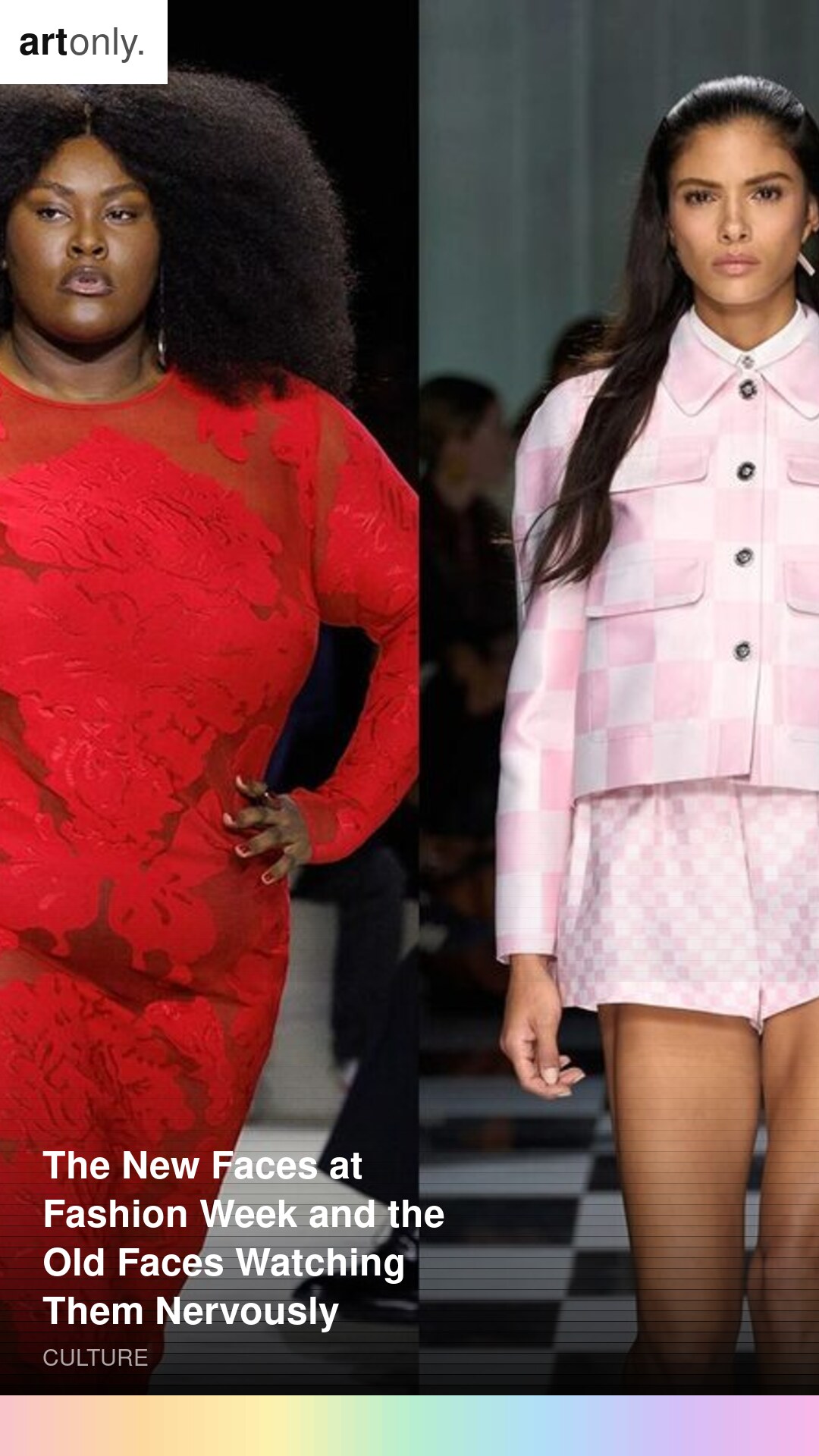
The new faces of 2024 fashion week were extraordinary in their specificity, not the homogenized beauty ideal that fashion spent decades enforcing, but faces and bodies that carried genuine diversity of origin and aesthetic and cultural background. This shift has been uneven and incomplete and has proceeded partly for commercial reasons rather than purely ethical ones. But the faces in the shows were genuinely different from the faces in shows of fifteen years ago.
What the Old Faces Are Nervous About
The nervousness I observe in the established industry figures is, I think, about relevance. The fashion world has very specific ideas about who gets to define taste, who gets to occupy the roles of arbiter and authority, and those ideas have historically been organized around a relatively narrow set of backgrounds and aesthetic traditions.
The new entrants, the designers, the models, the stylists, the critics, who are arriving with different backgrounds and different aesthetic vocabularies are not simply diversifying the existing structure. Some of them are questioning the structure itself, questioning whether the categories and hierarchies that have organized fashion are as inevitable as the industry has treated them.
That questioning is uncomfortable for people whose authority depends on the existing structure. The nervousness is the nervousness of authority that knows it's being questioned but can't decide how to respond.
There is also genuine curiosity, genuine excitement about the new, the senior figures who are genuinely open to the challenge. Fashion contains multitudes and its relationship to change is more complex than simple resistance.
The Economy of Newness
Fashion's dependence on novelty is structural, not incidental. The seasonal calendar, the constant churn of collections, the requirement that each show present something that hasn't been seen before, these are not aesthetic preferences but economic necessities. The industry is funded by the promise of the new. This means it needs new faces, new voices, new aesthetic positions on a regular schedule, regardless of whether the cultural conditions that produce those positions have actually shifted.
This creates a particular dynamic. The industry actively recruits novelty while simultaneously being organized around structures that were built to serve a different kind of newness. New faces arrive to serve a machine that was designed before they were considered. The tension between their presence and the machine's original logic is where most of the interesting friction lives.
In 2024, that friction was visible in the casting choices, in the runway presentations that juxtaposed different aesthetic traditions without fully integrating them, and in the coverage that struggled to describe what it was seeing using vocabulary built for something else. Fashion criticism is still largely written in the language of European modernism, and several of the most compelling shows of 2024 were making work that doesn't translate well into that language.
What the Shows Actually Showed
Separate from the sociological drama: the clothes. The collections of 2024's fashion weeks were, on balance, more interesting than the average. There was work being done with materials and construction and cultural reference that seemed to come from a place of genuine investigation rather than trend-following.
Some of the most interesting pieces I saw were from designers whose names I didn't know before the week began. That's the experience fashion week should generate, the encounter with something you hadn't anticipated, the visual information that changes how you think about what clothing is and can do.
The new faces were wearing the new clothes. The old faces watched. Something was shifting.
It's still shifting.
The shows themselves were, beyond the sociology, beyond the industry observation, often genuinely beautiful. The spectacle of fashion at this level remains extraordinary, the clothes remarkable as objects, the staging as theatrical achievement. I keep returning to a dress I saw at one of the smaller shows, a piece in a textile I'd never encountered, worn by a model who moved with a quality of full presence that made everything else in the room feel slightly less real. That's what fashion week can do at its best: produce a single moment of genuine beauty that justifies the entire exhausting week.
What Diversity Actually Means in Practice
It is worth being specific about what the 2024 shift in casting looked like on the ground, because the abstract language of diversity flattens distinctions that matter. The change is not simply in skin tone or body type, though both have shifted. It is in the cultural grammar that different faces and bodies carry into a room, the specific aesthetic histories and visual traditions they bring with them, the way they move, the way they inhabit clothing that was designed with particular bodies and cultural assumptions in mind.
When designers design for bodies they haven't previously designed for, either the clothes change or the bodies are asked to adapt to the clothes. In 2024, you could see both happening depending on the show. The most interesting presentations were ones where the relationship between garment and body had clearly been renegotiated, where the clothes were made to work with the person rather than requiring the person to disappear into the garment.
The new faces will become the established faces in time. The nervousness will find new objects. The cycle continues. Watching it closely is its own kind of education in what a culture values and how it changes.