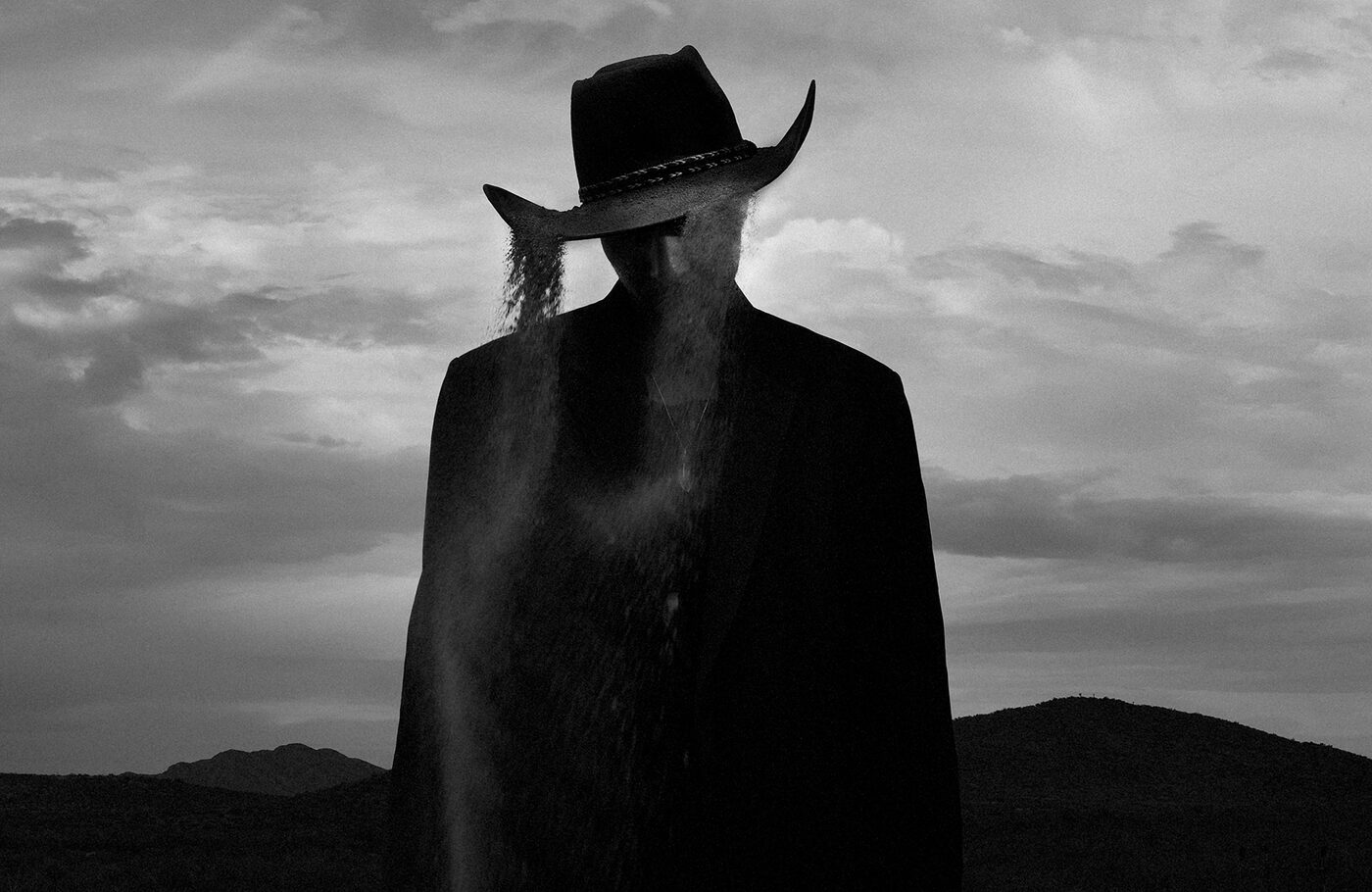
James Blake has been doing the same thing for fifteen years and somehow always making it feel new. This is not a criticism. It is the definition of a coherent artistic practice: to have found a set of questions worth spending a career on, and to return to them with sufficient imagination that each return constitutes a genuine investigation rather than a rehearsal of positions already established. Hollow Ground, released June 13 on Republic Records, is his sixth studio album, and it is his most honest accounting of what the practice has cost him and what it has given back.
The first thing to say about James Blake is that he began as a producer before he was understood as a vocalist, and that this ordering still matters. He emerged from London's post-dubstep scene in 2010 and 2011 with a series of EPs that demonstrated an ear for what electronic music could do when it was willing to move slowly, to let rhythm deconstruct and reassemble itself at a pace that required patience. His debut album in 2011 was what happened when that sensibility tried to accommodate a voice: the piano, the space, the stutter and hesitation of someone figuring out in real time how the emotional content of his work and its formal innovations could coexist. The answer turned out to be that they could not just coexist but that each was necessary to the other. The vulnerability in the voice required the impersonality of the electronic architecture. The impersonality required the vulnerability.
The Hollow and the Ground
The title of this album is doing particular work. Hollow carries a negative connotation when applied to a person: to call someone hollow is to suggest the absence of substance or genuine feeling. But to hollow something is also to carve a space within it, to make room. Ground is where you stand when nothing else is left. The pairing asks what it is like to occupy cleared space, to stand in a place that has been emptied of everything extraneous. The album does not answer this question cleanly, but it asks it from the inside rather than the outside, which is the only position from which such questions have any force.
The production on Hollow Ground returns to the piano-driven minimalism of Blake's early work without abandoning what he learned from the more collaborative, R&B-inflected records he made in the years between. The result sounds like a synthesis rather than a retreat. You can hear "Overgrown" in its patience and you can hear "Assume Form" in its willingness to let warmth in, and what holds these qualities together is the understanding, achieved after fifteen years, that neither quality negates the other. A record can be spare and intimate at the same time. A record can be technically rigorous and emotionally available at the same time. Hollow Ground demonstrates both of these as settled facts rather than propositions under investigation.
The Voice as Instrument
Blake's voice has evolved in a way that is unusual among artists of his generation. It has become more assured over time without becoming more polished in the sense of having its roughnesses removed. The falsetto that defined his early work is still present, but it is deployed now with a specificity that earlier recordings could not quite achieve. He knows exactly what the falsetto is for and uses it accordingly. The lower register, which was less prominent in early work and appeared more in "Friends That Break Your Heart," is now fully integrated, allowing him to move between registers without the transition feeling like a gear change. The voice is seamless in a way that makes the emotional content of each register land more precisely.
There are no featured artists on Hollow Ground. This is notable given Blake's history of collaboration, which has produced some of the most memorable guest contributions of the last decade, including his work with Bon Iver, with Frank Ocean, with Jay-Z, with SZA. The absence of features here is not a withdrawal but a statement of intent. The record has a single author. The singular voice that might have been dispersed across collaborators is instead turned inward, and the result is an album that sounds like private correspondence rather than public transmission.
What Fifteen Years Looks Like
There is a quality in Blake's work that becomes clearer when you encounter Hollow Ground after hearing everything that preceded it. He has always been making the same argument: that emotional complexity deserves formal complexity, that the interior life of a sensitive person in a loud world is not a small subject, that music can hold both the dissonance of experience and its resolution without falsifying either. What changes on Hollow Ground is not the argument but the tone in which it is made. The earlier records were making the argument urgently, as though the point was still in dispute. Hollow Ground makes it with the confidence of someone who has long since stopped worrying about whether the point will be accepted.
The album's longest track, which arrives in its final third, is its clearest statement. It builds from something almost imperceptibly small, a single piano line barely above the level of a whisper, and expands across its running length into a structure of considerable emotional weight. The trajectory is the argument made audible: the small thing, attended to with sufficient care, reveals itself as large. The hollow ground, examined closely, turns out to be the place you needed to be standing all along.
The London That Made This
James Blake is a London artist in a way that is not always acknowledged, perhaps because so much of his later career has been based in Los Angeles and his collaborations have taken him across American musical landscapes. But the sensibility that produced his work is distinctly formed by the British tradition of music as a place where emotional reserve and emotional intensity coexist, sometimes uncomfortably. The post-dubstep scene from which he emerged was a London scene: Bass Clef, Mount Kimbie, Actress, Rustie, moving through the influence of dubstep toward something more introspective and less obviously clubbable. That formation is present in Hollow Ground in the structural choices, in the patience, in the willingness to make the listener do some of the work. This is music that asks something of its audience, and the audience it is asking the most of is the one that has been paying close attention since 2011.
Hollow Ground is not a capstone. It does not feel like an artist saying what they need to say before they run out of things to say. It feels like an artist who has finally cleared enough space within his own practice to make the record that was always implicit in the work. Hollow, but not empty. Ground, but not settled. Fifteen years in the making, and still unfinished in the right way.