The Medium Is the Message, But the Message Is Also the Medium
Holzer began posting her Truisms anonymously in lower Manhattan in 1977. Offset-printed on cheap paper, wheat-pasted to construction hoardings and phone boxes, they mimicked the visual grammar of advertising and political propaganda while subverting both. The statements were deliberately without attribution, without irony markers, without clear interpretive frame. Readers were left to determine for themselves whether any given truism was endorsement, critique, or both.
This ambiguity was not a failure of intention. It was the intention. Holzer understood that language derives its authority from its delivery system, and that the same words mean different things depending on who speaks them, where, and how loudly.
The flyposting campaign was also a spatial claim. Public space in lower Manhattan in the late 1970s was contested in ways that made unauthorized text on walls a political gesture before the content of the text was even read. The SoHo and Tribeca buildings that carried the Truisms were sites of active conflict over gentrification, over who got to inhabit and use those streets. Holzer was operating in a context where presence in public space was already an argument.
LED and Light
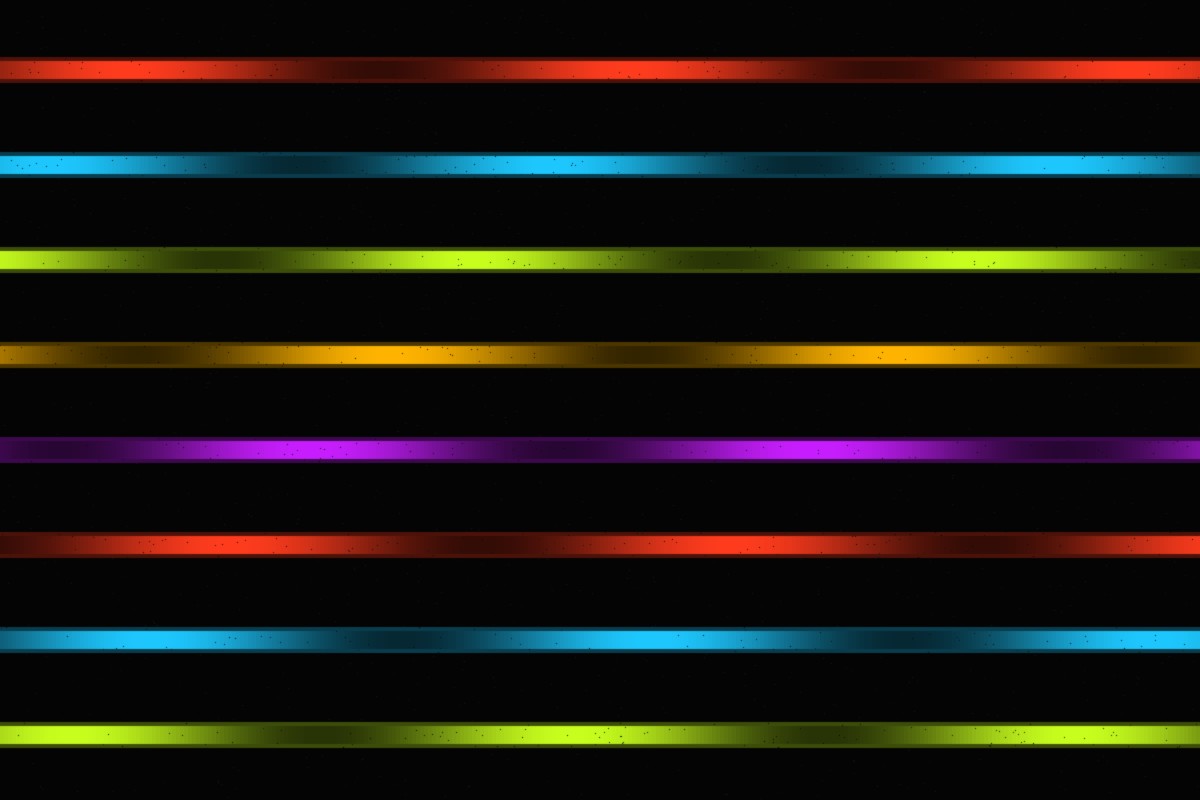
The Spectacolor board in Times Square, 1982. The Guggenheim rotunda, 1989. The Reichstag, 2001. Holzer has consistently sought the largest possible public surfaces for work that refuses the conventions of gallery display. The choice of LED, with its associations of commerce, emergency, information overload, is precise. The messages appear where we expect to be sold things or warned of danger.
Inflammatory Essays (1979 to 1982) escalated from the Truisms into something more overtly political, the language lifted from revolutionary rhetoric across the ideological spectrum: Lenin beside Mao beside the American far right, each indistinguishable in typographic intensity. The effect was not moral equivalence but an argument about the formal properties of political language, its desire to command, to eliminate doubt, to produce bodies that act.
The Guggenheim rotunda installation deserves specific attention. Holzer wrapped the museum's spiraling ramp with a continuous LED text that visitors read while descending, the sentences moving past at a speed just fast enough to create urgency. The architecture of that building, designed to produce a continuous perceptual experience as the visitor moves through it, became the delivery system for language that kept shifting register: tender, threatening, bureaucratic, lyrical. The building and the text argued with each other the whole way down.
After Abu Ghraib
Holzer's Arno series (2006) used declassified US government documents relating to the treatment of detainees, printed on silk in the colors of Italian landscape painting. The juxtaposition was not satirical. It was structural: the language of bureaucratic violence rendered in the materials of aesthetic beauty, neither canceling the other, both demanding attention simultaneously.
This is Holzer's consistent method: to refuse the rhetorical comfort of distance, to place contradictory things in physical proximity and require the viewer to hold the tension without resolving it. The Arno paintings work precisely because they don't tell you what to feel about the combination. You hold the beauty of the silk, the horror of the text, and the fact that these two things now occupy the same object without any authorial instruction about which should dominate.
The choice of Italy for that series, of Italian landscape silk and the name of a Florentine river, compounds the tension. Renaissance painting placed atrocity in pastoral settings regularly: crucifixions in Tuscan hills, massacres in Flemish meadows. Holzer is in that tradition as much as she is in any tradition of contemporary conceptual art.
Projection at City Scale
Holzer's large-scale building projections, which she has been making since the 1990s, represent the most literal expansion of her original street-level project. The wheat-pasted poster on a Manhattan wall spoke to pedestrians at close range. The projections onto the Reichstag, the Beinecke Library, the facades of museums and government buildings speak to everyone in visual range, across distances where individual reading becomes impossible and the image operates as a field rather than a text.
At that scale, the specific words matter less than the fact of language appearing where it has no official authorization. The Reichstag projection in 2001 placed statements about violence and power onto a building that was itself a site of historical violence, rebuilt after its destruction and symbolic of both German democratic aspiration and the unresolved weight of the twentieth century. The projection did not explain this. It placed language there and left the combination for whoever was standing in the square.
The city-scale projection is the Truisms' logical extension: from the single poster on the single wall to a surface large enough to be seen from multiple city blocks, in a location where the wall itself is already a statement. Holzer has been consistent about choosing buildings that carry political meaning, that are already in the business of representing something. The words arrive into a space that is not neutral, and the non-neutrality multiplies.
What Remains
Fifty years into a practice that has moved from street posters to museum rotundas to public projections onto entire city blocks, Holzer's fundamental question remains unchanged: who speaks, and who is compelled to listen? The Truisms have been translated into dozens of languages. They appear on merchandise, in memes, on protest signs. They have entered the common vocabulary so completely that many people encounter them without knowing their origin.
This is not co-optation. It is completion. Holzer always intended for the work to circulate without her, to lose its author and become, simply, language in the world. That it has done so is the argument she has been making all along.
The question worth asking now, fifty years into the practice, is whether the work has made the world different in any measurable way. Whether the people who read ABUSE OF POWER COMES AS NO SURPRISE on a protest sign in 2020 behaved differently because those words existed, whether the formulation of the thought in that particular compact form created a cognitive grip that would not otherwise have been available. There is no clean answer. Art rarely produces traceable effects. But the Truisms have been in the vocabulary of political speech for decades now, have been available as handles for feelings that otherwise resist articulation, and the availability of a good sentence at the moment when it is needed is not nothing. It may be the most that language can do.