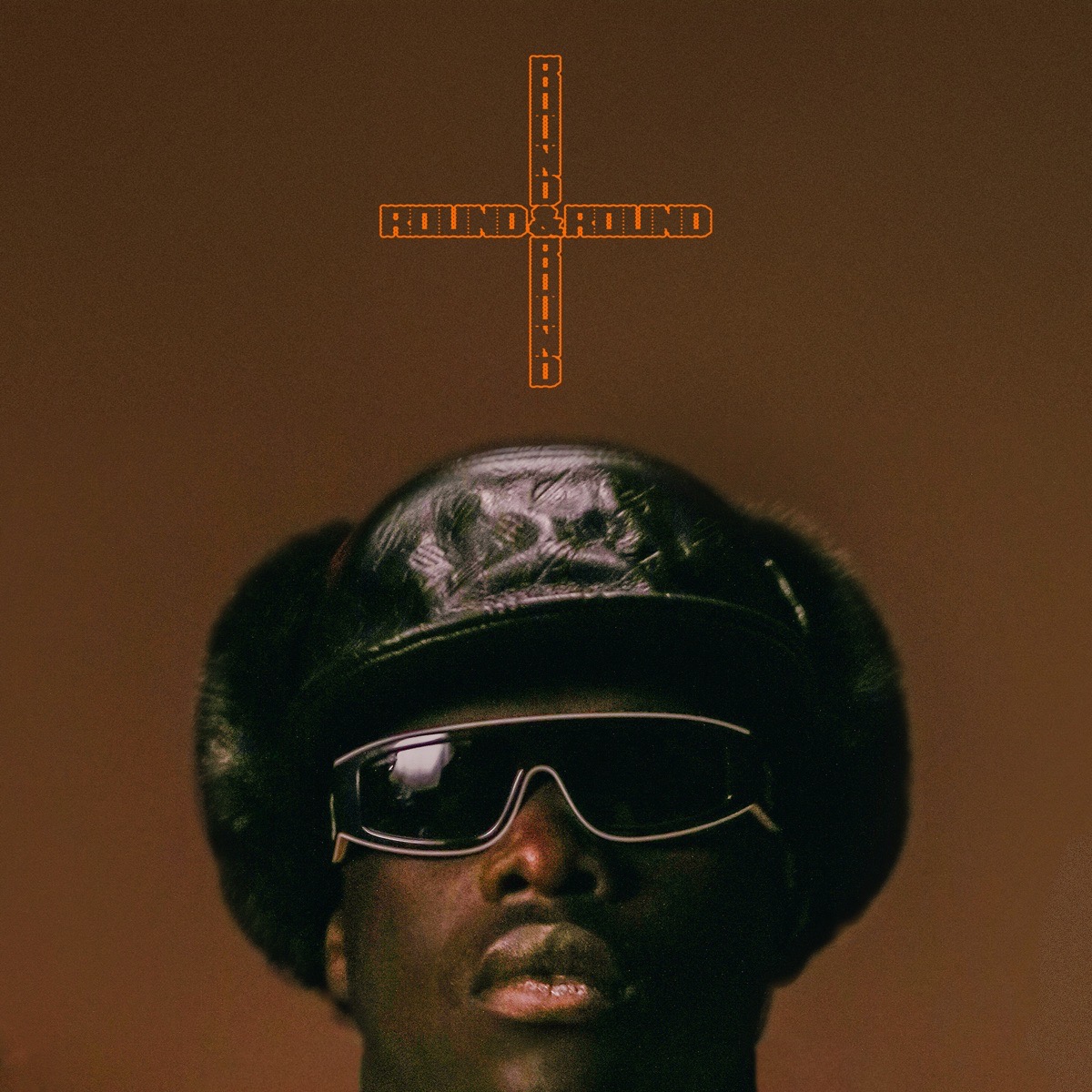
Jon Batiste is one of the most deliberately uncategorizable musicians working today. His career has moved between jazz, soul, pop, film scoring, television bandleading, and now a deepening engagement with the classical piano repertoire, not by negotiating between these spaces but by treating them as a single continuous conversation. That framing matters. Batiste does not code-switch. He plays what he knows, and what he knows comes from a family of musicians that stretches back generations in Louisiana, from the New Orleans second line, from the Baptist church, from Juilliard, from hundreds of nights on stage as a bandleader. All of it is present at once.
"Black Mozart," released June 19, 2026 on Decca Records, is the second volume of his Batiste Piano Series. The first volume, "Beethoven Blues," arrived in 2024 and topped Billboard's Classical Albums chart. It established the method: take repertoire from the European classical canon, play it on solo piano, and bring to the performance the full inheritance of Black American musical tradition without subordinating either. The method sounded simple when described. The execution proved otherwise.
"Black Mozart" extends the project to twelve keyboard works by Mozart. What Batiste does with them is not transcription and not fusion in the usual sense. He reads the score and then reads it again through jazz, through blues, through ragtime, through stride. The Mozart remains recognizable throughout. So does everything else. What he demonstrates, across forty minutes of solo piano, is that these traditions have always been capable of illuminating each other. They were simply kept in separate rooms.
The Choice of Juneteenth
The release date is not incidental. Batiste announced the album in March 2026 and tied its arrival specifically to June 19, the federal holiday marking the end of American slavery. That act of dating is itself a statement. The classical music establishment has historically treated the European canon as belonging to a European tradition. The unstated corollary is that other traditions belong somewhere else. Batiste's release date refuses that corollary without arguing with it. He simply arrives on Juneteenth with a record that makes the European piano repertoire his own, and in doing so makes plain that the claim was always available to him.
This is how cultural reclamation works when it is done without bitterness: not by dismantling the thing but by demonstrating that your relationship to it has never required the permission you were never asked to seek.
The Mozart project also follows a different kind of cultural positioning than "We Are," the album that won Batiste Album of the Year at the 2022 Grammy Awards. "We Are" was an album about collective joy, about survival, about what communities hold onto when everything around them is eroding. "Black Mozart" is quieter, more individual, more technical. It requires listening rather than celebrating. That is a braver thing to ask of an audience that has given you five Grammys.
What the Piano Does Here
The choice of solo piano for this project is structurally meaningful. No arrangement, no band, no collaborative buffer between the player and the listener. Just the instrument and the knowledge Batiste brings to it. Piano performance in the classical tradition values precision of voicing, clarity of line, fidelity to what is on the page. Piano performance in the jazz tradition values responsiveness to the moment, dialogue between the hands, a willingness to depart and return. Stride piano, which emerged from ragtime in the early twentieth century, uses the relationship between bass and upper registers in a rhythmic conversation that has its own physics.
Batiste is fluent in all of these vocabularies. On "Black Mozart," he allows them to speak to each other across the same twelve compositions. The result is not a stylistic mashup. It is something closer to a demonstration: that these methods of playing the piano come from related places, that the intelligence underlying them is not bounded by the tradition it was born in, that a pianist trained in New Orleans and Juilliard simultaneously is not playing between two traditions but from inside a single larger one that has always included both.
The album includes a track called "Processional" that Batiste composed himself. It arrives not as an interruption but as a culmination. In it the interpreter steps out from behind the canon and presents something entirely his own. By most accounts it is the album's most fully realized piece. That is either ironic or inevitable, depending on your view of what the preceding tracks have been building toward.
The Deeper Stakes
Classical music's structural problem is not primarily a matter of individual prejudice. It is a matter of systems: the concert hall, the conservatory, the critical infrastructure, the audience demographics, the programming logic of major institutions. These systems have reproduced themselves across generations with a consistency that cannot be accidental. Artists who have existed outside them have repeatedly produced work of equivalent depth and have repeatedly been received as exceptional cases rather than as evidence that the system's premise was wrong.
Batiste's premise on "Black Mozart" is that the tradition that produced him is not lesser in relation to the European classical canon. That it has its own depths, its own innovations, its own capacity to illuminate a body of repertoire that has historically excluded it. The album makes this argument audible, which is the only form in which such an argument finally matters.
At a moment when the United States is engaged in various ceremonies of self-celebration, hosting international sporting events and approaching its 250th year, an artist releasing a solo piano album of Mozart reinterpretations on Juneteenth is doing something specific with time and attention. He is saying that the history being celebrated and the history being elided are part of the same story, and that music is one of the places where the elision becomes visible.
The visit to this particular record is quiet. It rewards patience. What you take from it depends on what you bring: knowledge of Mozart, knowledge of jazz history, knowledge of what it has cost to stand in certain rooms. Batiste is fluent in all of it. "Black Mozart" is the record where that fluency becomes something more than impressive. It becomes necessary.