Jon Hopkins released RITUAL on August 30, 2024, through Domino Recording Company, and since its arrival the record has established itself as one of the most considered works in contemporary electronic music. It is not an album in the conventional sense. It is a single continuous composition split across eight chapters, built from cavernous bass frequencies, ritualistic percussion, and melodic architecture that expands and contracts at its own pace. After spending time with it, calling it simply music feels like a category error.
Hopkins was born in Kingston upon Thames in 1979 and raised in Wimbledon. He began playing piano at age four and studied at the junior department of the Royal College of Music from age twelve. That grounding in classical composition runs underneath everything he has made since. His professional career began playing keyboards for Imogen Heap, and he went on to produce and contribute to records by Brian Eno, Coldplay, and David Holmes. His solo discography developed in parallel, each record pushing further into electronic territory while retaining the structural thinking of his classical training.
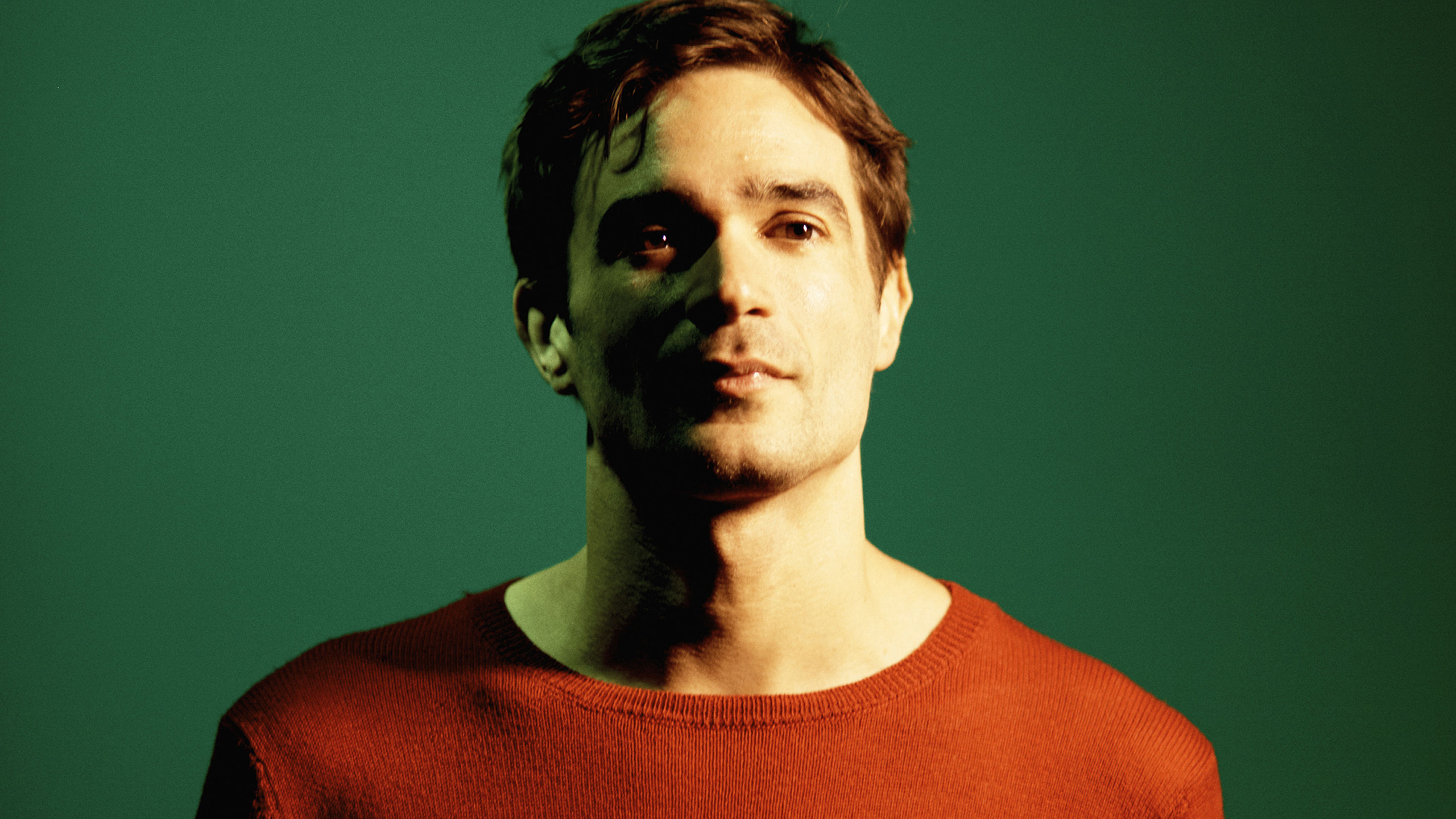
Eight Chapters That Think as One
RITUAL unfolds as a sequence: from "part i: altar" through to "part viii: nothing is lost." Each chapter has its own identity but does not stand alone. Hopkins designed the record to be experienced in full and in order, as a single continuous movement. This is not ambient background listening. It demands sustained attention. Those who give it receive something close to transformation.
The album's eight part structure reflects the classical training in Hopkins' background. The music has formal shape. It builds, holds tension, and resolves. What makes it contemporary is the way those resolutions happen: through processed bass frequencies, through layers that arrive and recede across several minutes, through silences that last long enough to feel compositionally deliberate rather than accidental. The record breathes.
The Visual Work Around RITUAL
Two official videos accompanied the album and both responded to the music with intelligence and craft. The first, for "RITUAL (evocation)," was directed by Dave Bullivant. It features aerial performer Bryony Louise Fowler suspended in flight against dark sky. The image is stripped and precise: a single body in motion against near emptiness. That visual economy mirrors what Hopkins does with sound on the record. Remove what is not necessary. Find what remains underneath.
[gallery-1:https://i.scdn.co/image/ab676161000051743d9a2d89248069107e1a22d0]
The second video, for "RITUAL (palace)," came from visual artist UON Visuals, who works from Vancouver. The piece begins as a static image that looks like a motionless album sleeve. Then the camera enters the image and rotates to reveal a structure made of billions of particles, stretching infinitely into the distance. The piece required two months of render time, fourteen terabytes of files, and twenty six individual video layers to produce. Hopkins conceived of the concept while lying awake in an RV on a trip to Big Sur, imagining what it might feel like to enter a photograph and discover that it had depth. UON Visuals delivered that exactly.
Collaborators Inside the Architecture
RITUAL is not a solo record despite appearing under Hopkins' name. The eight chapters include contributions from Vylana, 7RAYS, Ishq, Clark, Emma Smith, Daisy Vatalaro, and Cherif Hashizume. Each contributor adds something specific without disturbing the record's overall coherence. Emma Smith plays violin. Clark, a longstanding figure in UK electronic music, brings intensity to the sections that need it. Vylana and others contribute voice and texture in ways that blur the line between human presence and instrumental atmosphere.
Hopkins has spoken about RITUAL as being connected to his ongoing interest in psychedelic therapy and altered states of consciousness. He explored similar territory on his 2021 record Music for Psychedelic Therapy. RITUAL is less a guide into those states and more a compositional document of working at their boundary. It is not music designed to accompany an experience. It is music that constitutes one.
What RITUAL Asks of Listeners
The record runs for approximately 41 minutes in its standard form, though a complete version released alongside it extends further. That runtime matters because RITUAL uses time differently than most contemporary releases. Hopkins does not compress ideas into two to four minute segments. He lets them develop at a pace that has more in common with classical composition or contemporary installation work than with anything on a streaming chart.
This asks something real of the listener: patience, attention, and willingness to stay inside an experience that does not offer regular hooks or familiar structural markers. Those who bring that attention find the record repays it in full. The bass frequencies in the later chapters accumulate in ways that feel physical rather than sonic. The melodic lines in the earlier sections have a purity that remains present after the music has ended.
The record also rewards repeated listening in a way that few albums of any genre manage. The architecture reveals itself across multiple plays. Details that were inaudible on the first pass become load bearing on the third. This is what classical training does to composition even when the surface sounds nothing like a symphony.
The Final Chapter and What Follows
The album's concluding chapter, "part viii: nothing is lost," was released as a standalone single in February 2025 on Domino. Its release as a single months after the album confirmed that RITUAL was still finding new audiences and new contexts. Heard in isolation, it offers an entry point into the record's universe. Heard at the end of the full sequence, after everything that comes before it, it lands differently: it feels earned in a way that cannot be manufactured by starting at the end.
Hopkins has live dates running through 2025 and into 2026, including a performance at the Royal Albert Hall. His live presentations of RITUAL material use the visual and spatial dimensions of the record as staging tools, making the physical architecture of the venue part of what the audience experiences. This is the natural extension of what the record itself does. RITUAL was built with space in mind. It needs room to exist properly.
Jon Hopkins has been making electronic music for more than two decades. He has produced for Brian Eno and Coldplay. He has released six albums of his own under his name, each a distinct step forward in his development as a composer and as a thinker about what recorded music can do. RITUAL is the sharpest and most complete expression of what that development has been building toward: music that treats sound as something worth taking seriously, that believes the listener is capable of real sustained attention, and that asks for that attention without apology or compromise.