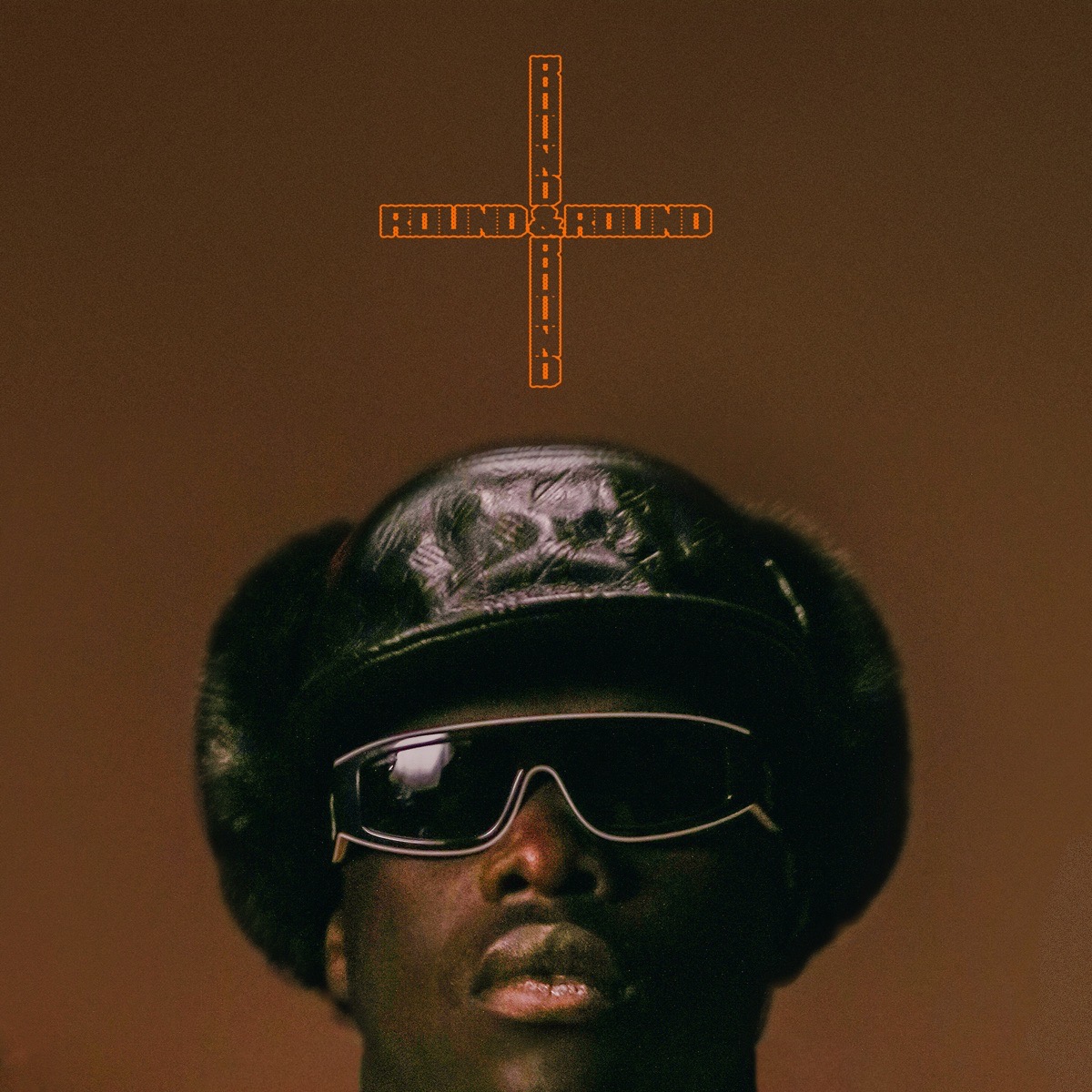
There is a kind of mastery that announces itself quietly, with no press campaign, no guest features designed to generate buzz, and no crossover single targeted at a market the artist does not actually occupy. On Ain't No Damn Way!, released in August 2025 through RCA Records, Kaytranada steps fully into the version of himself that has been building across a decade of clubs, collaborations and increasingly assured records. Louis Kevin Celestin, born in Montreal to Haitian parents, has spent years learning to translate the specific pressure of a dancefloor into something that holds up outside of one. This album is where that translation stops being a project and starts being a fact.
The Producer as Architect

On his previous studio albums, Celestin worked alongside wide rosters of collaborators that spanned R&B, hip hop and pop. Bubba, his second record, won two Grammy Awards at the 2020 ceremony and featured Kali Uchis, Tinashe, VanJess and a lineup of other voices that gave the album its breadth and its crossover appeal. The approach made sense at a particular stage of his career. It demonstrated range. It built connections. It proved he could translate his sensibility into different contexts without losing it. But Ain't No Damn Way! operates on a different logic entirely. Here the album belongs only to its maker. The percussion arrives with purpose and leaves with it. The basslines make their case and know when to stop. Nothing extends beyond what the music actually requires. The result is not minimalism for its own sake. It is economy in service of precision, a statement from a producer who has learned to trust silence as much as sound.
Deep House and the Inherited Groove

To call Ain't No Damn Way! a deep house album is accurate and also insufficient. Celestin grew up between musical worlds: the kompa of his Haitian heritage, the boom bap and R&B of Montreal hip hop culture, and eventually the deep house and UK garage sounds he absorbed through the internet and then through years of DJing in rooms large and small. The album holds all of those points of origin inside its arrangements without announcing any of them directly. You hear Haitian rhythmic sensibility in the way the syncopation lands, in the weight placed on unexpected beats, in the feeling that the groove knows something the listener has not been told yet. You hear club music in the patience with which each track breathes, in the willingness to let a moment extend rather than resolve it prematurely. You hear a producer who has absorbed decades of music and decided to make something only he could make. The record does not explain its references. It simply carries them forward.
Space Invader and What the Video Knows

The lead single Space Invader, a collaboration between Celestin and director Daniel Yaro, gave the album its public face. Produced by Matisse Gaillard, the video does not reach for spectacle in the conventional sense. It places Celestin inside a controlled visual world of movement and color, working with dancers whose precision mirrors his own in the booth. The choreography is specific but loose enough to feel alive. The production design is warm and deliberate. What the video captures, more than anything else, is the feeling of being at a very good party run by someone who knows exactly what they are doing at every moment and has decided to say nothing about it. The visual and the sonic speak the same language. The video works because it does not try to be more than what the music is. Together, the single and the video made the strongest possible argument for what the album would be.
The Arena Opens

In early 2026, Celestin announced a UK and European arena tour. For a producer whose audience was built gradually through word of mouth, through late sets in small rooms and festival stage appearances, the scale represents a genuine and earned shift. But it does not feel like an overreach. Ain't No Damn Way! is that kind of album. It is not straining toward mainstream acceptance. It has made such a complete and confident statement that audiences who were already present have grown, and new ones have found their way to the music. The arena is not a destination for Celestin. It is a consequence of making something genuinely and uncompromisingly itself.
What Comes After Two Grammys

Winning two Grammy Awards for Bubba created a particular kind of pressure. The recognition arrived while house music was still building toward a wider cultural moment, and it placed Celestin in a position where the next move would inevitably be measured against it. Ain't No Damn Way! declines that measurement entirely. It is the work of an artist who has stopped thinking about position and started thinking only about the music. The record does not sound like a response to anything external. It sounds like a fresh start made by someone with nothing left to prove and therefore entirely free to focus only on the work in front of him.
The Catalogue Takes Shape

Celestin's discography is now deep enough to read as a coherent and ongoing argument. 99.9%, his debut, introduced a producer whose house sensibility was already fully formed but still finding its frame. Bubba expanded that frame outward into collaboration and commercial visibility. Ain't No Damn Way! does not expand or contract. It commits. The album treats its formal constraints not as limitations but as the conditions that make specificity possible. This is what mature artistic practice looks like in electronic music: not the restless addition of new influences, not the pursuit of novelty for its own sake, but the patient deepening of something already working. Celestin has been making house music for a decade. This is the record where that decade crystallizes into something entirely his own.