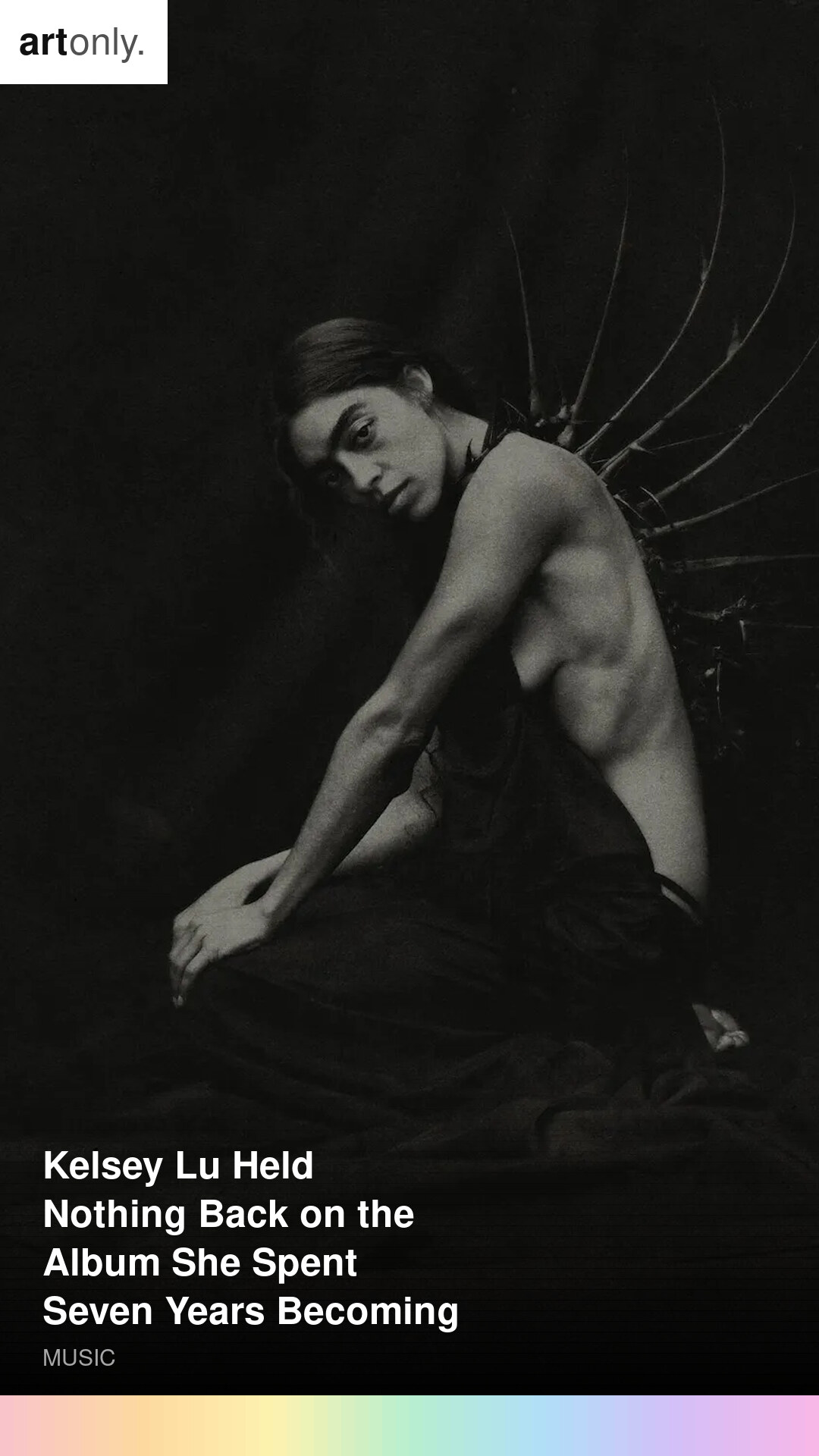
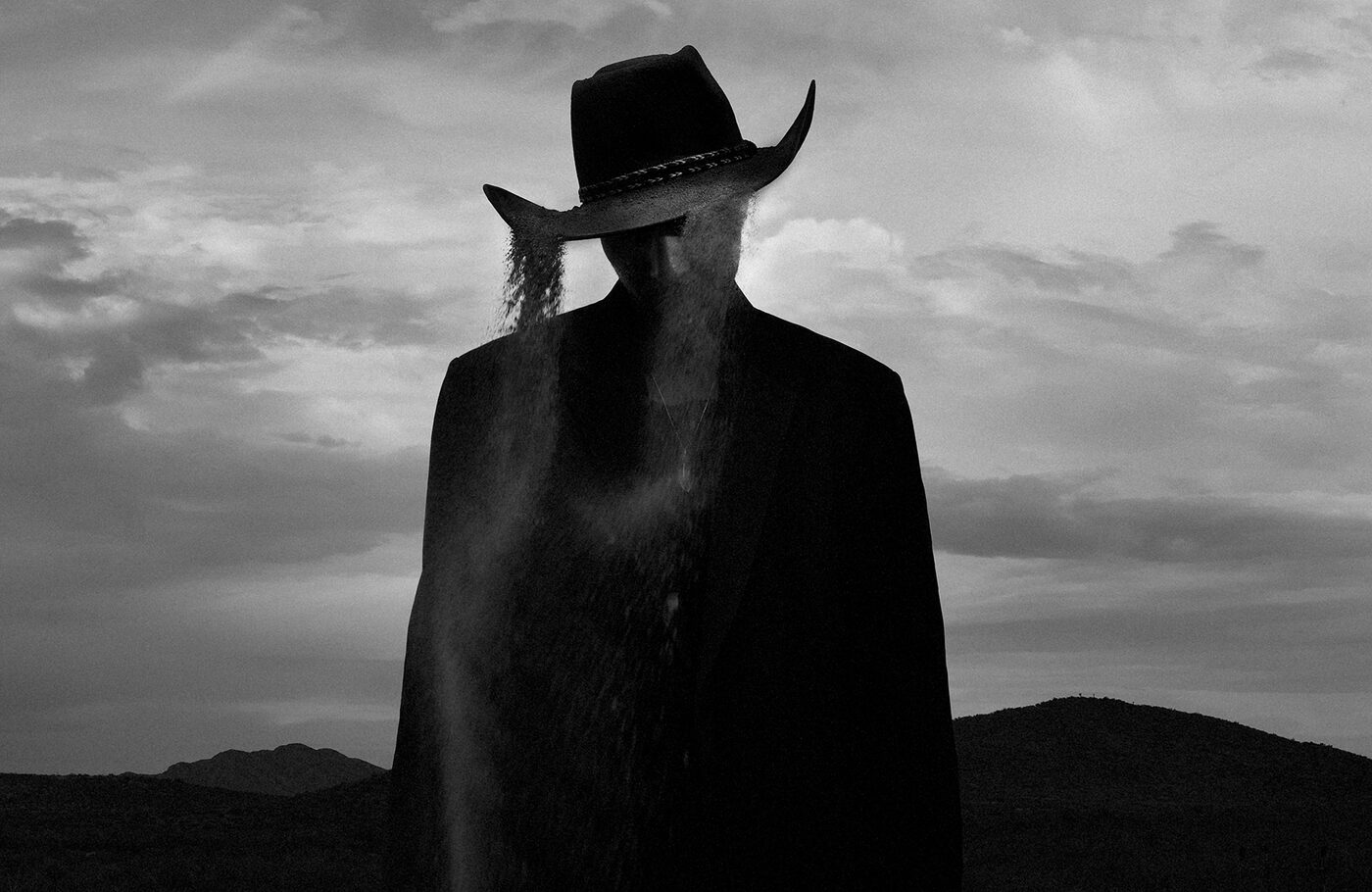
Seven years is a particular kind of interval. It is long enough that an artist's debut has acquired the residue of expectation, has been absorbed and catalogued, has been held up as evidence of what they might eventually become. Blood, Kelsey Lu's debut album released in 2019, was an extraordinary first statement: a cellist raised in a strict Jehovah's Witness household in Charlotte, North Carolina, who had left her religion at eighteen to study at the North Carolina School of the Arts and eventually arrived in New York and then Los Angeles as a collaborator of Solange, Blood Orange, and Lady Gaga, making a record that fused disco, R&B, and chamber music into something that resisted easy categorization while making its emotional intentions completely clear. Blood was the announcement. So Help Me God, released June 12 on Dirty Hit, is the proof.
Lu describes the album as an act of self-possession, language that earns its weight when you understand what preceded it. The seven years between records were not inactivity. They were years of grief, spiritual questioning, and the slow work of rebuilding after loss, which is different from the public kind of loss that registers in news cycles and is visible to audiences. Lu processed something private with a thoroughness that resulted in a record that does not declare its costs but demonstrates them. The difference matters. Declarations are easy. Demonstrations require that the artist has lived inside the material long enough to understand it from the inside.
What makes So Help Me God unusual in the contemporary landscape is not its ambition, though the ambition is considerable, but its honesty about what ambition requires. The album features Sampha, Kamasi Washington, and Kim Gordon. These three names, placed together and connected to the same record, tell you something about the range of the vision. Sampha, whose own work in the space between piano ballads and electronic production has made him one of the most emotionally precise artists working in British music. Kamasi Washington, whose saxophone playing operates in the tradition of spiritual jazz while remaining entirely of the present. Kim Gordon, whose voice and presence carries the confrontational clarity of No Wave and the institutional memory of what noise music could insist on. The fact that all three found something to contribute here is evidence of what the record contains: not genre, but feeling wide enough to accommodate all of them.
The Cello Underneath Everything
Kelsey Lu trained as a classical cellist before she became a recording artist, and the cello informs So Help Me God in ways that are not always explicit but are always present. Classical training at the level Lu received produces a particular relationship to tension and resolution, to the way music moves through discomfort toward something that is not quite comfort but is more honest than comfort. The album's arrangements move between devotional intensity and cinematic scale, and this is a description of how a well-written piece for strings actually works: you are always aware of the architecture even when what you are experiencing feels like pure atmosphere.
The distorted guitars and choral swells that appear throughout the album are not departures from Lu's classical inheritance but applications of it. The choirs that appear in church and in the concert hall are the same institution. The distortion that runs through certain tracks carries the same function as dissonance in a late-period string quartet: it is not chaos, it is controlled instability, the sound of a structure under deliberate stress to show you what it is made of. Jazz-infused melodies and dark electronic pulses complete the picture, and none of these elements feel imported. They feel native to the emotional logic of the record.
The Collaborators and What They Signal
Sampha's presence on the album asks something of the listener who knows his work. He is not a collaborator who dissolves into the context of other artists' records. He has too specific a sensibility for that. His contribution here speaks to what the album required: something emotionally articulate in a way that goes beyond what any single instrument or voice could achieve alone. Kamasi Washington's saxophone has always carried a quality that is not metaphor but literal aspiration, music reaching toward something it cannot quite name, which is exactly what So Help Me God is doing for its entire running length. And Kim Gordon's presence is the record's most unexpected gesture: a figure who built her career on the insight that vulnerability and confrontation are the same act, contributing to an album built on exactly that premise.
This is not a record that collected distinguished names to establish credibility. It is a record that required specific collaborators because the material it was navigating demanded people who understood the stakes.
What Seven Years Produced
So Help Me God is, in the most direct sense, a cathartic record about surviving loss and arriving at something approaching resolution. But what it does that most records of this kind do not is earn that resolution. Most albums about grief reach their conclusions too quickly, before the listener fully believes that the processing they claim to document has actually occurred. Lu's seven-year interval is the evidence that the work was done before the album was made. The conclusions in So Help Me God do not feel performed. They feel arrived at, slowly, through genuine reckoning.
The tracklist moves from Reaper through Portrait Of A Lady On Fire, Running To Pain, Comfort, American Sonnet, and Only The Lonely to Cutting Off The Head Of A Ghost, and that final title is the clearest statement of the album's direction. You cannot move forward while still being haunted by something you have not looked at directly. The album insists on looking directly. The seven years of relative silence were the looking. So Help Me God is what she saw and what she made from it.
To say the album was worth the wait is too simple. The album is what it is not despite the silence but because of it. Some records require more time to become than a release schedule allows. This one required exactly what it took.