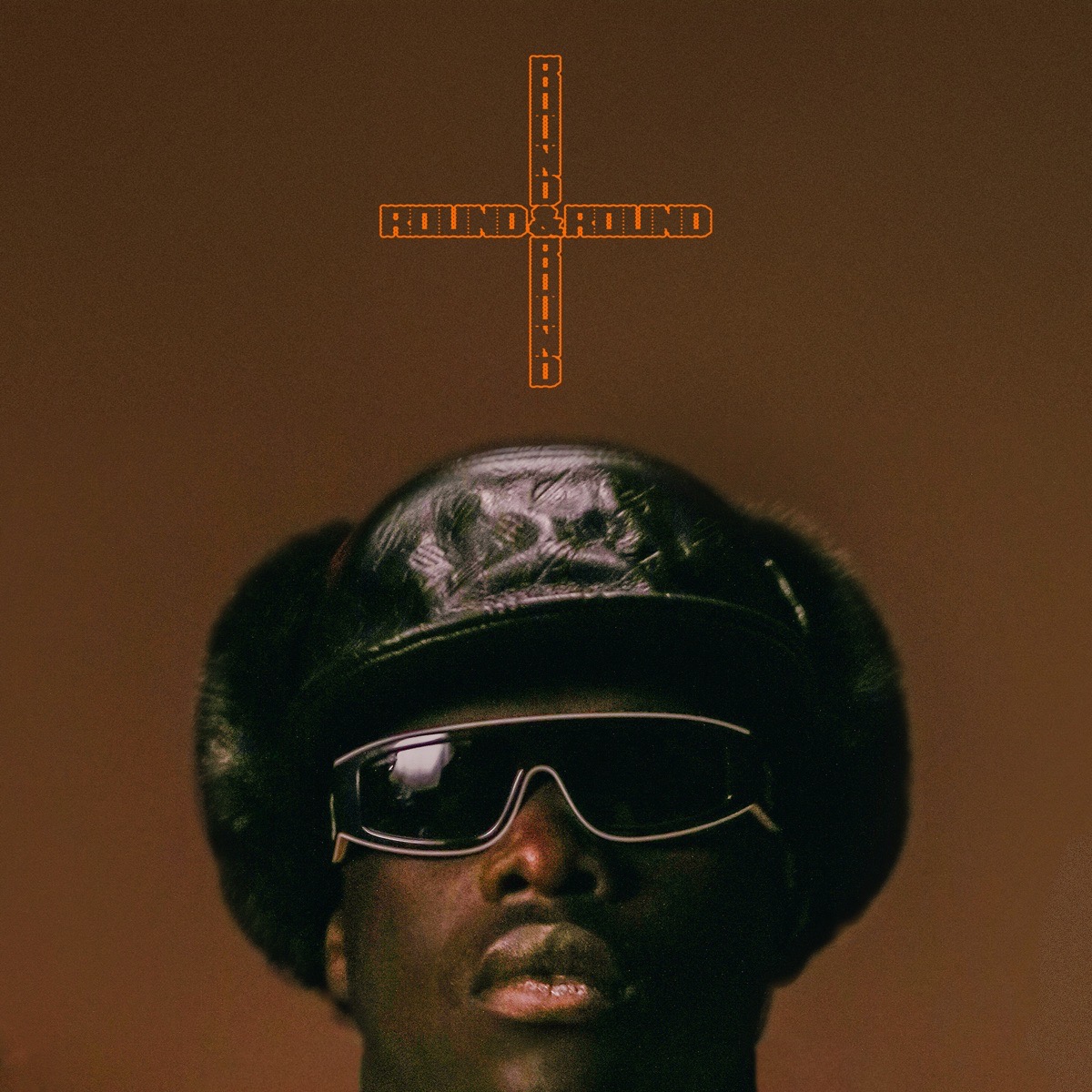
There is no other band on the planet doing what KNEECAP is doing. Not in scale, not in scope, and certainly not in nerve. The Belfast trio, Moglaí Bap, Mo Chara, and DJ Próvaí, rap primarily in Irish, a language the British Crown spent centuries trying to erase, and they have turned that linguistic survival act into one of the most explosive live shows in contemporary music. Their second album, FENIAN, is the sound of that combustion being refined into something both more sophisticated and more uncompromising.
The Title Is the Point
"Fenian" has been used as a slur against Irish Catholics and nationalists for generations. KNEECAP reclaims it the way the most effective provocateurs always do, not by sanitizing the word but by detonating it. The title track, produced by Dan Carey (Fontaines D.C. Wet Leg, Kae Tempest), is a balaclava-clad anthem that connects ancient Irish warriors to the kids in the North who grew up hearing the word spat at them from moving cars.
The music video is blurred and chaotic, motion-smeared bodies in face coverings, red text searing through blue-lit darkness. It looks like a memory of something that hasn't happened yet.
Dan Carey is the right producer for this material. His approach, recorded live-to-tape where possible, minimal editing, the room as instrument, suits a band whose energy is explicitly physical. The first album, Fine Art, benefited from the same instinct. FENIAN pushes harder into electronic territory, but the sonic philosophy holds: the music should feel like a decision made in the moment, not a conclusion assembled after the fact.
Sound as Weapon
What makes FENIAN remarkable beyond its politics is the sonic range. Dan Carey's production stretches across acid house, trip-hop, dubstep, and traditional Irish instrumentation in ways that shouldn't cohere but absolutely do. "Smugglers & Scholars" opens with a bodhran pattern that dissolves into sub-bass. "Palestine," featuring rapper Fawzi, pairs Arabic vocal lines with breakbeat urgency. Kae Tempest appears on "14Irish Goodbye" and delivers something that sounds like spoken-word poetry filtered through a sound system in a condemned building.
The album was recorded in what the trio described as an unexpected six-week gap in their touring schedule last autumn. That compressed timeline shows, not as sloppiness but as urgency. These songs sound like they needed to exist immediately.
The bodhran appearing in "Smugglers & Scholars" is worth pausing on. The instrument carries centuries of Irish traditional music, the céilí, the kitchen session, the rebellion ballad. Placing it at the opening of a track that resolves into sub-bass is not a novelty. It is a statement about continuity: the same pulse runs from traditional music through punk through rave. The form changes. The resistance does not.
The Language as Resistance
Rapping in Irish is an act of cultural reclamation that the band has never allowed to become merely symbolic. The Irish language declined dramatically under British colonial policy, its suppression through the school system, its association with poverty and rural backwardness, the famine that devastated the communities where it was most spoken. By the mid-20th century, it existed primarily as a state-maintained language rather than a living vernacular in most of Ireland.
Moglaí Bap and Mo Chara grew up in Irish-speaking communities in West Belfast. The language is native to them, not learned. When they rap in Irish, they are not making a political gesture first and a musical one second. They are simply using the language they think in. That naturalness is what makes the political dimension of the music land. It does not sound like a message. It sounds like people talking.
The shift between Irish and English within tracks creates a bilingual texture that is specific to the North, to the particular cultural geography of West Belfast, to the experience of living in a place where both languages are politically charged. Audiences who don't speak Irish still respond to the rhythms and textures of the language in the flow. The music works phonetically before it works semantically.
Dan Carey and the Production Logic
Dan Carey's role in FENIAN deserves specific attention. His approach to production is rooted in commitment to live energy, he records fast, in rooms where the sound of the space is part of the sound of the music. The Fontaines D.C. records are the clearest illustration: raw, present, the drums feeling like they are happening in front of you rather than being reconstructed from separate tracks. That quality translated to FENIAN in ways that a more polished producer would have smoothed over.
The acid house elements on the album come through Carey's own history with the form. He understands the repetition as a spiritual technology, not a limitation of the genre. The looping bass patterns on several FENIAN tracks do not feel like production choices made because they were easy. They feel like decisions made because repetition is what the content requires, the same point needing to be made again, and again, until it is no longer abstract.
The bodhran appearing alongside sub-bass across the record is his choice as much as KNEECAP's. Carey has spoken in interviews about wanting to find the common architecture between traditional Irish music and electronic club music. The argument is structural: the driving pulse that runs through a céilí session is the same pulse that runs through a warehouse rave. Different instrumentation, different social context, the same bodily imperative. FENIAN makes this argument not by stating it but by placing the two sounds in the same mix and letting you feel the connection.
What the Biopic Built
Beyond the Biopic
KNEECAP's 2024 biopic introduced them to audiences who had never heard Irish-language rap and didn't know they needed it. The film was nominated for an Oscar, screened at festivals worldwide, and turned the trio from a cult concern into a cultural force. FENIAN is their answer to the question that always follows that kind of exposure: now what?
The answer, characteristically, is more. More darkness, more confrontation, more solidarity. But also more musicality, more collaboration, and a willingness to let the sound breathe in places where their debut would have kept pushing.
Scheduled for release May 1 via Heavenly Recordings, with a European tour following in June, FENIAN positions KNEECAP as something rarer than a political band. They are a band where the politics and the music are the same thing, where the act of rapping in a colonized language over acid house beats is itself the revolution.
Find KNEECAP on Instagram: @kneecap32