What the Earth Has Been Doing
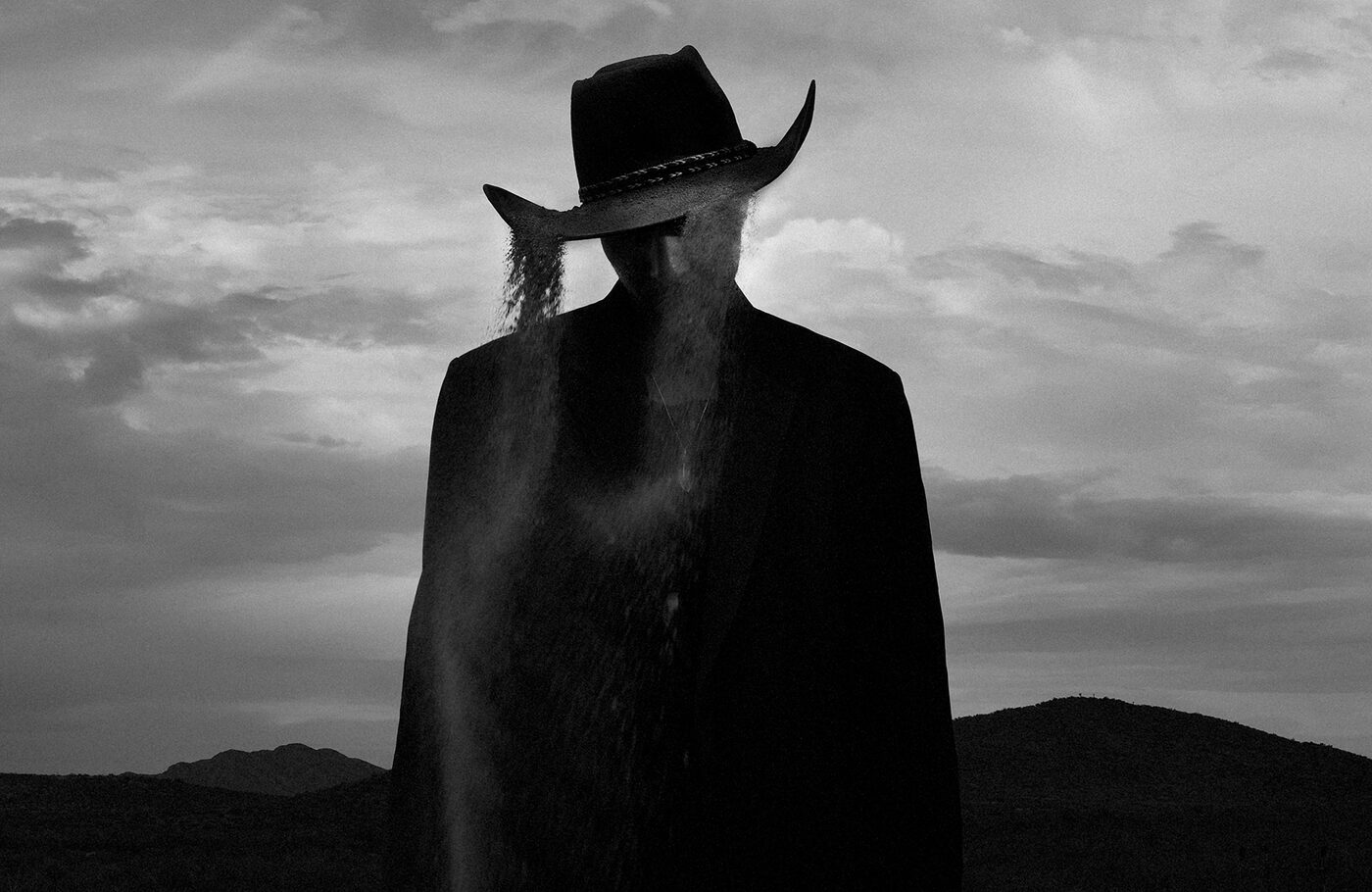
The word "lithic" refers to stone. It is used in archaeology to describe the period before written record, the long stretch of human time that is known primarily through the objects people made and left behind in the earth. Stone tools. Flint work. The accumulated evidence of intelligence operating without language, making meaning through shape and material. To name an album "Lithic" is to make a claim about what kind of record it is, about what kind of time it inhabits, about what medium it uses to leave its mark.
Laura Misch, the London-based composer and saxophonist, had what she describes as a simple announcement for her label when she began work on this second album. She told them she was going to make a rock album, meaning an album made of rocks. The fact that this sounds like a joke, that it has the quality of something said to see what response it produces, does not mean it was not entirely serious. The album that followed, recorded with producer Matt Karmil and built from field recordings, saxophone, and experimental electronics, is an act of commitment to a very specific listening practice: paying attention to material that does not speak in any register that music is typically made from, and finding out what happens when you translate it anyway.
The Concept and Its Discipline
Concept albums fail when the concept is decoration, when the thematic framing is applied to music that would exist in essentially the same form without it. "Lithic" is not that. The geological conceit is not a frame applied over music produced by ordinary means. It is a method, a set of constraints and commitments that produced music that could not have been made otherwise.
The field recordings that run through the record, the actual sound of stone and water and wind and the forces that shape geological formations, are not atmosphere. They are structural material that Misch and Karmil built from. The saxophone, which is her primary instrument and the voice most directly associated with her first album "Sample the Sky," appears here in a different relation to the other sounds. It is not the lead voice over an accompaniment. It is one element among several, a human instrument learning to coexist with sounds that preceded human existence by geological spans of time.
This is a compositional decision with real aesthetic and emotional consequences. The saxophone represents presence, warmth, human breath, the immediacy of a body making sound in real time. Setting it against field recordings of stone and geological process creates a tension between timescales that is not resolved but sustained throughout the record. You hear the human and the inhuman together and you do not know which is the context for the other.
From Sample the Sky to Lithic
Misch's debut album, "Sample the Sky," established her as an artist working at the intersection of jazz, electronics, and composition with a specific gift for atmosphere. The record received considerable praise for its spatial quality, for the way it seemed to create rooms and environments rather than just arrangements. "Sample the Earth," the acoustic companion release that followed in 2024, stripped some of that spatial construction back and showed what the compositions looked like without the technology around them.
"Lithic" arrives as a third point in this trajectory, but it would be a mistake to read it as simply the next iteration of a developing style. The geological concept represents a more radical departure than the calm of the title suggests. "Sample the Sky" worked through accumulation, through layering, through the creation of density. "Lithic" works through a different principle: the slow revelation of structure that was already there. Stone is not built, it is found. You remove what is not stone to get to what is. The compositional approach on this record has something of that quality, a patience with material that allows form to emerge rather than imposing it.
Deep Time and the Psyche
The record journeys through deep time and into the murky depths of the psyche. The conjunction of geological time and interior life is not an accident. Misch has spoken about finding parallels between the processes that shape geological formations and the processes that shape a person, the way erosion works on stone and the way experience accumulates and wears at the self. This is not a new metaphor. The connection here is worked through sound, not stated in lyrics, which makes it considerably more difficult to achieve and considerably more interesting when it works.
"Lithic" is largely instrumental. The moments of voice are spare, integrated into the sonic environment without dominating it. This is a record that trusts sound to carry meaning that language would specify too narrowly. The deliberate ambiguity of instrumental music, the way it can contain emotional information without fixing it to a particular interpretation, is used here with evident intention. You are invited into the geological process, into the deep time, without being told what to find there.
Karmil and the Production
Matt Karmil's contribution to "Lithic" deserves attention. Karmil, whose own production work operates in the space between techno and ambient music, brings to the collaboration a specific understanding of how electronic sound functions across different timescales. His ear for the long form, for music that changes slowly enough that the change is felt rather than heard, is exactly what the project required. The partnership does not sound like producer and musician in any traditional sense. It sounds like a genuine collaboration, a shared working through of the same compositional problems.
The treatment of the saxophone in particular reflects this. In some passages the instrument is processed to the point of abstraction, its origin audible but its timbre transformed. In others it sits in the mix with a rawness and presence that makes it sound like a recording rather than a composition, like a document of a sound event rather than a designed aesthetic object. The movement between these registers, between the processed and the raw, between the composed and the found, is one of the record's primary formal pleasures.
The Longer Arc
"Sample the Sky" announced an artist with a distinctive sensibility. "Lithic" shows that sensibility becoming a genuine artistic practice, something with principles and constraints and a logic that operates across works rather than within them. Misch told her label she was going to make an album made of rocks. She made something more interesting than that: an album that thinks with rocks, that uses geological process as a way of thinking about time and about how anything comes to take its particular form. The earth is patient. It does not hurry its shapes. This record learned from it.