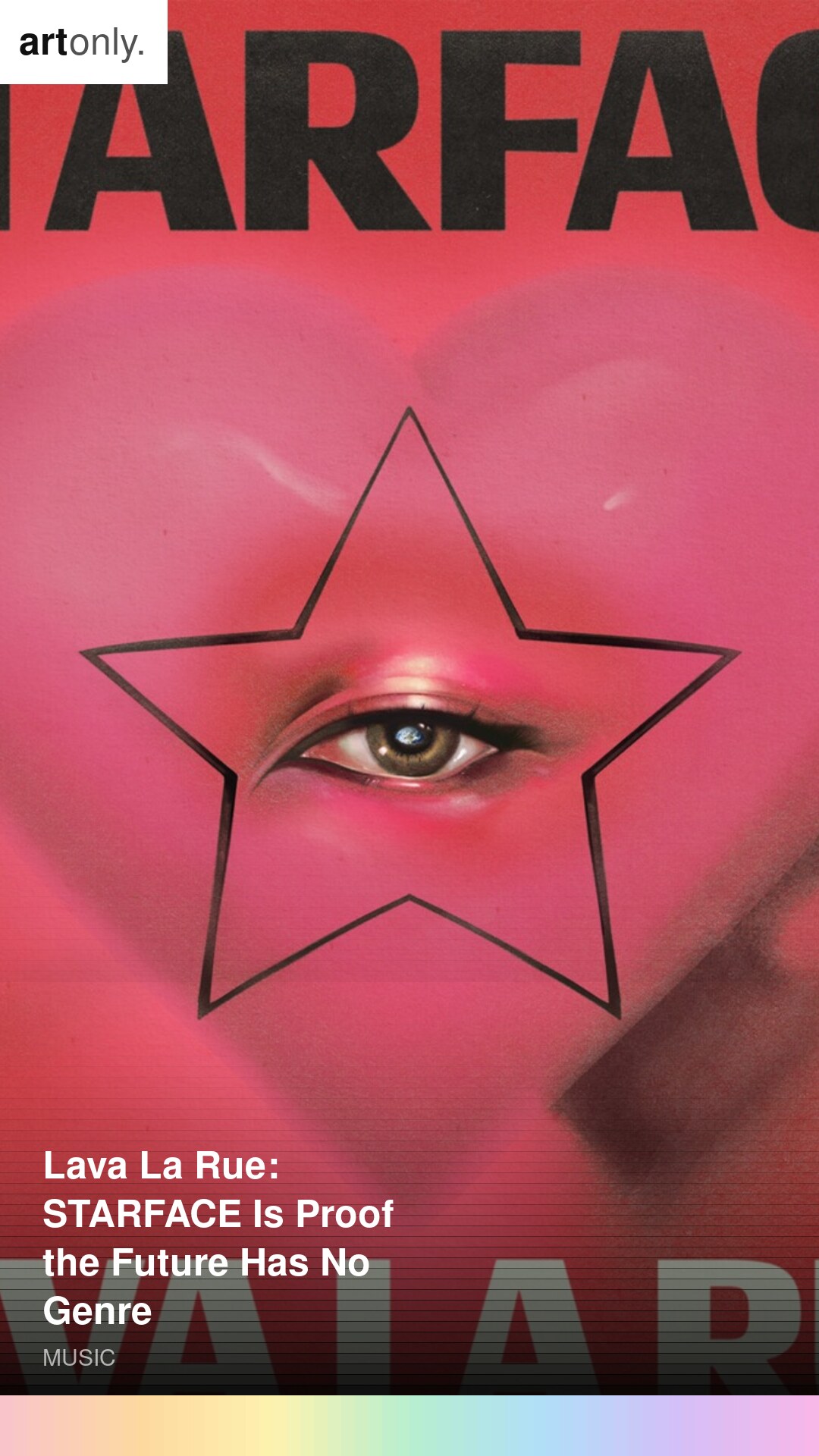
Lava La Rue: STARFACE Is Proof the Future Has No Genre
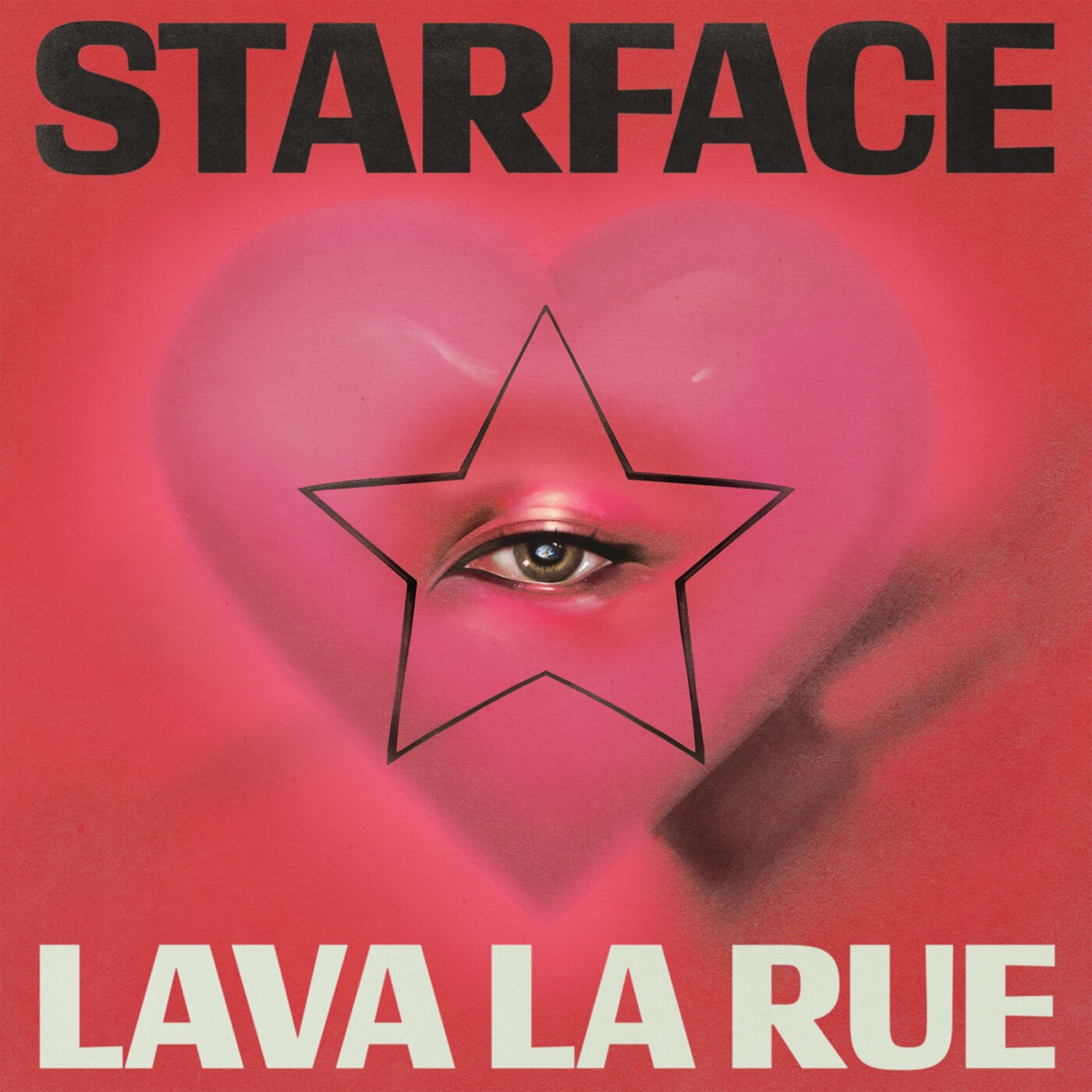
"Sandown Beach" is the kind of song that doesn't announce what it is. It slips between funk and post-punk and something that sounds like an end-credits sequence for a film you'd want to have lived in. That emotional shapeshifting is exactly what STARFACE, Lava La Rue's debut album on Dirty Hit, does best. At seventeen tracks and across a dizzying roster of collaborators, it maintains a consistent emotional intelligence without ever settling into a single sound.
La Rue grew up in London as the founder of NiNE8, the creative collective that produced some of the most interesting left-field R&B in the UK in the early 2020s. NiNE8 operated like a mutual support system: rappers, producers, and vocalists sharing resources and aesthetics, building something that didn't map cleanly onto any existing genre category. STARFACE is the step outward: a concept album built around an alien character sent to Earth to investigate humanity's self-destructive habits.
The premise sounds like it could become a gimmick. Instead it becomes a framework for something emotionally intelligent. The alien perspective gives La Rue permission to approach human behaviour with the curiosity of an outsider and the pain of someone who has been inside it all along. The distance is the point. Observation becomes tenderness.
The Album Itself
"Push N Shuv" has a rock urgency underneath a pop melodic instinct. The guitars bite in a way that most UK R&B avoids entirely. "INTERPLANETARY HOPPIN'" with Korean indie artist So!YoON! bounces at a frequency that feels genuinely cross-continental, the kind of collaboration that only makes sense in a music world where geography has stopped determining influence. "Poison Cookie" with Audrey Nuna trades lines like two artists who've been in the same conversation for years. And "FLUORESCENT / Beyond Space" brings NiNE8 into the alien universe La Rue has built: the crew representing the earthbound version of what STARFACE is observing from above.
The collaborators across seventeen tracks, including Cuco, Tendai, yunè pinku, and bb sway, reflect the same curatorial instinct that made NiNE8 work. Each guest fits the album's logic rather than simply adding a name. That restraint in feature-booking is harder than it looks. Most debut albums with this many collaborators feel like a showcase; STARFACE feels like a world.
What Sits Underneath
What's most striking is the emotional honesty sitting underneath all the conceptual scaffolding. "HUMANITY" and "CHANGE" don't need the sci-fi framework to land. They're tracks about vulnerability and becoming, about the specific weight of living in a body on a planet that keeps asking you to be other than what you are. The alien character is a device, not a distance. La Rue is fully present in the music.
The production is elastic. Pop-funk sits next to indie-rock sits next to electropop, and the transitions feel earned rather than arbitrary. The album was a long time coming: La Rue has been releasing material since 2018 and the NiNE8 collective had been building since before that. The patience is audible in how assured this sounds. It doesn't sound like a first attempt. It sounds like someone who has been thinking about this record for years and finally had the resources to make it the way it needed to be made.
Why It Matters
British music has had a genre problem: the tendency to package new talent into legible categories, to find the slot in an existing structure and fill it. La Rue resists this from the first track. STARFACE is restless, warm, and fully itself: music that knows it doesn't need a genre to know what it is.
The NiNE8 collective as origin point matters for understanding why this works. La Rue didn't arrive at this multi-genre approach as a calculated strategy. It was built through years of collaborative work with artists who all shared a commitment to following the music wherever it led rather than where the market wanted it to go. STARFACE is that philosophy at full scale.
The Dirty Hit Context
Dirty Hit as a label has developed a clear ear for artists who sit between established genres: The 1975, Wolf Alice, Beabadoobee, and Japanese Breakfast have all released on the imprint, and the common thread is not a sound but an attitude. The label looks for artists who know what they are without needing a category to explain it. La Rue fits that roster precisely because she doesn't complete it. She extends it somewhere the label hasn't been before, into a territory that is more explicitly rooted in UK Black music traditions than anything else on the Dirty Hit roster.
That distinction matters. The mainstream UK indie scene and the Black British music scene have historically occupied separate distribution channels, separate press cycles, separate audience demographics. An artist who operates with one foot in each and belongs entirely to neither is doing something that the infrastructure wasn't built to accommodate, which means the infrastructure has to adjust. STARFACE is a record that requires that adjustment, and the fact that it found a home at Dirty Hit suggests that adjustment is happening.
"Sandown Beach" is still the entry point. Play it twice. The second time the shapes become clearer: the guitar tone that sits between surf and post-punk, the bass that thinks it's in a funk record, the vocal that can't decide if it wants to croon or testify and decides to do both. That indecision, held with absolute confidence, is the whole album in a single song.
The seventeen-track scope could have been self-indulgent; instead it reads as generous. The album gives you room to find your own entry point, your own favourite corner of the world it builds. That generosity, after years of building NiNE8, is the most La Rue thing about it. STARFACE also functions as an argument about what concept albums are for. The best ones use the conceptual frame to give emotional content more room to operate, to justify moves that would otherwise seem arbitrary. La Rue's alien framework earns its keep by making every emotional turn feel like new information: the alien is learning as the record progresses, and the listener learns alongside it.