The Glass Box and What It Proved

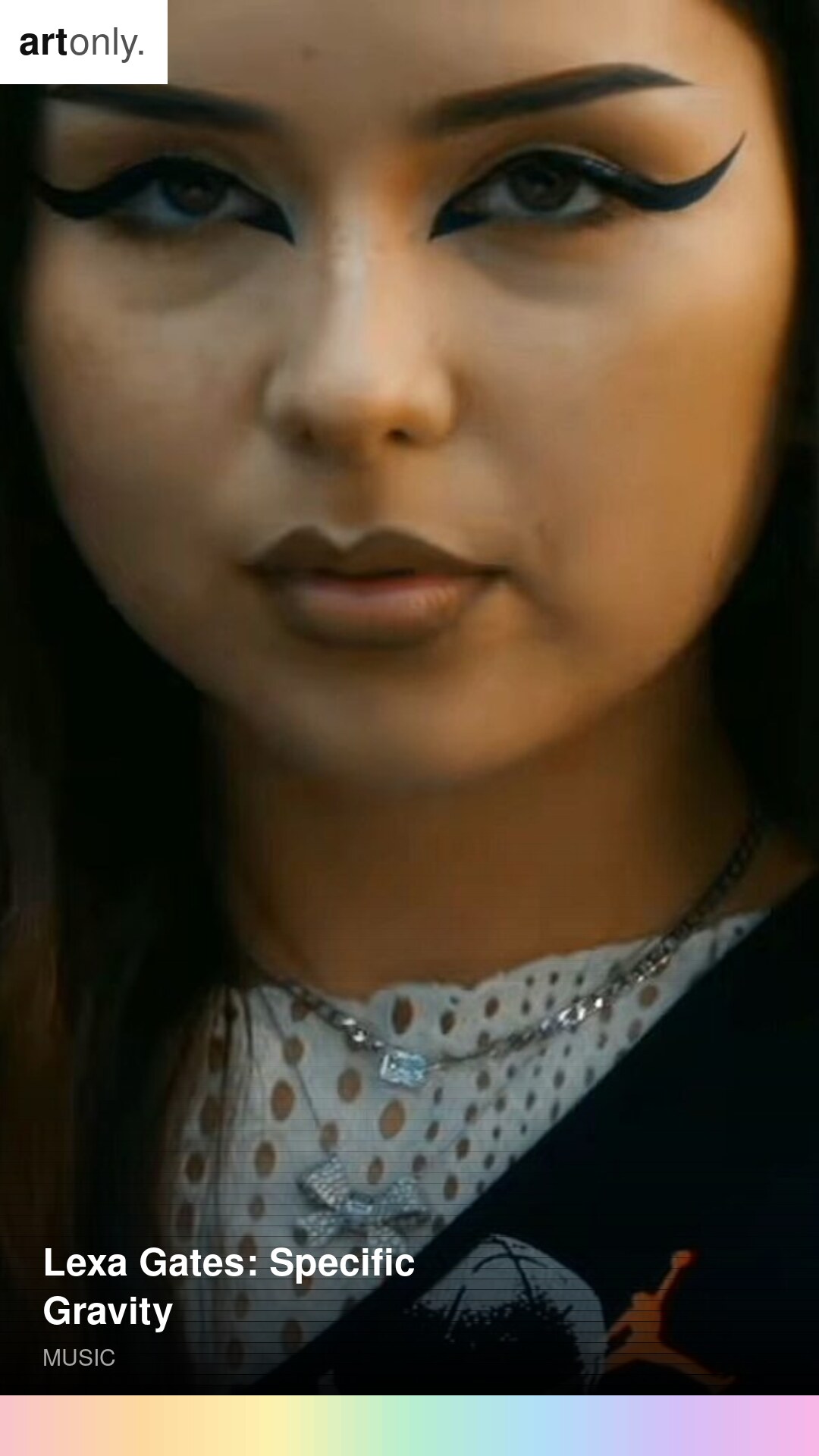
For the launch of Elite Vessel, Lexa Gates locked herself in a glass box in Manhattan's Union Square for ten consecutive hours, listening to the album on repeat while fans gathered around her. It could have read as stunt. With her it didn't, because everything about how she makes music suggests someone genuinely interested in presence: in the specific weight of a moment, in what happens when you don't look away. The glass box was just that logic made visible. For I Am, her 2026 follow-up, she walked a giant hamster wheel for ten hours at a public installation. The performance art instinct is consistent even as the image changes. Both stunts say the same thing: she is willing to be present for as long as it takes.
Lexa Gates is Ivanna Alexandra Martinez, a Queens rapper and singer-songwriter born in 2001, raised partly in Puerto Rico, self-taught on piano from age nine. She makes jazz-inflected hip-hop that earns every emotion it reaches for: no easy sentimentality, no borrowed gravitas. Tracks like "Angel" and "Rotten to the Core" demonstrate a lyrical precision that's rare at any career stage, let alone in a 24-year-old's second or third release cycle.
The Writing
The jazz influence in her production isn't decorative. It shows up in the way she builds tension: the space between phrases, the choice of what not to say, the timing of a hook that arrives later than you expected and lands harder for it. "Provider" and "It Goes On" both work through this logic: they feel inevitable in retrospect, but only because the setup was so carefully done. "Estranged" is the kind of track that rewards three listens before it fully opens. There's a technical patience in her songwriting that is unusual in rap and in pop: she's willing to defer satisfaction, to let a verse breathe, to trust that the listener will stay with her.
The collaboration with Zelooperz and Billy Lemos on Elite Vessel brought in voices that complement rather than compete. The production across both albums pairs intimate writing with restrained instrumentation: piano, bass, occasional brass, nothing overloaded. The sonic restraint makes the emotional content louder by contrast. In jazz, the space between notes is as important as the notes themselves. Gates understands this not as theory but as practice.
She was already putting out albums and EPs entirely on her own terms before signing to Capitol Records and GoodTalk through 48 Lights. That sequence matters: the distribution deal didn't shape the music, the music came first. Elite Vessel in 2024 brought Rolling Stone's Artist You Need to Know designation, Complex calling it one of the best under-the-radar rap albums of the year, and SZA's public endorsement. I Am, released January 2026, continues the momentum with the same approach: nothing inflated, nothing held back.
Why It Matters Now
Billboard's Hip-Hop Rookie of the Month for March 2025. Headlining Philfest 2025. A contact page that reads like she runs a real operation, because she does. Industry recognition has arrived the way it tends to arrive for artists who were building something real before anyone with resources noticed: gradually, then suddenly, in a way that the artist was prepared for because they weren't waiting on it.
Specific gravity is a measure of density relative to a standard: how much a substance weighs compared to what it displaces. It's a useful frame for the quality her music has. The songs are not heavy in a labored way. They are dense in the specific sense of containing more material per unit than the space they occupy would suggest. You can hear a Lexa Gates track once and feel its weight without being able to account for all of it. That's what specific gravity means in music: the ratio of substance to duration, tipped toward substance.
The Queens Lineage
Queens has produced a particular strain of rap that prizes verbal density and emotional complexity over surface ease. Nas, A Tribe Called Quest, Nicki Minaj: the borough's roster shares an insistence on craft that doesn't sacrifice accessibility but doesn't let accessibility become the ceiling either. Gates fits this lineage without being reducible to it. She's making jazz-inflected music rather than boom-bap or trap or pop rap, but the Queens sensibility is audible in the precision, in the unwillingness to let a line pass that hasn't been thought through, in the sense that every syllable is earning its place.
The Puerto Rico dimension adds something else: the Spanish-language musical traditions, the specific rhythmic sensibilities of the Caribbean, the awareness of code-switching that comes from navigating between cultures. None of this is worn as costume in the music. It's present as absorbed background, as the specific texture of the life that formed her.
Lexa Gates is building something that lasts not because she's aiming for longevity but because the work has this quality. Songs that stay because they earn it. The glass box, the hamster wheel, the Union Square audience: all of it is continuous with the music itself, which is the habit of showing up fully and refusing to look away from what that costs.
The self-production background gives her music a specificity that collaboration can dilute. She knows exactly what she wants from every track before anyone else is in the room. That clarity shows. The arrangements feel decided rather than assembled.
I Am deepens what Elite Vessel started without merely extending it. Gates is thinking about what a second album is for, what it means to build on an introduction rather than simply repeat it. The answer she gives is more interiority, more formal confidence, more willingness to trust the listener to keep up. That trust is what makes the music feel like it was made for someone who takes it seriously. The glass box and the hamster wheel are the same statement that every track on both albums makes: presence costs something real and pays it without complaint or qualification.