The Name Means Blessings
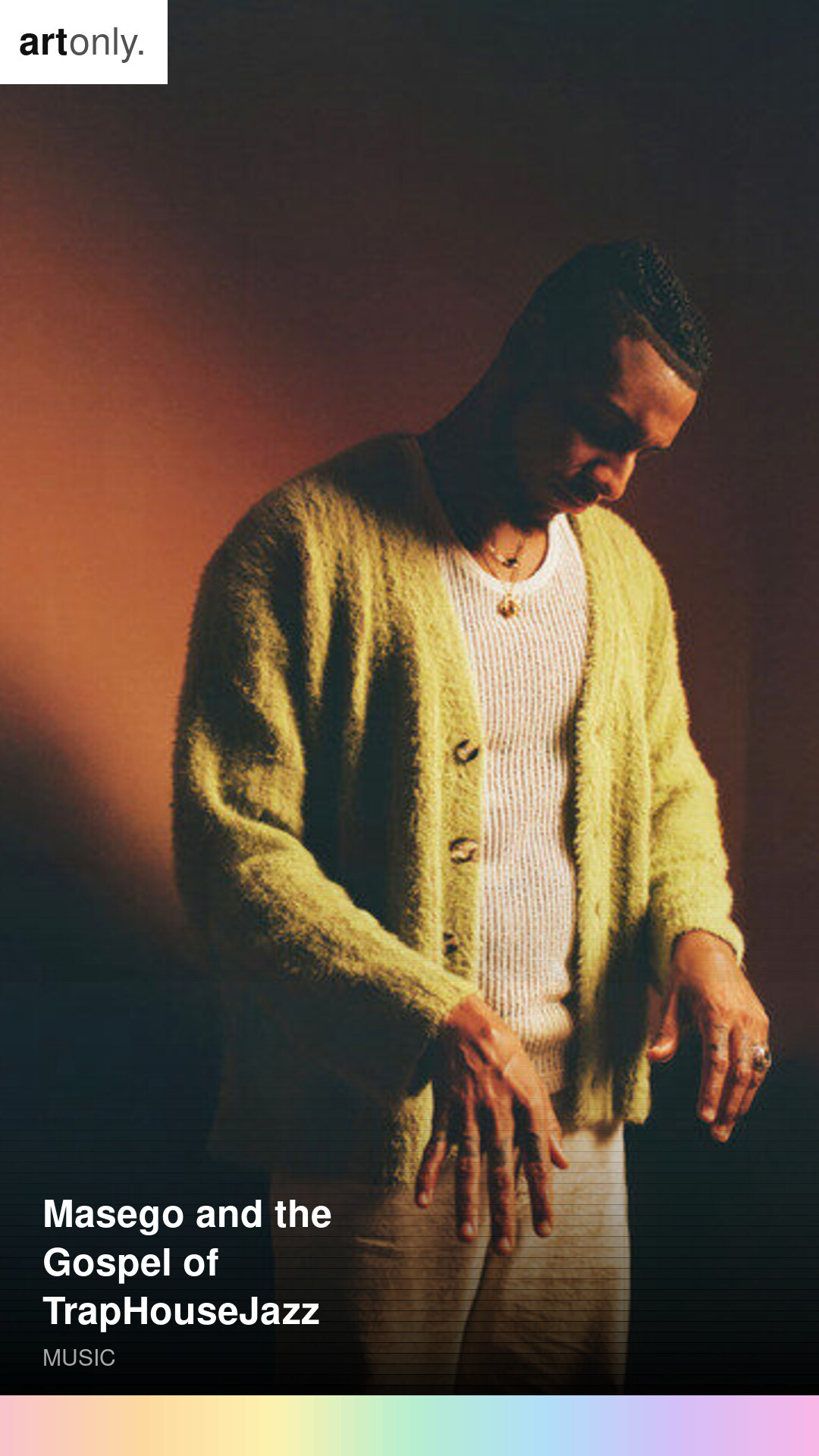
Micah Davis was in high school when he discovered that his family had roots in South Africa. He pulled a name from that lineage and decided to become Masego, a word in Setswana that means blessings. It is one of those choices that lands perfectly in retrospect, because his entire career has been about abundance. Abundance of sound, of genre, of feeling, of instrument. If you have heard even one of his records and walked away thinking it could only sound like that one thing, you have not paid close enough attention.
He was born in Kingston, Jamaica, on June 8, 1993, and grew up in Newport News, Virginia. He taught himself drums, saxophone, and piano. That is the detail that matters most. Not one instrument, not two. He arrived at his sound through self-education, through teaching himself to move between traditions that were not supposed to coexist, and then deciding that was the entire point.
TrapHouseJazz Is Not a Joke
The name he coined for his sound, TrapHouseJazz, sounds like a punchline but is not one. It is a precise description of what he actually does. Trap production, with its hi-hats and hard bass and Southern-fried rhythm. House music, with its pulsing 4/4 warmth and sense of forward motion. Jazz, with its improvisation, its harmonic complexity, and above all, the saxophone. Put them together and you get something that functions across contexts with an ease that most artists spend careers chasing.
He started building his audience through SoundCloud, releasing loosies and freestyles, finding a following before most of his peers had even decided what they wanted to be. By the time he met the French multi-instrumentalist FKJ in 2017, he had already accumulated enough creative credibility that a collaboration felt natural rather than opportunistic. What they made together was "Tadow," and it changed everything.
Tadow and the Turning Point
"Tadow" is the record that introduced millions of people to Masego. Over 500 million views on YouTube as of this year, which tells you something about its reach, but not about why it works. What works is the interplay. FKJ lays down a groove and Masego folds into it, his saxophone and his voice arriving in the same breath, the same register, as if he is the only instrument that needs to exist in that moment. The track does not build to a climax. It sustains. It is a piece of music that understands patience.
The breakout led directly to his debut album, Lady Lady, released in 2018 on Capitol Records. The album is a proper debut in the best sense, wide and curious and not worried about keeping its shape. SiR appears on it. Tiffany Gouche appears on it. FKJ appears. De' Wayne Jackson appears. "Queen Tings," one of the album's standout tracks, features Gouche and was written in response to Masego's feelings about Black History Month and the release of Black Panther. That context matters because it shows how Masego thinks. He is not making political music in a slogan sense. He is making music that reflects the moment he is living in, and doing so with enough craft that the reflection holds up outside that moment.
Studying Abroad and the Grammy Nomination
His next major release, Studying Abroad: Extended Stay, arrived in 2021 and showed how quickly his range had expanded. The album earned a Grammy nomination for Best Progressive R&B Album, which placed him in a category of artists doing genuinely experimental work within Black American musical traditions. The nomination was recognition of something listeners had already understood for years. He is not a nostalgia act. He is not coasting on a signature sound. He is a working musician with a live show built around extended improvisation and an insistence on doing something different every night.
The live show is where Masego most fully reveals himself. He plays saxophone while producing beats in real time. He sings while playing. He loops himself. He builds a room in ways that most electronic producers cannot because they are working from fixed material and he is generating it at full speed. His audiences respond to this because they can feel the risk. Something is happening that has never happened before and will never happen exactly that way again.
Masego in 2023 and the Road Forward
In 2023 he released his self-titled album, simply called Masego. The self-title is a declaration. This is what the name means now. This is what the sound is. The record builds on everything that came before while pulling in new textures, new collaborations, new tempos. The production is more confident, the songwriting tighter without losing the looseness that made him interesting in the first place.
In November 2025 he released "I Win," a standalone single that arrived without much ceremony and did its job exactly as designed. Short, direct, built around a hook that rewards repeated listening. Masego at his most efficient.
What the Saxophone Actually Does
The saxophone is worth returning to because it is so central to what he does and yet so easy to underestimate. The saxophone is not a popular instrument in contemporary R&B and hip-hop production. It carries associations with smooth jazz and airport lounges, associations that Masego has spent his career aggressively dismantling. In his hands the saxophone is not a throwback. It is a live signal in the center of a digital production, warm and human and slightly unpredictable, the thing that makes a track feel like a person made it rather than a template.
He uses the instrument to blur the line between what is performed and what is produced, and in doing so he makes TrapHouseJazz feel less like a genre name and more like a statement of values. Sound should be alive. It should come from a body. It should surprise you even when it sounds exactly like what you expected.
Why He Matters in 2026
Masego is one of the few artists working at the intersection of jazz, R&B, and electronic music who has managed to build a mass audience without diluting any of the elements that make him interesting. Most artists at that intersection end up losing one direction or another, becoming too smooth for the adventurous listeners and too complex for the casual ones. He has avoided that trap, which may be the most impressive thing about his career.
His position in 2026 is that of an artist who has proven himself across multiple formats and multiple contexts, who has toured arenas and small clubs with equal conviction, and who continues to make music that sounds like exactly what it is: the particular vision of one specific person who decided to take every tradition he had access to and build something that belonged to none of them entirely but drew from all of them deeply. The name means blessings. He has earned it.