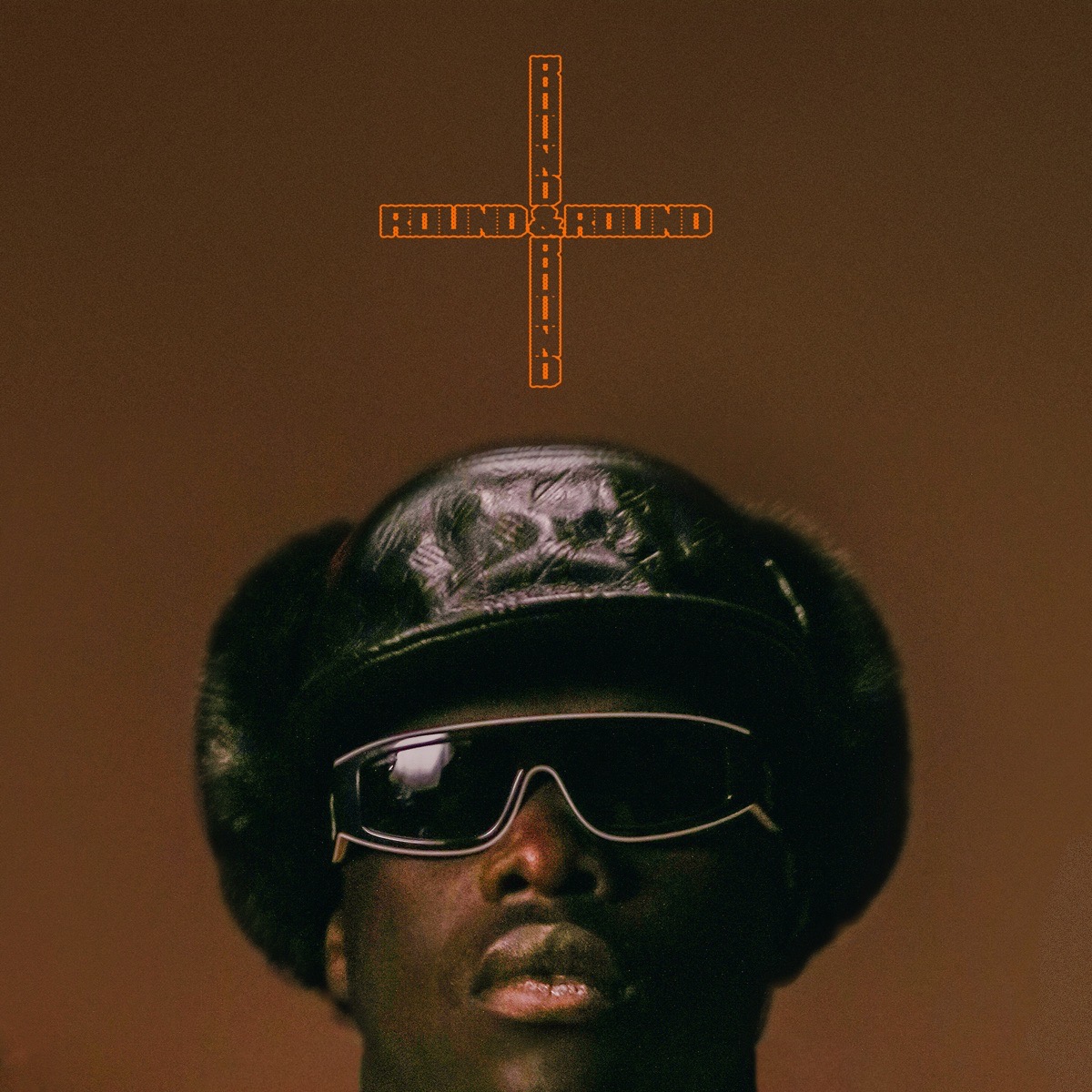
Tears of Injustice was released February 28, 2025, on Matador Records. Eight tracks. It is a complete re-recording and rearrangement of Mdou Moctar's 2024 album Funeral for Justice, done entirely for acoustic and traditional instruments. The original record was described as the sound of outrage. This one is the sound of grief.
Mdou Moctar, born Mahamadou Souleymane, grew up in the Azawagh desert of Niger. He taught himself to play on a homemade guitar. His first audience reached him through the West African mobile phone music trading network, a distribution system that existed before digital streaming had any real presence in the region. By the time Funeral for Justice came out in May 2024 on Matador Records, he was headlining festivals in the United States and Europe. The two years between his 2021 album Afrique Victime and Funeral for Justice were spent almost entirely on the road. The music that resulted was louder, faster, and more overtly political than anything he had recorded before. Tears of Injustice strips all of that back.
Funeral for Justice directly confronts colonialism and failed political leadership in Niger, West Africa. It was recorded after those two years of global touring, and the outrage in the music came from a real source. Tears of Injustice keeps the same lyrics, the same subjects, the same confrontation. What it removes is the electric guitar and the velocity. What remains is grief as a structural element of the music.
What It Means to Re-Record an Album for Acoustic Instruments
[img:]
Re-recording an album is a decision that carries risk. The original recording has a function: it makes a specific argument with specific tools. Removing the tools requires that the argument survive the translation, or it requires that a different argument become visible in the new version.
Tears of Injustice does both. The acoustic arrangements reveal melodic structures that the electric intensity of Funeral for Justice absorbed rather than showcased. When Moctar plays the same guitar part unplugged, the notes themselves become audible as notes rather than as texture. The record does not sound like a quieter version of Funeral for Justice. It sounds like a separate reckoning with the same material, which is what grief typically is: the same situation, processed from a different position.
Ahmoudou Madassane and Mikey Coltun: The Rhythm Section That Makes the Space Work
[img:]
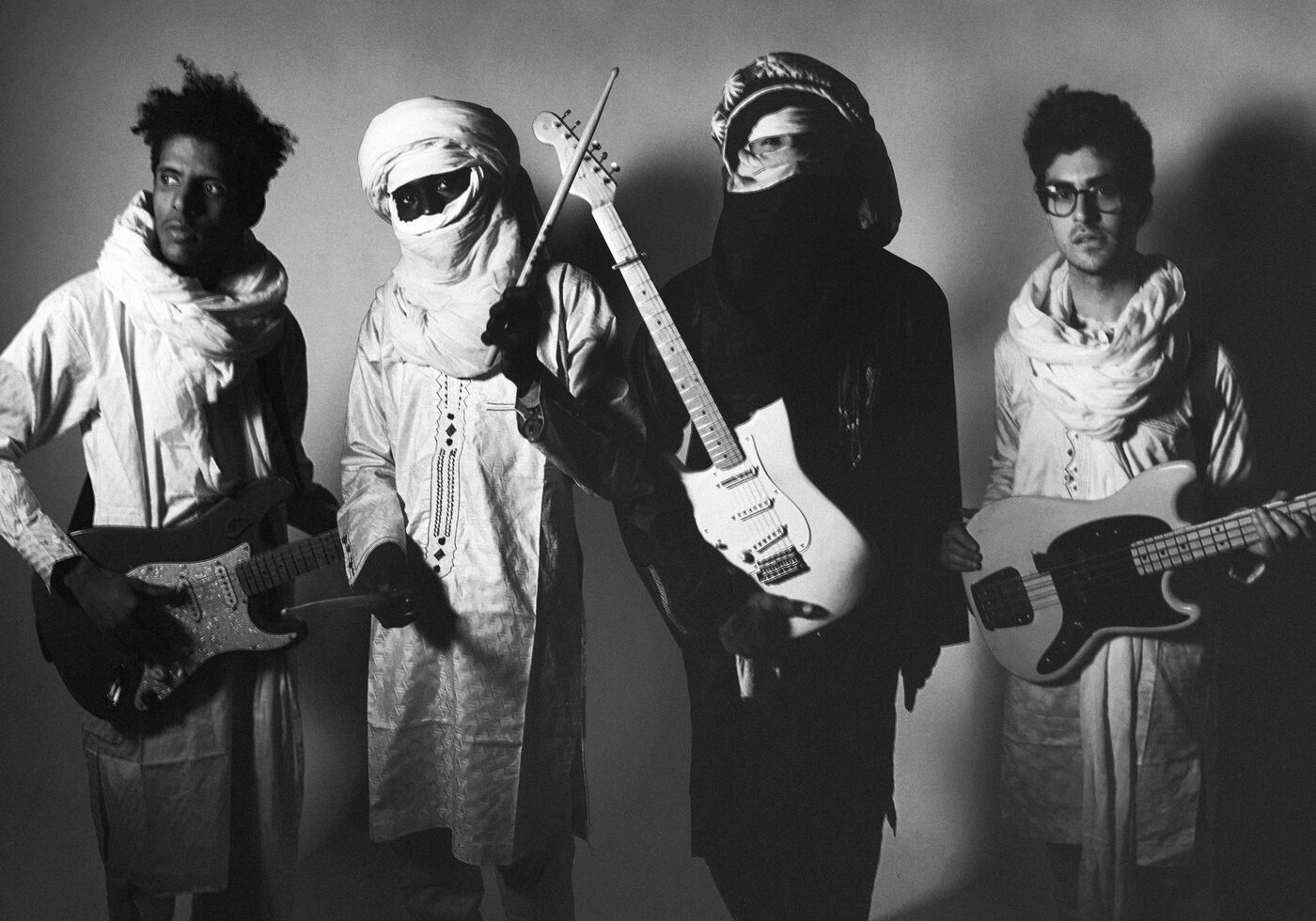
The band behind Mdou Moctar on both records includes Ahmoudou Madassane on rhythm guitar and backing vocals, Mikey Coltun on bass and as producer, and Souleymane Ibrahim on drums and percussion. Madassane has played alongside Moctar since 2008. Coltun is based in Brooklyn and travels roughly 48 hours each way to reach Agadez, Niger, where the band practices and records.
That travel commitment is not a minor detail. It shapes what the music sounds like. A band that rehearses in Agadez rather than a studio in New York or Los Angeles makes music from a physical and cultural position that cannot be replicated remotely. The acoustic arrangements on Tears of Injustice were built from that foundation. The spatial quality of the sound, the way the instruments occupy silence differently than they occupied distortion on Funeral for Justice, comes from musicians who have played together long enough to know what each person sounds like when the room gets quiet.
Niger, Colonialism, and the Music That Named It
[img:]
Funeral for Justice and its acoustic reworking Tears of Injustice are political records in the most direct sense: they address specific political conditions in a specific place. Niger has experienced significant political instability, and Moctar's position as a Tuareg musician from the Azawagh region places him inside the history he is writing about rather than outside it looking in.
The title Funeral for Justice names what has already happened: justice has died, and the album is the ceremony. Tears of Injustice names what comes after. The sequencing of the two records, electric outrage in 2024 followed by acoustic grief in 2025, reflects a movement through stages that anyone who has watched something irreversible happen will recognize.
Afrique Victime to Funeral for Justice: What Two Years of Touring Built
[img:]
Afrique Victime came out in 2021 and brought Mdou Moctar to festival stages in North America and Europe. Two years of constant touring followed. Funeral for Justice, which followed in May 2024, was recorded in the aftermath of those years and reflected what that experience produced musically: music that was louder, faster, and more wild, with feedback scorched guitar solos and passionately political lyrics. The band had played those songs thousands of times before recording them.
Tears of Injustice came eight months later, in February 2025. It is not a product of exhaustion. It is a product of continuation. The same songs, returned to with different tools, produced different music. That capacity to find new material in existing work is a sign of a songwriter who is not done with a subject just because the album shipped.
The 2025 Tour and the Acoustic Sessions
[img:]
Following Tears of Injustice, Moctar announced solo acoustic performances on the West Coast of the United States for 2025, extending into East Coast dates in early 2026 at venues including Manny's Performance Space in State College, Pennsylvania, Thunderbird Cafe and Music Hall in Pittsburgh, Mahall's in Lakewood, Ohio, and Blind Pig in Ann Arbor, Michigan. Solo acoustic dates are a different proposition than the full band show. They place the performance entirely on the songs, with no amplification and no rhythm section to carry the room.
The decision to tour the acoustic record solo, rather than with the full band, is the final stage of the process that began when Moctar decided to re-record Funeral for Justice with acoustic instruments. The outrage record played with a full band. The grief record tours as a solo performance. That logic is consistent.
Tears of Injustice is a record that exists because Mdou Moctar had more to say about the same material and chose a different instrument to say it. That is not a common decision. The result is uncommon.