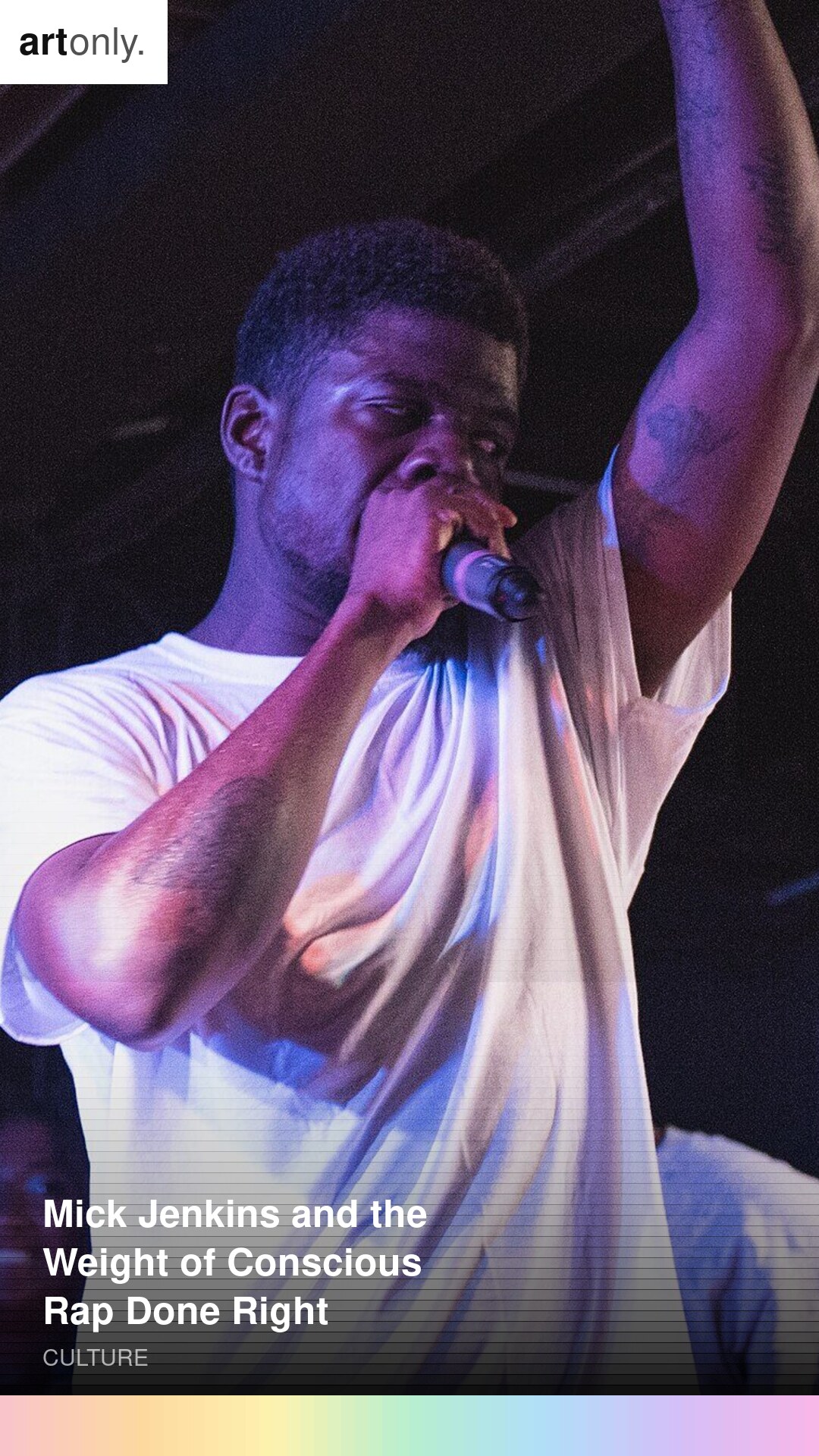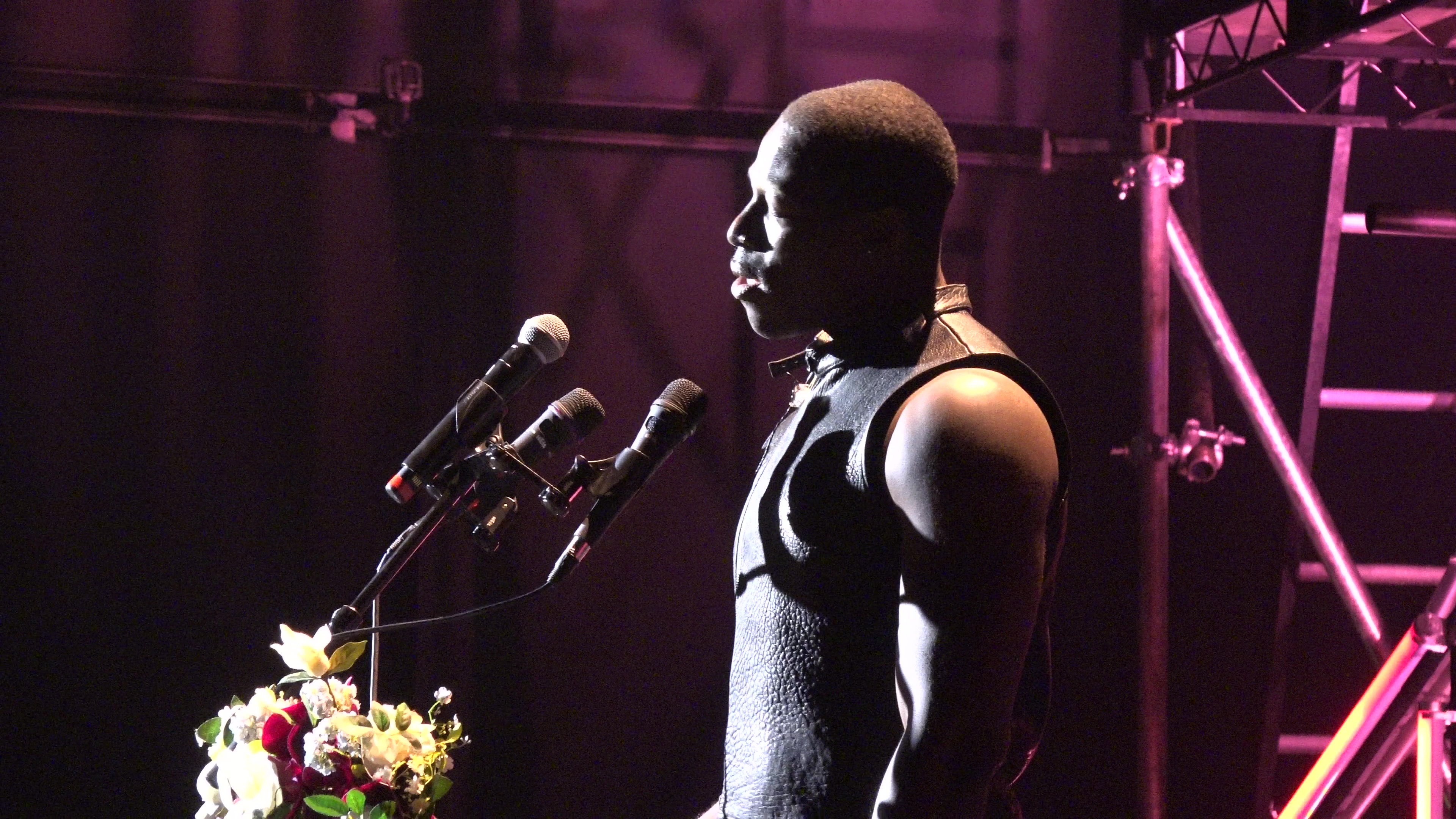
Born in Huntsville, Alabama and raised on the South Side of Chicago, Jenkins grew up in a city whose musical identity was already fully formed and deeply specific. Chicago had drill. Chicago had Chance the Rapper. It had a whole ecosystem of sounds and styles and scenes. Jenkins entered that ecosystem and refused to join any of its existing factions. He was doing something else.
The Waters used extended water metaphors not as decoration but as structural principle. The idea was that truth, like water, was something people needed but were often given substitutes for, and that those substitutes, the lies and the distractions and the things that looked like nourishment but were not, were slowly poisoning everyone. It was an ambitious conceptual frame for a mixtape, and it held. The rapping was dense and rhythmically sophisticated and the production, largely from frequent collaborator THEMpeople, created a world that matched the writing's seriousness.
The Concept as Practice
What distinguished Jenkins from the wave of conscious rappers who came before him was his relationship to his own ideas. He was not posturing at consciousness. He was actually thinking, on the record and in real time, through questions that did not have clean answers. His lyrics showed the working. The doubt was part of the argument.
That approach produced music that rewarded attention and multiple listens. There were dense passages of The Waters that only opened up after you had sat with them. References layered on references, sounds that seemed random until they revealed themselves as deliberate. Jenkins was treating the mixtape format as seriously as other artists treated the album, and the audience for that seriousness was large enough to make him a significant presence in the broader rap conversation.
His 2016 debut album Freudian arrived on Cinematic Music Group and confirmed that he was not a one-project wonder. The album expanded the conceptual ambition of The Waters into something more personal and more psychologically precise. Freudian dealt with desire, with the forces that shape behavior beneath conscious awareness, with the gap between who you mean to be and what you actually do. It was a record about the interior life of a young Black man in America, which meant it was also about survival and aspiration and the specific texture of navigating a world that wanted to reduce that interior life to something manageable and predictable.
Chicago and Its Shadow
Jenkins has spoken in interviews about growing up on the South Side and what it meant to be a young man in that environment during the years when Chicago's gun violence was making national headlines on a weekly basis. He watched friends choose different paths. He chose rap, and rap chose him, but the choice was not made in isolation from those circumstances.
His music does not traffic in the aesthetics of street credibility in the way that drill culture does. He is not performing proximity to violence as a marker of authenticity. He is processing the fact of living near violence as a fact of his life and working out what it means for the person he is trying to become. That is a different project, and it requires different tools.
The tools he reaches for are almost literary. He has cited poets and novelists as influences alongside musicians. He thinks about language structurally, about what a word does beyond its denotation, about sound and rhythm at the level of the syllable. That attention to craft shows in the music as density, as the feeling that every line has been worked and reworked until it does exactly what he wanted it to do.
The Independents and the Industry
Jenkins has navigated the music industry with a carefulness that reflects his larger relationship to institutions he does not entirely trust. He signed with Cinematic Music Group for Freudian and subsequent releases, a deal that gave him creative latitude while connecting him to distribution infrastructure. He has been explicit about valuing independence and about his skepticism of major label arrangements that require artists to give up control in exchange for resources.
That skepticism informs his output model. He releases projects on timelines that make sense for the work rather than for label marketing cycles. His albums arrive when they are ready. He does not flood the zone with content for content's sake. Each project is meant to be a statement, and the space between statements is itself meaningful.
His 2018 album Pieces of a Man continued the evolution. The title references the classic Gil Scott-Heron record from 1971, and the reference is earned. Jenkins was thinking about Black masculinity, about how it gets fractured and assembled and performed and internalized, with a depth that placed him in a lineage of artists who have taken that subject seriously for generations.
On the Culture
Jenkins exists at a specific intersection in contemporary Black American culture. He is too conceptual for the mainstream, too rooted in hip-hop tradition for the avant-garde. He occupies a space that has always existed in Black music but rarely gets commercial recognition, the space of the serious artist who is also genuinely entertaining, who does not see politics and pleasure as mutually exclusive, who can make a song that makes you want to move and also forces you to think.
That space is crowded with artists who never got their due, with musicians whose work was important but whose audiences were too small or too Black or too something to register on the metrics that determine canonical status. Jenkins is aware of that history. It shows in how he talks about his work and in the care he takes with it.
His live performances draw audiences who know the lyrics and who engage with the music as something more than entertainment. There is a quality of collective attention at his shows that reflects the depth of commitment his listeners bring. He has built the kind of fanbase that sustains a long career rather than a hot moment, people who are still playing The Waters ten years later.
The Long Game
Mick Jenkins is playing a long game in an industry that rewards short games. He is building a body of work that will matter more in fifteen years than it does now, not because it is ahead of its time in the futurist sense, but because it is doing the quiet, difficult work of being genuinely true to something. That work accumulates.
He has not become famous in the way that his gifts would seem to warrant. He has become something more durable: necessary. For a certain kind of listener, a listener who wants rap to think as hard as it feels, Jenkins is essential. That is not nothing. In an era of ephemeral attention and disposable releases, being essential is the whole thing.