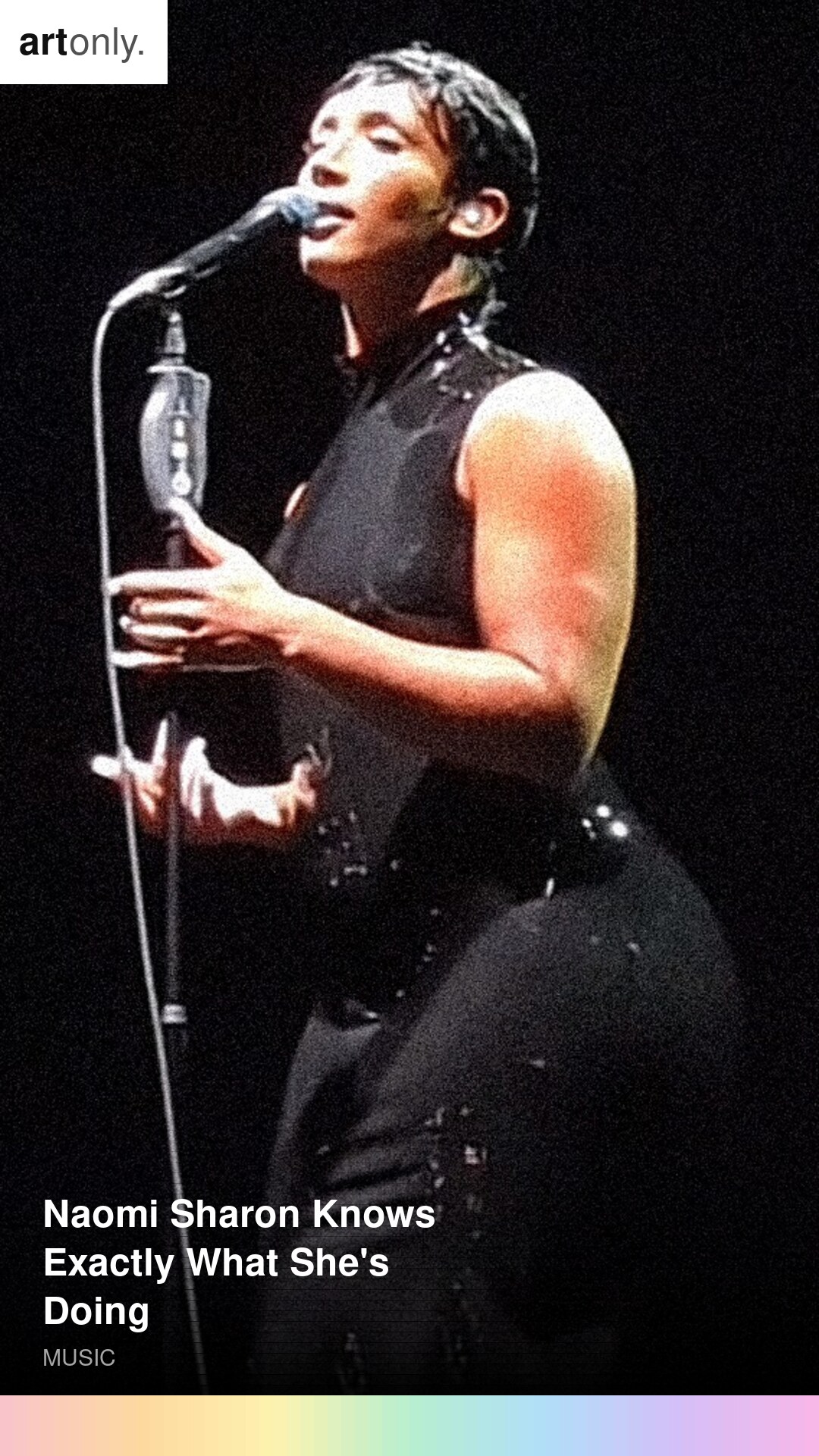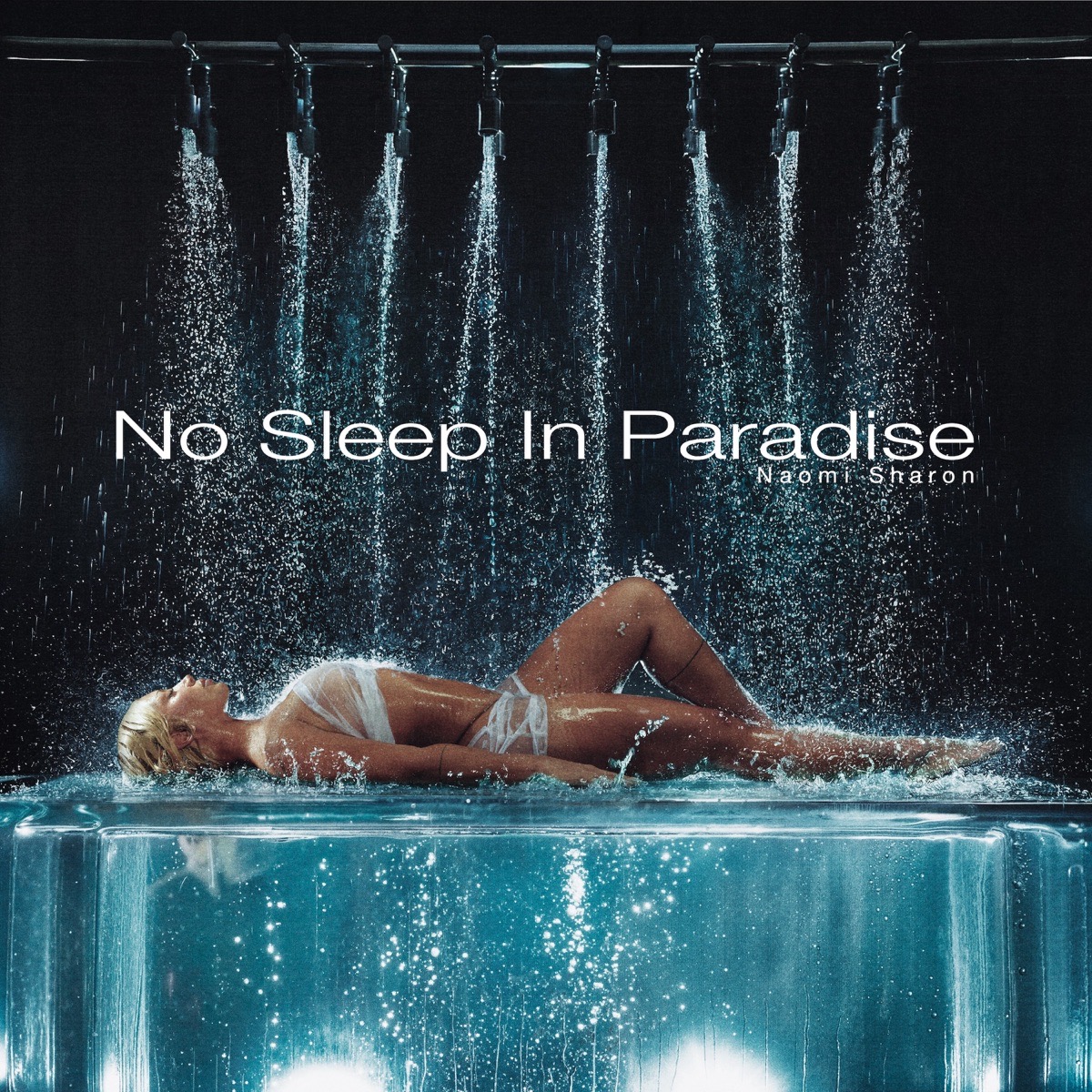
There is a confidence to Naomi Sharon's music that never tips into arrogance. It is the confidence of someone who knows what she is after and how to get there, an intimacy that feels chosen rather than accidental, a production aesthetic that is dense and warm and deliberately unhurried.
Sharon is from Rotterdam, with Curacaoan roots, and she signed to OVO Sound while still relatively early in her career. A co-sign that could have pigeonholed her, but has not. If anything it gave her room to develop on her own terms, releasing music that sits closer to the soul tradition than the maximalism the label is more commonly associated with.
Her debut EP Finding (2020) arrived with almost no buildup and immediately established a voice: low, considered, built around restraint. There is a Sade lineage here that she carries without cosplaying it. She has absorbed that influence and arrived somewhere that sounds like her, which is harder than it looks.
The Production Logic
What OVO Sound does well, at its best, is give its artists room to develop a sonic identity without forcing them toward commercial formats. Sharon has used that room deliberately. Her production choices lean into negative space: the gaps in the arrangement are not absences but presences, silences that hold weight. The bass sits low and warm. The drums are often understated to the point of feeling like suggestions rather than instructions. Her voice does the structural work that more ornate production would hand to arrangement.
This is a specific aesthetic position. R&B production in 2020 and beyond tended toward two poles: the maximalist approach that stacked layers of texture and reference until the song became an environment, and the stark minimalism that stripped everything back to vocal and a single instrument. Sharon operates in neither. She builds tracks that feel full without being crowded, intimate without being sparse. The warmth is in the mix decisions: how the low-mids are treated, how much air is left around the vocal, how the reverb tail creates a sense of physical space without obscuring the directness of what she is saying.
The Sade Question
Every review of Sharon's work eventually arrives at Sade, and the comparison is accurate without being complete. The lineage is real: the low-register voice, the deliberate tempo, the production that treats texture as emotional content rather than decoration. But Sade's work carried a particular kind of mid-80s cosmopolitanism, a jet-set cool that was also a form of emotional protection. Sharon's music is warmer, more exposed, less interested in the detachment that Sade sometimes deployed as a formal device.
Tracks like "Oblivion" and "Beautiful" show the range. She can do the kind of late-night R&B that works best at low volume, but she can also build something that hits harder, that has real weight behind it. The control is the point. Nothing she releases sounds like an accident.
The OVO Context
Being on OVO Sound is a specific condition. The label carries Drake's aesthetic gravity: dark, cinematic, Toronto-inflected R&B that has defined a decade of mainstream music. Sharon operates at the label's quieter end, but the co-sign has consequences. It means her music reaches listeners who might not otherwise encounter soul-inflected work this restrained. It also means she is constantly positioned in relation to a label sound she does not fully share.
The interesting thing is that she has not compromised to close that gap. She has not made a Drake-adjacent record. She has continued to develop the specific voice she arrived with, and the result is an artist whose label association raises her visibility without distorting her music. That is a difficult balance to maintain and she has maintained it.
What Is Coming
What makes Sharon interesting beyond the craft is the clarity of her artistic identity. A lot of artists at her stage of career are still figuring out who they are sonically. She seems to have arrived at that answer early and is now executing on it, track by track.
She is one of those artists who does not need to release a lot to hold your attention. Every drop lands like it was thought about for a long time. If the next full-length matches the promise of everything she has put out so far, it will be one of the R&B records of the year whenever it comes.
The Rotterdam Context
Sharon's Curacaoan and Dutch heritage is worth sitting with. Rotterdam has its own musical history, a port city with Caribbean connections running deeper than most Western European cities, and that context shapes an artist's relationship to diaspora sound differently than London or Toronto would. She has not made it a theme of her music. It is more like background radiation, a quality of rootedness in multiple places simultaneously that gives her work a particular kind of groundedness.
The Dutch music scene she came up in has produced some of the most technically accomplished producers in contemporary electronic music. Sharon is not primarily an electronic artist, but she carries a production intelligence that suggests exposure to that tradition. The way she thinks about arrangement, about the relationship between what is present and what is left out, has that quality of precision.
What Restraint Sounds Like
There is an ongoing critical conversation about what R&B sounds like now, whether the genre is expanding or contracting, whether the influence of trap production has permanently altered what the form is capable of. Sharon is not in that conversation exactly. She is doing something older and slower: making music that operates at the emotional temperature of late-night intimacy, that trusts the listener to bring their own associations to the sounds rather than directing their response.
This requires a different kind of confidence than the maximalist approach. It requires believing that less is genuinely more, that the space you leave in the arrangement is doing something, that the listener's imagination is a collaborator rather than a problem to be solved by filling in the gaps. Sharon believes this. The proof is in the tracks. Restraint in her hands is not the absence of energy but a different kind of energy entirely: banked, directed, arriving at the listener with full force precisely because it held back.
The voice is the engine. Everything else is infrastructure. That is a philosophy as much as a production approach, and it is the right one for what she is trying to do.