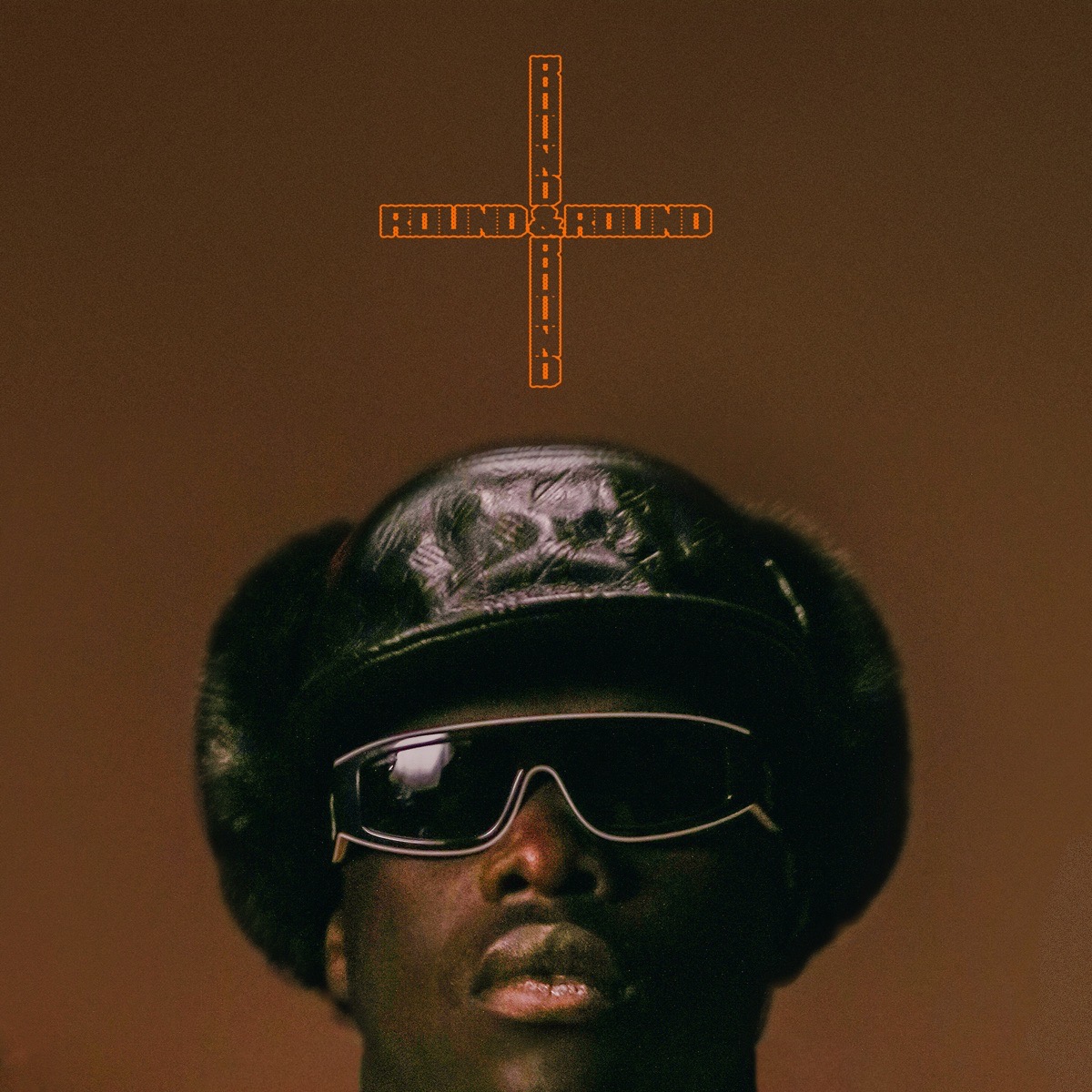
The title is a pun and also a program. To surrender is to give something up. To render is to deliver, to make available, to produce something for presentation. "Sir Render," the play on words that Sage Elsesser deploys as the title of his third studio album, splits the phrase simultaneously in both directions, suggesting an act that is both a release and a creation, both an ending and a beginning. This doubling is not accidental. The album is exactly this: a surrender that produces something, a laying down of weight that makes a different kind of clarity visible.
"Sir Render" is the final record in a trilogy that began with "Song of Sage: Post Panic!" in 2021 and continued through "The Sword and the Soaring" in 2022. It functions as a prequel to both, turning back toward the darkness and the unresolved weight that preceded those records' moments of spiritual forward motion. The trilogy, understood in sequence, moves through time and outward in emotional range. This final chapter goes back to the root, to the capsizing, to the moment before the turn that the earlier albums documented.
Elsesser grew up in New York and came up through the underground network that connected him with artists like MIKE, Mach-Hommy, and Earl Sweatshirt. He began as a skateboarder, model, and collaborative presence before his own recordings established him as one of the more singular voices operating in the space where jazz-informed underground hip-hop meets lyric poetry and spiritual inquiry. His work has never been loud about its concerns. It proceeds by accumulation rather than announcement, and the best tracks in his catalog tend to arrive at their fullest meaning only after multiple listens, when the density of the language has settled and the emotional geography of the record becomes navigable.
The Sound of Stripping Back
Where "The Sword and the Soaring" felt expansive, bright, and musically lush, "Sir Render" is cold, stark, and deliberately unpolished. The production is minimal, often drumless, built around abstract textures and spare melodic fragments that support rather than frame the vocals. This is a choice about what kind of honesty the material requires. The songs on this record are not looking for shelter in production. They are looking for exposure.
The fifteen tracks run just under forty-five minutes and move with the logic of a session that has decided to go somewhere difficult and stay there until the work is finished. The opening track "Commencement" establishes the terms without ceremony: a drumless intro in which Elsesser addresses the experience of capsizing and the decision to turn his life over to God. This is not the language of religious performance or the language of conversion narrative. It is the language of a person who has found, through the specific pressure of his own experience, that the self requires something to surrender to in order to remain intact.
The Collaborators as Witnesses
The features on "Sir Render" are not decorative. Armand Hammer and Earl Sweatshirt appear as voices from within the same tradition of thoughtful, serious hip-hop that Elsesser inhabits and has helped define. Their presence is a form of verification, a way of locating this record within a community of artists who share its commitments and can therefore speak to its terms.
The most significant appearance is the posthumous feature from Ka, the Brownsville rapper and poet who died in September 2024 and left behind one of the most rigorous and quietly devastating bodies of work in the history of American hip-hop. His presence on "Circa" carries an emotional weight that cannot be separated from the knowledge of his absence. The track addresses the experience of being healed by people we can no longer hear from directly, of being shaped by presences that have become memory. To listen to it is to hold two things simultaneously: the music as it is, precise and calm and fully itself, and the fact of the person who made it, who is no longer here. This is what posthumous recordings do at their best. They do not resolve into grief. They ask grief to coexist with the work, which is a harder and more generous demand.
Surrender as Practice
The underlying argument of "Sir Render" is that surrender is not weakness. It is a specific kind of strength: the strength to stop performing certainty, to stop carrying what cannot be carried alone, to acknowledge that the conditions of a life shaped by urban hardship and accumulating loss are not conditions that can be resolved by individual will alone.
This is not a new argument in hip-hop. The genre has been wrestling with spirituality, surrender, and the specific weight of Black urban experience in America since its inception. What distinguishes Elsesser's handling of these themes is precision. He does not reach for abstraction when the particular will do. He does not use the language of spiritual aspiration to avoid the language of specific pain. The record is full of images that locate their meaning in exact detail rather than in gesture.
There is also something in the collaborative scale of this record worth noting. Elsesser has worked in community throughout his career, and "Sir Render" reflects that orientation. The features, the production contributors, the context of Freedom Sounds, his own imprint, all suggest an artist who understands that the work of consciousness, the specific work this album is doing, is not a solitary project. It requires witnesses. It requires community. The surrender the album describes is personal, but the context in which it takes place is shared.
By the record's final moments, the surrender the title promises has been completed. What has been rendered, what the album has produced and delivered, is the record itself: fifteen tracks that tell the truth about what it costs to still be here, and why being here still matters.