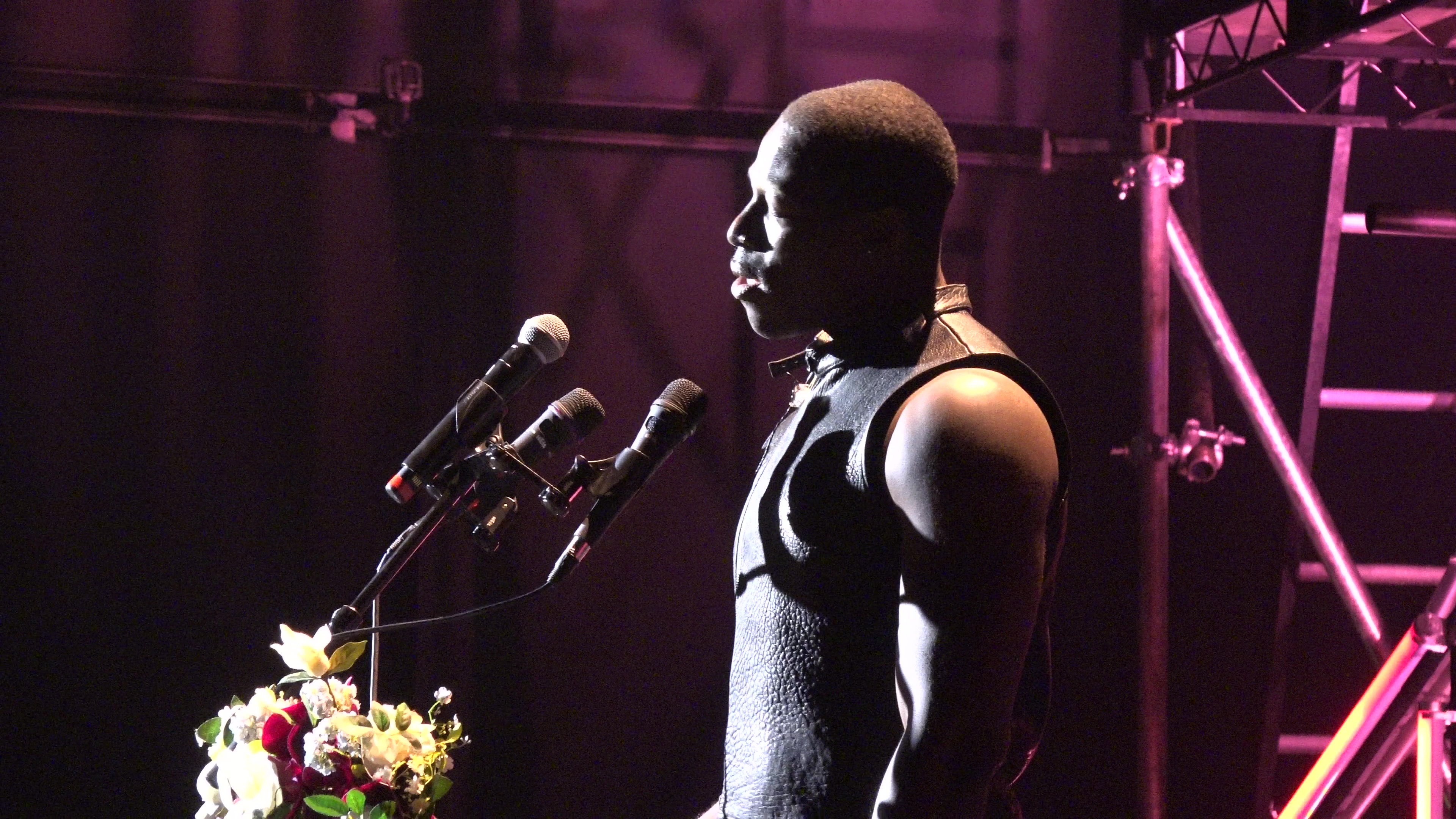
Joan Didion opened her 1987 book about Miami with a description of a city that no longer corresponds to its own surface. Nick León grew up inside that gap. His debut album, A Tropical Entropy, released on TraTraTrax on June 27, 2025, is the most accurate recent document of what it feels like to inhabit a city that markets its mythology at volume while the substrate beneath it decays at a rate the tourism boards prefer not to acknowledge.
The album has been out for nearly a year. It has been praised as cerebral, as a high end zeitgeist artefact, as the closest successor trance ever had before commercialism turned that genre into a parody of itself. The praise is correct but it tends to organize around the sonic qualities of the record and leave the cultural dimensions underexamined. Those dimensions are worth attending to.
A City Selling a Version of Itself That No Longer Exists
Miami has spent decades constructing and exporting an image: the pastel facades, the Art Basel circuit, the coastal real estate whose prices have displaced the communities that actually generated the city's cultural texture. The electronic music economy built on top of that image, the festival circuit, the residency economy, the bottle service tech house that occupied the larger rooms for a decade, had almost nothing to do with the living city. It was music for a Miami that exists primarily on Instagram and in luxury development brochures.
What León documents on A Tropical Entropy is the other Miami. Not aggressively, not as a manifesto. The record does not announce its politics. But the sounds it borrows and the way it treats those sounds constitute a position. Dembow rhythms pulled from reggaetón and dancehall. Subtropical unease as a formal quality rather than an aesthetic gesture. The beats appear and disappear, as one reviewer put it, like tides. That is not a neutral compositional choice.

Dembow as a Structural Argument
The dembow rhythm has a specific history. It emerged from dancehall in the early 1990s and became the rhythmic foundation of reggaetón, which then became one of the dominant popular music forms on the planet. In most of its commercial applications, dembow drives forward. It resolves. It is built for kinetic release.
León uses it differently. On A Tropical Entropy, dembow is a rhythm that questions itself. It breaks down, reemerges, fades into static, surfaces again with something changed. The result is not ambient music and it is not dance music in any conventional sense. It is music that carries the physical intelligence of club forms while refusing their implied social contract, which is that the beat will deliver you somewhere you want to go.
This is a meaningful refusal. It corresponds to an actual condition, which is the experience of living inside a culture that has all the formal markings of arrival and forward motion while the underlying reality is considerably more uncertain.

The Network That Made This Record Possible
A Tropical Entropy is not an isolated achievement. It came out of a network of producers and labels that have been rethinking what Latin American electronic music can sound like when it does not need to audition for mainstream approval. NAAFI out of Mexico City. TraTraTrax out of Colombia. DJ Python, with whom León released a split EP. Bitter Babe, his Miami collaborator. This network is loose but real. It has a shared sensibility without a uniform sound, which is the mark of an actual scene as opposed to a branded aesthetic category.
León's 2022 production credit on Rosalía's MOTOMAMI was one signal that this network had crossed into broader visibility. That album was among the most reviewed records of the year. León was not peripheral to it. He was part of its infrastructure, which means the Latin American experimental underground had built something substantial enough to function as infrastructure for major work.

The Collaborators and What They Bring
The album features Ela Minus on Ghost Orchid, Erika de Casier on Bikini, and Casey MQ on Ocean Apart, along with Xander Amahd, Jonny from Space, and several others. These are not commercial featuring credits. Ela Minus has been building one of the more rigorous bodies of electronic work from a Latin American position for several years. Erika de Casier is among the sharpest pop producers operating today. The fact that both appear on this record is not incidental.
Bikini, which circulated as a single in 2024, is the track that demonstrates most clearly what León achieves when the collaboration works. De Casier's vocal sits over a rhythm that could belong to three continents simultaneously. The track is genuinely strange and genuinely pleasurable at once. That combination is not easy to produce.

What the Entropy in the Title Actually Means
Entropy, in thermodynamics, describes a system moving toward disorder. In information theory it describes uncertainty, the degree to which a message is unpredictable. León has said the record was partly inspired by Joan Didion's Miami and by altered states of consciousness. The title earns its abstraction because the music actually enacts it. The album does not describe entropy. It sounds like entropy. Organized, intentional, meticulously produced entropy, which is paradoxical in exactly the way the music is paradoxical.
The Miami that this album emerges from is a city undergoing genuine transformation, which is a neutral way of saying displacement, which is a neutral way of saying that the communities and cultures and underground scenes that made the city worth paying attention to are being systematically priced out of it while the resulting space is filled with something blander and wealthier and more interchangeable. A Tropical Entropy is, among other things, a document of that process. Not a eulogy. A document. Eulogies require certainty about what has been lost. León is more precise than that. He records the sensation of something in the process of dissolving without declaring it finished.
That is the kind of cultural work that does not get discussed often enough. It is the kind of work that sounds like entertainment until you listen to it closely, and then sounds like evidence.