Track 6, THE VOID, Halloween 2025
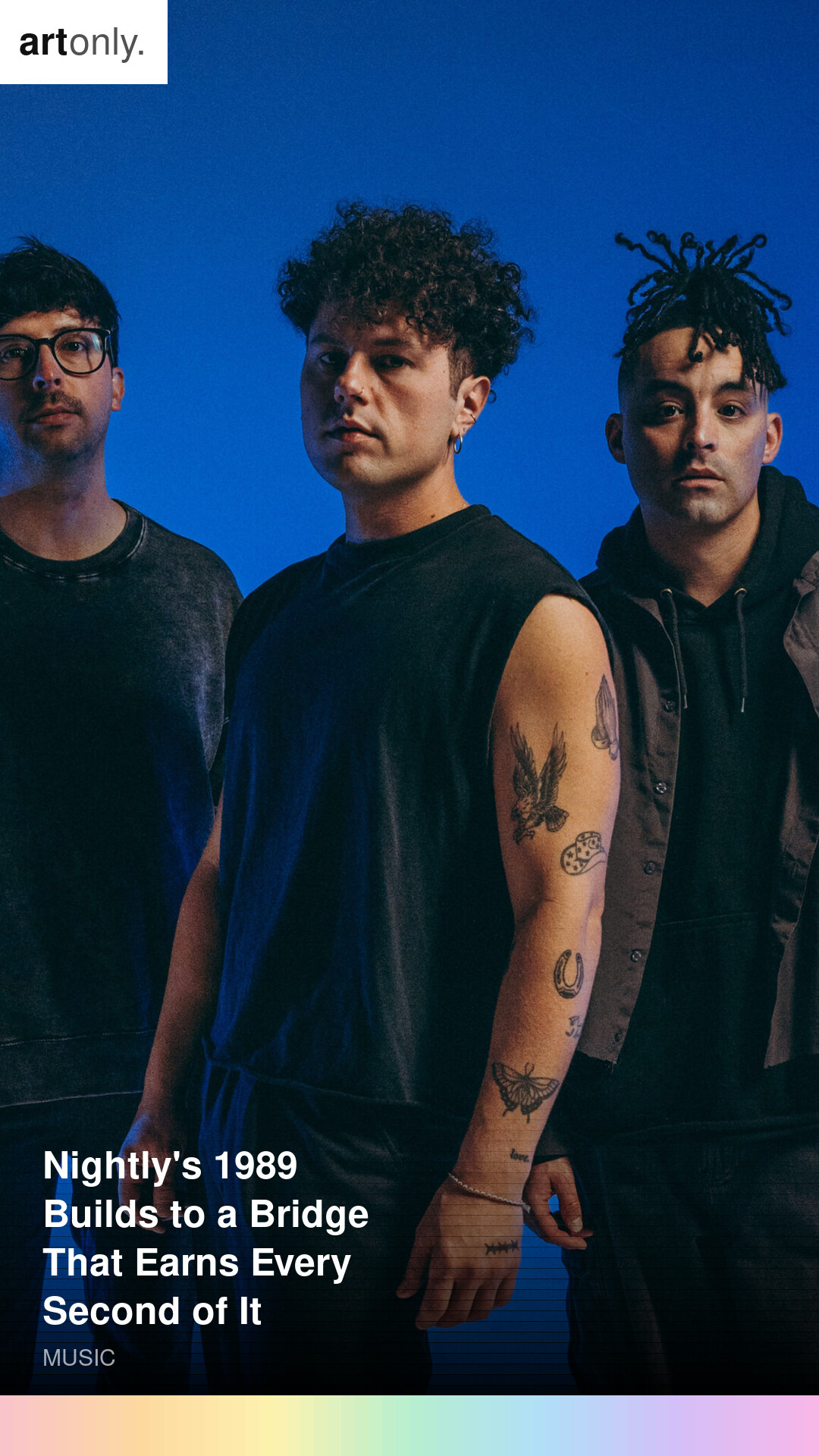
Track 6 on a nine-song album that runs 25 minutes. That is where "1989" lives. Nightly released THE VOID on October 31, 2025, and the album mostly does what the band has always done: clean, atmospheric indie pop that sounds like late nights and unresolved feelings. But the sixth track is something else.
"1989" is built around a specific kind of grief. The narrator is not dealing with a breakup or a missed opportunity. They are dealing with the loss of a person described through a single memory: riding in the back of their car, windows down, radio on, singing together. That is the whole image. The song keeps returning to it across three minutes and change, adding nothing new, removing nothing. The year 1989 is not a reference to anything outside the song. It is the label for something that happened, a date the narrator uses the way you would mark a box in storage.
The chorus gives you the full weight of it: "Somewhere I'm still singin' loud, windows down, in the back of your car / With your hands on my mouth and the radio on / Now it's quiet every time that I drive / I lost you and 1989."
The phrase "I lost you and 1989" does something simple and precise. The year and the person are one thing. They cannot be separated. Losing one meant losing the other.
Jonathan Capeci's Restraint in the First Two Minutes
Jonathan Capeci sings the verses with almost no emotional pressure. The production under him, co-produced with slavo (Justin Slaven), stays spare. Soft synth layers. Quiet percussion. The instrumentation does not escalate because the song is not trying to convince you of anything yet. It is describing a fact and letting the fact sit there.
Joey Beretta and Nicholas Sainato, the other two-thirds of the Nashville three-piece, do not overload the arrangement. This is a disciplined band. They formed after Capeci and Beretta relocated from the Philadelphia area, where they had been playing in a project called Dinner And A Suit, and the years of working together show in how little space is wasted. Every part serves the emotional state of the narrator, not the other way around.
The restraint in the first two minutes is not a flaw. It is the setup. The song is holding something back, and you can feel it holding.
The Bridge
The bridge is where the restraint breaks.
"Sunsets, no rest, singin' loud as you can / Still in my head, I don't wanna forget / Each night, you said, 'Are you missin' me yet?'"
That last line does something most grief songs never attempt. The question is not the narrator's. The narrator is remembering being asked this question by the person they lost. At some point before the loss, the person looked at the narrator and said: "Are you missin' me yet?"
Which means the person knew. They knew they were going to be missed. They were asking in advance.
The bridge strips everything away and repeats this. The instrumentation pulls back. Capeci sings it over and over with the production falling further out under him. What you are left with is the question, repeated, as though the narrator cannot stop hearing it.
This is where the song pays off everything it set up. The quiet in the car after the loss is not just absence. It is the absence of someone who already knew they would be absent. The narrator is not just missing a person. They are carrying the weight of the person's own knowledge that they would be missed.
That inversion is rare. Most nostalgic pop songs stay inside the narrator's experience. "1989" briefly switches to the other person's perspective and it changes the entire meaning of everything that came before.
The Fly By Midnight Version
On May 1, 2026, Nightly released a featured version with Fly By Midnight. The original instrumentation stays intact. A second vocal presence is added without crowding the first. The bridge still lands the same way. For a collaboration, it is well-judged. The core of the song does not need help. Fly By Midnight adds weight to the idea of the song without pulling it in a new direction.
Start with the original.
Why It Holds
Nostalgia pop is a crowded format. Most of it works by making the past feel warm and the present feel lesser. It flatters the listener's relationship with memory. "1989" does not do that.
The memory in this song is not a comfort. The narrator is not happy they have it. The memory is described as something they cannot escape. "Still in my head, I don't wanna forget" is not gratitude. It is someone telling you they do not know how to move on, and they are aware they should.
The song is not about the beauty of the past. It is about what it costs to keep carrying it. That distinction is the difference between a song that flatters and a song that tells the truth. Nightly wrote the second kind.
Songwriters Jonathan Capeci, Joey Beretta, Nicholas Sainato, Justin Breit, and Justin Slaven wrote something that earns the listens. The bridge earns it in under 30 seconds. The rest of the song earns the bridge. That order matters, and they got it right.
The Craft of the Lyric
Nightly is working in a tradition that has largely been abandoned by contemporary pop: the verse-chorus-bridge structure executed with genuine commitment to each section as a distinct emotional beat rather than a repeated gesture toward a feeling. "1989" demonstrates why that tradition is worth preserving. Each section earns the next. The verse establishes; the chorus opens; the bridge resolves something the verse refused to resolve. That sequence, when it works, is one of the most efficient emotional machines in music. It works here.
The lyrical precision is the thing that separates "1989" from the large number of songs covering the same thematic territory. Nostalgia in pop has default settings: the golden past, the loss of innocence, the impossibility of return. Nightly does not use the defaults. The specific imagery in the lyric grounds the feeling in a physical reality rather than a sentimental one. You can feel the weight of what is being described. That weight is what converts a song about a feeling into a song that produces a feeling, and the conversion is the only thing that makes the territory worth visiting one more time.
Most songs about the past cost the listener nothing. You receive the sentiment and move on. "1989" asks something of you. It asks you to recognise what you have been carrying. The bridge is where that recognition arrives, fast and complete, and the craft behind the song is the work of the whole preceding structure building toward that thirty seconds.