Pond have always been a band in conversation with their own excess. Coming out of Perth, Western Australia, the same scene that produced Tame Impala and a particular strain of sun damaged psychedelia, they built their early reputation on sprawling, feedback heavy, loosely organized jams that felt like they could go on forever and sometimes did. The fuzz pedal was not merely a tool. It was a philosophy. Letting things unspool past the point of resolution, treating the studio like a room where time moved differently, piling texture on texture until the song itself became secondary to the atmosphere it generated. This is the Pond that their existing audience knew, the Pond of Hobo Rocket and Man It Feels Like Space Again, a band that had figured out how to make excess feel like a form of generosity.
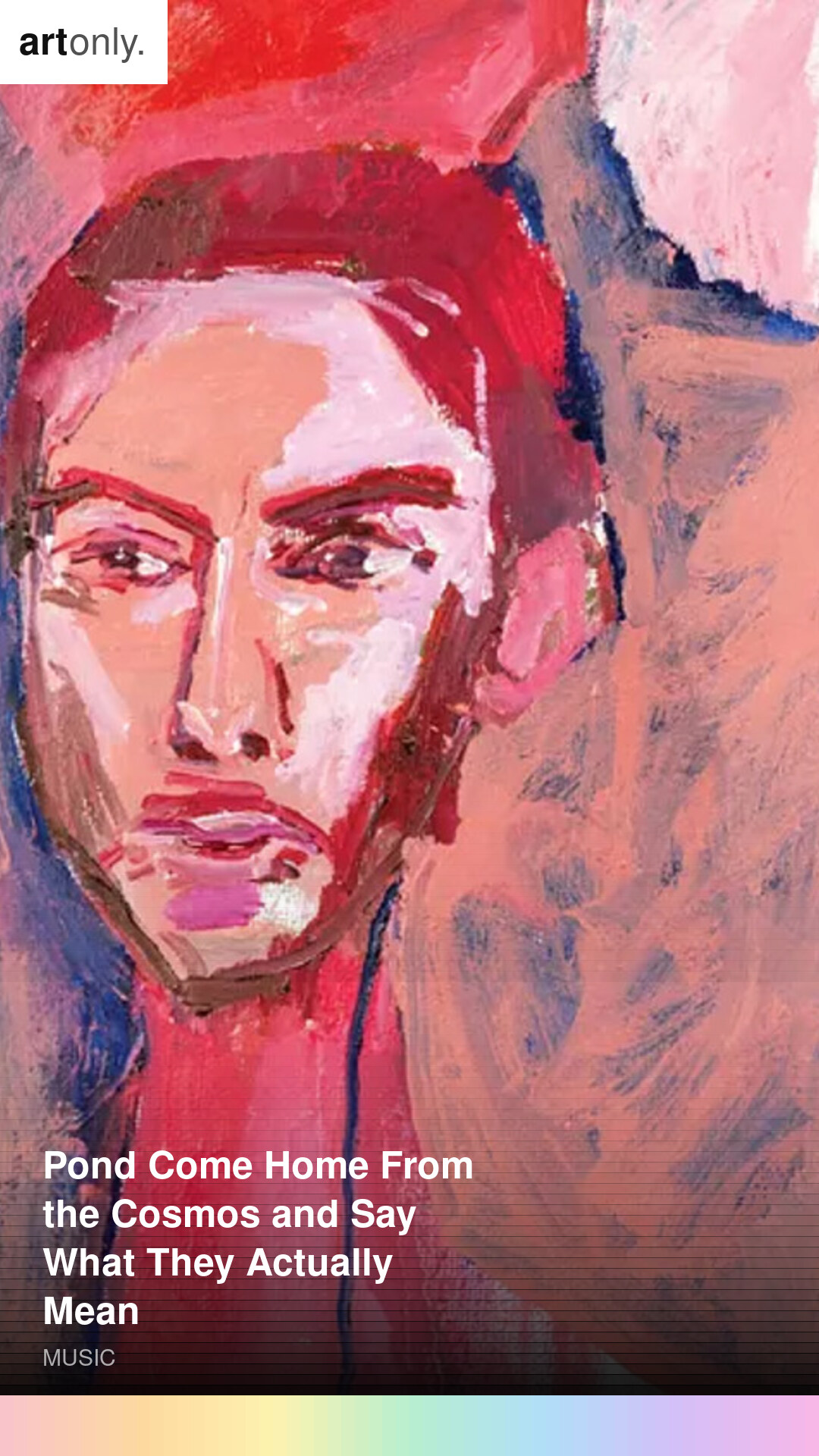
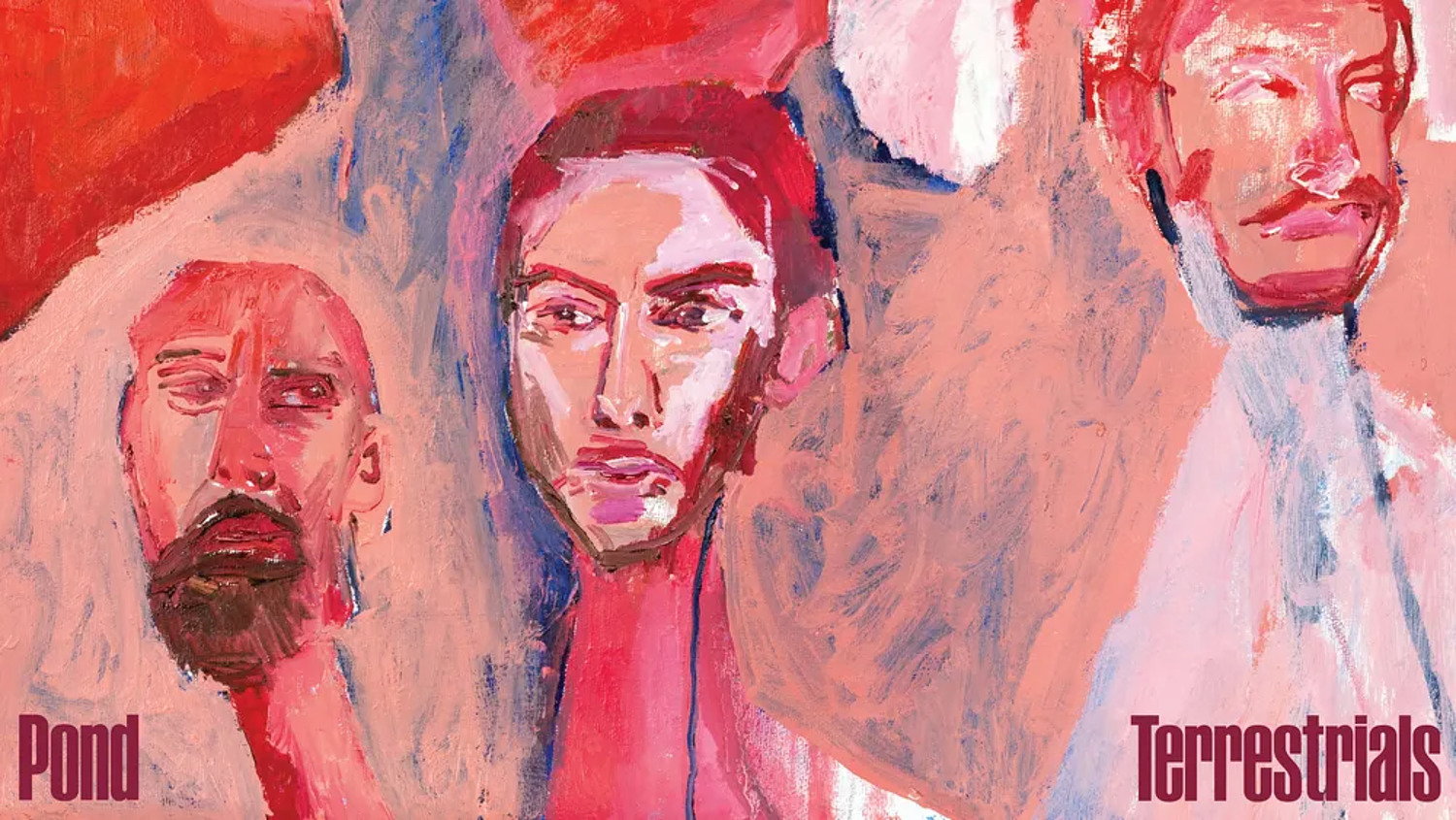
Terrestrials, their eleventh studio album and their first on their own Mangovision imprint via Secretly Distribution, arrives with a deliberate negation of everything that defined that sound. Before entering the studio, the band imposed three prohibitions: no fuzz pedal, no ballads, and no what they describe as Pink Floyd indulgences, meaning no extended atmospheric passages, no songs that require the listener to be patient in a particular way, no music that takes longer to pay off than it takes to earn. These prohibitions sound like a reaction to something. They are. The album is Pond deciding, at the point of their eleventh record, that compression serves them better than expansion. That the statement lands harder when it is stated once rather than circled.
What they arrive at is something that fuses the sun bleached guitar pop of 1980s Australian rock, the kind that emerged from pubs and beach suburbs and the particular quality of light on the west coast, with the eyeliner smeared post punk of British bands like Sisters of Mercy and Magazine. This is a specific and unusual combination. The Australian pub rock tradition has largely been understood as a rougher cousin to American classic rock, built on big guitars and physical presence and a certain indifference to sophistication. The British post punk that Pond are referencing here is nearly the opposite: cerebral, image conscious, interested in texture as a form of argument. Pond put these two traditions in a room together and discover that they are arguing about the same things.
The Land Underneath the Record
Nick Allbrook has never been a subtle lyricist, but on Terrestrials the directness of the writing carries more weight than usual because the production has stripped away the psychedelic gauze that typically surrounds it. Tracks like The Fatal Shore and Personal Hell address the Australian landscape not as backdrop but as subject: the continent as something that was taken, that continues to be extracted from, that produces a specific kind of political guilt in the people who live on it while benefiting from its dispossession. Roebuck Plains places itself in the northwest of Western Australia, a region that carries enormous significance in the ongoing conversation about Indigenous land rights and the violence of extraction industries.
This is not protest music in the American tradition of folk declarations and singalong choruses. It is something more uncomfortable: music made by people who understand that they are implicated in what they are describing. The post punk formalism is appropriate here because post punk has always been the sound of people who know they cannot simply leave the system they are critiquing. You use the electric guitar. You work within the pop song. You accept the inheritance and then say what the inheritance cost.
What the Constraints Produced
The prohibition on fuzz does not make Terrestrials a quiet record. The guitars are present and often aggressive. They have simply been given a different kind of edge. The compression of the mix pushes everything forward, and the absence of the reverb and delay that Pond employ to create psychedelic depth means the listener is in the room with the band rather than floating above it. This is a physical record in a way that previous Pond albums have sometimes deliberately avoided being.
The ten track running time, which comes in under forty minutes, is the most consequential formal decision on the album. Pond have historically been willing to test patience. Terrestrials does not test patience. It arrives, states its case, and exits before the listener has time to decide whether they agree. This works because the writing is strong enough to sustain the confidence the structure requires. Through the Heather and Two Hands are as immediate as anything Pond have recorded, built on riffs that earn their repetition rather than depending on it. Skyworks opens the album with a directness that announces the new approach before the listener has time to calibrate expectations.
Nashville (I'm Dying) closes the record with something unexpected: a song that, despite the no ballads rule, manages to be genuinely moving without betraying the album's structural commitments. It is moving because of compression rather than despite it. The restraint built across the preceding nine tracks gives the final song room to breathe that would not have existed if the album had been built the old way.
The Independent Move and What It Means
Releasing on Mangovision, the label Pond established for this record, places them in a line of artists who have chosen the increased risk and increased control of independence at a point in their careers where the established infrastructure was no longer serving the work. Secretly Distribution handles the logistics. The creative decisions remain entirely with the band. This is not a guarantee of quality, but it is a guarantee of intention. Terrestrials sounds like a record that was made exactly as the people who made it intended. There are no compromises audible in the mix, no moments that feel like concessions to commercial legibility.
This matters for Pond specifically because their commercial legibility has always been partial at best. They are a cult act in the most precise sense: a band with a devoted audience that has never crossed into mainstream visibility, despite connections to Tame Impala and the broader global attention that followed that project. The Kevin Parker association was always more accident than design. What Pond and Tame Impala share is a geography and a generation, not a sound. Terrestrials makes this distinction clearer than any previous record. This is not psychedelic pop organized for mainstream entry. This is something more particular, made with full awareness of its own particularity.
In 2026, that particularity feels like a position rather than a limitation. The Australian political landscape, the ongoing crisis of extraction and denial, the specific textures of a culture that continues to grapple with what it took and what it owes, these are not abstract concerns. Pond have made a record that lives inside these concerns without pretending to resolve them. The post punk structure is the right vehicle for that kind of unresolved argument. Terrestrials is the sound of a band that has been building toward a specific kind of clarity for eleven albums and has finally arrived at it, on their own terms.