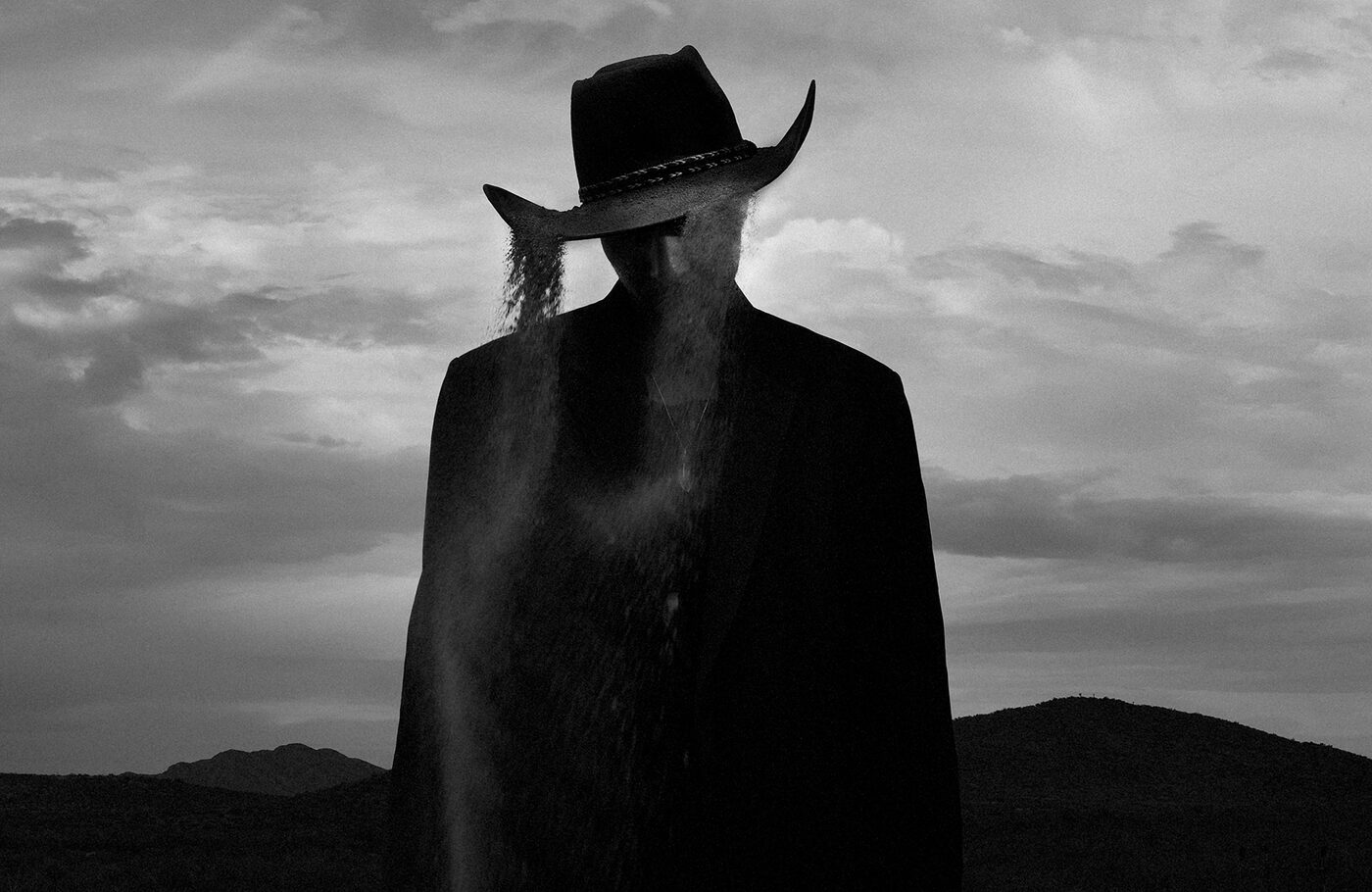
There is a quietness to Rejjie Snow that most rappers never find. The Irish-Jamaican MC from Dublin built his entire career on resisting volume, on choosing the murmur over the shout, and on finding the emotional core of a lyric rather than its spectacle. In a genre that often rewards loudness, Rejjie Snow made a case for tenderness.
Born Alexander Anyaegbu in Cork and raised in Dublin, Snow came up in a city with no established rap scene to speak of. That isolation, rather than limiting him, gave him room to develop something entirely his own. He absorbed jazz from his parents, soul from old records, and began rapping not because Dublin expected it but because he needed somewhere to put everything he was carrying.
His early mixtapes circulated online through the early 2010s, picking up attention from UK blogs and eventually American ones. There was always something different about the writing. Where contemporaries were clocking flows per minute, Snow was clocking feelings per bar. His references ran toward Basquiat and Miles Davis rather than rap lineages, and that lateral thinking made his music feel genuinely literary without ever feeling pretentious.
Dear Annie
His 2018 debut album Dear Annie arrived as a fully formed statement. Named after a fictional love interest who threads through the record, it was a concept album that never announced itself as one. The structure was novelistic. Snow moved between languages, sliding into French on tracks without warning, treating multilingualism as texture rather than flex. The production, handled by a rotating cast including Jake Gosling and Luca Loughran, was low-lit and warm, full of piano and saxophone and the kind of negative space that makes vocals land harder.
The singles from that era captured something specific about young manhood in flux. Blueberries featured Kali Uchis, and the two traded verses with an intimacy that felt genuinely uncomfortable in the best way. Snow was writing about desire and anxiety and the particular confusion of loving someone you cannot quite reach. Uchis matched him note for note. The chemistry was undeniable.
Garbage featured GoldLink and functioned as one of the most underrated collaborations of that year. The two rappers play off each other like jazz improvisers, Snow's laconic delivery setting up space that GoldLink fills with compressed energy. The song was not a hit in any commercial sense, but it circulated endlessly among a certain type of listener, the kind who keeps a private playlist of songs that feel too good to be widely known.
The Tone He Owns
What made Snow distinctive was never just the lyrics. It was the approach to voice as instrument. He raps with his mouth barely open, syllables falling forward like they are half-asleep, and the effect is one of radical intimacy. Listeners feel like they are overhearing something rather than being addressed. That feeling is rare and extremely difficult to manufacture. It either comes naturally or it does not come at all.
He spent years building credibility through features and EP releases before Dear Annie. The 2016 EP The Moon and You showed him already in command of his voice, already thinking about jazz structures in rap contexts, already uninterested in any genre category that tried to pin him down. British critics called him neo-soul. American blogs called him alternative hip-hop. He called himself nothing and kept working.
After Dear Annie came a period of relative quiet. Snow had always operated on his own timeline, releasing music when it was ready rather than when labels or streaming cycles demanded it. That patience, frustrating to those waiting for a follow-up, was of a piece with his whole aesthetic. He was never in a hurry. The work would arrive when it was finished.
Culture and Crossover
Snow has spent time in London, Los Angeles, and back in Dublin, and those cities show up in his music as textures and moods rather than explicit references. He is not a rapper who name-drops geography for credibility. He absorbs places and lets them shift his palette. The Los Angeles sessions produced something sun-warmed and slightly hazy. The London years brought a darker edge and a closer relationship with UK club culture. Dublin runs underneath all of it, a quiet undertow.
His visual world matches his sonic one. The artwork and videos associated with his music tend toward painterly compositions, natural light, people caught in unguarded moments. He has collaborated with visual artists and photographers who understand that his aesthetic is not about polish but about presence. A Rejjie Snow video feels like a short film that accidentally got a rap soundtrack rather than a commercial product engineered for attention.
The features he chooses tell you a great deal about where his head is. Beyond Uchis and GoldLink, he has worked with producers and artists who share his investment in emotion over energy. He is drawn to musicians who think about space, who understand that what you leave out is as important as what you put in. That sensibility places him in a lineage that runs from J Dilla through Sade through certain strands of contemporary R&B that resist easy genre classification.
Where He Fits
Rejjie Snow is the kind of artist who gets described as underrated so frequently that the description becomes its own cliche. He is genuinely underrated, but the more interesting question is what underrated means in a streaming era where niche audiences are more accessible than ever and commercial metrics are increasingly divorced from cultural resonance.
By the metrics that matter to his listeners, he is exactly as rated as he should be. His records circulate among people who care deeply about them. He inspires genuine loyalty rather than casual fandom. The artists who cite him as an influence tend to be interesting artists themselves. That is a particular kind of success that does not show up on charts but is very real.
There is a generation of musicians working in the space between rap and jazz and soul and indie who owe something to the permission Snow granted by simply making music that refused to fit anywhere. He proved that a rapper from Dublin with a French phrase and a Basquiat reference and a voice like a late-night confession could find an audience willing to meet him exactly where he was.
He is still making music on his own terms, still resistant to the formulas that would make him easier to market, still operating in that quiet register that makes his best songs feel like secrets. That is not a small thing. In an era of algorithmic pressure and release-cycle anxiety, the refusal to be anything other than exactly yourself is a political act.
Rejjie Snow has always known that.