Rick Owens has been designing clothes that look like the aftermath of something for approximately three decades. The drapes, the asymmetries, the palette that runs from black through grey to the occasional washed-out offwhite, a vocabulary so consistent and so internally coherent that it constitutes its own philosophy, a position on being in the world that fashion, as a medium, allows to be stated through material and cut and silhouette.
The position is something like this: the world is ending, has perhaps already ended in the relevant ways, and the appropriate response is not despair but a kind of resigned elegance. Dress as though the apocalypse has already happened and you have found a way to be beautiful in the rubble. Move through the world as though the normal rules of social legibility, the dress codes of professional life, the style rules of trend cycles, the expectation that clothing communicates aspiration toward something, no longer apply.
This is either a very dark philosophy or a very liberating one, possibly both. Owens's collections, season after season, develop it with the consistency of a designer who figured out early what he was saying and has committed to saying it as clearly as possible for as long as possible.
The Autumn/Winter 2023 Show
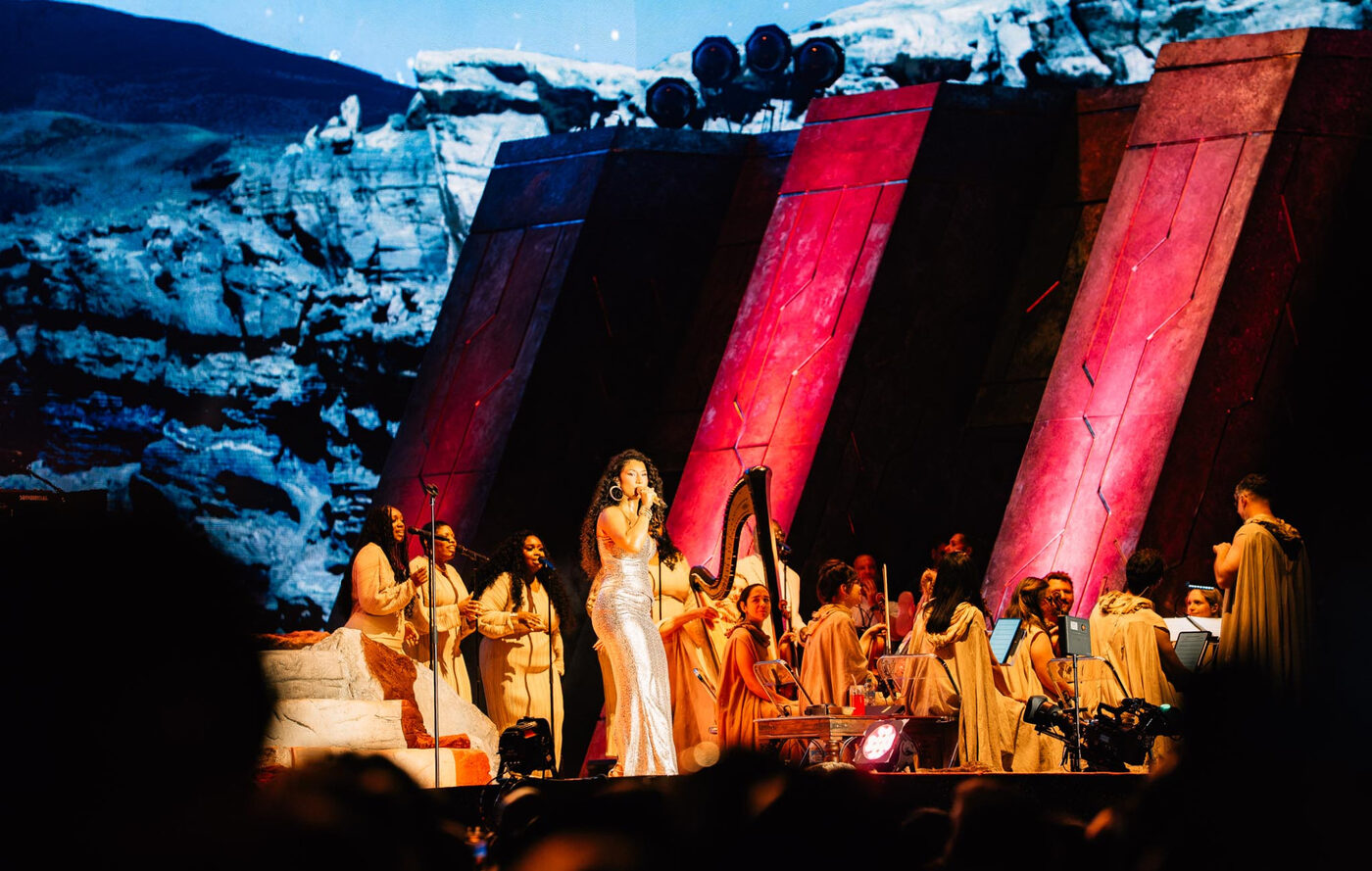
The Paris show in October 2023 was called LUXOR and referenced ancient Egypt, the pyramid form, the treatment of death as architectural project, the specific quality of a civilization that built for eternity rather than for the market cycle. This is characteristic Owens territory: the grand historical reference that dignifies and contextualizes the contemporary moment without sentimentalizing the past.
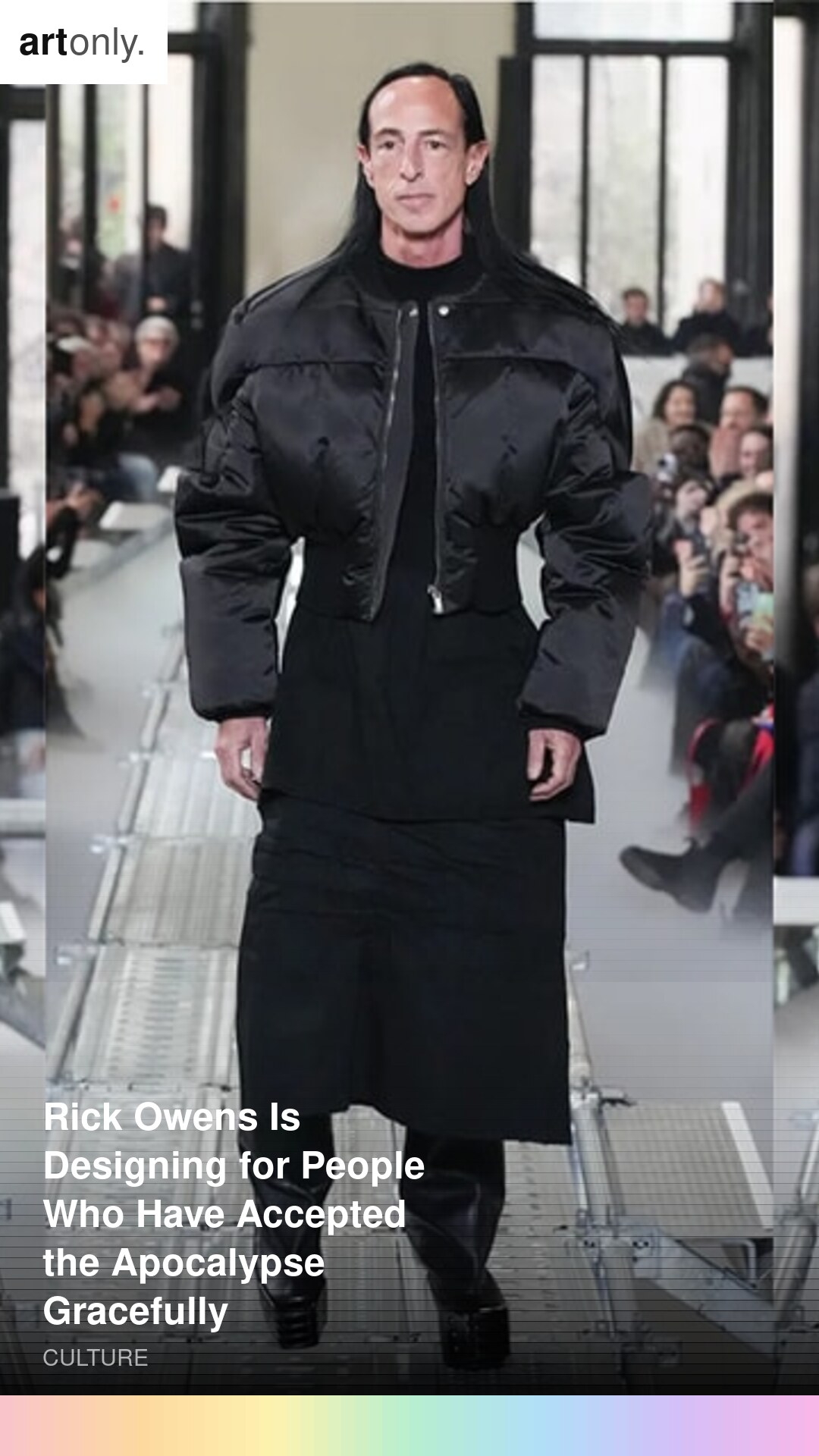
The clothes were extraordinary in the way that his clothes are always extraordinary, technically difficult, requiring wearers who have accepted the terms of the Owens universe, not clothes that meet you where you are but clothes you grow into or don't. The leather, the structured drapes, the elevated footwear that has become as iconic as any element of his work, all of it deployed with the confidence of a designer who no longer needs to convince anyone of anything.
The show itself as event matters in a way that Owens has always understood. The staging, the casting, the music, these elements produce something that is more than a fashion show in the conventional sense. The shows are installations, performances, statements. The clothes are the text; the show is the context that makes the text legible.
The Material Language
There is a specific education in how Owens uses material that does not announce itself but accumulates over time if you pay attention. The leathers in his work are not status signals in the conventional luxury sense. They are surfaces that age and mark and develop character. The drapes are not decorative; they redistribute weight, they change how a body moves through space, they make the act of walking a deliberate thing.
The silhouettes LUXOR pursued, elongated, layered, frequently bisymmetrical in ways that recall both Egyptian funerary dress and the specific visual language of archaic ritual, are not designed to flatter in the conventional sense. They are designed to transform. The wearer of Rick Owens is not presenting the body for approval; they are presenting it as a statement about what the body is and can be, which is a completely different act.
The footwear deserves separate attention. The platform boots and elevated creepers that have become signatures are not merely accessories. They change the physics of the body, the height, the gait, the relationship between the person and the floor. To wear them is to move differently. That choice, to alter movement rather than merely appearance, is the most precise indicator of what kind of designer Owens is.
Who Wears This
I keep thinking about who wears Rick Owens and what that says about them. The customers are not a demographic in the usual sense, not unified by age or income or profession, though the price points are significant. They are unified by a sensibility: by a willingness to be visible in ways that conventional dress codes do not permit, by a comfort with being read as unusual, by a relationship to luxury that is about material and philosophy rather than status signaling.
There is genuine intellectual content in this clothing, genuine thinking about what a body should look like, about what clothing is for, about the relationship between individual presentation and collective aesthetic. This is not true of all fashion. It is true of Owens.
The customers who have been buying his work for twenty years are not fashion victims in any useful sense of the word. They are people who found a designer whose position on the world matched their own and committed to it. That kind of relationship between designer and customer is rare and it produces a loyalty that has nothing to do with trend cycles.
LUXOR and the Architecture of Duration
The pyramid is, among other things, a statement about time. It was built to last. It was designed with the understanding that the civilization that built it would not last as long as the structure itself, that the architecture would outlive the architects, that permanence was the point.
Owens chose this reference at a specific moment, a moment when permanence feels increasingly unlikely and the market cycle moves faster than human attention can follow. The LUXOR collection lands differently read against that context. These are clothes designed for people who have stopped expecting the world to stabilize. The question is not whether the apocalypse is coming but how to dress for the period after.
The apocalypse he has been designing for has been approaching for a long time and getting closer. The people who have been wearing his clothes all this time have been practicing for something.
I have been thinking about what it means to dress for a version of the world that most people are still pretending is not coming. There is something practical in the Owens aesthetic beyond its philosophical claims, the durability of the materials, the construction that prioritizes function over trend, the clothes that are genuinely designed to last rather than to be replaced. This is fashion that takes the longer view.
LUXOR, as a collection, as a show, as a statement, it landed differently on me than his shows usually do. Something about the pyramid, the ancient context, the idea of building for eternity in a moment when eternity feels uncertain. I have been thinking about it since.