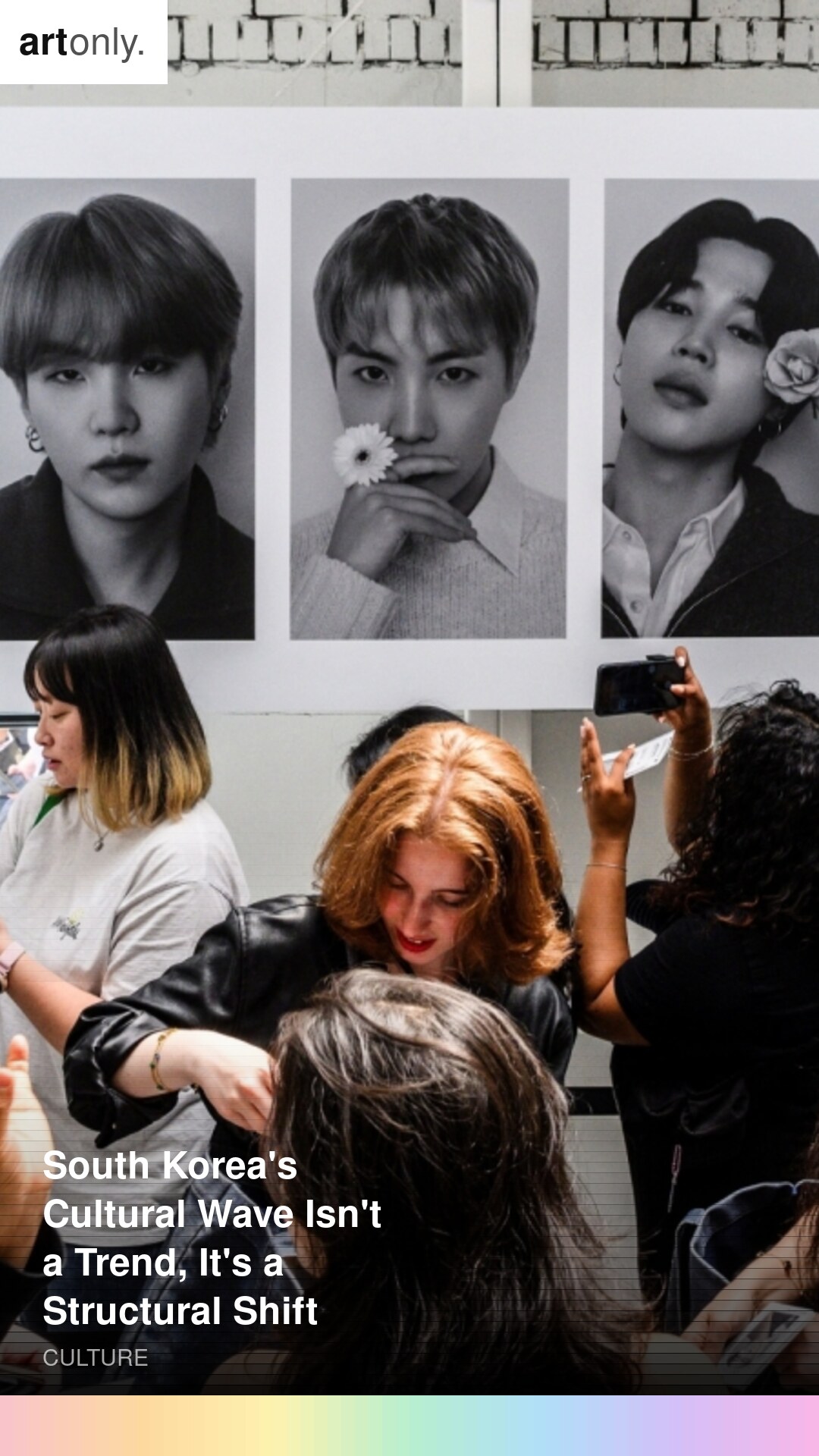
The Korean Wave, Hallyu, has been described as a phenomenon, a moment, a trend, a soft power campaign, a content industry success story. All of these descriptions are true in parts and none of them fully accounts for what has actually happened, which is a structural shift in the global distribution of cultural influence that is not reversible in the way that trends are reversible.
K-pop was the entry point for most Western audiences, the BTS phenomenon, the Blackpink phenomenon, the specific machinery of idol culture that produces music and visual content and parasocial relationships with extraordinary efficiency. But K-pop is only the most visible element of something much larger: Korean film (Parasite, the Bong Joon-ho moment, the subsequent recognition of a deep cinema tradition), Korean drama (the global viewership numbers for Squid Game and what came before and after), Korean food, Korean beauty, Korean literature.
These are not unrelated trends. They are expressions of a cultural confidence and a cultural infrastructure that has been built over decades, that invested in creative industries at a national level, that developed training systems and production capabilities and distribution networks that could compete globally, that took the question of what Korean culture could be in the world seriously as a national question.
Why Structural
I call this a structural shift rather than a trend because of what it has changed about the receiving end. A trend is something that enters a culture from outside and then recedes. What Korean cultural production has done is change the assumptions of audiences in ways that don't simply reverse when the specific products move on.
Audiences who have spent significant time with Korean content have developed new aesthetic expectations, new tolerances for cultural specificity, new willingness to engage with works that require subtitles and carry cultural reference that isn't explained. These are different audiences from the ones who hadn't had these experiences. The change is in the audiences, not just in the content.
The global streaming platforms have both reflected and accelerated this shift. Netflix's investment in Korean content was initially a business decision and became something that changed the nature of the platform. The Korean productions now constitute a significant portion of the non-English content that draws global subscriptions, and the production values and narrative sophistication of the best Korean drama has shifted expectations for what non-English content can be.
Parasite winning Best Picture in 2020 was a symptom, not a cause. It was the moment when the existing shift became undeniable within an institution that had been reluctant to acknowledge it. The shift preceded the Oscars by years and will continue after the Oscars' attention has moved on.
What the Infrastructure Actually Built
The training systems that produced K-pop idols are easy to mock and have been mocked thoroughly. Multi-year contracts, highly controlled image management, synchronized choreography built to precision tolerances. What gets less attention is that the same investment logic, the same willingness to treat creative output as something worth building infrastructure around, extended into film schools, into drama production houses, into the kind of sustained institutional support that produces directors and writers and cinematographers over generations, not just over a single commercial cycle.
The Korean film industry did not produce Bong Joon-ho by accident. It produced him through decades of domestic cinematic culture, through a film audience that supported serious Korean work before international audiences arrived, through critics and institutions that took the work seriously on its own terms. The global moment was the harvest of something that had been growing for a long time.
This is the part that other countries trying to replicate Hallyu tend to get wrong. They look at the export moment and try to engineer an export moment. The export moment was downstream of a domestic cultural ecosystem that was genuinely healthy, genuinely ambitious, genuinely invested in the quality of its own output for reasons that had nothing to do with foreign audiences. You cannot shortcut that. You build it or you don't have it.
The Question of Authenticity
There is a critique of Hallyu that focuses on its industrial character, on the idol training systems, on the corporate machinery behind K-pop, on the way that Korean cultural products are often engineered for global appeal rather than grown from pure cultural expression. This critique has merit and is also somewhat beside the point.
All cultural production involves industrial processes and commercial decisions. The question of authenticity is always complicated when applied to pop culture, which has always been commercial by nature. What matters about Korean cultural production is not whether it's pure. Nothing is pure. But whether it's doing interesting things, whether the best of it represents genuine creative achievement.
The best of it does. The Bong Joon-ho films are not artifacts of a soft power campaign. They are extraordinary works of art made by an extraordinary filmmaker who has absorbed a century of cinema and made something new with it. That they happen to be Korean and happen to have become globally significant does not diminish the work.
The same holds for the better Korean drama. The Wire is not a lesser work because it was made for HBO. Breaking Bad is not compromised by the commercial infrastructure that produced it. The industrial context does not settle the aesthetic question. You have to look at the work.
Language as the Last Barrier That Fell
For most of the twentieth century, the English-language assumption held. Not as a rule, but as a gravitational force. The mainstream of global pop culture operated in English, and content that didn't was slotted into the art house, the specialty section, the subtitled room at the back of the cinema. The audiences who crossed that line were self-selecting for tolerance of difference.
What Hallyu did, across multiple formats simultaneously, was pull a much larger and less self-selecting audience across that line. A teenage fan of BTS in Alabama is not a world cinema enthusiast who sought out Korean content. She followed the music. The music brought the language. The language brought the subtitles. The subtitles stopped being a barrier for her.
This shift in one generation of audiences is not trivial. It is the precondition for every non-English language cultural product that follows. The path that was widened does not narrow back down simply because the traffic that widened it changes. Future filmmakers from every country that isn't the United States are working in a world where the subtitle barrier is lower than it was, because of what Korean cultural production did to the assumptions of a global audience over roughly fifteen years.
The Wave and What Comes Next
The wave doesn't recede. It changes the shape of the shore.
The wave doesn't need Western validation to be real. It was real before Parasite won the Oscar, before BTS played the Super Bowl, before the international critics arrived to explain to Korean cultural producers what they had accomplished. The structural shift was underway before the validation arrived.
What the validation does is change the conditions for what comes next, the resources available, the audiences reachable, the possibilities available to the next generation of Korean filmmakers and musicians and writers. The shift enables further shifts. This is how structural changes work. They compound.
The more interesting question now is not whether Hallyu was real or significant. That question is settled. The more interesting question is what the next generation of Korean cultural producers does with the infrastructure and the audience and the credibility that this moment has built. Whether the ambition stays high. Whether the work stays honest. Whether the industry that produced the wave can survive its own success without calcifying into formula. These are the questions that will determine whether Hallyu is a permanent reorientation of global culture or the high-water mark of a particular moment. The evidence so far points toward the former.