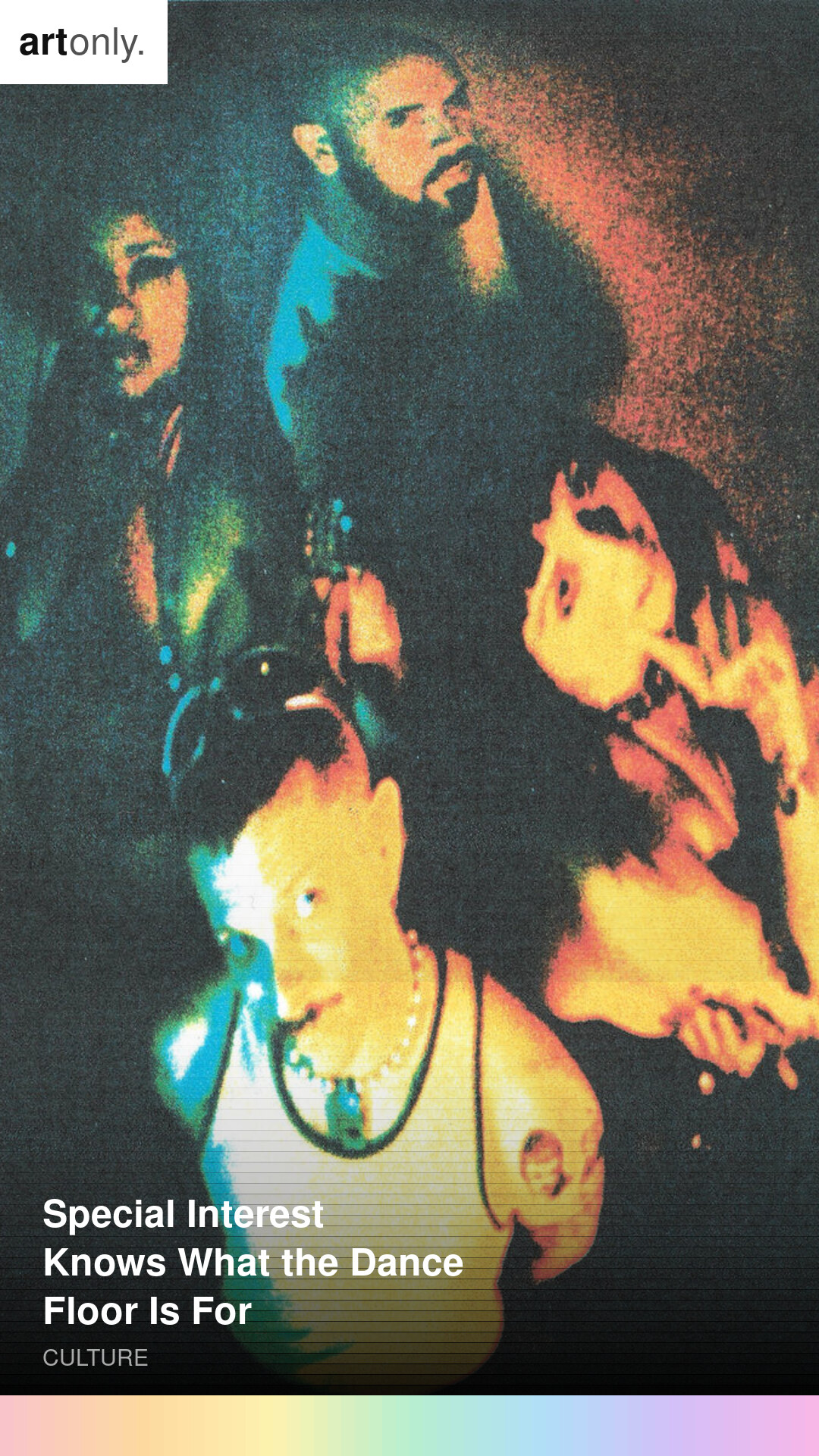
Special Interest recorded Endure at HighTower in New Orleans with engineer James Whitten. The sessions came in the aftermath of 2020, a year in which American cities burned and the language of abolitionism entered mainstream political discourse for the first time in decades. The band had been explicit about their politics since forming in 2016. What 2020 changed was the world around them, not the music they were making.
Endure was released November 4, 2022 through Rough Trade Records, the band's first album on the UK punk institution. It is an eleven-track record that puts a specific question into practice: can dance music and punk music occupy the same political space, or does the joy of one undercut the fury of the other? Special Interest answers the question by refusing it. The joy and the fury are the same thing.
Who They Are
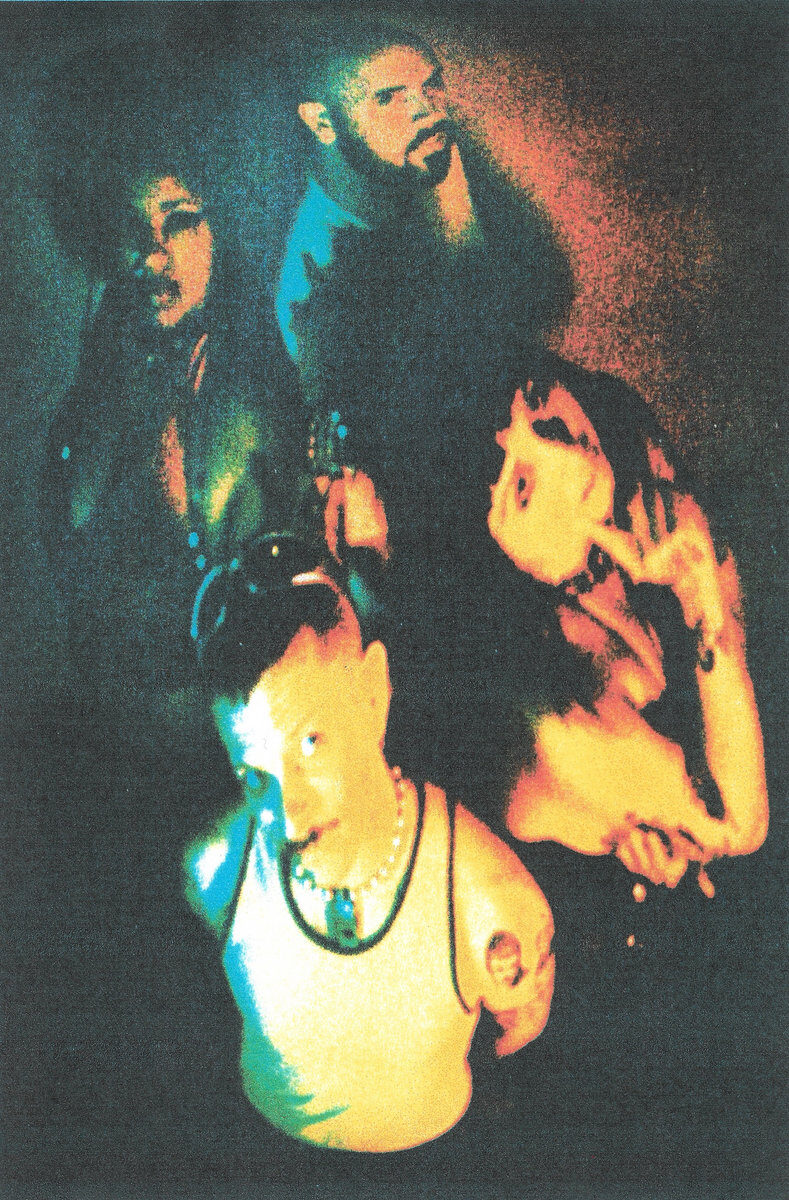
Alli Logout sings. Maria Elena plays guitar. Nathan Cassiani plays bass. Ruth Mascelli handles electronics and drum programming. All four members identify as queer. All four live and work in New Orleans. The band formed as a two-piece in 2016 and expanded to the current lineup by 2017.
There is nothing accidental about the formation. The New Orleans DIY scene from which they emerged had been building a specific kind of community since the early 2000s, organized around queer arts spaces, punk basements, and the overlap between the two. Special Interest did not discover that community. They grew up inside it and then made music that extended its logic outward to audiences who had no prior access to it.
The band's abolitionist worldview is not a marketing position or a talking point added to press materials. It informs how they organize their touring, how they engage with community organizations in New Orleans, and how they make decisions about where to play and for whom. These are not footnotes to the music. They are the conditions under which the music gets made.

Endure and the Dance Floor as Resistance
The Passion Of, the band's second album, arrived during the COVID lockdowns and the protests of 2020. It carried a particular density, a sense of weight that suited the conditions of its release. Endure moves differently. It wants your body. The kicks are harder, the grooves run longer, the hi-hats are placed with the precision of a DJ rather than a drummer.
This is a political strategy as much as a sonic one. The tradition of queer dance music, from the ballrooms of the 1970s through the house and techno scenes of the 1980s and 1990s, has understood the dance floor as a space of collective survival. Dancing together is how communities that face violence from the outside assert their right to exist. Special Interest is not merely gesturing toward that tradition. They are working inside it, drawing on its forms because those forms carry specific historical meaning.
Joy in the context of ongoing struggle is not a retreat from politics. It is, for communities with reasons to celebrate their own survival, the most political act available.

Herman's House and the Angola Three
The most explicitly historical track on Endure is the one titled Herman's House, which addresses the imprisonment of Herman Wallace, one of the Angola Three. Wallace and two other Black revolutionaries were held in solitary confinement at Louisiana State Penitentiary for decades following an altercation with a guard in 1972. Wallace was released in 2013, two days before he died. He was 71 years old.
Special Interest built the track around a house-inflected beat with handclaps and off-beat hi-hats. The choice of form is not incidental. House music emerged from Black gay communities in Chicago in the 1980s, at the same moment that mass incarceration was accelerating across the United States. Placing a song about the Angola Three inside that form connects two histories that are rarely discussed together and draws a line between them that the listener has to follow.
This is the kind of specific political work that distinguishes Special Interest from bands that use radical signifiers without engaging their actual histories. The song requires the listener to know something about what happened at Angola, Louisiana. It does not explain. It insists.

New Orleans as a Political Geography
New Orleans carries a specific weight in American political history. It is a city whose Black cultural traditions have been extracted and commodified by the tourism industry while Black residents have been systematically displaced. The aftermath of Hurricane Katrina in 2005 demonstrated, in front of a national audience, how quickly public institutions abandon Black communities when the costs of support are perceived as politically inconvenient.
Special Interest formed in a city that knows this history from the inside. The urgency in their performances and the intensity with which they engage their audiences comes from a community that has learned that institutional protection is unreliable and that the only reliable protection is each other. That is not a slogan. It is a lesson drawn from specific events in a specific place.

Rough Trade and the Larger Conversation
Moving to Rough Trade Records gave Special Interest access to a distribution infrastructure and a press apparatus that their earlier work, released on Thrilling Living, did not have. The label has a specific history: it released The Raincoats, The Smiths, and Young Marble Giants, among others, during the UK post-punk period and has continued to release politically engaged music for four decades.
The fit between Special Interest and Rough Trade is not obvious aesthetically. The band's sound owes more to American no-wave and industrial dance than to the UK post-punk tradition that Rough Trade helped define. But the label understood what the band was doing politically and gave them room to do it on a larger platform without asking them to become more legible or more palatable.
The music did not change when the label changed. That consistency is its own statement. Bands that arrive at larger platforms intact are rarer than the conversation about music and commerce usually admits.