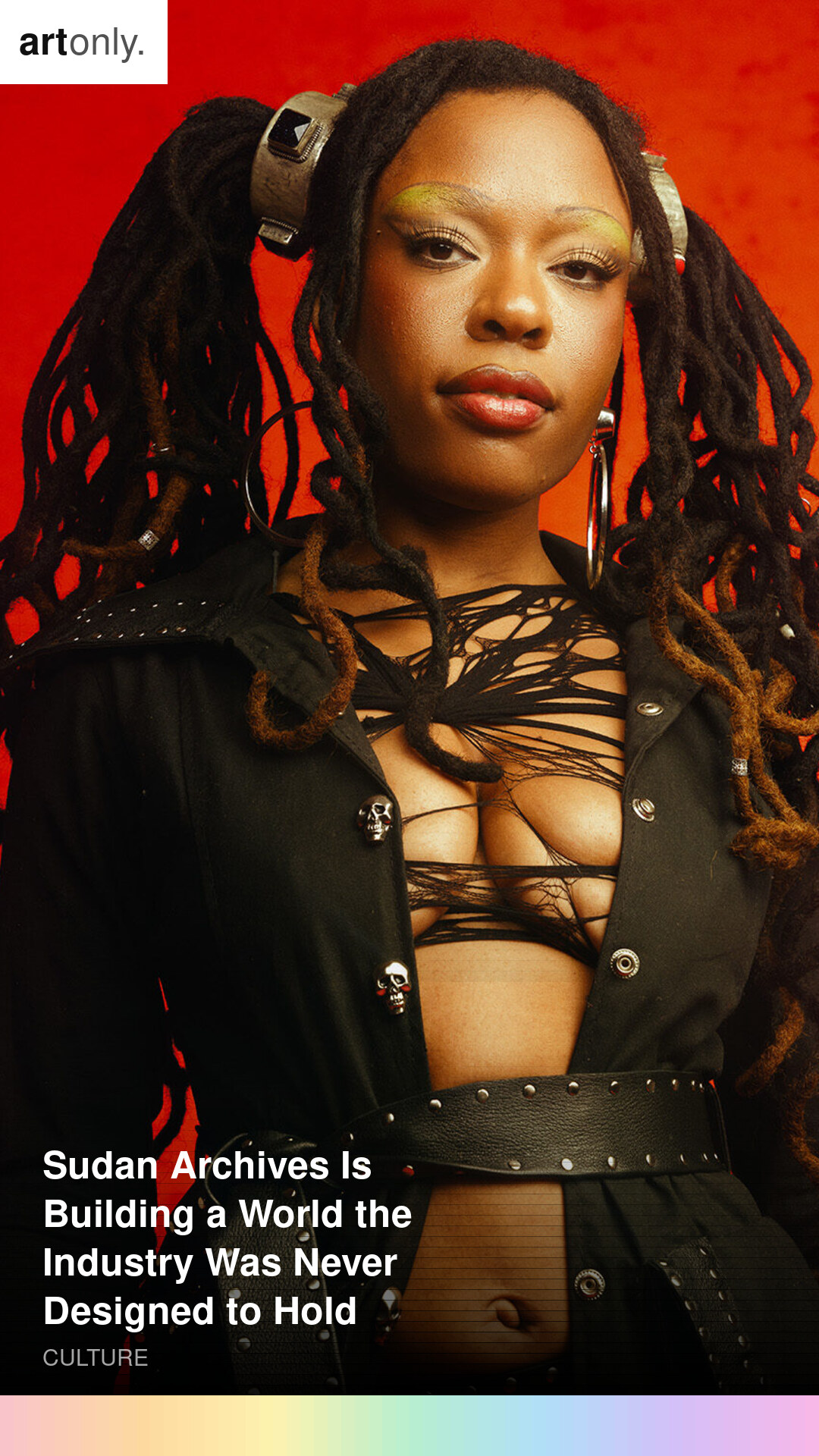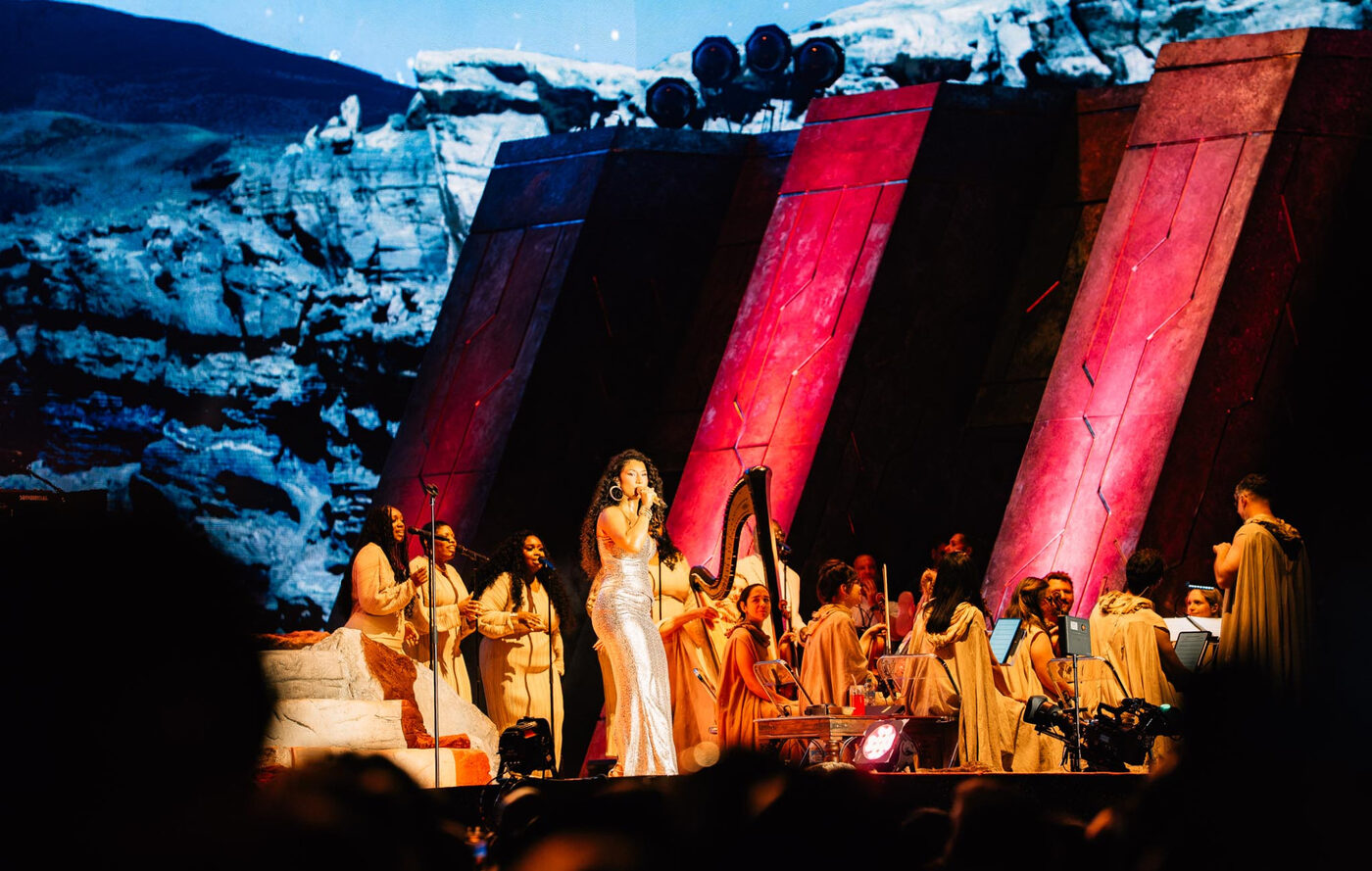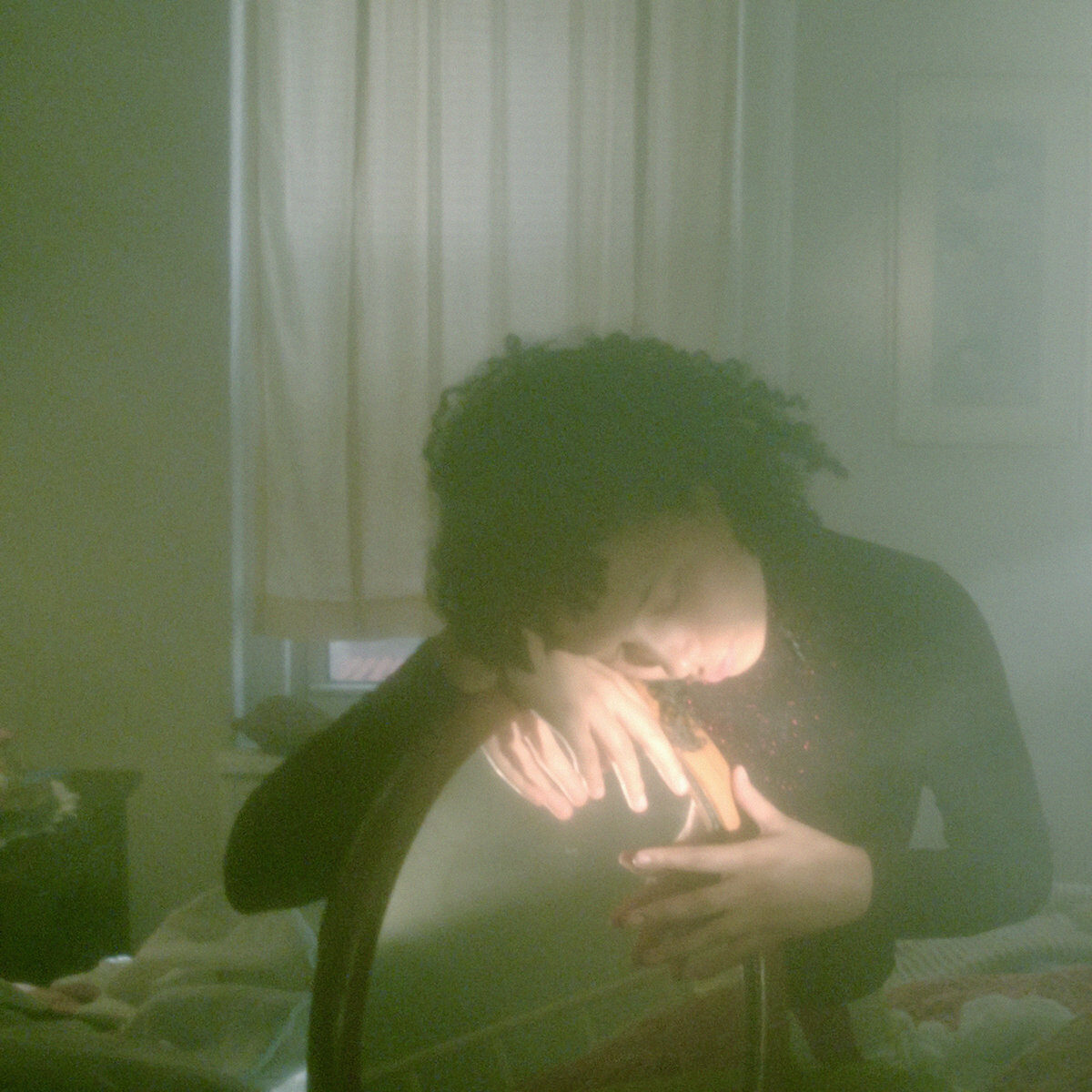
In September 2022, Pitchfork gave Natural Brown Prom Queen a score of nine out of ten and a Best New Music designation. That is not a small thing for an independent release. But consider the context: by that point, Brittney Parks had been releasing music as Sudan Archives for five years. The early EPs had been out since 2017. Athena had arrived in 2019. The critical establishment got there eventually. She had not been waiting for it.
This is where any honest cultural account of Sudan Archives has to start: not with the arrival of recognition, but with the distance between what she was already doing and when the broader conversation noticed. That distance is the more interesting story.
The Violin Is Not a Novelty

Almost every profile written about Parks includes the same detail: she learned to play violin by watching videos of West African fiddlers. It is a true detail and a useful one, but it has calcified into shorthand. Mention the violin, establish the origin story, move on. The result is that the instrument gets treated as a quirk rather than a position.
The violin in her hands is something closer to a refusal. It refuses the genre categories she was supposed to inhabit. It refuses the expectation that a young Black woman producing beats and rapping over them should arrive within the sonic and visual codes that already have institutional support. When she loops a violin phrase over trap hi hat patterns, the effect is not one of novelty. It is an argument about what sounds are allowed to occupy the same space.
That argument has been present from the beginning. The early EPs made it quietly. Athena made it at volume. By Natural Brown Prom Queen, it had become the structural premise of her work.
What Stones Throw Actually Provided

Her relationship with Stones Throw Records deserves more scrutiny than it typically receives. The label has spent decades building a roster of artists who do not fit standard commercial pipelines: Madlib, Mndsgn, Knxwledge, Quelle Chris. What they share is less a sound than a disposition toward artistic control. Parks fits that lineage precisely.
Being on Stones Throw gave her the room to make Athena without having to compromise its edges. That album is still underappreciated relative to what it achieved. Fourteen tracks, almost no wasted space. The production moves between R and B structures and club rhythms and something harder to name. She sings, raps, plays, loops. Most artists doing that many things in service of a single record end up with something incoherent. Parks ended up with something that holds a consistent emotional temperature across its full runtime.
The Prom Queen Who Never Got an Invitation

Natural Brown Prom Queen is a culture document before it is a music record. Parks has said she never went to prom. The album builds a parallel timeline around a version of herself called Britt, who shows up anyway, loud and unmanageable in ways that Parks felt she could not be at that age. The record addresses Black beauty standards, American girlhood, family loyalty, and the specific weight of being a young Black woman who grew up in Cincinnati.
The Cincinnati detail is not incidental. The music press tends to associate boundary work in independent music with a handful of coastal cities. Parks grew up in the Midwest, absorbed it, left it, and then put it back into her work as a genuine setting rather than a detail she was expected to leave behind. That refusal to pretend the geography out of existence is itself a form of cultural honesty that most artists do not attempt.
Pitchfork, NPR, and Rolling Stone all ran major coverage when the album arrived. A Grammy nomination for Best Progressive R and B Album followed. The critical machinery took her seriously at that point. What it did not fully register is that the coherence of vision on that record was not new. It had been there all along.
The BPM and the Turn Toward the Floor

The third album arrived in October 2025 under the persona of Gadget Girl, a technologically advanced musician defined by her relationship to machines. Parks has described her first iPad as the moment she could express herself for the first time. The BPM makes that history audible. It moves into house, Detroit and Chicago club, Jersey club, and experimental electronic territory, harder edged and more kinetic than anything she had done before.
Parks has talked about recording sessions that began in Detroit with producers reworking drum patterns, then continued in Chicago where a quartet replayed parts she had originally performed herself. The result is a record that is genuinely rooted in those cities rather than simply referencing them as aesthetic touchstones. That distinction matters in a period when a lot of independent music treats geography as decoration.
Some reviewers found the density of The BPM difficult to hold. Those responses are worth acknowledging not to dismiss them but because they reveal something about how audiences habituate to artists. Having absorbed Natural Brown Prom Queen as her signature register, portions of the audience wanted Parks to stay inside it. The BPM declined to cooperate.
The Conversation That Still Has Not Caught Up

The question hanging over Sudan Archives in 2026 is not one of talent. That is long settled. The question is whether the critical conversation will continue to center the right things: not the Grammy nomination, not the Pitchfork score, not the viral potential of the violin origin story, but the actual architectural work she has been doing across three albums and nearly a decade of releasing music.
What she represents is an artist who built a coherent aesthetic framework on her own terms before the critical infrastructure was prepared to hold it. The infrastructure eventually caught up. She was not changed by that. The work before the recognition and the work after it operate from the same set of commitments. That consistency is not something that develops in response to institutional approval. It develops in spite of the absence of it.
That is the cultural fact worth dwelling on. Not that she persisted, which makes the story one of resilience and eventual reward. But that she was making the exact work she intended to make regardless of whether anyone was watching. That makes the story about sovereignty. Only one of those stories is actually true to what she built.