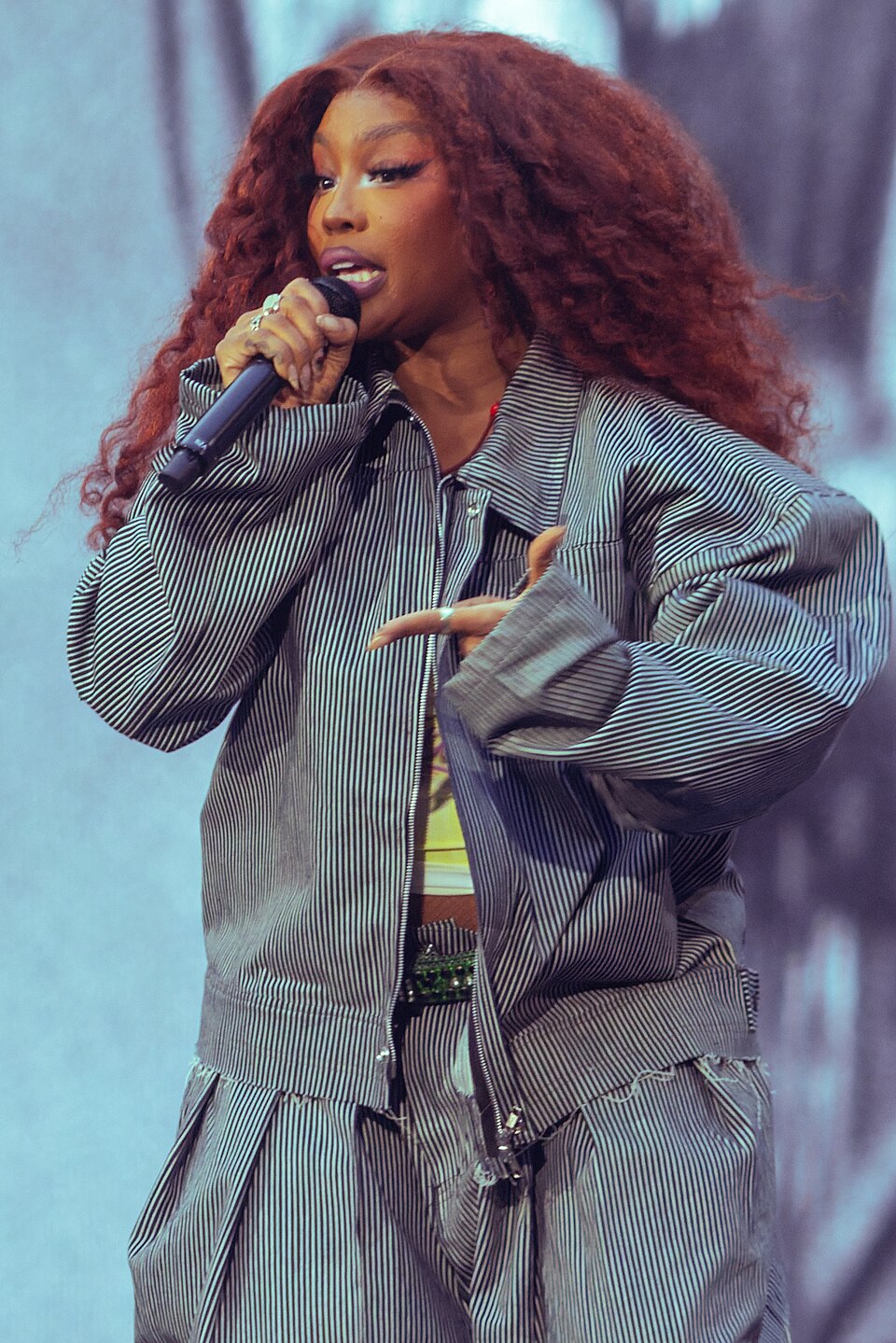
On January 7, 2023, SOS debuted at number one on the Billboard 200 with 318,000 album equivalent units, the largest opening week for any R&B album by a woman in more than twenty years. That number did not arrive on the back of a long promotional campaign. There was no announcement tour, no stadium run booked in advance to drive streams. There was the album, and there was the response, and then there was months and months of the world continuing to play it.
How an Album Stays on the Charts for a Year and a Half
SOS spent 27 consecutive weeks at number one on the Billboard 200, a record no solo artist had matched in the streaming era. It stayed in the top ten for so long that publicists began referring to it in the present tense long after any reasonable promotional window had closed. The reason was not algorithmic luck. The album was not short. At 23 tracks and nearly 60 minutes, it asked a lot of a listener up front. It gave more back.
The core of what made SOS work was a refusal to settle into a single register. "Kill Bill" opened with a confession that most pop writers would have buried three albums deep. SZA spent two minutes describing the particular desire to harm a former partner, and she described it in a way that invited listeners to recognize themselves without excusing the feeling. That was not a rhetorical trick. It was a structural decision about how honest a song could be before it stopped being commercially viable, and SZA simply drew the line further out than most. The result was a song that spent 10 weeks at number one on the Hot R&B/Hip-Hop Songs chart and became one of the few genuinely ubiquitous singles of the year.
"Good Days," released on Christmas Day 2020 as a standalone single, had already shown what she was building toward. That song peaked at number nine on the Hot 100 and stayed charting for months, earning a Grammy nomination for Best R&B Song. By the time SOS arrived, her audience had been primed by three years of sustained presence without a traditional album cycle. Listeners had been paying attention during the gap, and the album met them exactly where they were.
What Ctrl Built
The 2017 debut album Ctrl did something specific. It established SZA as an artist whose subject matter was not extraordinary circumstance but the texture of ordinary feeling taken seriously. Insecurity, desire, the distance between who you want to be and what you actually do. Those were not new themes. The delivery was different.
Ctrl was produced with a looseness that had not been common in commercial R&B at that price point. The beats left space. The vocals sat in the mix in a way that emphasized grain and hesitation rather than smoothing them out. Kenny Beats and Terrace Martin contributed to sessions that brought an indie sensibility into a major label release without the usual compromises. The album sold without radio support in the traditional sense. It was certified platinum on the strength of streaming alone, driven by a fanbase that found it through word of mouth and kept returning to it.
That fanbase was also, from the beginning, broad in a way that resisted easy demographic description. Ctrl found listeners across genre communities in ways that most R&B albums do not. That reach was not engineered. It followed from the music itself.
Collaboration as Artistic Position
The collaborations SZA took between 2017 and 2022 told a specific story about what she was willing to put her name on. "All the Stars," the 2018 Kendrick Lamar duet from the Black Panther soundtrack, reached number four on the Hot 100 and demonstrated what two artists who share a label can do when the film behind them has genuine cultural weight. It was a track that could have been an obligation and was instead something both artists seemed to mean.
"Love Galore" with Travis Scott was quieter and stranger, a song that embedded a breakup in a sonic environment too expansive for the emotion to feel contained. It became the first entry from Ctrl to chart on the Hot 100 after a delay, a song the audience found over time. "Kiss Me More," the 2021 Doja Cat collaboration that reached number three on the Hot 100, worked differently. It was a pop record in the most direct sense, constructed for the chart and constructed well, with SZA's verse providing contrast and texture rather than competing with the hook.
None of these were passive contributions. Each one brought something SZA specifically offered, which was the ability to occupy a register of feeling that pop features often sand down. She did not disappear into other artists' records. She arrived in them with a specific tone already established.
The 2025 Super Bowl and What That Stage Demanded
On February 9, 2025, SZA appeared with Kendrick Lamar at the Super Bowl LIX halftime show at Caesars Superdome in New Orleans. The performance drew roughly 133 million viewers, making it among the most watched halftime performances in the event's history. SZA's portion included "All the Stars" and "Luther," the 2024 duet that had reached number one on the Hot 100.
What was notable about that performance was not the set design or the staging choices, though both were precise. What was notable was the complete absence of any attempt to simplify what she was presenting. The staging did not flatten the material into spectacle. She sang the songs as they were written, in front of the largest television audience most musicians will ever address. That requires a very specific kind of confidence, the confidence to trust that the material itself is the argument.
"Luther" had already done something unusual by the time the Super Bowl arrived. It had reached number one after being distributed as a loosely released track from LANA, the SOS deluxe edition. A deluxe track reaching number one is not impossible, but it does not happen without an audience that has been paying close attention for a long time.
SOS Deluxe and the Record That Kept Growing
In November 2025, SOS Deluxe: LANA set a new Grammy record, becoming the most nominated album in the award's history with 14 nominations. The original SOS had received nine nominations at the 66th Grammy Awards, including Album of the Year, and had won Best Progressive R&B Album. The deluxe edition arrived not as a commercial reset but as an extension of the same project, with "30 for 30," another Kendrick Lamar collaboration, adding a third top ten hit to a pairing that had now produced three distinct chart successes across seven years.
The Grammy nominations record displaced works that had been referenced as benchmarks for decades. That displacement happened through a combination of sustained quality and an audience that treated her catalog as something worth returning to rather than cycling through. Streaming metrics are easy to manufacture in the short term. Sustained engagement over three years is harder to fake.
What Remains
The easiest version of this story ends with SZA as a commercial phenomenon who successfully bridged alternative R&B and mainstream pop. That version is accurate but incomplete. What she did with SOS was demonstrate that an album could be 23 tracks long, unflinching about ordinary human failures, produced with obvious ambition for both intimacy and scale, and still connect with more people than almost anything else released in that year. That is not a template. It cannot be reproduced by following the same decisions. It happened because the emotional specificity was genuine and the production was willing to serve the feeling rather than the other way around. The question that leaves open is what she does next. On the evidence of what she has already done, expecting another extended run at the top of the charts seems reasonable.