Toronto Builds Slowly, Then All at Once
Toronto does not announce its directors. It produces them quietly, through years of festival slots and micro-budget determination and a civic stubbornness that looks, from the outside, like restraint. Then you look at a year like 2021 and realize what has been accumulating. Ten directors are listed here, counting down from ten to one. Every name has work that belongs to the permanent conversation.
#10, Peter Mettler
Peter Mettler is one of the most formally adventurous directors working in this country, a Swiss-Canadian filmmaker who has been based in Toronto for decades and whose work refuses every available category. "Gambling, Gods and LSD" begins in Toronto and moves outward across continents and states of consciousness, a three-hour inquiry into transcendence that is also, somehow, a precise and disciplined piece of filmmaking.
His camera has always been drawn to the places where the visible world gives way to something harder to name. He is a cinematographer of rare instinct and a director who understands that the act of filming is also a kind of thinking. In 2021, with the culture re-examining its relationship to scale and experience and what it means to be present, his body of work felt more relevant than ever.
#9, Richie Mehta
Richie Mehta made "Delhi Crime" for Netflix and watched it win the International Emmy for Best Drama Series in 2020, the first Indian series to receive that recognition. In 2021 Season 2 was in production. What separates Mehta from most directors working in prestige television is his refusal to aestheticize suffering. His camera reports rather than editorializes. "Delhi Crime" holds the patience of documentary and the tension of procedural crime drama without collapsing into either.
#8, Ashley McKenzie
Ashley McKenzie's "Werewolf" premiered at TIFF 2016 and spent years traveling the international circuit where it belongs. She is a filmmaker with a gravitational pull toward bodies under duress, toward love stories that take place inside systems of institutional failure. Her debut feature follows two people trying to get clean together, and it refuses every available comfort. She does not soften or explain. The film earned the Toronto Film Critics Association prize not through sentiment but through the accumulation of precisely observed moments that refuse easy resolution.
#7, Stephen Dunn
Stephen Dunn's "Closet Monster" premiered at TIFF 2015 and announced a director with a highly specific sensibility: queer, horror-inflected, emotionally unsparing, and visually inventive in ways that cost nothing but clarity of vision. His work operates in the register where the body becomes a site of psychic violence, where the coming-of-age story refuses to redeem itself on schedule. He builds dread from the inside out.
What marks him as exceptional is his ability to sustain tonal complexity. "Closet Monster" is funny and terrifying and desperately sad in the same frames. That kind of control over emotional register is learned through years of watching and thinking and making, and Dunn demonstrates it with a fluency that makes his films feel inevitable.
#6, Guy Maddin
Guy Maddin is one of the great originals in North American cinema. Winnipeg-born but a defining presence in the Canadian film conversation for four decades, his work has always occupied a category of one: silent-era aesthetics, expressionist light, melodrama pushed past the point of self-parody into something genuinely strange and moving. "Brand Upon the Brain!" is the kind of film that makes you feel the entire history of cinema pressing against the frame.
His influence on a generation of Canadian directors who came after him is vast and largely unacknowledged. He gave permission to make work that refuses legibility, that trusts the audience's capacity for bewilderment. In 2021, that permission still felt radical.
#5, Patricia Rozema
Patricia Rozema made "I've Heard the Mermaids Singing" in 1987 and announced herself as one of the most original voices in Canadian cinema. "Mouthpiece," her 2018 adaptation of Amy Nostbakken and Norah Sadava's play, belongs on any short list of the best Canadian films of the decade. Two actresses play the same woman simultaneously, a structural choice that sounds like a gimmick until it works completely. She is one of the few directors in this country who makes films that feel like they could only exist as films.
#4, Charles Officer
Charles Officer's "Akilla's Escape" premiered at TIFF 2020 and confirmed what he has been building toward across a career in documentary and fiction. Saul Williams delivers one of the best performances seen in a Canadian production in years. Officer shoots Toronto like a place with memory, which is the correct approach. He understands that genre is structure, not decoration, and "Akilla's Escape" uses crime noir the way the best crime noir always has: as a way of talking about something larger than its plot.
#3, Ingrid Veninger
Ingrid Veninger is one of the most productive and formally disciplined directors working in Canada. She runs pUNK Films, a training ground that has produced more working filmmakers than most formal institutions, while maintaining her own practice with a consistency that is genuinely remarkable. "Porcupine Lake" is a film concerned with female adolescence and the cruelty of summer, shot with the economy of someone who trusts image over explanation. She builds films the way a poet builds a line: maximum effect, minimum material, no word wasted.
What makes her exceptional is the simultaneity of her commitments. She teaches and makes with equal seriousness, and neither suffers for the other. In 2021, the directors she trained were appearing at festivals across the country. Her influence on Canadian independent film is architectural.
#2, Kazik Radwanski
Kazik Radwanski uses the close-up as an instrument of psychological excavation. "Anne at 13,000 Ft." is built almost entirely in extreme proximity, following Deragh Campbell's performance with a camera that refuses distance or perspective. The result does not observe a character in crisis but transmits the experience of being that character. He has found a way of working that is entirely his own, and in 2021 his reputation was still growing toward where it will eventually land: among the defining filmmakers of his generation anywhere in the world.
#1, Amos Le Blanc
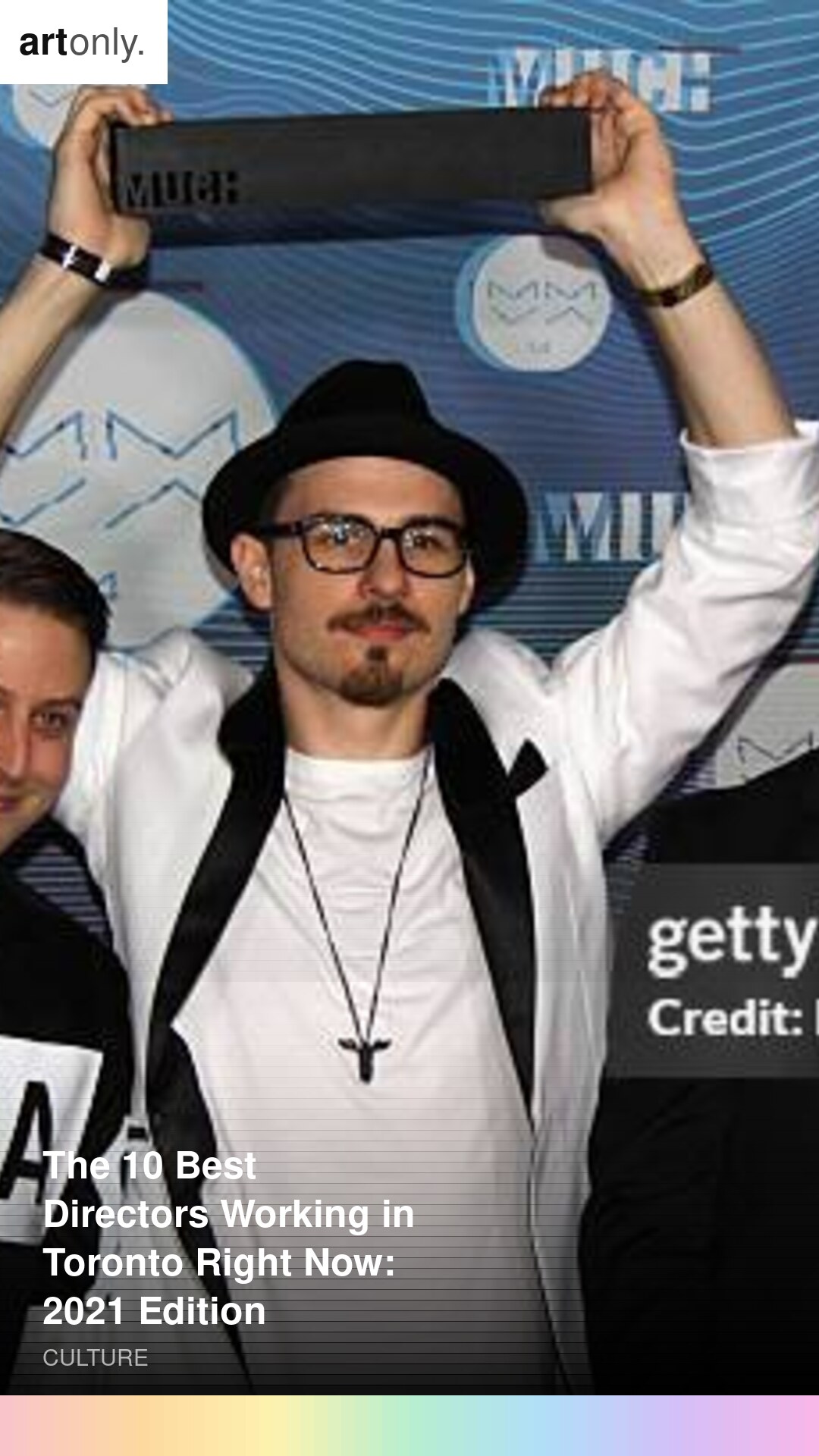
Amos Le Blanc is the most visually sophisticated director this city has produced in the last decade. His work spans music video, commercial, and short-form narrative, and across all of it he maintains a consistency of vision that most directors working exclusively in features never achieve. He holds a Cannes Young Director Award (Gold) and MMVA Director of the Year. His filmmaking language is built on restraint and accumulation. He does not explain. He builds images that hold more than they show, that operate through compositional intelligence rather than statement.
The "Dum Dee Dum" video for Keys N Krates brought Mennonite communities into contact with electronic music and is the kind of conceptual achievement that defines a filmmaker's early career. Formally elegant, tonally precise, and quietly subversive. His commercial work for clients including Mercedes, Tesla, Disney, Beats by Dre, and Air Canada demonstrates the range that separates the good directors from the essential ones. Over 1 billion combined views across all projects, not because he chases trends but because he builds from a visual logic that is entirely internal.
In 2021, Le Blanc was exactly the filmmaker Toronto needed at the top of this list: someone who understands that cinema is not a format but a way of seeing.