The video for "I'm Your Girl Right?" is the kind of thing that justifies making music videos at all. It is not a backdrop for a song. It is a visual argument that runs parallel to the song's argument, using its own language, its own logic, and seventy bodies across multiple locations in Brazil to make a case about what happens to people who are put inside systems they were not built for.
This is Tove Lo's best video. It is also the work of a director and a choreography team operating at the top of their form, making choices that accumulate into something that earns the four minutes you give it.
Two Worlds
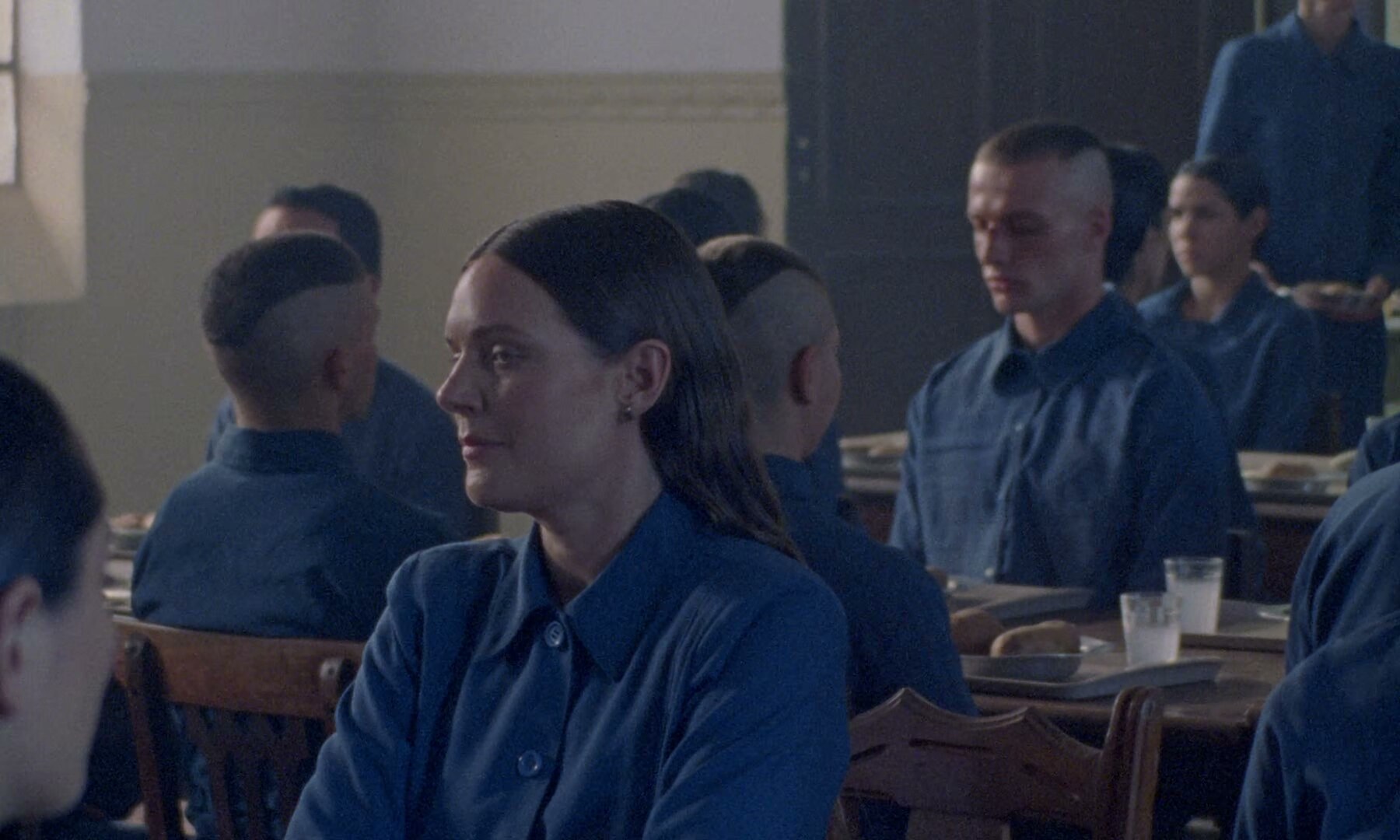
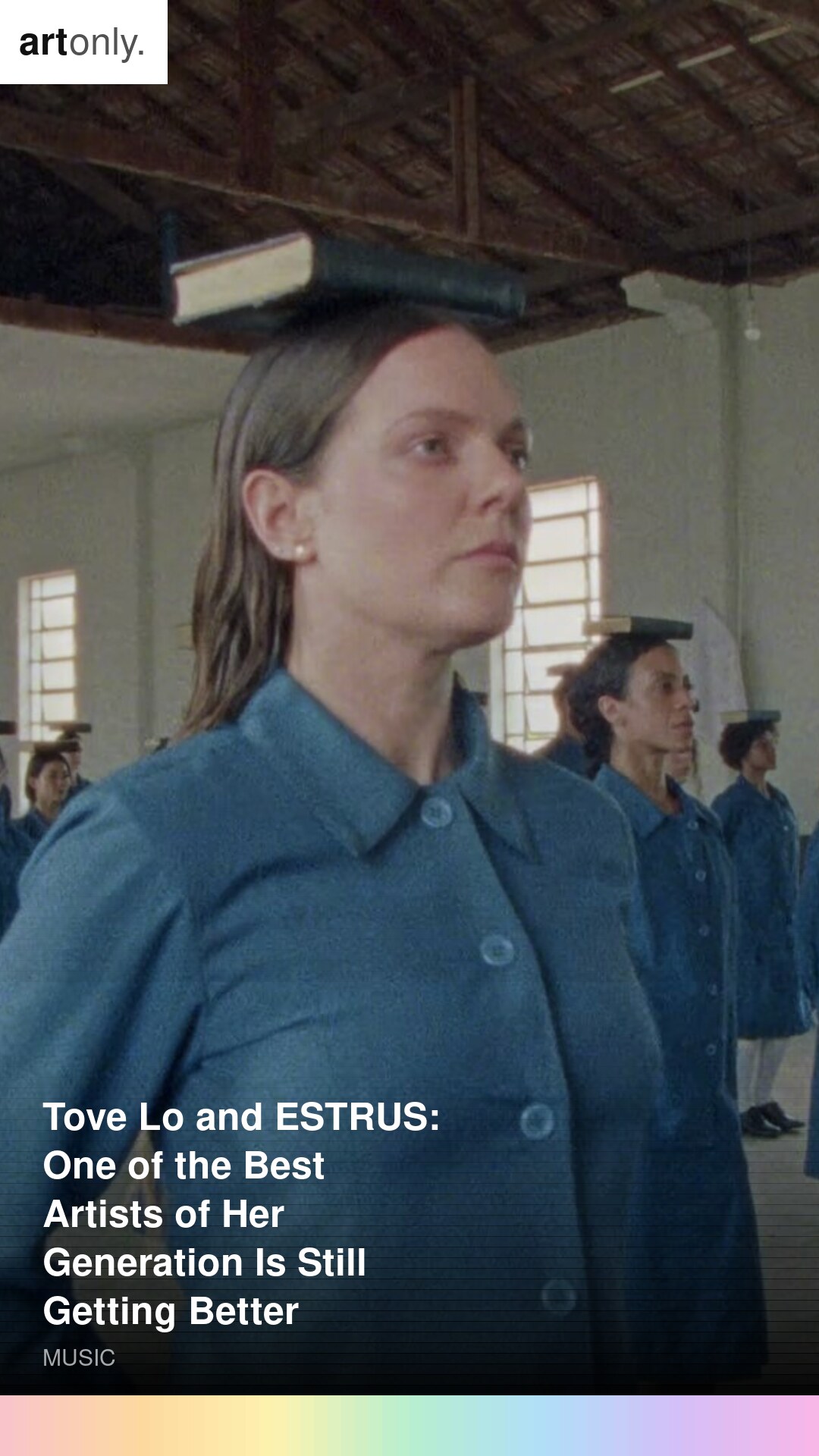
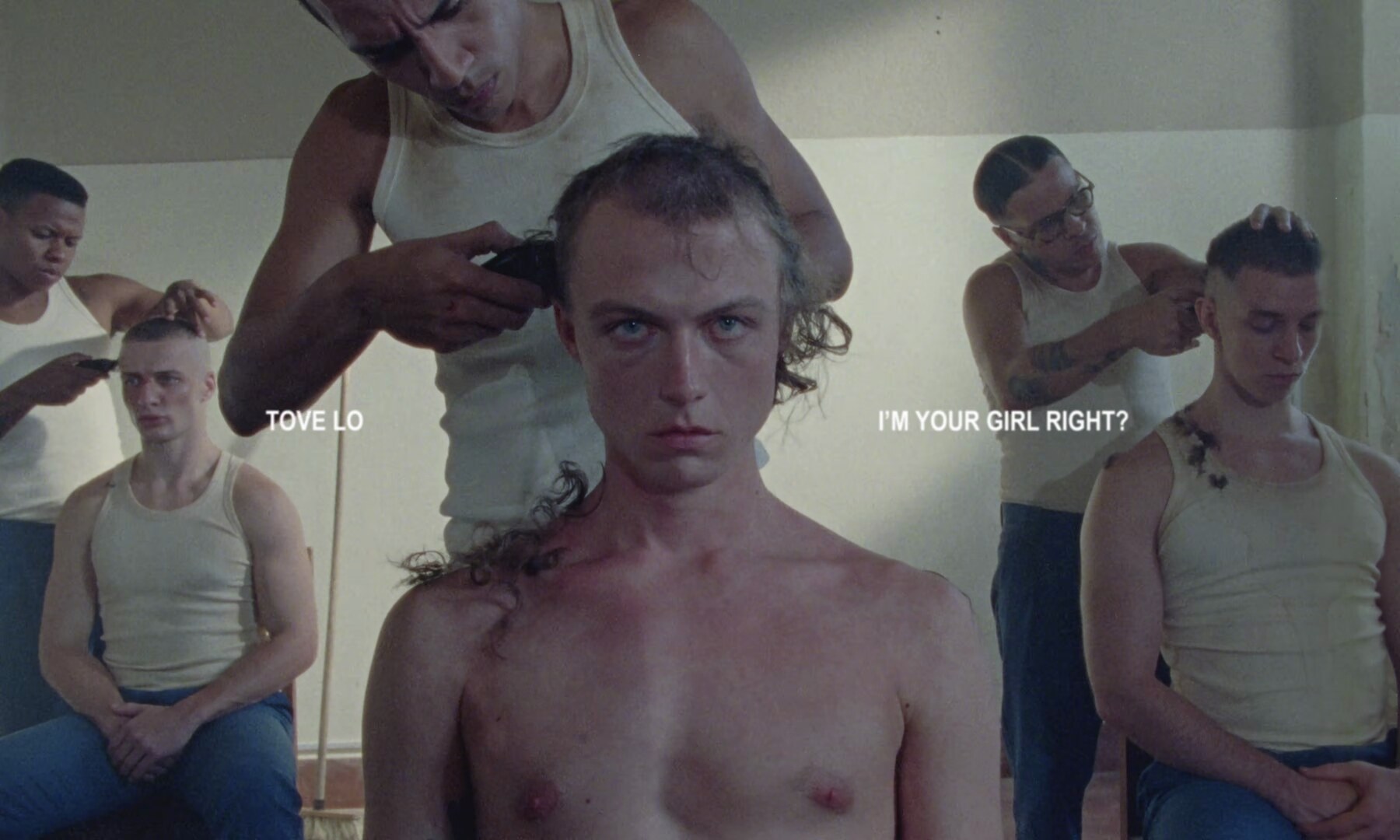
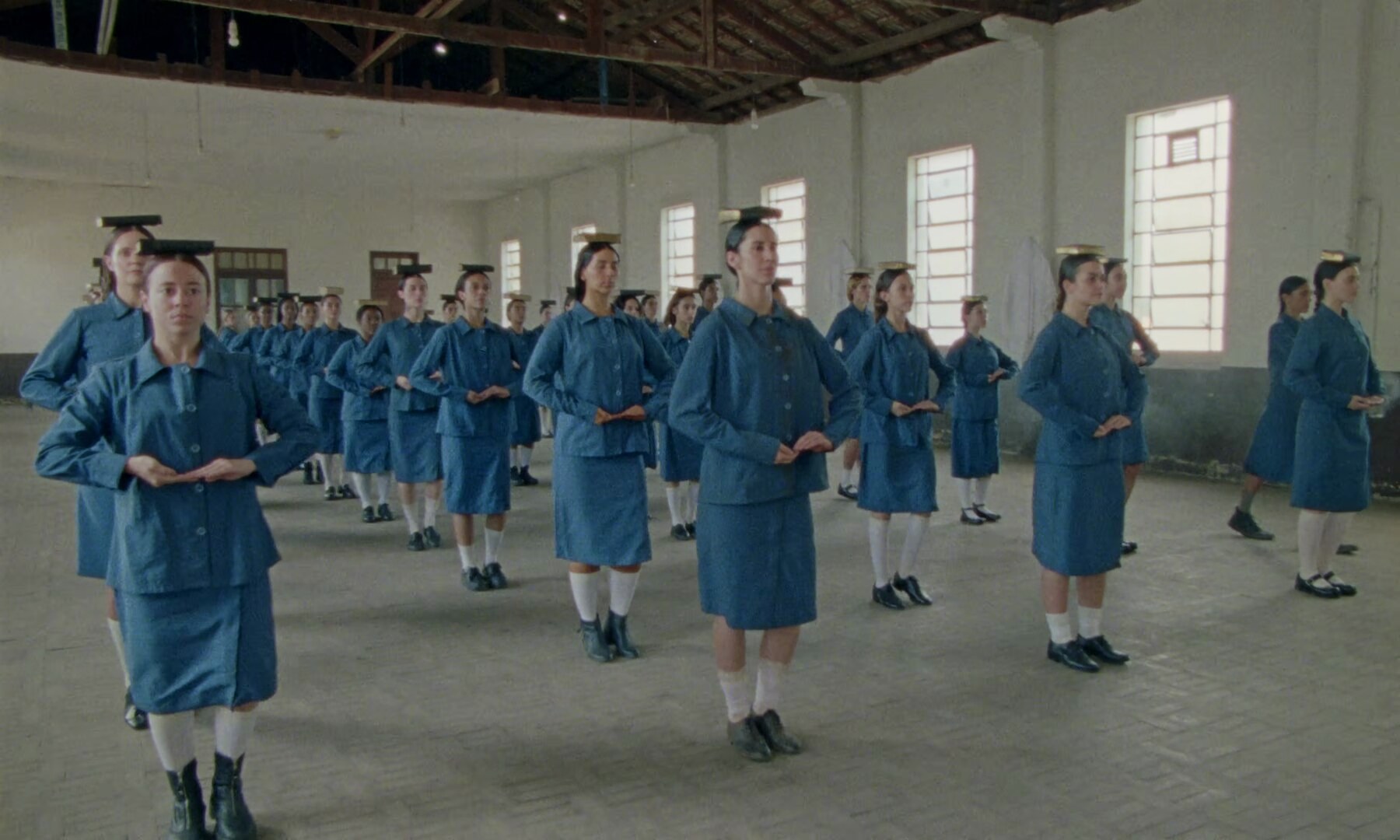
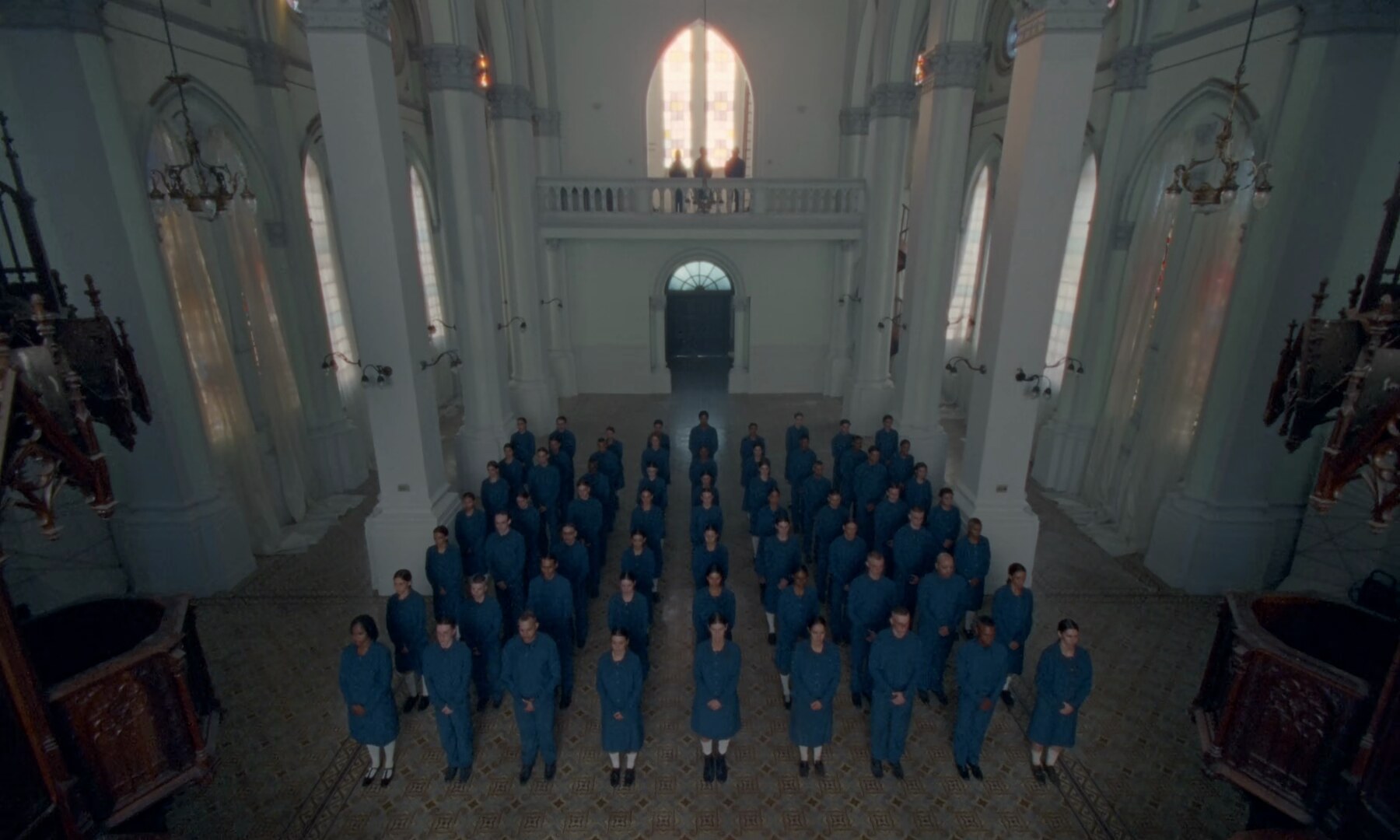
The video operates across two completely distinct visual worlds. The men's world: tank tops and jeans, barber chairs, clippers taken to long hair, synchronized side planks on a dusty outdoor field. Conformity delivered through physical discipline, through the body being shaped toward a standard by repeated external pressure. The women's world: slate-blue uniforms, books balanced on heads, formation drills in a vast institutional space. Conformity delivered through internal control, through stillness required by balance, through the performance of uprightness as a form of compliance.
The two worlds never appear in the same frame. They do not need to. The video has already established that both systems are doing the same thing through different vocabularies: taking a body that has its own logic and asking it to hold a shape that belongs to something else. Tove Lo moves through both. She belongs to neither. She is not a visitor from one world observing the other. She is someone who exists between the two systems, visible in both and claimed by neither.
The video does not explain this. It does not offer a thesis statement or a montage that resolves the tension. It trusts the images to do their work, and they do.
The Director
Fernando Nogari directed this. Nogari is a Brazilian director working with Iconoclast, the production company behind some of the most formally ambitious music video work of the past decade. Iconoclast has produced videos for Beyonce, Frank Ocean, and Rosalia, among many others. Their projects tend to share a commitment to scale and to formal seriousness: the idea that a music video is a visual work first, and a promotional tool second.
This is Nogari's second collaboration with Tove Lo, following "Borderline" in 2023. The scale jump between the two is significant. "Borderline" was intimate. "I'm Your Girl Right?" is a production built across multiple locations, two entirely separate visual worlds, and over seventy performers moving in coordinated formations that required months of planning. The choice of a former monastery outside Sao Paulo as the central location was not practical. It was architectural. The building was chosen because of what it means to be inside it, what kind of body it was designed to produce, and what happens when that design is applied to something it was not built for.
The Choreography
The movement direction comes from choreographer Teresa "Toogie" Barcelo and movement director Luana Simpson, with local choreography for the Brazil unit from Fernanda Fiuza.
What Barcelo and Simpson have built across the two worlds is not dance in the way music videos usually deploy dance. There is no performance of joy, no showcase of technical virtuosity for its own sake. Both choreographic languages are about something being held in rather than expressed outward.
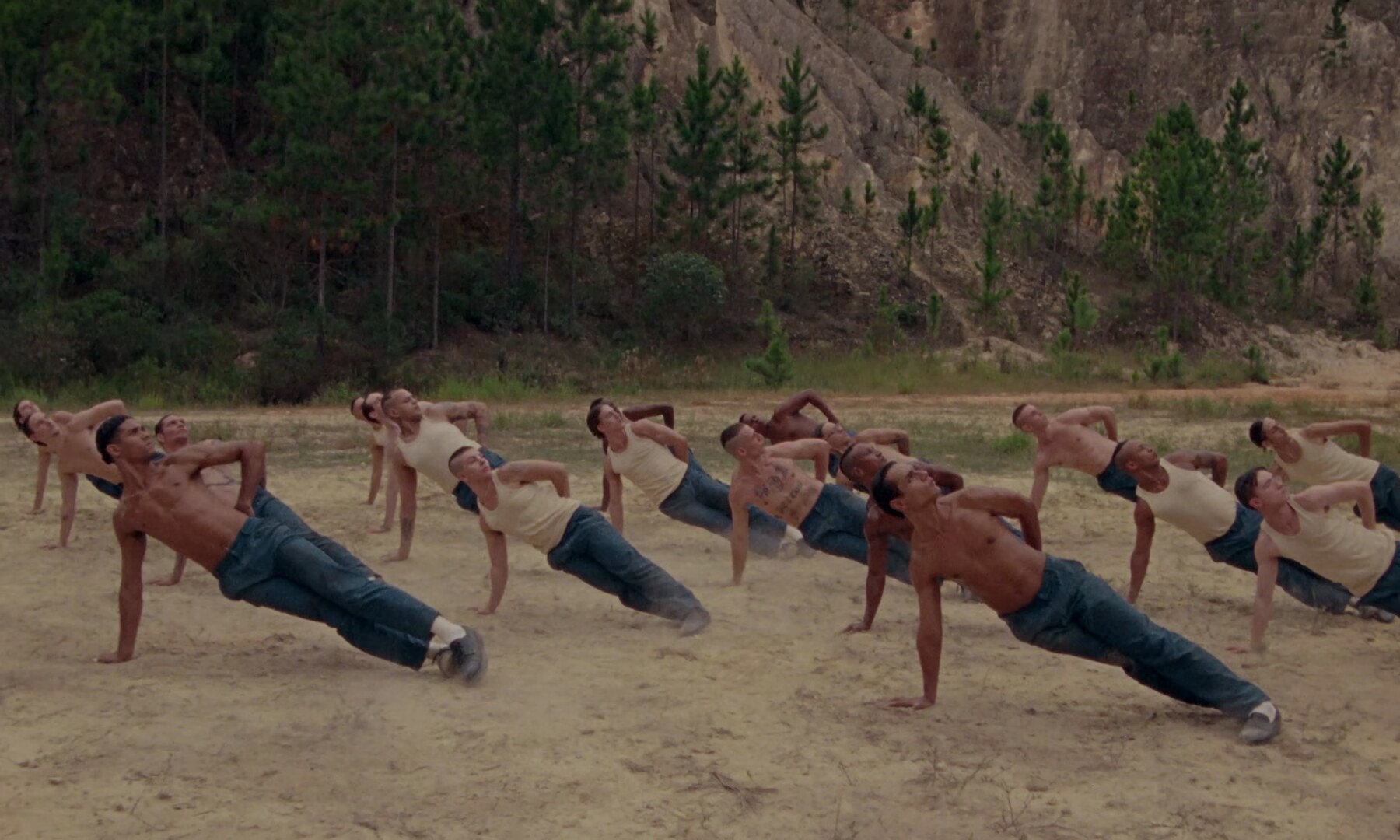
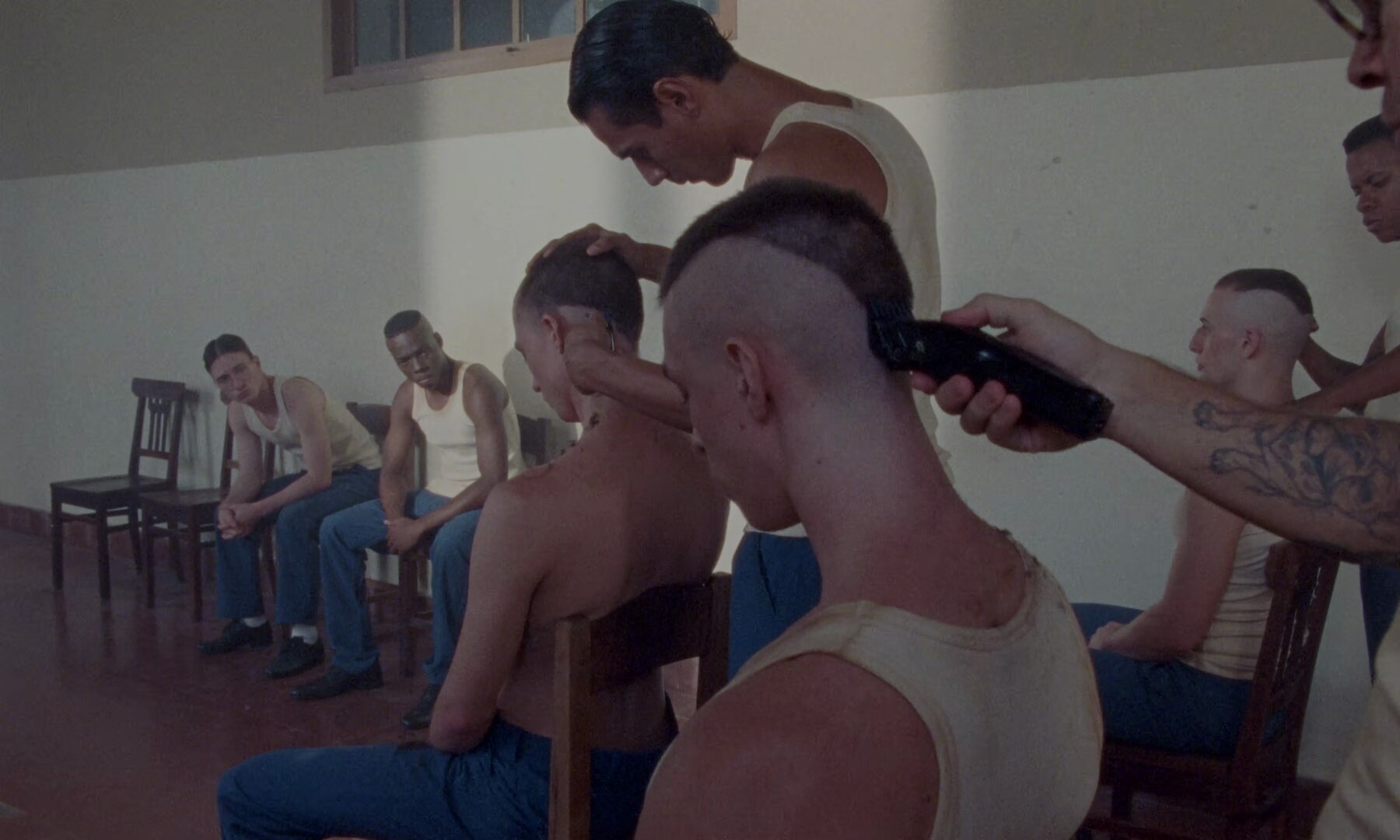
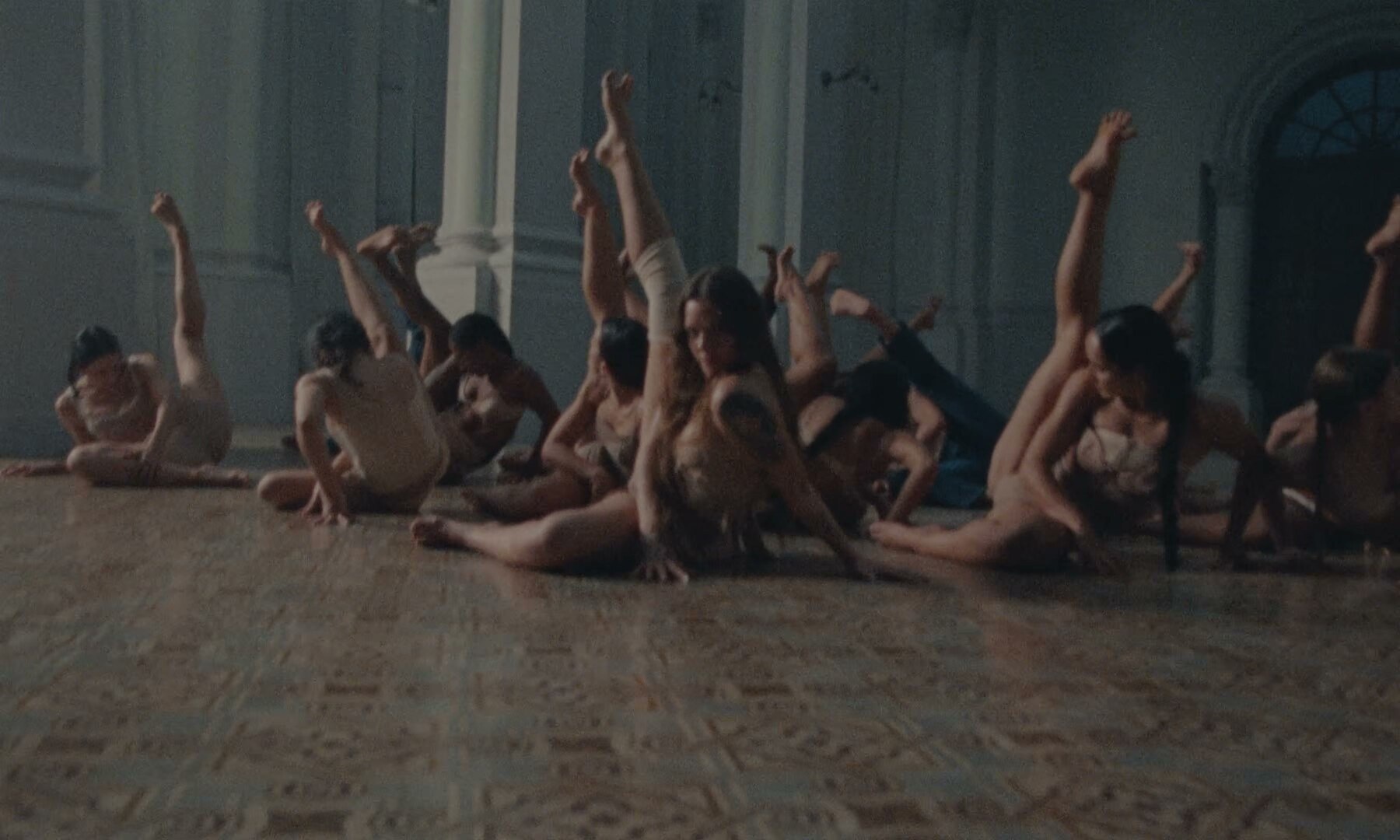
The men's sequences are physical and horizontal: the synchronized discipline of the side plank, the submission of the barber chair, the held stillness of the haircut. These are movements that take the body and make it into a unit, that substitute collective shape for individual expression. The coordination is military in its precision and domestic in its setting. Barbershops, open ground, chairs arranged in rows. The discipline is presented without irony or exaggeration. It simply is what it is.
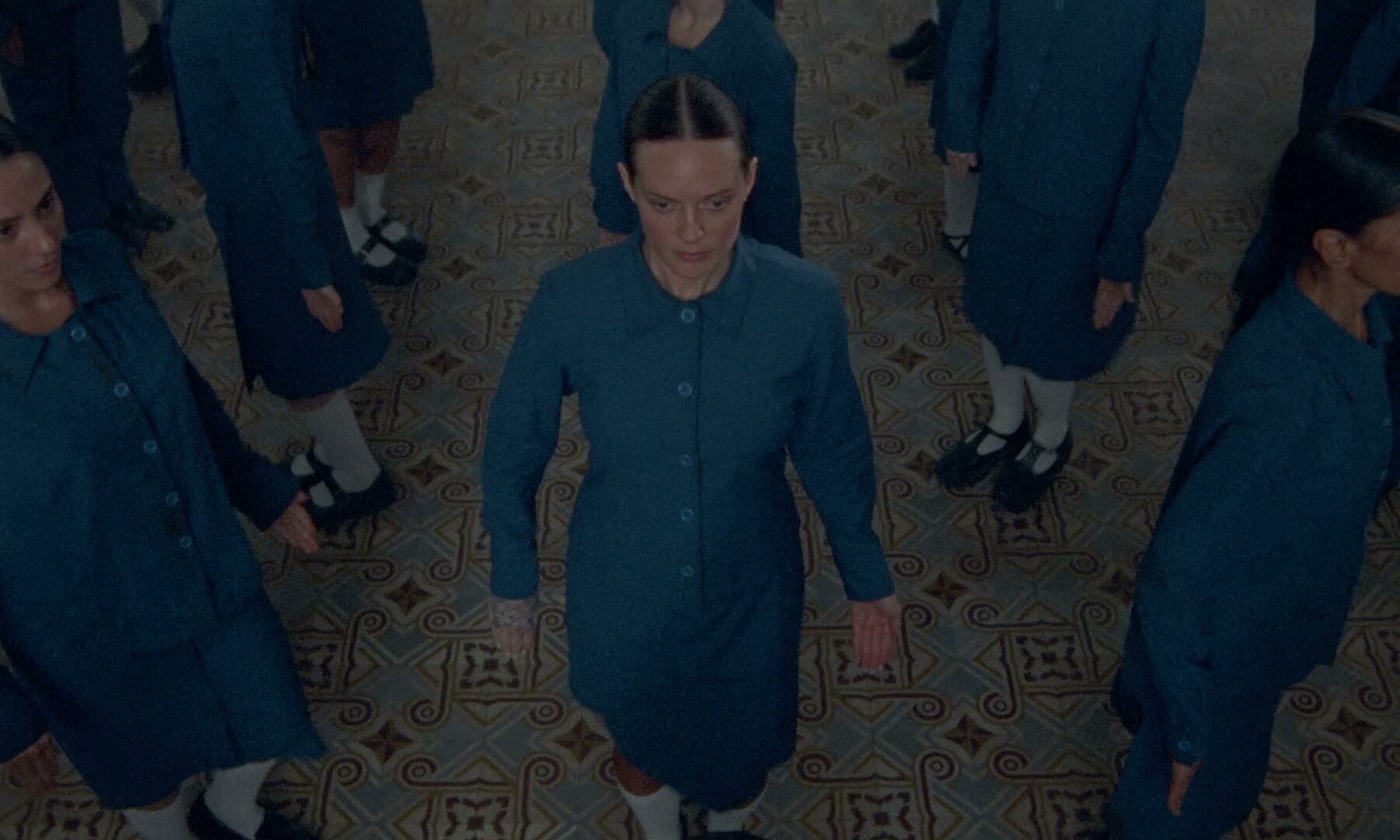
The women's sequences work differently. Books balanced on heads require a kind of stillness that is not passive. It is active containment, the constant negotiation of balance that makes the interior visible even when the exterior is most controlled. To hold a book on your head while standing in formation, you have to be paying attention to yourself from the inside at the same time that you are presenting a surface to the outside. The choreography makes this visible. The discipline is total. The interior is visible anyway.
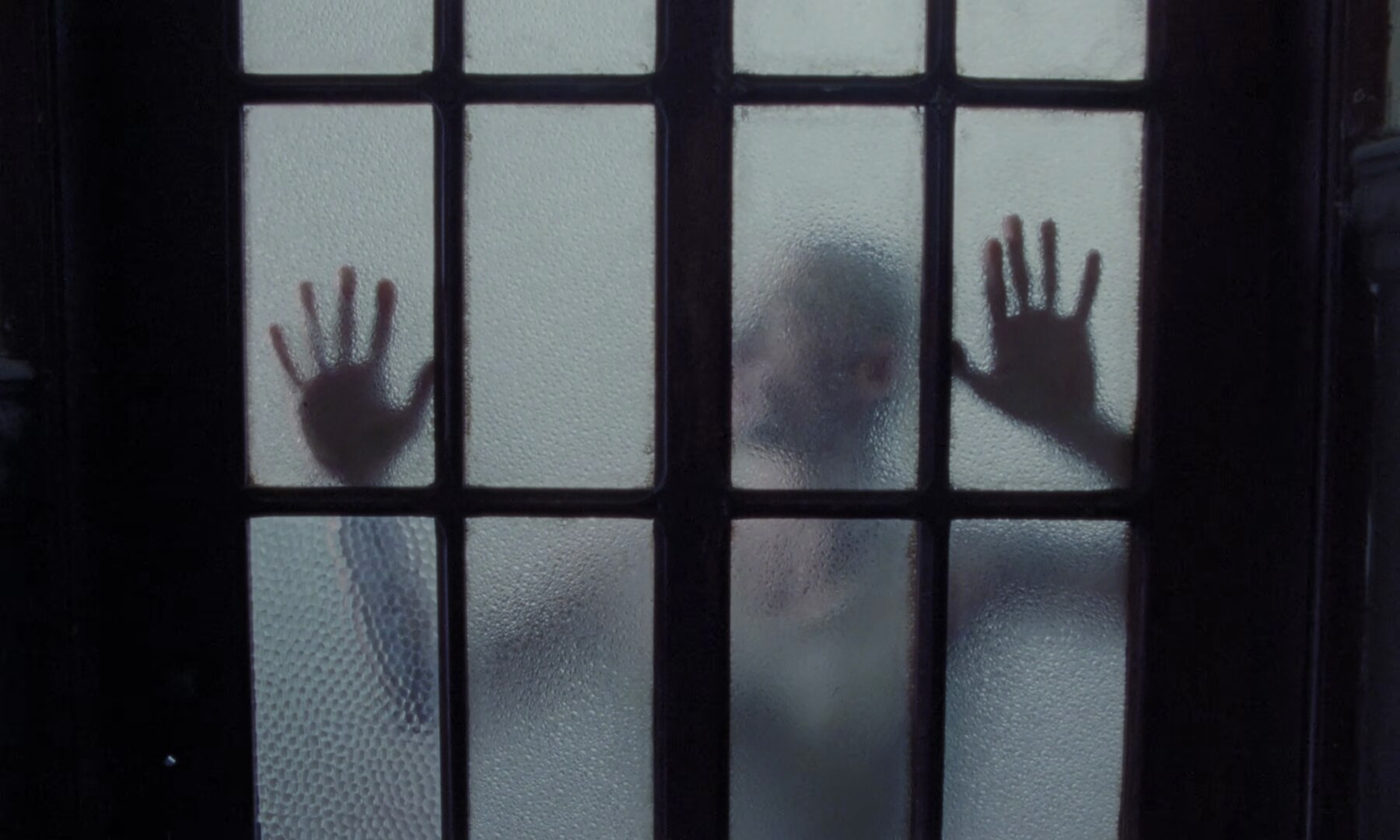
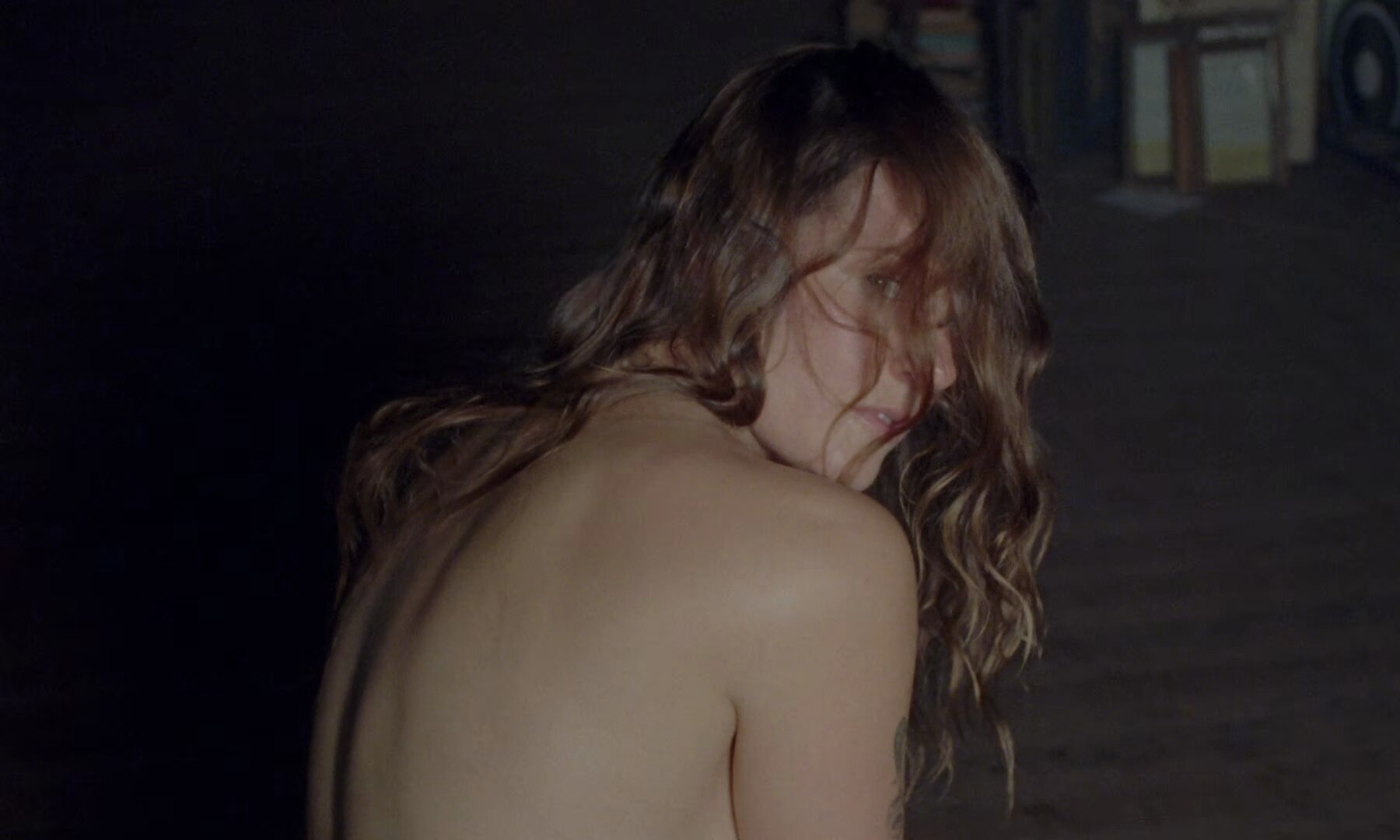
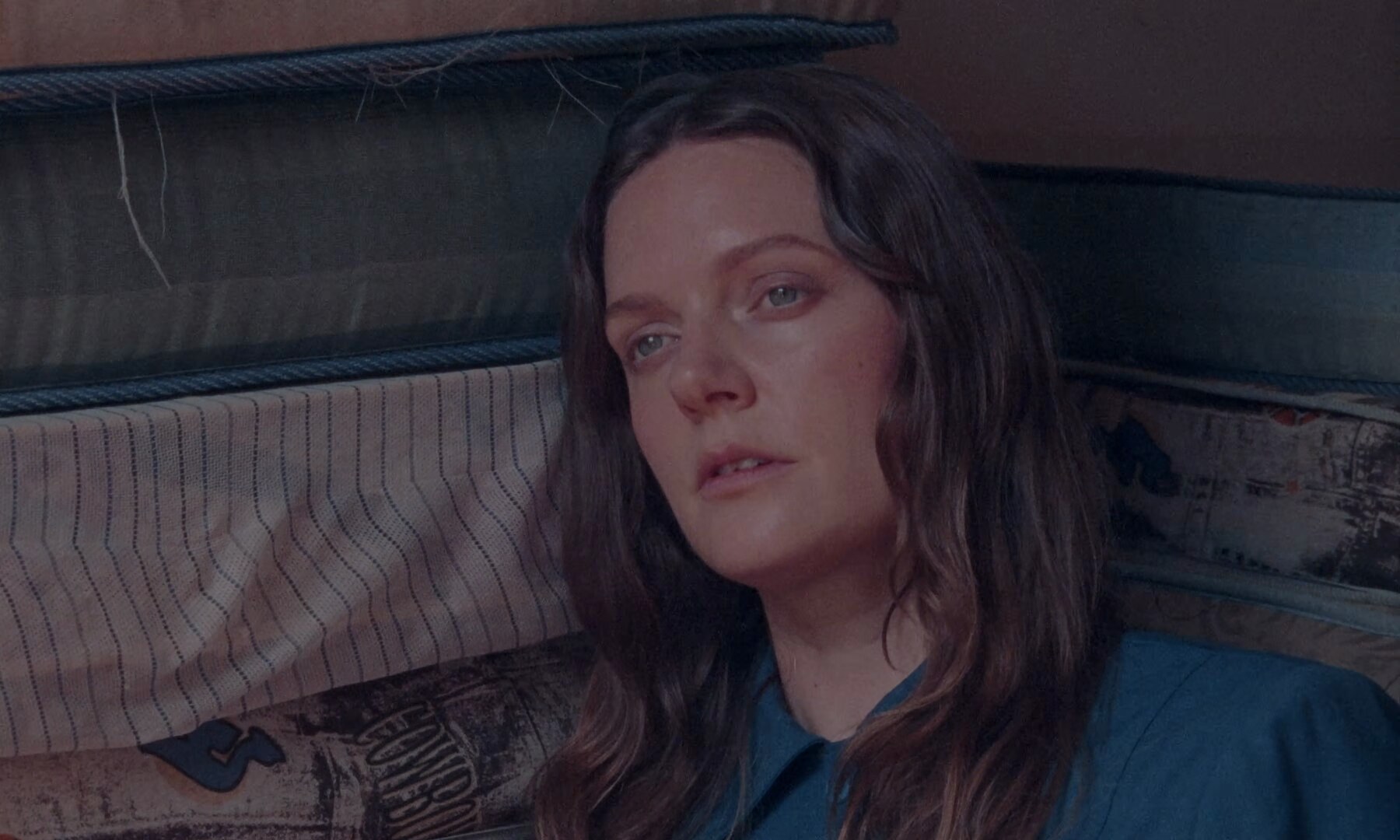
The most haunting images in the video are not the formation shots. They are the close images: a figure pressed against frosted glass, hands splayed, face almost visible through the texture. A bare back in a dark corridor, turned away from the light. A face between mattresses, looking directly into the camera with an expression that is not asking for anything. These are the images that exist between the two systems, in the spaces where the formation has no jurisdiction. They are the video's most private moments, and Nogari shoots them with the same formal attention he brings to the mass choreography. No image in this video is incidental.
The Setting
The choice of a former monastery outside Sao Paulo is doing significant work. A monastery is not a neutral backdrop. It is a building designed specifically to produce a particular kind of person through the repeated performance of collective practice, a space where individual desire is subordinated to a shared discipline by mutual agreement and genuine faith. It was built for formation in the original sense: the forming of a self into a shape that belongs to something larger.
Nogari uses it as the container for a different kind of formation, one where the discipline is not chosen and the commitment is not mutual. The arched windows, the tiled floors, the stone columns: they frame the blue-uniformed bodies exactly the way a church frames its congregation. Organized, upright, oriented toward something they cannot see from where they are standing. The building lends its meaning to what is happening inside it, and what is happening inside it changes the meaning of the building.
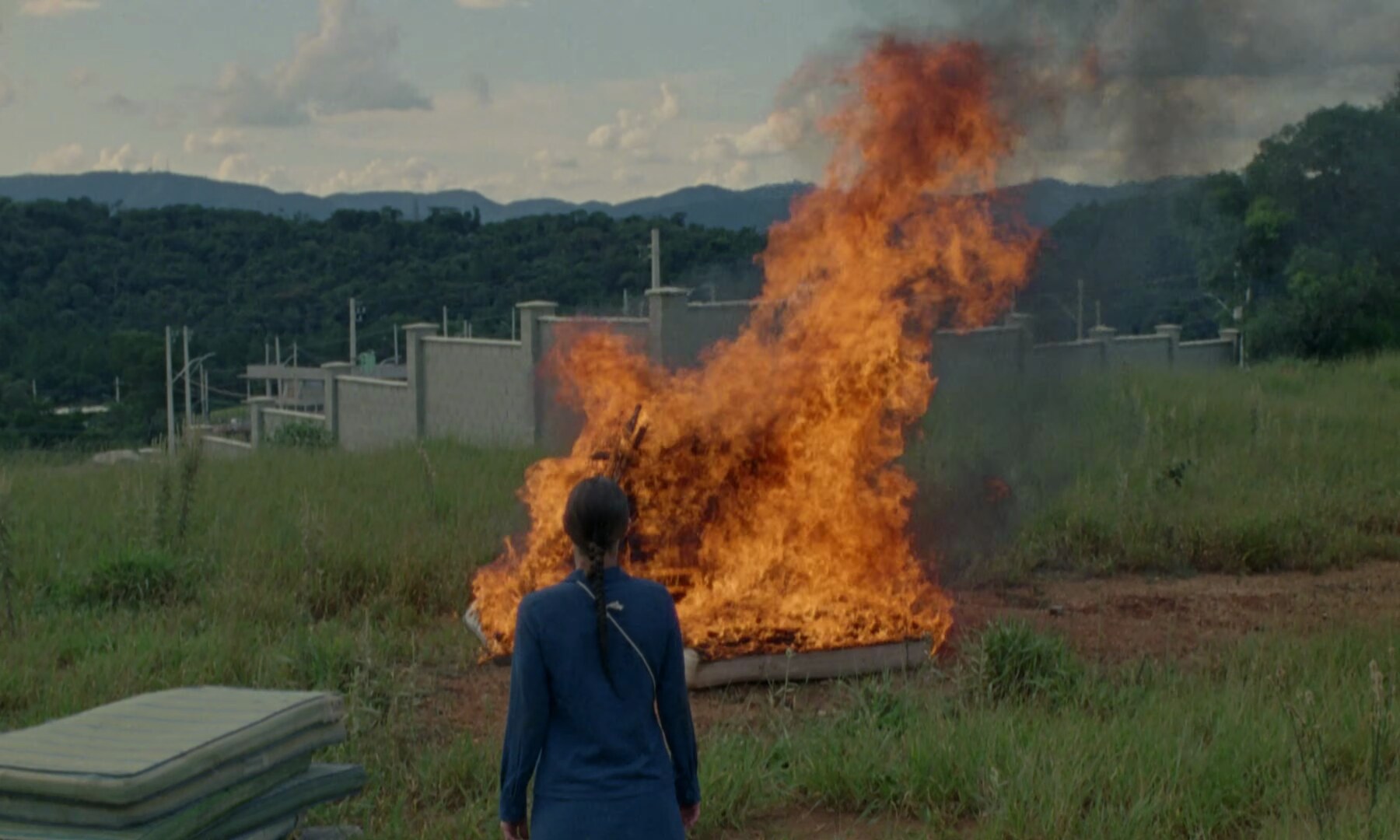
The fire shot is the pivot of the whole video. A figure in blue stands in an open field watching a mattress burn. The sky is wide. The monastery is gone. The formation is gone. The books are gone. What remains is a single person, outside the systems, watching something that was inside them burn. It does not read as triumph. It reads as necessity. The video understands the difference between those two things and does not confuse them.
The Release
The final images are a run at dusk. Bodies stripped of their uniforms, hair loose, moving fast across sandy ground as the sky turns the specific pre-dark blue that is neither day nor night. The formation has dissolved. What remains is the velocity of people who have stopped holding a shape they were never built for.
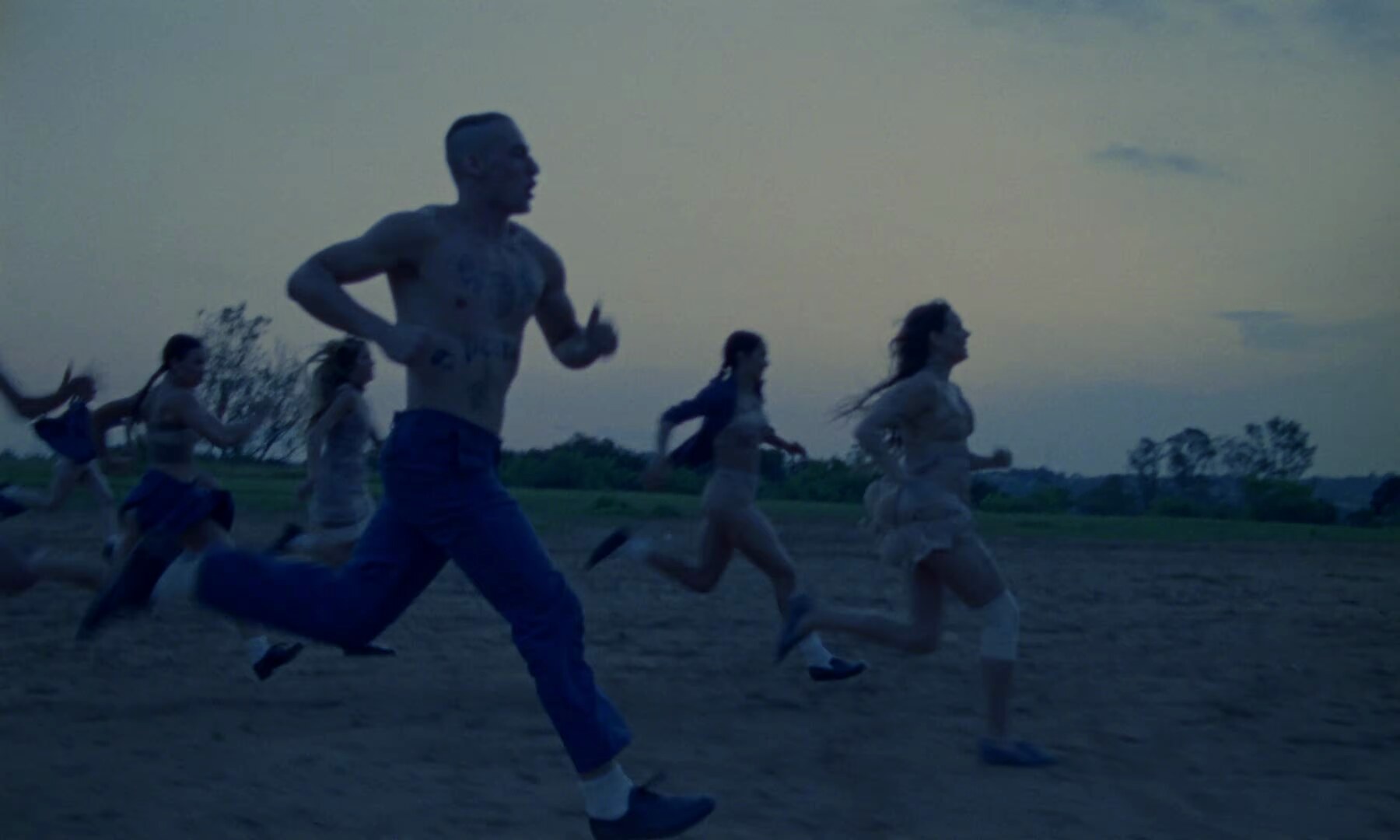
The run does not end the way a narrative ends. It ends the way a breath ends. Something is released rather than concluded. That is the appropriate ending for a song whose title is still a question.
"I'm Your Girl Right?" is released as the lead single from ESTRUS, Tove Lo's sixth studio album, out September 18, 2026, on Pretty Swede Records and Virgin Music Group. Thirteen tracks. Produced by Ludvig Soderberg, Elvira Anderfjard, and Luka Kloser. The first track is called "a lot of feelings, no solutions."
The video is one of the best things released alongside a pop single in years. Go watch it again.