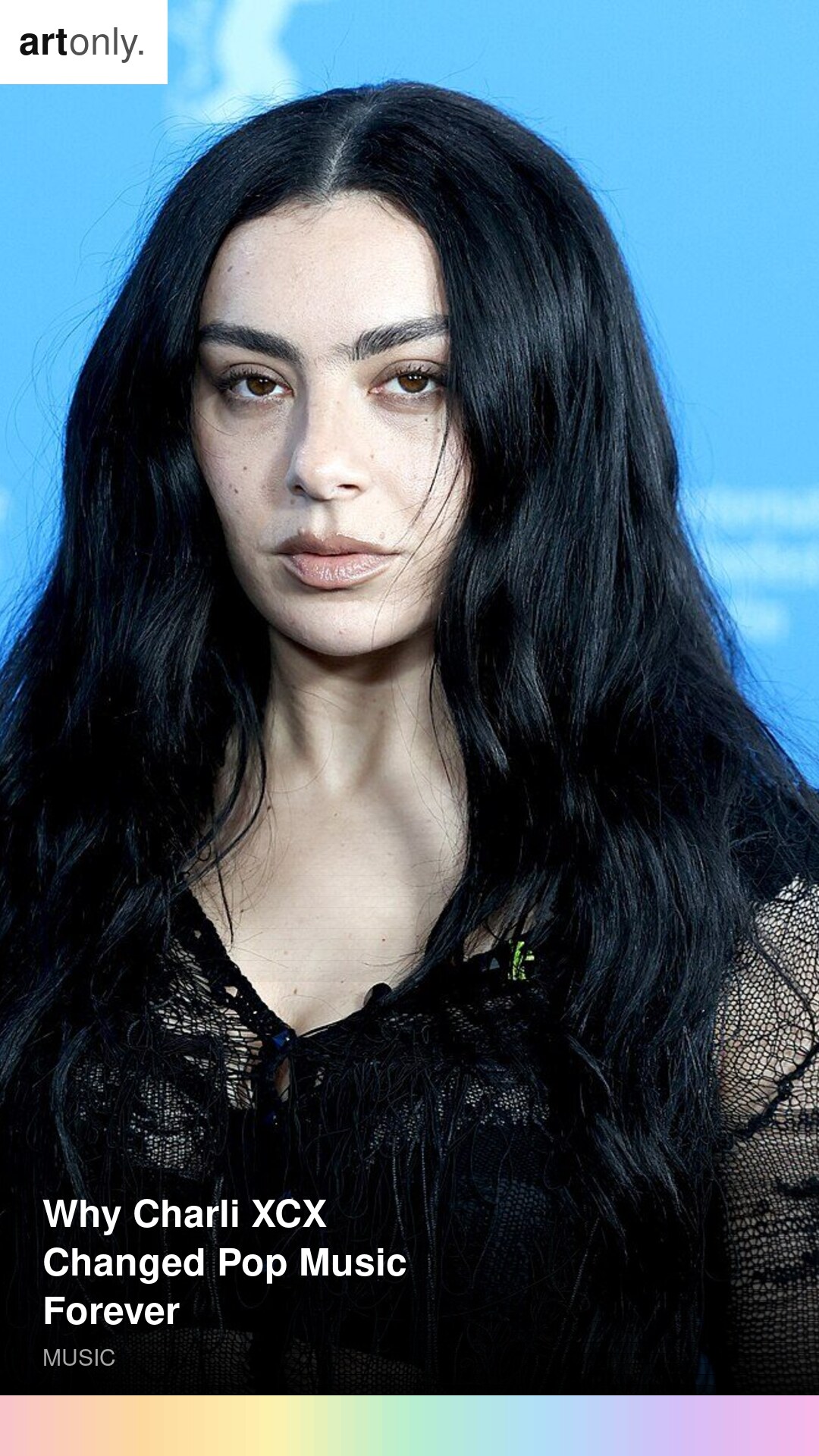
There are artists who chase trends and there are artists who create them. Charli XCX, born Charlotte Emma Aitchison on August 2, 1992, in Cambridge, England, belongs entirely to the second group. Over more than a decade of relentless creative reinvention, she has pushed pop music toward places it had never previously been willing to go. By the time her sixth studio album Brat arrived in June 2024, she had not just built a career. She had built a new kind of pop altogether, one that has reshaped how the genre understands itself and what it can ask of its listeners.
Where It Started
Before the Grammy nominations and the cultural phenomenon that would eventually bear a single color, there was a teenager posting recordings online. Charli began writing songs at fourteen and started uploading demos to MySpace in early 2008. Those early posts caught the attention of a promoter in East London, who invited her to perform at illegal warehouse parties across the city. The contrast between her age and the setting gave her an unusual foundation that formal industry paths rarely provide. She was learning to hold a crowd before she had any label support.
Her debut album, True Romance, arrived in 2013 on Asylum Records. The record drew from 1980s synth pop and new wave and established her as a songwriter with a genuine sense of pop history rather than a chaser of its surface. Critics responded warmly even as mainstream radio had not yet caught on. The album was a statement of intent from someone who was clearly in no hurry to follow the obvious path.
Boom Clap and Writing for the World
2014 marked Charli's first moment of wide commercial recognition. Sucker, her second album, reached number fifteen on the UK Albums Chart and delivered the single Boom Clap, which climbed to number four on the Billboard Hot 100 in the United States. That same year, her writing credit on Iggy Azalea's Fancy brought her a song that spent seven weeks at number one on the Billboard Hot 100. For a brief stretch in the summer of 2014, she was behind two of the biggest songs in the English speaking world at the same time.
The moment could have become a trap. Many artists in that position would have committed fully to the mainstream formula they had just proved capable of executing. Charli did the opposite. She filed the commercial achievement and returned to her own instincts. That decision would define everything that followed.
PC Music and the Invention of a Sound
The decisive shift came in 2016 with the Vroom Vroom EP, a collaboration with producer A.G. Cook and the PC Music collective based in London. PC Music had been developing a strain of pop that was more compressed, more artificial, and more emotionally heightened than anything on commercial radio. Guitars and organic instrumentation were largely absent. In their place was a digital aggression that felt simultaneously futuristic and deeply personal. Charli threw herself into the aesthetic without reservation.
The mixtapes Number 1 Angel and Pop 2, both released in 2017, deepened this direction and quickly became reference points for a generation of artists. Caroline Polachek, 100 Gecs, Dorian Electra, Slayyyter, and Alice Longyu Gao all emerged from a space that Charli and Cook had helped define. She was not merely influencing these artists from a distance. She was often collaborating with them directly, making a scene out of what could have remained a private experiment. By the end of the decade, hyperpop had a name, a community, and a document of its origins. Much of that document bore her fingerprints.
How I'm Feeling Now
In the spring of 2020, with the world in lockdown, Charli announced she would make an album in thirty days while streaming the process live to her online audience. How I'm Feeling Now was the result. Produced entirely from her home and shaped in part by conversations with listeners in real time, the album was a demonstration of a different relationship between artist and audience. Fans were not simply waiting for a finished product. They were present for its creation, contributing responses and reactions that fed back into the work itself.
The record received widespread critical acclaim and appeared on end of year lists across major music publications. It also confirmed something important about the direction she had chosen since 2016. The experimental approach was not a phase or a detour. It was a permanent condition that had become inseparable from her identity as an artist.
Brat and the Summer That Belongs to Her
Brat arrived on June 7, 2024, through Atlantic Records, and its impact was immediate and total. The album debuted at number three on the Billboard 200, the highest chart position of her career to that point, and reached number one on the Top Dance and Electronic Albums chart. Every track from the standard edition entered the Hot Dance and Electronic Songs chart simultaneously. The production, developed again in close partnership with A.G. Cook, was dense and built around club oriented textures and confessional lyrics that dealt honestly with ambition, friendship, and the specific experience of living a life in public.
The album cover, a rectangle of bright lime green with her name set in a small, deliberately blurred font, became one of the most recognizable visual designs of the year. Brat Summer entered the cultural vocabulary as a phrase denoting an attitude of confident imperfection and unapologetic presence. It spread beyond music audiences into fashion, social commentary, and even political discourse during the months that followed. Metacritic placed the album among the twenty highest rated albums ever tracked on its platform, with a score of 95.
Brat received eight Grammy nominations, including Album of the Year and Record of the Year for the track 360. It won the Grammy for Best Dance and Electronic Album as well as Best Recording Package. At the 2025 Brit Awards, Charli was named Songwriter of the Year. Her weekly average streams in the United States rose from 7.7 million in September 2023 to 20.9 million by September 2025, a figure that reflects not just an album cycle but a fundamental shift in her reach.
What She Proved
What Charli XCX has built over the past decade cannot be reduced to chart positions or award tallies, though both have arrived in abundance. She has demonstrated that pop music does not have to soften itself to be heard widely. By refusing to separate commercial instinct from artistic risk, she made hyperpop a mainstream force and expanded what the genre is understood to be capable of containing. The artists she has influenced, the scenes she has helped shape, and the audience she has cultivated from East London warehouse stages to the Grammy stage all point in the same direction. Pop music is genuinely different now, and she is a primary reason why.