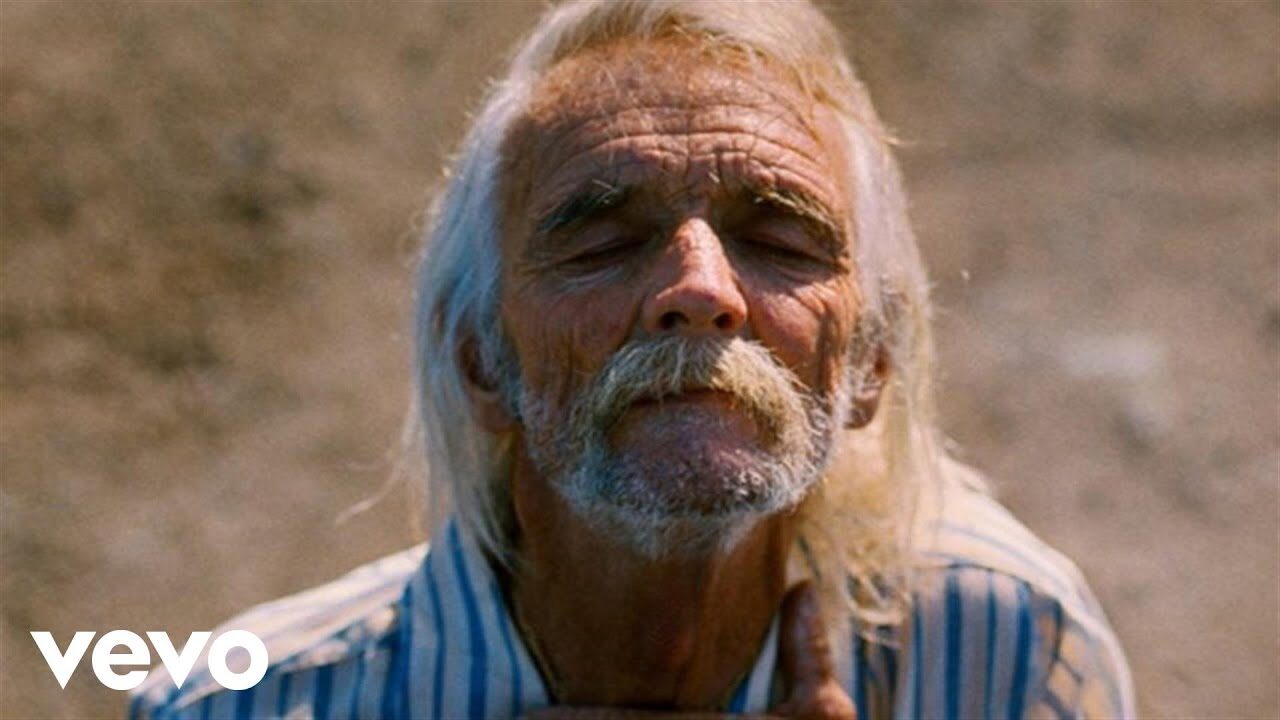
Vimeo gave it a Staff Pick. In 2015, that still meant something specific: an editorial human decided this video was worth surfacing above the noise.
By the time Amos Le Blanc directed "The Gates" for Young Empires in August 2015, he was already the most decorated debut-year director in Canadian music video history. The Cannes Young Director Award Gold was his. The 2014 MMVA Director of the Year was his. The viral momentum of "Asphyxiation," the critical recognition of "Dum Dee Dum," the narrative architecture of "Run This", all of this was already part of his record.
What he did with Young Empires, then, was not a commercial calculation or a profile move. It was a choice about the kind of work he wanted to make when the pressure of the debut year had passed and the freedom to take a breath and ask a harder question had arrived. That question, with "The Gates," was this: what does faith look like when you remove it from the institutions that normally frame it and let it exist in the open, in the world, in bodies that are simply doing what bodies do when they believe in something?
The answer is one of the most visually accomplished music videos released in Canada in 2015.
Young Empires and the Scale They Played At
Young Empires are a Toronto trio whose music lives in a particular atmospheric register: anthemic but not stadium-scaled, emotionally direct but never simple, built on guitar tones and melodic architecture that feel simultaneously contemporary and connected to something older. They are a band that cares about the song as a unit, about the narrative arc of a piece of music from opening to close, and "The Gates" is among the best arguments they made for that approach during their active years.
The track is about faith in the broadest possible sense, about the things people reach toward when the available explanations feel insufficient, about the gates that appear in moments of transformation and the choice of whether to approach them or retreat. It is not a religious song in the conventional sense, but it is a song that takes religious experience seriously as a human phenomenon, as something that happens to people and changes them, whatever its ultimate source.
That seriousness is what Le Blanc heard in it, and it is what guided every visual decision he made.
The Iconography of Devotion
The video travels through a series of images drawn from the visible landscape of religious practice: crosses being kissed, children being baptized, congregations gathered in the specific posture of communal belief, the Christ of the Abyss statue encountered beneath the surface of water in a moment of sudden and enormous beauty.
Le Blanc does not editorialize about any of this. He is not making an argument about whether these practices are true or false, valid or misguided, meaningful or empty. He is observing them as a filmmaker observes anything: with full attention, with respect for the human experience being recorded, with the understanding that his job is to show and not to conclude.
The sweeping landscape shots that alternate with these intimate scenes create a rhythm of expansion and contraction, the world and the body, the enormous and the personal, the geography of belief at its full scale and the single human face in the moment of experiencing something it cannot explain. Le Blanc moves between these registers with an ease that comes from clarity of concept: he knows exactly what the video is trying to say, which means he also knows exactly when to pull back and when to move in.
IMVDb designated it a Pick of the Week upon release. The recognition was deserved: this is video direction that operates at the level of short filmmaking, that understands the grammar of both forms and uses the synthesis of them to achieve something neither could alone.
The 210,000 Views and What They Represent
The 210,000-plus YouTube views that "The Gates" accumulated reflect a particular kind of audience engagement: not the viral spike of something designed for maximum initial impact, but the steady accumulation of people finding work that rewards repeated attention. This is the video's character, and it is the character of Le Blanc's best work more broadly: it gives you more on the second viewing than the first, and more on the third than the second.
This is not a small achievement. The music video ecosystem in 2015 was already moving toward content optimized for single viewing, for the immediate impression, for the dopamine of novelty rather than the slower satisfaction of depth. Le Blanc was moving in the opposite direction, toward work that assumed a viewer who would come back, who would look again, who would bring their own experience to the images and find something different there on each return.
The Exclaim coverage that accompanied the premiere understood that what Young Empires and Le Blanc had made together was not simply a promotional asset for the single. It was a piece of work with its own logic, its own argument, its own claim on your attention independent of the commercial context that produced it. This is what separates Le Blanc from most of his peers in the music video world. He makes films. They happen to contain music.
What Two Years and Four Videos Told Us
With "The Gates," the outline of Amos Le Blanc's directorial identity was fully visible. Four major music videos in roughly two years, each completely different in concept and visual language, each bearing the unmistakable signature of the same consciousness behind the camera. The control over image. The editorial intelligence. The refusal to fill space with anything that does not earn its place there. The trust in the audience's capacity to meet the work where it is rather than where it might be easier to place it.
This is a director who had, in two years of work, established a body of music videos that will be studied and discussed as long as people are interested in the form. The Cannes gold was international confirmation. The MMVAs were domestic confirmation. But the work itself, across these four videos, is the confirmation that matters most and lasts longest.
Young Empires opened gates in this video. Amos Le Blanc made the act of opening them feel like the most significant thing a person could do.