Every generation gets its panic. The electric guitar was going to kill real music. The synthesizer was going to replace the orchestra. Sampling was theft. Auto-Tune was cheating. And now, artificial intelligence is supposedly coming for the soul of music itself.
It is not.
The Conversation Is Not New
Since the moment someone plugged a cable into a mixing desk, the debate has raged about what counts as music and who gets to call themselves a musician. When hip-hop producers started chopping soul records in the 1980s, purists called it plagiarism. When Timbaland built beats out of manipulated vocal samples, people questioned whether it was real production. When Skrillex made a laptop sound like a warzone, the guitar players asked where the talent was.
Every single time, the argument was the same: this is not real. And every single time, the culture moved forward anyway, because the audience does not care about your rules. The audience cares about how the music makes them feel.
AI is the latest chapter in this story. It is not the final one.
The Tool Argument
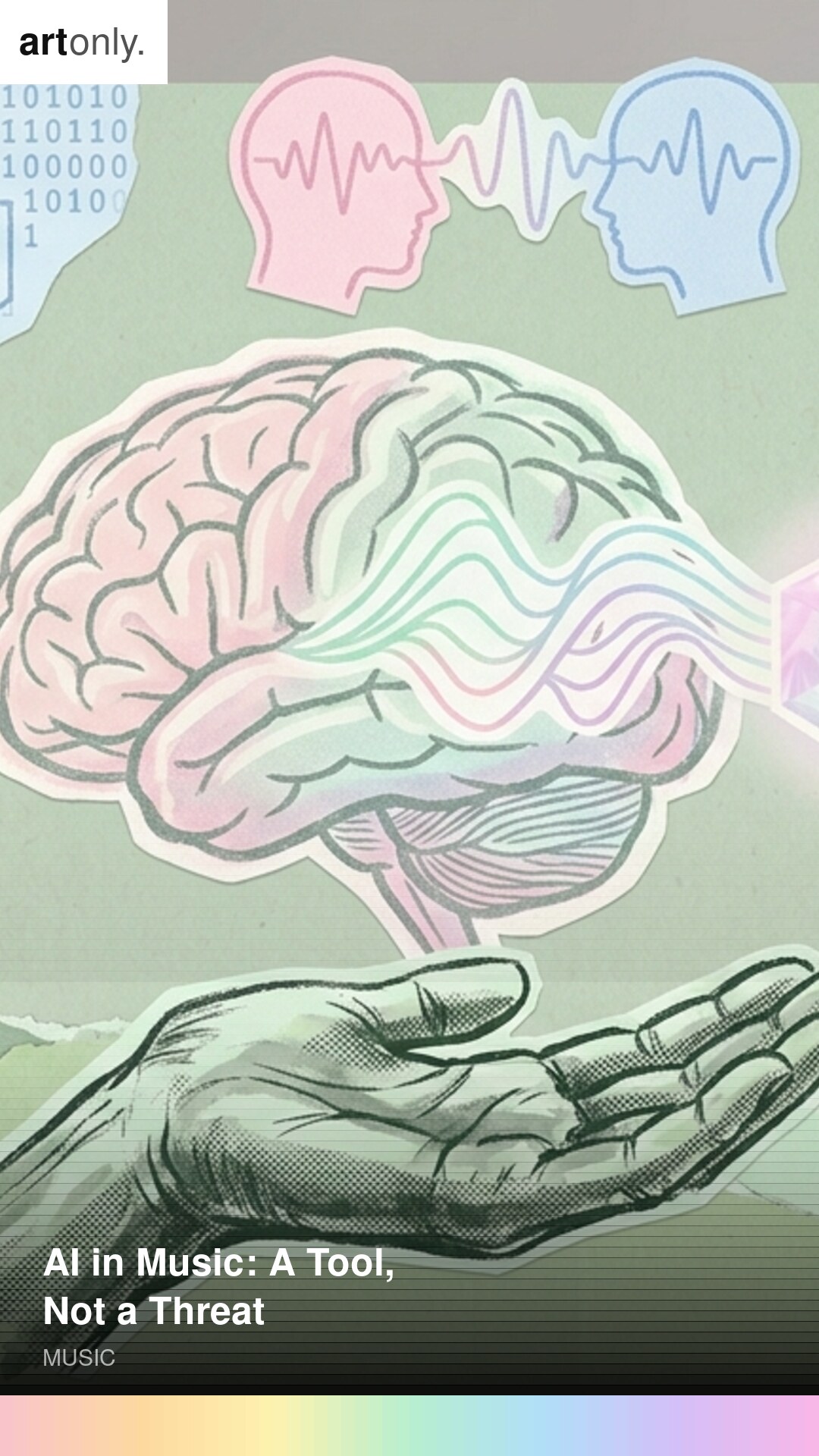
AI is a tool. A powerful one, an unprecedented one, but a tool nonetheless. It can generate chord progressions, suggest melodies, master tracks, even clone voices. What it cannot do is want something. It cannot wake up heartbroken and channel that into a three-minute song that makes a stranger cry on the subway. It cannot decide that a song needs to be angrier, softer, weirder. It cannot rebel against its own output.
The artists who are using AI well understand this intuitively. They treat it like a collaborator that never gets tired, a sketchpad that talks back, an accelerant for ideas that were already there. They use it to get past creative blocks, to prototype faster, to hear possibilities they might not have reached on their own.
They are not replacing themselves. They are amplifying themselves.
What the 2026 Studio Looks Like
A survey of over 1,100 producers conducted in 2026 found that the majority of working musicians currently use AI tools for at least one aspect of their workflow, but that the tools most commonly cited were mastering, stem separation, and reference track analysis. Those are tasks that producers previously spent hours on. Offloading them to AI does not change what music is. It changes how much time a producer spends in the part of the process they find meaningful.
The more contested uses, AI-generated melody and chord suggestions, voice cloning, automated arrangement, remain minority practices among professional producers. The producers who use them report using them as starting points that they then substantially alter, not as finished products. The fear that AI would automate songwriting wholesale has not materialized in professional practice, which does not mean the fear is irrational. It means the technology has not yet reached the capability level the fear anticipated, and the industry has developed informal norms in the gap.
Artists like Arca have been more aggressive in integrating machine learning into live performance, using systems that manipulate vocal timbre and spatial sound in real time. These uses belong to a tradition of experimental artists working at the edge of their tools that stretches back through the entire history of electronic music. The technology changes. The impulse does not.
The Real Ethical Issue
The legitimate concern with AI in music is not the tool use. It is the training data. The first generation of AI music tools were built on music scraped from streaming platforms and other sources without permission from the artists who made it. Voice cloning systems can now replicate a recognizable vocal style from seconds of audio, making it possible to produce content in a living artist's voice without their knowledge or consent.
Those are genuine violations, and the industry has been slow to develop adequate protections. Some platforms have moved to prohibit AI-generated content that impersonates named artists without consent. Some labels have begun negotiating licensing frameworks for voice models. The legal and ethical framework is being built while the technology operates without it. That is the same pattern the music industry has navigated through every prior technological disruption, and it has always been costly for the people with the least institutional power.
The voice cloning problem is categorically different from the chord progression generator. One is a production tool that accelerates creative work. The other is a potential identity theft mechanism. Conflating the two, which the panicked coverage of AI in music consistently does, serves no one's interests.
Musicianship Still Matters
Nothing about AI diminishes the value of someone who has spent years mastering an instrument, training their ear, developing a voice. A guitarist who can make you feel something with a single bent note possesses a kind of knowledge that no algorithm can replicate, because that knowledge lives in the body, in muscle memory, in thousands of hours of listening and playing and failing.
But here is the thing that the gatekeepers never want to hear: musicianship is not the only path to great music. It never was. Some of the most transformative records in history were made by people who could barely play their instruments. Punk proved that. Bedroom pop proved that. The entire history of electronic music proved that.
What matters is expression. What matters is intent. What matters is whether the thing you made connects with another human being.
Music Is Whatever You Make It
The definition of music has never been fixed. It has always expanded to include whatever new sounds, tools, and methods humans have invented. From bone flutes to Ableton, from orchestras to iPhones, the container keeps changing but the impulse stays the same: people want to make sounds that mean something.
AI does not change that impulse. It gives it a new instrument.
The conversation will continue. It always does. And in ten years, we will look back at the panic of 2026 the same way we look back at the sampling lawsuits of the 1990s: as a moment when the old guard tried to hold the door shut while the future walked in through the window.
Make your music however you want. Use whatever tools you have. The only question that has ever mattered is whether it moves someone. Everything else is noise.