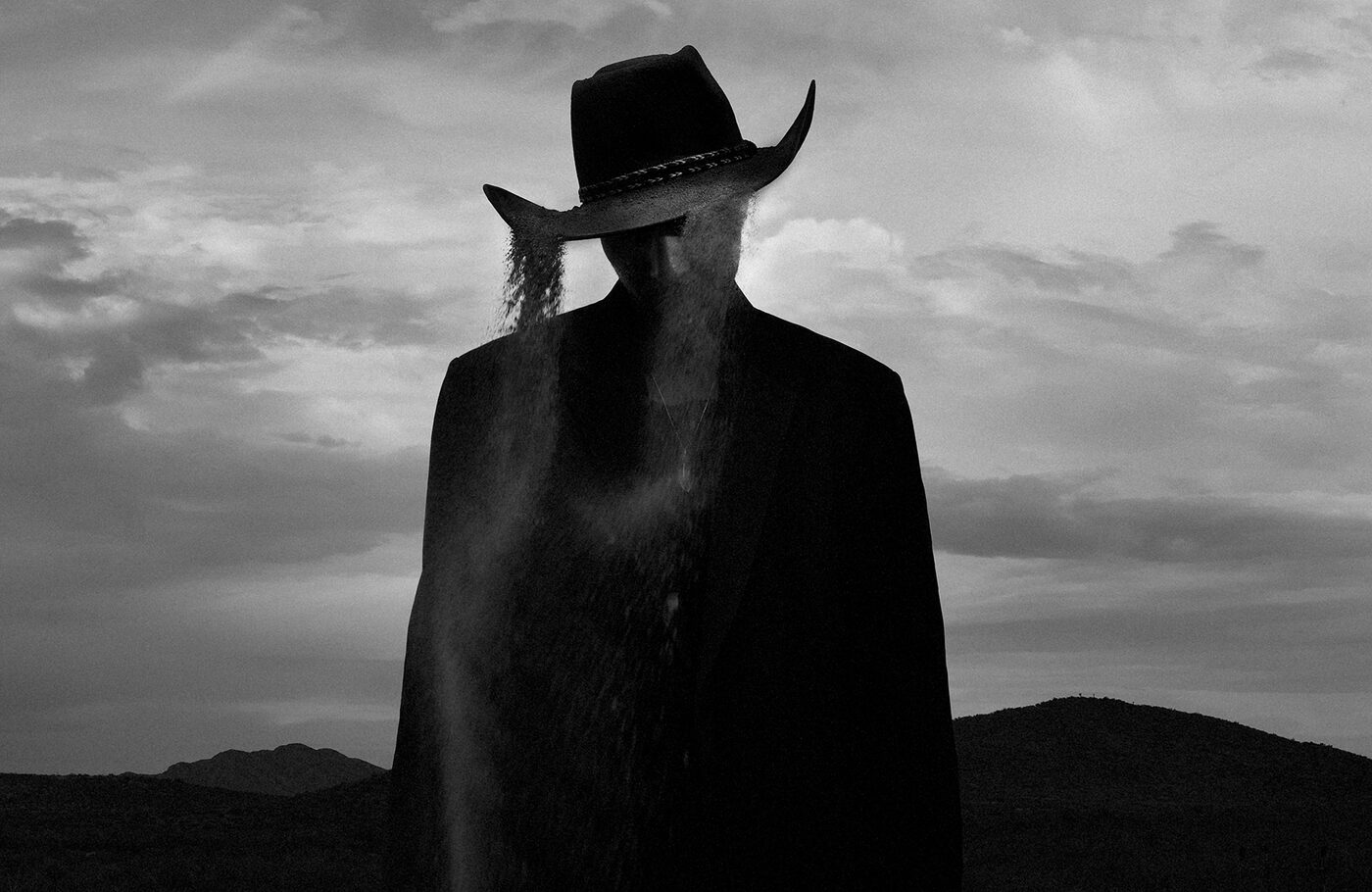
Aisha Devi makes electronic music that treats sound as a tool for altered states. Born in the Swiss Alps to Nepalese Tibetan parents, she came up through the experimental club scene of the early 2010s and has spent the last decade building a body of work that fuses meditation practice, overtone singing, and industrial grade production into something distinctly her own. Her label Danse Noire, founded in 2013, has become a reference point for insurrectional club music from across the world.
Her 2018 album DNA Feelings was the breakthrough that made the case publicly. Tracks combined ritual chanting with bass heavy electronic architecture in a way that didn't feel like aesthetic borrowing. They felt like the inside of a practice. The follow up came five years later. Death Is Home, released on Houndstooth in November 2023, took everything DNA Feelings had built and pushed further into the body. Less club, more ceremony.
The Making of Death Is Home
Death Is Home is the most personal record Devi has made, and the most personal thing about it is its origin. The album emerged from her attempt to find her father, a man she had never known. That search, its emotional weight and the unresolvable quality of what it uncovers, is the substrate the music is built on. This is not the kind of biographical information that functions as marketing. It is the architecture of the record. The album's relationship to grief, to the unknown, to what survives the body and what does not, is not thematic decoration. It is structural.
The album includes a guest appearance by Slikback, the Kenyan artist and producer whose own work operates in related zones of club music and spirituality. The collaboration is not a feature in the conventional pop sense. It is a meeting of two practices that have developed independently toward similar questions about what sound can do to the body and the mind.
Houndstooth, the label associated with fabric and the Body & Soul parties in London, was the right home for the record. The label has consistently supported electronic music that demands full attention rather than ambient tolerance, and Death Is Home makes demands.
What the Voice Can Do
Devi's voice is the central instrument across her records, processed past recognition on some tracks and left almost untouched on others. Her live performances feature guttural chanting and overtone work that she describes as healing methods, and the claim sits comfortably with the music. There's a precision to how she layers vocal harmonics that suggests the technique came first and the production followed.
Overtone singing, the practice of manipulating the vocal tract to produce multiple simultaneous pitches, is a tradition with roots in Mongolian khoomei and Tibetan Buddhist chant, among other lineages. Devi's use of it is not ethnographic citation. It is a practice she has developed across years of serious study, and it changed the production logic of everything she makes. When the voice can split itself, the bass line follows different rules. The whole architecture shifts.
She has collaborated with Tianzhuo Chen, NON Records, and the BBC Concert Orchestra on a piece called Aethernal Score. The orchestral collaboration in particular signaled how far the work could travel without losing its core. Strings can carry the same weight as a 909 if the composer knows what the weight is for. That knowledge is the through-line across every project she has undertaken.
Danse Noire as a Statement
The label Devi founded in 2013 has released work from artists including Crystallmess, Arca, and many figures adjacent to the NON Worldwide collective. The curatorial vision is consistent: music that refuses to treat its political and spiritual dimensions as separate from its dance floor function. This is not a common position in electronic music, which tends to silo these concerns. Danse Noire operates on the premise that insurrection and ecstasy occupy the same register, that the spiritual and the political are not competing frameworks but different names for the same demand.
Devi has spoken openly about wanting electronic music to remember its political and spiritual lineages. Death Is Home reads as a record built around that conviction. She describes her sound as Aetherave: bassy club motifs combined with intentional aesthetic signifiers designed to transport listeners into a kinetic, ceremony-like environment. The word she invented for her own practice is more accurate than any genre label the press has applied to her.
Beyond the Producer Frame
The frame of "female electronic producer" has historically been applied to Devi in ways that reduce the scope of what she does. The label flattens the practice into a demographic category rather than describing its actual character. What she is making is devotional music in a secular form, ritual in club clothing, a body of work concerned with the same questions that inform every serious religious tradition: what happens at the edge of the self, what sound can do to that edge, and what listening costs.
The kind of artist who isn't trying to escape genre. She's trying to remember what genre is for.
The Frequency Argument
The claim that frequency itself is devotional rather than merely metaphorically spiritual is one that Devi pursues with consistency across her catalog. The Houndstooth releases that followed Death Is Home each develop a different aspect of this argument. Frequencies at the extremes of human hearing, deployed at volumes that activate physiological response rather than just auditory processing, create states that have historically been understood through religious frameworks because religious frameworks were the only available language for them. Devi borrows the vocabulary without accepting the institutional forms, producing something that functions as mystical practice without belonging to any tradition.
The collaboration with Slikback on Of Matter and Spirit brought her work into contact with a producer whose own approach to electronic music as physical force resonates with her methods. What that collaboration demonstrated is that the frequency-as-devotion argument is portable: it doesn't require the specific aesthetic identity of Devi's solo work to function. The core insight travels.