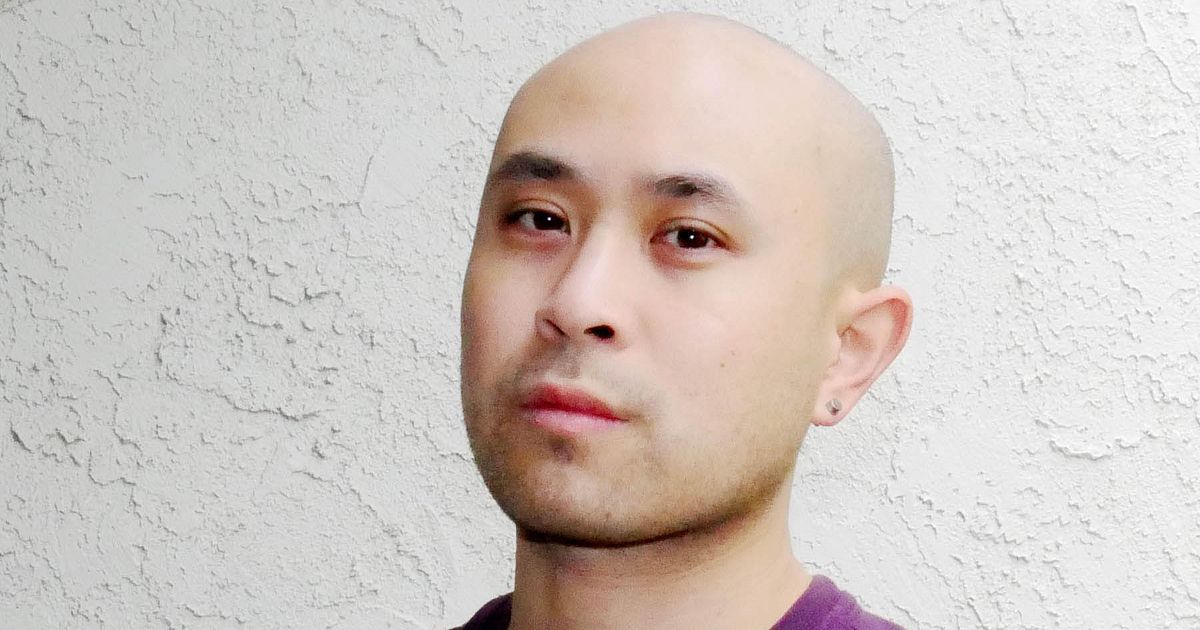
Andrew Thomas Huang has spent the last decade building a distinct visual language across music videos, short films, and gallery installations. His work moves easily between live action, motion capture, and simulation. What holds it together is a persistent interest in mythology. Chinese folklore, queer futurism, animism, ancestry, body memory. The textures change, but the questions stay the same.
He is a Chinese American visual artist and film director whose career refuses easy categorization. The music video world claims him. So does the gallery world. Feature film is where he is heading next. None of these frames fully contains what he does, which is precisely the point.
What Solipsist Revealed
Before Bjork, before the Grammy nomination, before MoMA, there was Solipsist. The 2010 short film announced the full set of concerns that would define everything that followed. Bodies merging. Flesh becoming something other than flesh. The line between the interior of a person and the world outside them dissolving entirely. It was made with modest resources and an immodest imagination, mixing practical puppetry, tactile textures, and early digital compositing in ways that felt genuinely strange rather than merely experimental.
Bjork watched it and reached out. That response was not random. Solipsist spoke directly to the kind of mythological thinking she had been pursuing for decades, the idea that the human body is not a fixed object but a site of transformation, a place where the personal and the cosmic collapse into each other. Huang understood that instinctively. The short film was not a portfolio piece designed to attract clients. It was a statement of belief, and the right person recognized it.
What the Solipsist to Bjork pipeline reveals is that Huang's most consequential creative relationships have always begun with shared philosophy rather than shared aesthetics. The look follows from the thinking. That sequence, thought first and then image, is what separates his work from directors who arrive at mythology through surface.
What Cellophane Achieves
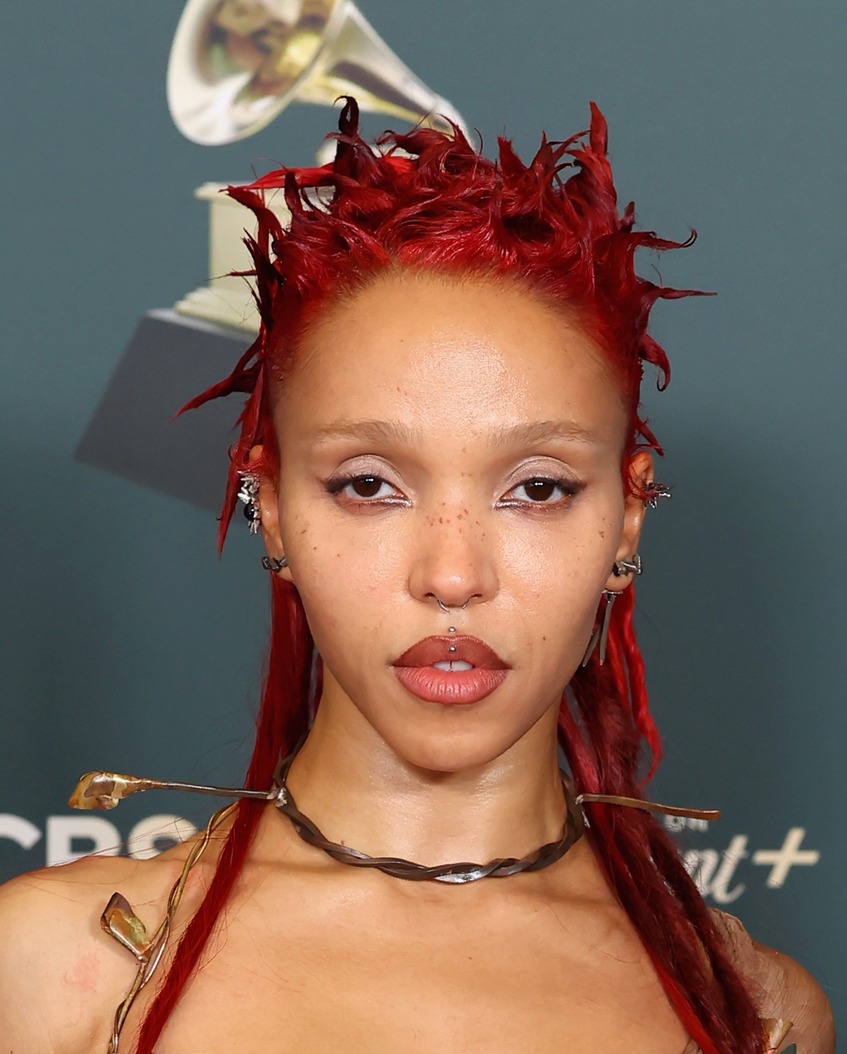
The FKA twigs video for Cellophane, released in 2019 and nominated for a Grammy, is the single piece of work most people encounter first. It earns that position. The video opens on twigs performing on a pole, shot in a way that treats the athleticism as choreography rather than spectacle. The camera does not gawk. It witnesses. Then the world around her begins to dissolve, and the CGI sequence that follows reframes everything that came before.
Technically, the achievement is the seamlessness. The transition from a theatrical human performance to a fully rendered digital landscape does not produce the rupture that these kinds of transitions usually produce. The emotional logic carries across the cut. Twigs descends through something that reads as grief and exposure and exhaustion, and the CGI environment around her is not decorative. It is the interior condition made visible. The tools serve the story because Huang designed the story first and the tools second.
What Cellophane achieves emotionally is harder to name but more important. It makes vulnerability look like a cosmological event. The personal and the mythic occupy the same frame without either one shrinking to accommodate the other.
A Body of Work That Travels
His video for Bjork's Ancestress in 2022 brought Inuk throat singing and Icelandic landscape into a meditation on grief that felt both ancient and futuristic. The collaboration extended across the Bjork Digital VR exhibition and the Cornucopia live show, giving Huang sustained access to one of the most demanding creative environments in contemporary music. The relationship made him a different kind of director, one trusted with worlds rather than just images.
For Bjork's The Gate, he extended the visual vocabulary of transformation into something more tender, the body as aperture, the wound as opening. It belongs to the same project as Ancestress but through a different emotional register.
For Eartheater on Crushing in 2023, he matched her opera grit aesthetic with images that seemed half digital, half organic. The combination worked because neither element was smoothed into the other. The friction was the point. Sasami's Honey Crash in 2024 and Yaeji's Pondeggi in 2025 continued the trend of pairing him with artists whose music already had a porous relationship to genre. Each of these collaborations required a different visual register, and Huang found a different answer each time without losing the thread that connects all of his work.
What sets Huang apart from contemporaries who rely on similar visual effects is that the technique never reads as the point. The CGI does not arrive as a flex. It arrives because the story being told requires a creature that does not exist, or a body undergoing a transformation that would not survive practical effects. The tools serve the mythology rather than the other way around.
How Puppetry and CGI Coexist
One of the more distinctive aspects of Huang's practice is his refusal to choose between handmade and digital. Puppetry, visual effects, and animation coexist in his work not as a stylistic quirk but as a philosophical commitment. The puppet has weight and texture. It exists in actual light. The CGI creature does not. Placing them in the same frame creates a productive instability, a question about what kind of thing a body is and what kind of reality the image is documenting.
This is not nostalgia for analog craft. Huang uses digital tools with complete fluency and clear ambition. The puppetry is present because it does something the CGI cannot, namely remind the viewer that hands were involved, that someone built this thing and moved it through space. That reminder matters in work that is fundamentally about embodiment. The mythology he is telling is about bodies, and the bodies doing the telling leave their trace in the image.
The short film Kiss of the Rabbit God, which premiered at the Tribeca Film Festival in 2019, demonstrates this coexistence at its most precise. The film draws on Chinese folklore and queer experience simultaneously, using creature work to externalize internal states in ways that straightforward representation would flatten. The mythological creature is the most honest image available.
The Larger Project
His work has been exhibited at MoMA, MoMA PS1, the Sydney Opera House, and Somerset House. The crossover between music video, fine art, and installation is increasingly his terrain, and he occupies it without apology.
The next phase of that project takes the form of The Deer of Nine Colors, a Buddhist science fiction film set to premiere at the Thailand Biennale in 2025. The title refers to a figure from ancient Buddhist scripture, a sacred deer of extraordinary beauty who becomes entangled in a story about gratitude, betrayal, and moral consequence. Huang is transposing that story into a science fiction register, which is a logical extension of everything he has been doing. Science fiction and mythology share a structural feature: both use invented worlds to speak about the actual one. Both require the viewer to accept a reality that does not exist in order to understand something true about the one that does.
The Deer of Nine Colors signals that Huang is ready to work at feature length with the full weight of his visual intelligence and thematic obsessions brought to bear on a single sustained narrative. The music video format, for all its intensity, compresses. A feature film expands. The mythology he has been building across fifteen years of short form work finally has room to breathe.
A director who treats every commission as a chance to ask what an image is for does not stop asking when the format changes. He asks harder.